Yellow leaves on a blueberry bush are the most common symptom of a problem that most gardeners treat with fertilizer — and that is the wrong instinct. In the vast majority of cases, yellow blueberry leaves are caused by the roots being unable to absorb iron, not by a lack of iron in the soil. The iron is there, but the soil chemistry around the roots prevents the plant from accessing it.
This is the central fact of blueberry leaf yellowing: the problem is almost never “not enough iron.” The problem is “something is preventing the roots from absorbing iron.” That something is almost always soil pH above 5.5 — the same induced deficiency mechanism explained in our blueberry soil pH and fertilization guide.
Understanding this single concept changes how you respond to yellowing blueberry leaves — from adding iron to lowering pH.
The Chlorosis Mechanism : Why pH Controls Iron Availability
In soil with a pH above 5.5, iron and manganese — the two nutrients blueberries need in higher quantities than most plants — become chemically bound to soil particles in ways that make them unavailable to plant roots. The roots are functioning normally, but the iron they need is locked in a form they cannot take up.
This is called “induced deficiency” — the nutrients are present but inaccessible. Adding iron as a foliar spray or soil drench may help temporarily, but without fixing the pH, the problem recurs within weeks.
The only permanent fix is lowering soil pH to the 4.5 to 5.5 range where iron is in an available form. In this range, the roots absorb iron normally and the yellowing resolves without ongoing supplementation.
This mechanism also explains why adding iron-rich fertilizers to an alkaline soil is mostly ineffective — the fertilizer breaks down into forms the roots still cannot absorb.
—
The Most Common Cause : pH Above 5.5
The first thing to check when blueberry leaves yellow is the soil pH. Even if the soil was tested and corrected when the bush was planted, container soil pH drifts upward over time. For the full container soil management protocol, see our container blueberry guide., and in-ground soil pH can shift based on irrigation water, fertilizer type, and organic matter decomposition.
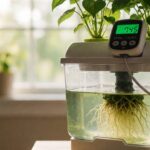
How to test: Use a digital pH meter inserted two inches into the root zone soil. Test at three to four points around the root zone and average the readings.
If pH is above 5.5: Apply elemental sulfur at the rate of one to two pounds per 100 square feet (or one to two teaspoons per five-gallon container). Work it into the top inch of soil and water in thoroughly. Retest after four to six weeks. If pH has not come down sufficiently, apply a second sulfur application.
If pH is 4.5 or below: The soil is too acidic. This causes different problems — aluminum toxicity and manganese toxicity can occur in very acidic conditions and produce leaf yellowing and stunting. Raise pH by applying lime, and retest after three months.
—
Iron Chlorosis : The Specific Pattern
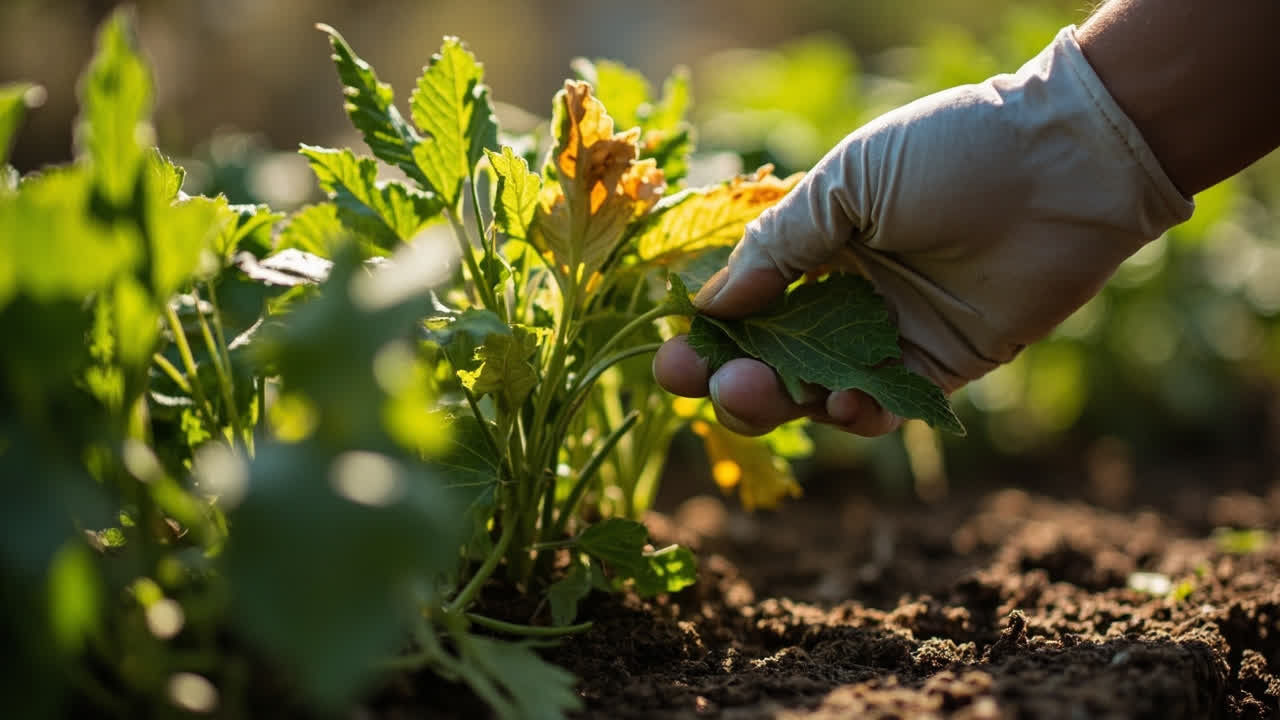
Iron chlorosis produces a distinctive yellowing pattern: the leaf blade turns yellow while the leaf veins remain green. This is called interveinal chlorosis. In severe cases, the leaf may develop brown necrotic spots at the margins or tips as the cells die.
Iron chlorosis almost always indicates pH-related induced deficiency. The leaves are yellow because the roots cannot access iron. The fix is lowering pH, not adding iron.
If correcting pH does not resolve the yellowing, actual iron deficiency may be present — possible in very sandy soils or after years of heavy rainfall that leaches iron from the root zone. In this case, apply iron chelate as a soil drench according to label directions. Iron chelate is a form that stays available to roots even at higher pH — but it is an expensive solution compared to fixing the pH.
—
Manganese Deficiency : Similar Pattern, Different Cause
Manganese deficiency also produces interveinal chlorosis, but it typically appears on older leaves first and is most common in soils with pH above 5.8. The symptoms can look identical to iron chlorosis to the untrained eye.
The difference: manganese deficiency is more likely when the pH has been corrected but yellowing persists, or when leaves show interveinal chlorosis in very hot weather. Manganese becomes less available as pH rises above 5.5, similar to iron.
For both iron and manganese chlorosis, the diagnostic protocol is the same: test and correct pH first. If yellowing persists after pH is confirmed in the 4.5 to 5.5 range, apply a manganese foliar spray (manganese sulfate at the rate specified on the product label).
—
Nitrogen Deficiency : Different Yellowing Pattern
Nitrogen deficiency produces uniform yellowing across the entire leaf — not the interveinal pattern of iron chlorosis. The older leaves turn pale green to yellow first, and the new growth at cane tips may be smaller and paler than it should be.
Nitrogen deficiency is more common in light, sandy soils and in container blueberries where frequent watering leaches nitrogen out of the root zone. The fix is straightforward: apply ammonium sulfate at the standard rate for your bush size, scratched into the soil surface and watered in.
Nitrogen deficiency in a blueberry bush that is otherwise healthy and growing in properly pH-adjusted soil usually indicates that the soil mix is too lean — add compost or a slow-release nitrogen source to the maintenance program.
—
Root Damage : When the Roots Cannot Absorb What Is Available
If soil pH is correct and nutrients are present, yellowing may be occurring because the roots themselves are damaged and cannot absorb what is available. Root damage in blueberries most commonly comes from overwatering, root rot, or physical damage during cultivation. The save a dying blueberry plant guide has the full diagnostic sequence for root zone damage and recovery..
Overwatering and root rot: Blueberry roots that sit in waterlogged soil for extended periods develop root rot — the roots turn brown and mushy and stop functioning. The plant shows yellowing leaves because the damaged roots cannot absorb nutrients, regardless of how much is present in the soil.
The diagnostic clue: soil is wet or stays wet for days after watering. The bush may be wilting even though the soil appears moist. Roots, if you inspect them, are brown and soft rather than white and fibrous.
Fix: remove the plant from wet soil, trim away all damaged roots, repot in fresh acidic, fast-draining mix, and water only when the top inch of soil is dry. Reduce watering frequency significantly.
Physical damage: Digging or cultivating around blueberry roots damages the shallow, delicate root system and causes stress that manifests as yellowing. Avoid cultivating around blueberry bushes — hand-pull weeds instead of using hoes or tillers, and do not pile mulch against the base of the stem where it contacts the crown.
—
Recovery and Monitoring After Fixing the Cause
Once the underlying cause of yellowing is identified and corrected, recovery takes time. The roots need to regenerate enough functional tissue to absorb nutrients at the rate the bush needs them. This process takes six to eight weeks in most cases.
During recovery, keep the following conditions stable:
Maintain consistent moisture — not wet, not dry. The recovering root system is more sensitive to moisture stress than a healthy one.
Do not fertilize during recovery — the roots cannot absorb nutrients efficiently enough to use fertilizer, and fertilizer in this state can burn the damaged tissue.
Monitor new growth. The first sign of recovery is new leaves emerging in healthy green. If new growth is still yellowing, the underlying cause has not been fully corrected.
Once the bush has put out a full cycle of healthy green new growth, the plant care guide has the full recovery feeding schedule and ongoing maintenance calendar., resume normal fertilization at half strength for the first two applications. Return to full fertilization only when the bush is clearly in active, vigorous growth.
The single most important response to yellowing blueberry leaves is to measure the pH before adding anything. In blueberry culture, pH is the master variable — it determines whether roots can absorb the nutrients the bush needs, regardless of how much of those nutrients you add to the soil. Fix the pH first and you will almost always fix the yellowing. Everything else is secondary.
If the chlorosis is part of a broader decline, the recovery protocol is in our save a dying blueberry plant guide. For the full picture on soil pH and chlorosis prevention, see our complete guide to growing blueberries at home.
Turn any PDF statement into a clean sheet
Skip the typos and the hours of copying. Our converter handles any bank statement format and outputs Excel, CSV, or QBO for QuickBooks. No file retention, free to try.
Convert your statement