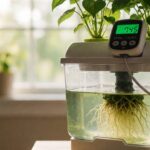
Blueberries reward soil prep over impulse. A blueberry bush that produces well starts with soil pH between 4.5 and 5.5 — not the 6.0 to 7.0 range most garden plants tolerate — and most home garden soil sits above 6.5 before amendment.
The single most common reason home blueberry plantings fail is iron lockout: at pH above 6.0, blueberry roots lose the ability to absorb iron even when it’s present in the soil. The visible result is chlorosis — yellow leaves with green veins, slowed growth, and a bush that declines over two to three seasons until it dies. For the deep-dive on soil pH and chlorosis, see our blueberry soil pH requirements guide. For the diagnostic if your bush is already showing yellow leaves, see why blueberry leaves turn yellow. If the leaves are turning red instead, see why blueberry leaves turn red.
This guide covers the four decisions that decide whether your blueberry planting thrives or slowly declines: choosing the right Vaccinium type for your climate, setting up the soil to the pH blueberry roots actually need, planting and watering rhythm that matches the bush’s shallow root system, and the long-term pruning + pollination plan that keeps a bush productive for twenty years.
Why Blueberries Are Different From Most Garden Plants
Blueberry roots evolved a partnership with ericoid mycorrhizal fungi that no other common garden fruit shares. The fungi colonize the root surface and extend the root’s effective reach into the soil — but the partnership only functions in acidic conditions, below pH 5.5. In exchange for sugars from the plant, the fungi unlock phosphorus, nitrogen, and especially iron from soil particles that other plants can’t access.
The practical consequence is a hard biological limit: at pH above 6.0, the mycorrhizal partnership collapses and blueberry roots lose access to iron even when iron is abundant in the soil. The plant shows chlorosis — yellow leaves with green veins — and declines over two to three seasons even with normal watering and fertilizing. This is not a nutrient deficiency that fertilizer will fix; it is a chemistry problem that only pH correction solves.
Most soil in USDA zones 5 through 8 has a pH between 6.0 and 7.5 — too high for blueberries without significant amendment. According to Cornell Cooperative Extension, amending native soil above pH 7.0 is rarely worth the effort; raised beds with acidic mix or containers are a more reliable path. For the full pH math, see our soil pH requirements guide.
If you’re deciding which berry crop to start with, strawberries produce fruit in year one but need replacing every 3–4 years, raspberries spread aggressively via runners and need annual cane management, and gooseberries tolerate partial shade but need careful pruning to avoid thorns. Blueberries sit in the middle: perennial like raspberries, well-behaved like strawberries, shade-tolerant like gooseberries — but with the non-negotiable pH requirement none of the others share.
Choosing the Right Blueberry Varieties
Blueberries aren’t one plant — they’re four distinct types within the Vaccinium genus, each adapted to a different climate and chill-hour regime. Choosing the right type for your USDA zone is the single most consequential decision in blueberry growing; the wrong type simply doesn’t fruit.
Northern Highbush (Vaccinium corymbosum) is the standard for home gardens in zones 4 through 7. Plants grow five to eight feet tall, produce large sweet berries, and need 600 to 1,000 chill hours per winter — hours below 45°F that trigger bud break. Southern Highbush is bred for zones 7 through 9 with only 200 to 500 chill hours; without enough winter cold, Northern Highbush flower buds never break, and without protection from late frosts, Southern Highbush buds break too early and get killed. Rabbiteye (V. ashei) handles the heat and humidity of zones 7 through 9 in the Southeast better than either Highbush type, but needs a pollinator variety within 100 feet. Lowbush (V. angustifolium) is a cold-zone ground-cover for zones 2 through 5 — small intensely flavored berries, but a very different growing shape. The full type-by-type breakdown with variety recommendations is in our blueberry varieties guide.
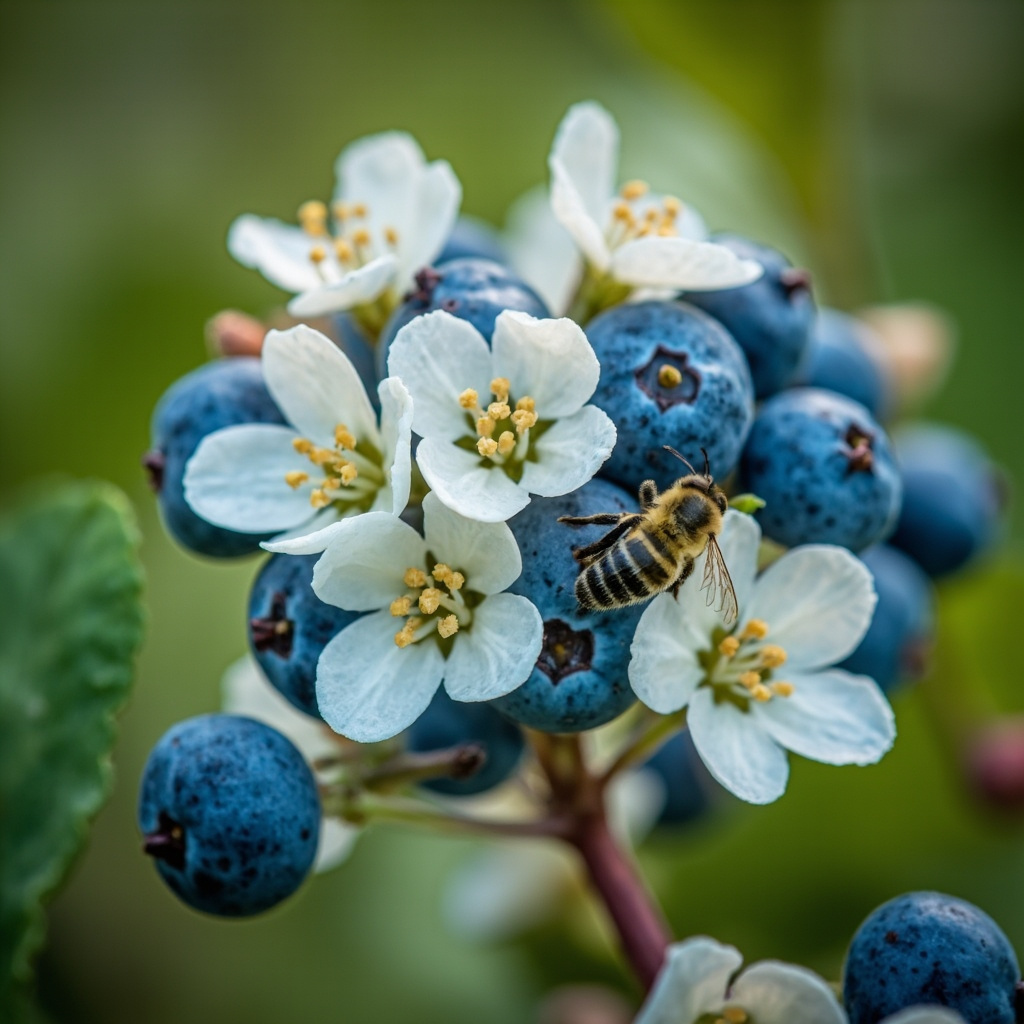
Most blueberry varieties — even those marketed as self-pollinating — produce 15 to 30 percent more fruit when planted with a compatible partner variety within 100 feet. The variety description will name the recommended cross-pollinator; pairing two varieties that bloom at the same time matters more than pairing any two random varieties. Truly self-fertile varieties like ‘Sunshine Blue’ and ‘Pink Lemonade’ will set fruit alone but still benefit from a partner.
The decision rule that prevents most variety mistakes: pick by USDA zone first, by chill hours second, by berry size third, by self-pollination last. Most home failures trace to picking a low-chill variety for a cold-winter zone (no fruit) or a high-chill variety for a warm-winter zone (no fruit).
For a side-by-side comparison with another acid-loving berry, see our blueberry vs cranberry guide.
Soil Preparation and pH Management
Soil pH decides everything downstream — whether roots access iron, whether mycorrhizal fungi colonize, whether chlorosis shows up in year two or year five. Test before you buy a bush, not after you plant it.
Blueberries aren’t the only fruit crop that demands acidic soil. Indoor citrus trees also develop iron chlorosis above pH 6.0 and benefit from the same elemental sulfur amendment strategy — though they’re less demanding than blueberries, tolerating pH up to 6.5.
The three pH bands matter differently. Native soil at pH 4.5 to 5.5 is the rare ideal — plant directly in ground. Native soil at pH 5.5 to 6.5 can be amended with elemental sulfur over six to twelve months and used for in-ground planting. Native soil at pH 6.5 and above is unreliable for in-ground blueberries — sulfur amendment at that level takes multiple seasons and frequently fails to hold the pH. Use raised beds (built with peat and pine bark mix) or containers. Cornell Cooperative Extension specifically cautions against amending alkaline soil for in-ground blueberries; the cost of sulfur and the time to retest usually exceed the cost of a container setup.
Elemental sulfur amendment rates depend on soil texture. Sandy soil needs roughly one pound per 100 square feet to drop pH by half a unit; clay soil needs one and a half to two pounds. Apply in fall for spring planting — sulfur takes six to twelve months to fully react in the soil. Retest at three months and again at six months before planting.
The planting hole recipe that works for in-ground blueberries at pH 5.5 to 6.5: dig a hole two to three feet wide and one foot deep, backfill with a 50/50 mix of sphagnum peat moss and native soil. This creates a localized acidic zone around the root system. Mulch with two to three inches of pine bark or pine needles — both acidify slowly as they break down and conserve surface moisture. Keep mulch two inches away from the crown to prevent rot. The full amendment math and pH testing protocol is in our soil pH requirements guide.
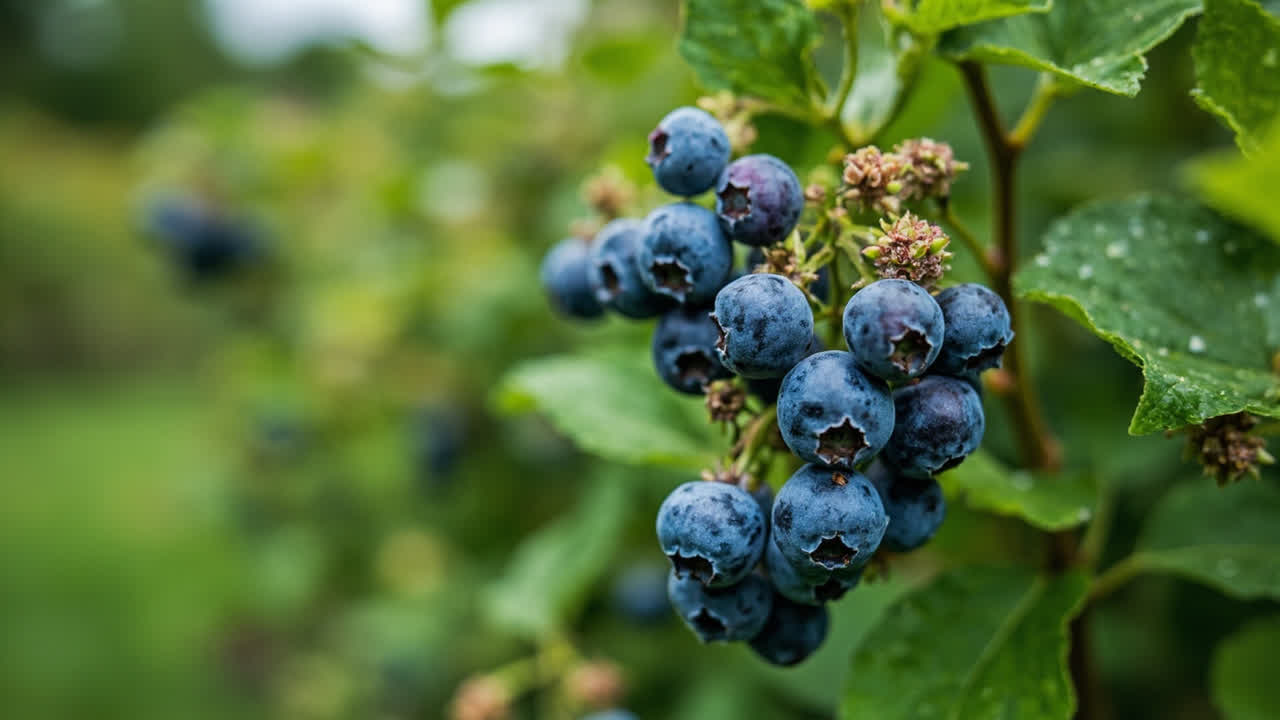
How to Plant Blueberry Bushes
Planting timing depends on climate. In zones 4 and 5, spring planting only — the bush needs the full season to establish roots before winter. In zones 6 and 7, spring or fall both work; fall planting gives a head start on root growth. In zones 8 and 9, fall planting is preferred so the bush establishes through the cool wet winter before summer heat arrives. Bare-root plants are cheaper but only plant in early spring when fully dormant; containerized plants can go in any time the ground isn’t frozen.
Blueberry roots spread horizontally, not deep — the root system is shallow and fibrous, designed for the top eight to twelve inches of soil. Plant at the same depth the bush was growing in its nursery container, or one inch shallower. Do not bury the crown (the point where stems meet roots); burying it invites crown rot. Spread the roots outward into the planting hole rather than letting them circle.
Spacing depends on type. Highbush varieties need four to six feet between plants; half-high varieties need three to four feet. Rows spaced six to eight feet apart allow maintenance access. For cross-pollination, plant compatible varieties within 100 feet — bees travel that far but produce noticeably higher yields when the pollinator is closer.
First-year care is establishment, not production. Water deeply at planting (two gallons per bush) and keep the root zone consistently moist for the first two months — one to two inches of water per week from rain plus irrigation. Mulch with two to three inches of pine bark, kept two inches away from the crown. Don’t expect flowers in year one; if flowers appear, pinch them off so the bush devotes energy to roots. The full step-by-step planting protocol is in our how to plant blueberry bushes guide.
Container Blueberries — Special Considerations
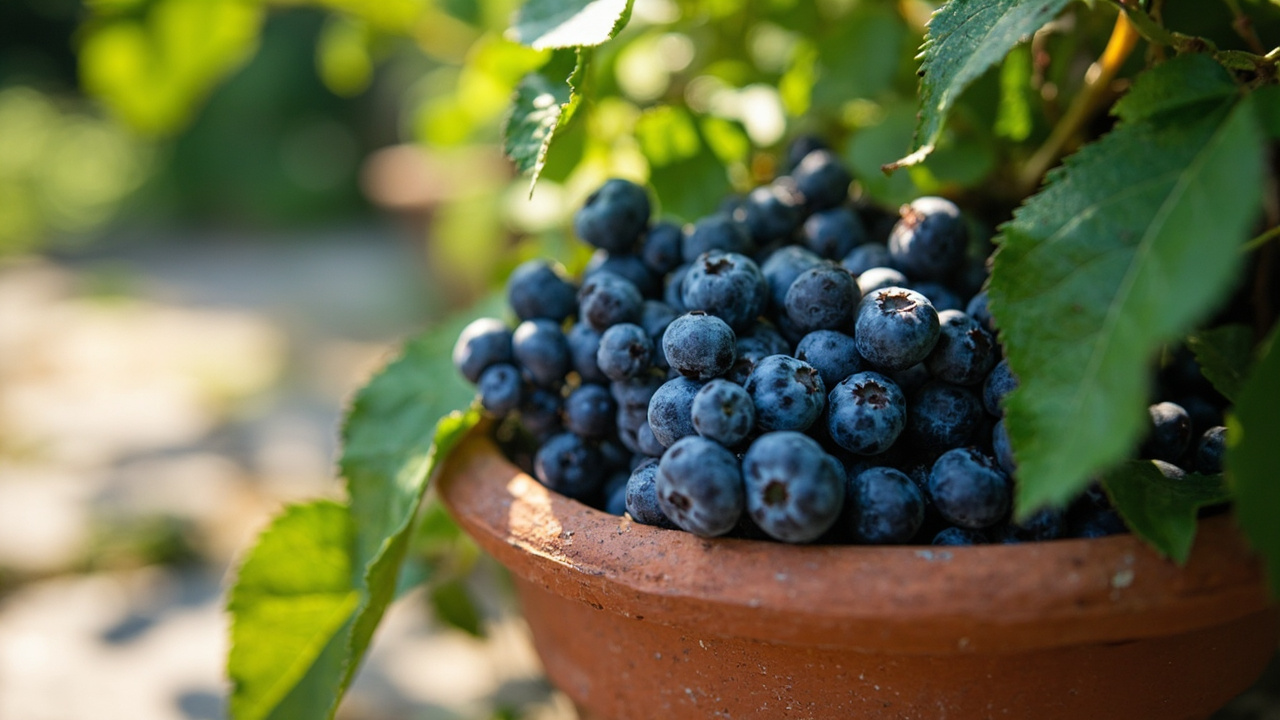
Containers solve the soil pH problem because you control the mix from day one — but they introduce a different problem: the root system becomes more sensitive to temperature extremes and to drying out. Both failure modes (heat-killed roots in summer, frozen root balls in winter) kill container blueberries faster than any disease.
The container mix is the same recipe as the in-ground planting hole, minus the native soil: one part sphagnum peat moss, one part pine bark (fine to medium grade), one part coarse perlite. Do not use standard potting mix — it’s formulated for pH 6.0 to 7.0 and will gradually push the container pH too high. The mix should be acidic (target pH 4.5 to 5.5), fast-draining, and moisture-retentive. Test the mix pH after the first three months and amend with sulfur if it creeps above 5.5.
Container size and color matter more than they look. Minimum eighteen inches wide and eighteen inches deep for a single bush; half-whiskey barrels and fifteen-gallon fabric pots give more root room and produce larger plants. Light-colored containers absorb less heat than dark plastic or ceramic — in zones 7 and warmer, dark containers in full sun can heat the root zone to lethal temperatures by mid-afternoon. Elevate containers on pot feet to prevent heat transfer from concrete patios and to improve drainage.
Container watering is the daily commitment nobody warns you about. Surface mix dries fast — in midsummer, a fully grown container blueberry in zone 7 may need daily watering. The full seasonal watering schedule is in our watering schedule guide. In zones 5 and below, containers freeze solid in winter and blueberry roots are less cold-hardy than the plant’s above-ground canes — move containers to an unheated garage or wrap them in insulation for winter. Our container blueberry guide covers the full setup.
Watering and Fertilizing Blueberry Bushes
Blueberry root systems stay in the top eight to twelve inches of soil — they cannot reach deep moisture the way tomato or fruit tree roots can. The watering rule is one to two inches of water per week from rain plus irrigation, applied at the soil surface. Drip irrigation or soaker hoses are ideal; overhead watering on the foliage promotes fungal disease and fruit split. For a complete feeding schedule and product comparison, see our blueberry fertilizing guide.
The fertilizer protocol is different from most garden plants. Ammonium sulfate (21-0-0) is the standard nitrogen source for blueberries — as soil bacteria convert ammonium to nitrate, the process releases hydrogen ions that gradually acidify the root zone. Avoid calcium nitrate, sodium nitrate, and any alkaline-forming nitrogen source. Penn State Extension specifically cautions against balanced 10-10-10 fertilizers for blueberries — the calcium and other cations push pH up over time.
Apply fertilizer in two windows: early spring as new growth begins, and again after harvest in early summer. Stop fertilizing by late July — late-season nitrogen encourages tender new growth that won’t harden off before winter and is more susceptible to cold damage. For young bushes (years one and two), apply half the rate; over-fertilization in the establishment phase burns shallow roots.
The diagnostic signs matter: burned leaf edges (brown and crispy) plus excessive pale new growth indicates over-fertilization — flush the soil heavily with water to leach excess. Yellow leaves despite moist soil indicates root rot developing, not thirst — check drainage and consider raised-bed rescue. The full root rot diagnostic is in our blueberry root rot guide. The full seasonal watering rhythm is in our watering schedule guide.
Pruning, Pollination, and Long-Term Productivity
A properly pruned blueberry bush stays productive for twenty years or more. The pruning timeline matters: years one through three are establishment — minimal pruning, just remove damaged canes. From year three onward, annual late-winter renewal pruning keeps the bush productive. Blueberry fruit is produced on wood from the previous season — one-year-old canes are the most productive, two to four-year-old canes are the backbone, and canes older than five years crowd the center and produce less fruit.
The annual pruning decision: remove dead or broken canes at any time; remove canes older than five years during late-winter pruning; remove canes that cross through the center or grow at awkward angles; keep one to five of the strongest new canes (born the previous season) as replacement growth; never remove more than a third of the bush’s total canes in a single year. Heavy pruning produces bigger individual berries but smaller total yield; light pruning produces more berries but smaller size. Most home growers lean toward lighter pruning.
Cross-pollination revisited: 15 to 30 percent yield boost from a compatible partner variety within 100 feet. Blueberries are bee-pollinated — avoid spraying anything (even organic fungicides) during bloom. The full pollination diagnostic for bushes that flower but don’t fruit is in our pollination guide and our why blueberry leaves turn yellow page covers the most common companion problem.
If you inherited an ailing bush on your property — chlorotic leaves, declining growth, no fruit — the recovery protocol is different from the prep-first plan. Start with the save a dying blueberry plant guide to diagnose the actual problem before amending. Blueberry growing rewards preparation over impulse: the gardener who tests soil pH before planting, chooses a climate-appropriate variety, and mulches properly will have a productive bush in year three. The gardener who plants without checking soil pH will have a struggling bush that never produces well, no matter how much attention it gets afterward.
If you’re deciding between blueberry and its acidic-soil cousin, the four-axis decision matrix covers soil pH, chill hours, cane structure, and harvest window.
From Bank Statement to QuickBooks-Ready File
That manual cleanup you just read about? This tool skips it. Turn your PDF into QBO for QuickBooks without storing your data anywhere.
Start Converting