Blueberry plants have a deceptive problem: they look like they should be drought-tolerant. The waxy leaf coating, the deep green foliage, the way established bushes sit quietly through a dry July — these signals suggest toughness.
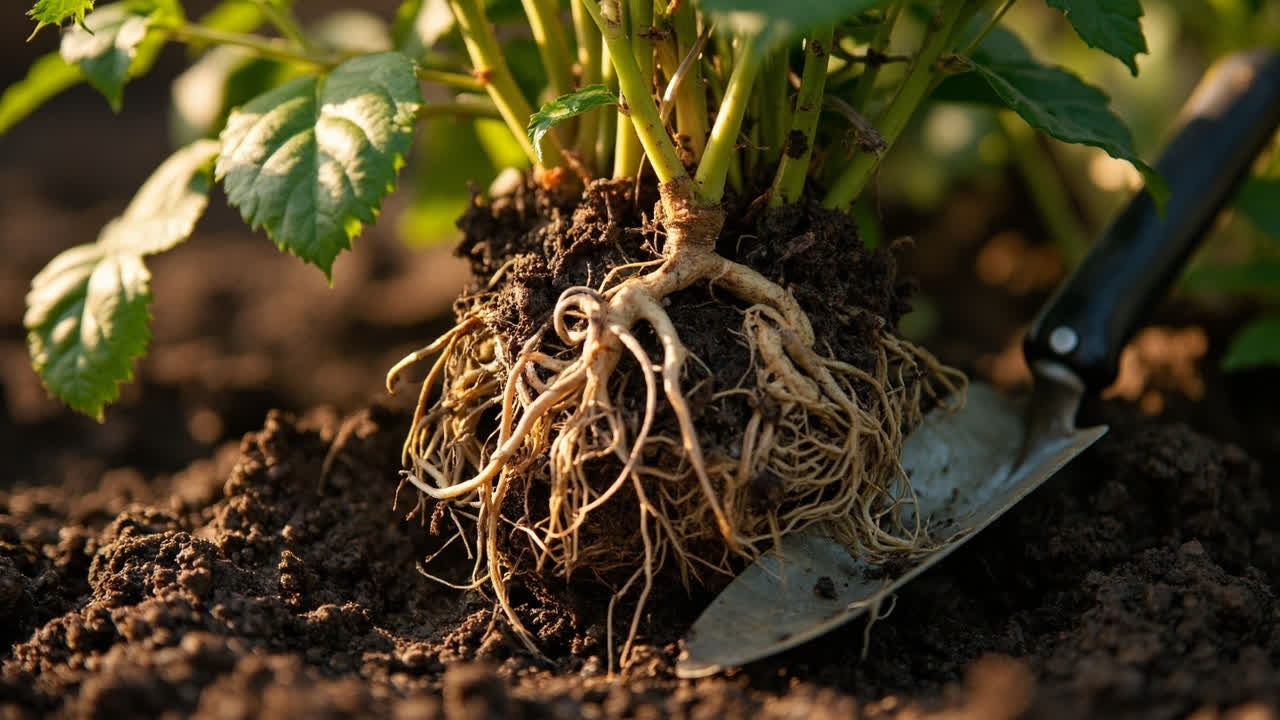
But blueberry roots are fine, shallow, and hairless, which means the plant has less root surface area to draw water than almost any other fruit crop you’d grow in the same space.
The result is a plant that gives you very little visual warning before water stress arrives. A tomato plant wilts dramatically and recovers from a thorough watering. A blueberry plant can lose 30–40% of its fine root mass during a multi-day drought without visibly drooping, then drop flower buds the following spring not because of frost — because the bud primordia never fully developed the previous summer.
The shallow, hairless root system also makes blueberries uniquely sensitive to soil pH — when pH drifts above 5.5, roots cannot access iron efficiently even in moist soil.
That invisible quality makes a consistent watering schedule the most important single intervention in blueberry care. Fertilizer timing and pruning technique don’t matter if the water isn’t there to drive nutrient uptake and carbohydrate storage.
The Weekly Water Volume Baseline
Blueberry plants need 1–2 in (2.5–5 cm) of water per week during the growing season, delivered at the root zone — not the crown. The 2-in (5-cm) figure is for peak summer heat, sandy soils, and the fruit maturation window (roughly 4 weeks before harvest through harvest completion). The 1-in (2.5-cm) figure is adequate for cooler conditions, heavier soils, and the post-harvest recharge period.
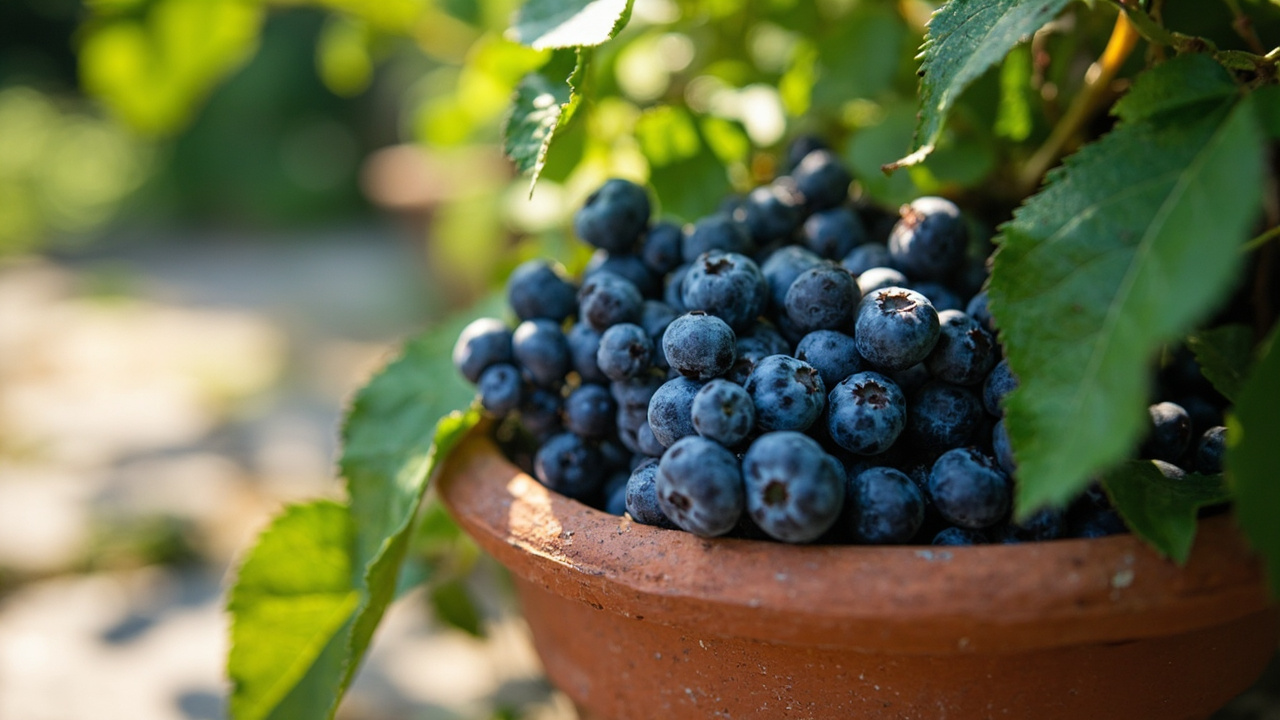
Container blueberries need more frequent watering than in-ground plantings — the limited root zone dries out 2–3 times faster, especially in terracotta pots that wick moisture through the walls. In summer heat, container blueberries may need water daily or even twice daily, while in-ground bushes typically need deep watering 2–3 times per week.
Shallow-rooted berries share similar watering needs — strawberries also need consistent surface moisture and suffer equally from drought stress during fruit set.
What that means in practice: a mature in-ground blueberry bush in zone 6 during a typical July uses roughly 3–4 gallons (11–15 liters) per day at peak evapotranspiration. In a 5-gallon container in the same conditions, it might use 1.5–2 gallons (5.7–7.6 liters) per day. These numbers depend on humidity, wind, temperature, and canopy size — but they’re the right order of magnitude for planning a drip irrigation run time.
Signs of Underwatering to Watch For
The challenge with underwatering blueberries is that the symptoms appear at a distance. By the time leaf scorch shows at leaf margins — brown, dried edges progressing inward from the oldest leaves — the plant has already experienced significant stress. Check the soil at the drip line, not the crown, for moisture content. If the top 2 in (5 cm) of soil feels dry when you rub it between your fingers, the plant is overdue.
- Pre-dawn leaf wilting: Leaves that don’t perk up before sunrise are conservatively 50% through available soil moisture. This is your single best early warning indicator if you’re hand-watering.
- New shoot growth stops: Blueberry bushes in active growth produce new canes and extending lateral shoots through most of the season. If new growth stops in June or July while established canes look healthy, consider water stress before you look at nutrition.
- Fruit shrinkage: Berries that size up and then shrivel before reaching mature dimensions are almost always a water stress event, not a nutrient problem. The fruit aborts when the plant cannot maintain carbohydrate delivery to all developing fruits simultaneously.
Drip Irrigation Design for Blueberry Beds
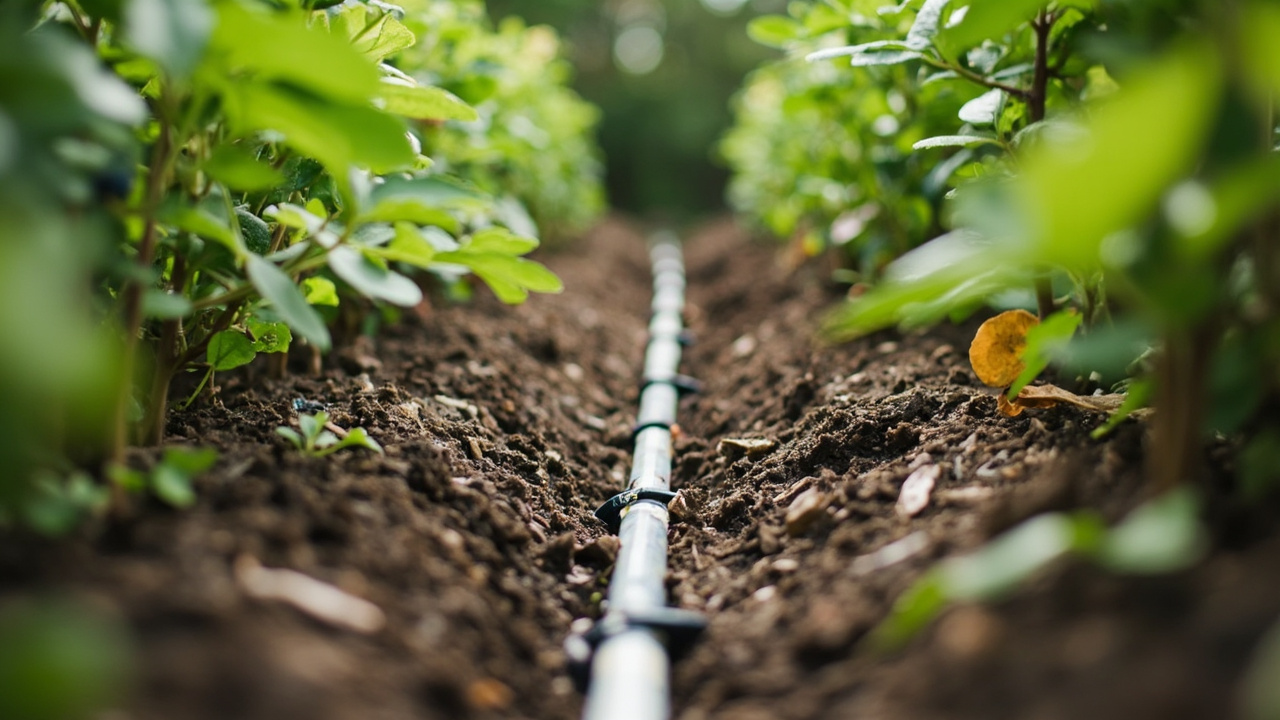
Drip irrigation is the most effective delivery method for blueberries because it puts water where the roots are rather than where leaves are — overhead irrigation creates a wet foliar zone that promotes fungal disease, especially in the humid conditions blueberries prefer.
For in-ground beds: run two drip lines per row, positioned at roughly 12 in (30 cm) from the plant center on either side. This matches the spread of a mature blueberry’s root system, which extends 2–3 ft (60–90 cm) from the plant center in all directions. A single drip emitter at the crown leaves the outer root zone dry — and the outer root zone is where the plant’s most active fine roots concentrate.
Run time depends on your flow rate and soil drainage. Sandy loam: 30–45 minutes per watering event, 2–3 times per week in summer. Clay loam: longer runs at lower frequency (1–2x per week) to allow drainage between events. Clay soils that stay waterlogged for more than 24 hours post-irrigation are creating conditions for Phytophthora root rot — reduce run time and improve drainage before adding water volume.
Critical Watering Windows Through the Season
Blueberry water needs aren’t constant — they peak at specific stages, and missing those windows produces direct yield losses that no amount of mid-season can recover.
Bud Break to Bloom (Early Spring)
Water demand is moderate during this phase, but the root system is rebuilding after winter dormancy. Consistent soil moisture at this stage supports uniform bud opening and extends the flowering period — longer flowering means a more extended fruit set window, which reduces the risk of losing the full crop to a late frost event. Maintain soil moisture at field capacity (not saturated) from green tip through full petal fall.
Fruit Set and Fruit Development (Late Spring – Early Summer)
This is the highest-water-demand period. The plant is transpiring heavily through full canopies, building fruit sugars, and supporting root growth simultaneously. A water deficit during fruit sizing — typically 4–8 weeks before harvest — produces small, firm berries that don’t size properly and may drop prematurely. These berries don’t recover with later watering. By the time you see the stress, the damage to fruit architecture happened weeks earlier.
Increase watering frequency as temperatures rise above 85°F (29°C). In heat waves, it may be necessary to water daily — but only if the soil drains freely. If your container media stays saturated for more than 4 hours post-watering, you have a drainage problem that increasing water frequency will worsen, not fix.
Post-Harvest Recharge (Late Summer – Early Fall)
After the last berries are picked, the plant shifts resources to root carbohydrate storage and flower bud differentiation for the next spring. This phase lasts roughly 6–8 weeks and requires consistent water but at reduced volume compared to the fruit development period. Reducing water at this stage is a mistake — the plant is building next year’s crop in the dormant buds, and water stress during this window means fewer flower buds, a smaller spring bloom, and a smaller crop the following year.
Rainwater vs. Tap Water for Blueberries
Municipal water supplies in many regions are alkaline (pH 7.0+) due to carbonate hardness. When used consistently on blueberries, this water gradually raises container or surface soil pH even when the original media was correctly acidic. The signs show up 12–18 months into a watering routine: leaves that looked healthy in year one develop interveinal chlorosis in year two, and soil tests reveal drifting pH.
Collect rainwater for blueberry irrigation where possible. If you rely on municipal water, let it sit in an open container for 24 hours before applying — this allows chlorine to dissipate and some carbonate to precipitate before contact with the root zone. For container blueberries on a patio or balcony, this is the single most impactful change you can make to increase plant longevity without changing anything else about your care routine. Varieties like Bluecrop blueberry plants benefit particularly from consistent water quality because their large fruit load demands reliable nutrient uptake throughout the season.
Water Quality Quick Test
Fill a glass jar with your irrigation water and add 10 drops of white vinegar. If the water turns milky and cloudy briefly before clearing, the water is carbonate-hard and will gradually raise pH. If it stays clear, your water source is either naturally soft or has already been treated. This at-home test is approximate but gives you the directional information you need to decide whether rainwater collection is worth pursuing for your blueberry plants.
The Takeaway
Blueberry plant watering is simple in principle — 1–2 in (2.5–5 cm) per week at the root zone — but it requires paying attention to soil type, seasonal demand peaks, and irrigation water quality. Drip irrigation along the drip line outperforms crown watering. The critical windows are bud break through bloom and the 4–8 weeks before harvest. Water quality matters as much as quantity: alkaline tap water gradually reverses your soil pH work. Consistency through those windows determines next year’s yield as much as this year’s.
For the full seasonal rhythm — site selection, soil prep, variety, planting, and ongoing care — see our complete guide to growing blueberries at home.
Turn That PDF Into a Spreadsheet in Minutes
You've seen how to do it manually — now let the tool handle the heavy lifting. Upload your bank statement and get Excel, CSV, or QBO in a few clicks.
Try It Free