Blueberry bushes demand acidic soil—pH 4.5 to 4.8, nothing close to neutral. That single fact trips up more growers than any other. Most garden soils, especially in areas with limestone bedrock or alkaline tap water, sit at pH 6.5 or higher, which locks out the iron and manganese blueberry roots need and gradually kills the plant. You cannot amend your way out of this after planting; the pH has to be right before the roots go in.
Testing and Adjusting Soil pH Before You Plant
Run a soil test at least three months before planting—longer if you’re lowering pH significantly. Home soil test kits exist, but a professional lab test through your local extension office gives you the baseline number you actually need to work from. Extension office tests also reveal nutrient levels and organic matter percentage, which matter for blueberries too.
To lower pH from 6.5 into the 4.5–4.8 range with elemental sulfur: apply roughly 1 to 1.5 pounds of sulfur per 100 square feet for sandy soils, or 2 to 2.5 pounds for loam and clay soils. Heavy clay holds pH in place and resists change more than sand does. Work the sulfur into the top 6 inches of soil and water it in. The oxidation process that converts sulfur to sulfuric acid takes 3 to 6 months at temperatures above 50°F (10°C)—this is not something you do the week before planting. For a full breakdown of how acidifying amendments work at each soil type, see our blueberry soil pH and fertilization guide.
Site Selection: Sun, Drainage, and Wind
Blueberry bushes yield best in full sun—at least 6 to 8 hours of direct sun daily. They tolerate partial shade, but you trade direct berry production for every hour of reduced light. In hot climates (zone 7 and above), afternoon shade reduces heat stress and helps fruit retain moisture, which prevents shriveling during dry spells.
Drainage matters more than most people realize. Blueberry roots are fibrous, shallow, and oxygen-hungry. They sit in the top 8 to 12 inches of soil and hate standing water. If your site holds puddles after heavy rain for more than a few hours, either build a raised bed at least 12 inches tall or choose a different site. Do not plant in a low spot that collects frost or surface water.
Wind protection matters in early spring when bushes are blooming. A late frost during bloom can wipe out the entire year’s fruit set. If your site is exposed, a fence, hedgerow, or buildings on the north and west sides cut wind speed and reduce frost risk. Elevation changes of even a few feet can mean the difference between a killing frost and a light one.
How to Plant the Bush
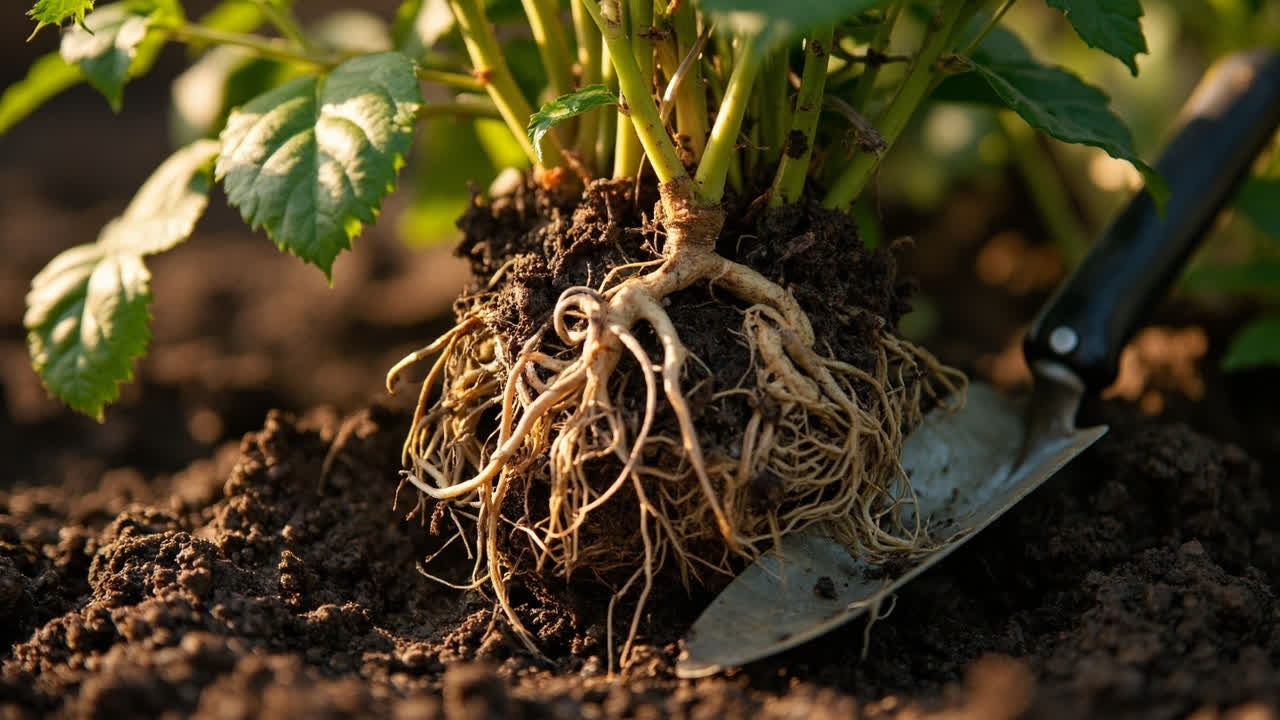
Soak the nursery pot or bare-root bundle in water for 30 to 60 minutes before planting. For bare-root plants, trim any dead or broken roots cleanly with sharp bypass pruners. For container plants, gently loosen the root ball by hand—blueberry roots resist being “teased” apart with tools, and any resistance means you’re damaging the fine, fibrous feeding roots.
Dig a hole twice as wide as the root ball and no deeper than the plant was growing in its nursery container. The most common planting mistake is burying the crown—where the stems meet the roots—below the soil surface. Keep the crown at or slightly above the surrounding grade, then backfill with the native soil. Blueberry roots are shallow; they need horizontal space more than depth.
Firm the soil around the roots as you backfill, working in layers. There should be no air pockets left around the root zone—gaps cause roots to dry out and die back. Water deeply immediately after planting, filling the planting hole twice if needed to ensure the entire root zone is saturated.
Mulching After Planting
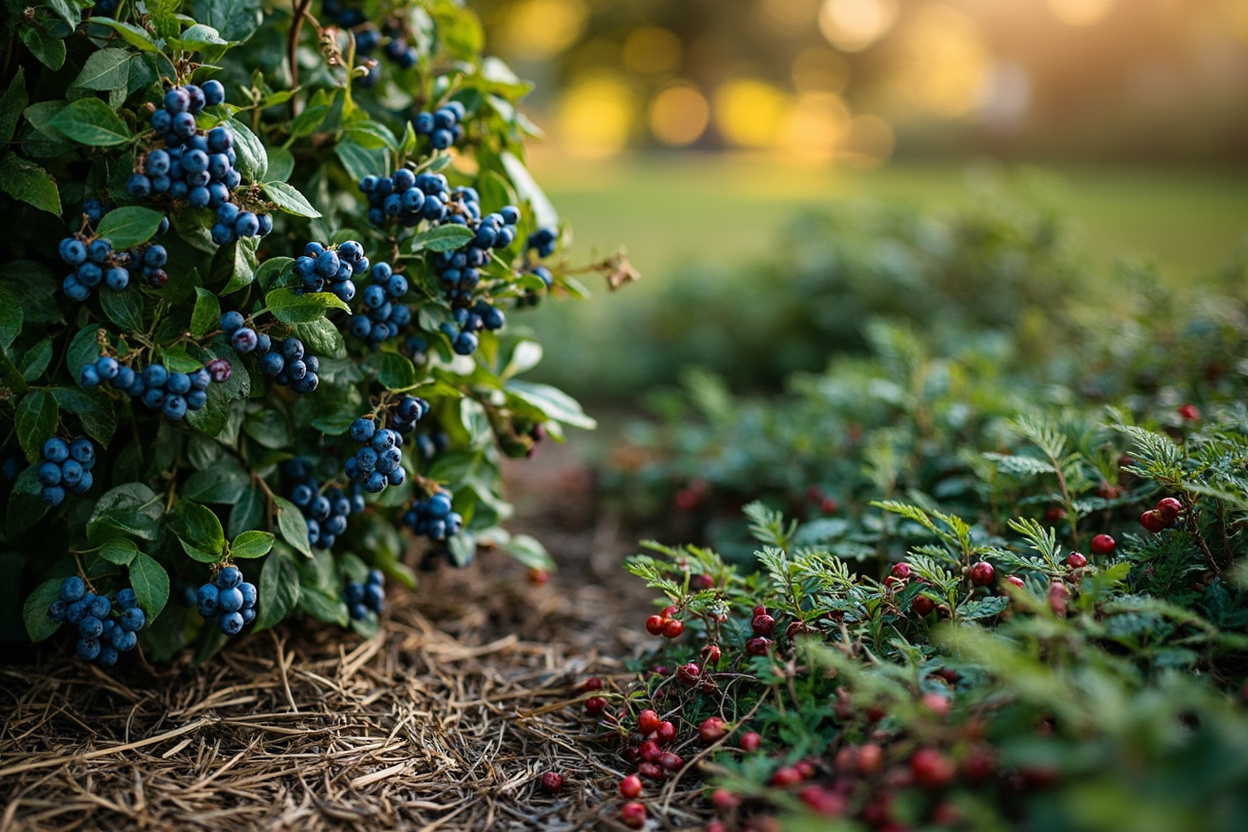
Apply 3 to 4 inches of acidic mulch immediately after planting—pine needles, shredded pine bark, or wood chips from conifers are all appropriate. Avoid hardwood mulch, which breaks down alkaline. Mulch moderates soil temperature, conserves moisture, and gradually acidifies the surface soil as it decomposes. Keep mulch 2 inches away from the crown to prevent rot. Replenish the mulch layer each spring to maintain depth.
Aftercare in the First Year
The first growing season is about root establishment, not fruit. Keep the soil consistently moist—never waterlogged, never allowed to dry out completely. During hot weather, this can mean watering every 2 to 3 days in a container or raised bed, or every 3 to 5 days in in-ground beds with decent drainage.
Do not fertilize at planting time. Wait until new growth emerges in spring—typically 3 to 4 weeks after the last frost—then apply a fertilizer formulated for acid-loving plants, such as ammonium sulfate (21-0-0). Apply at half the label rate the first year. Over-fertilizing burns shallow blueberry roots faster than almost any other mistake.
Remove all flower buds the first spring after planting, regardless of how many appear. I know it feels wasteful, but a blueberry bush flowering heavily as a one-year-old plant is spending energy it should be using to build roots and structural canes. Forgo the first fruit so the plant puts everything into the root and cane development that determines your yield for the next five years.
What Goes Wrong in the First Year
The two mistakes that kill new blueberry plants most often are wrong soil pH and overwatering. Alkaline soil doesn’t show immediate symptoms—plants often look fine through their first summer and decline the following spring as iron chlorosis sets in (a problem covered in detail in our guide to blueberry leaf color problems). By the time you see yellow leaves and stunted growth, the root system is already compromised. Test pH before you plant, not after.
Overwatering looks like underwatering because both cause wilting. The difference is that overwatered soil stays wet at the surface and the lower leaves turn yellow before they drop. Check soil moisture with your finger 2 inches deep before watering every time. If it feels moist, wait another day.
For the complete picture — soil pH management, variety selection, and ongoing care — see our complete guide to growing blueberries at home.
From Bank Statement to QuickBooks-Ready File
That manual cleanup you just read about? This tool skips it. Turn your PDF into QBO for QuickBooks without storing your data anywhere.
Start Converting