Blueberries are acid-loving plants, and that isn’t a preference — it’s a physiological requirement. When you grow a blueberry plant in soil with a pH above 5.5, the plant’s root system loses its ability to absorb iron and manganese even if both nutrients are present in adequate quantities. The result looks like classic chlorosis: leaves turn yellow between the veins while the veins themselves stay green, new growth stunts, and the plant gradually weakens through the season without an obvious cause.
The critical range for blueberry soil pH is 4.5–4.8. Below 4.5, manganese can reach toxic levels. Above 5.0, iron availability drops sharply even in mineral-rich soils. Above 6.0, the plant stops functioning normally — you might see new leaves emerge yellow, stay small, and drop prematurely. This isn’t a nutrient deficiency you can fix by adding more fertilizer. It’s a pH problem that fertilizer cannot solve until the soil pH comes down. Before establishing a new planting, get a soil test done as part of the correct planting process — adjusting pH post-planting is far more disruptive than getting it right before.
The mechanism is chemical: at higher pH, iron and manganese form insoluble compounds that cannot cross the root membrane. The plant doesn’t starve because there’s no iron in the soil — it’s starved because the chemical form of the iron makes it inaccessible. This is why a blueberry planted in typical amended garden soil (pH 6.5–7.5) will look yellow and stunted even with regular feeding.
How to Measure and Confirm Your Soil pH
Before you do anything to lower pH, measure what you’re actually working with. A pH meter or a professional lab test will tell you whether you need to acidify at all. Home test kits vary in accuracy — a 3-point calibration drop tester is more reliable than a cheap probe. If you’re serious about blueberries, spend the $20–30 on a complete soil analysis that also gives you baseline nutrient levels.
Acidic soil management isn’t unique to blueberries — indoor citrus trees also need pH below 6.0 to avoid iron chlorosis, and the same elemental sulfur amendment works for both crops.
If you’re growing in-ground, test the soil at two depths: 0–4 in (0–10 cm) and 8–12 in (20–30 cm). Blueberry roots concentrate in the top 8 in (20 cm), but subsoil pH can differ significantly from surface readings. In plots where old lime or calcium amendments have been worked into the top 6 in (15 cm), the shallow reading might look acceptable while the deeper root zone remains alkaline.
Reading Your pH Test Results
A soil pH of 6.0 in a container is a serious problem requiring immediate action. A pH of 5.8 in a 24-in (60-cm) container is manageable with ongoing maintenance. The difference matters because container soil chemistry changes faster and more dramatically than field soil — what you measure today might shift by 0.3–0.5 units within 30 days if you’re applying alkaline water or using the wrong amendment.
- pH 4.0–4.4: Too acidic — risk of manganese toxicity, aluminum toxicity, calcium deficiency
- pH 4.5–4.8: Optimal range — maximum micronutrient availability
- pH 4.9–5.4: Acceptable range — watch for slow chlorosis appearing in new growth
- pH 5.5–6.0: Marginal — blueberry will struggle; pH-lowering amendments needed
- pH 6.1+: Unsuitable for blueberries without significant soil reconstruction
How to Acidify Soil for Blueberries
Three primary amendment strategies exist for lowering soil pH around blueberry plants. Each has a different speed, longevity, and risk profile. Choosing the right one depends on how far you need to move the pH, your soil type, and whether you’re working in-ground or in containers.
Elemental Sulfur (Fastest Long-Term Solution)
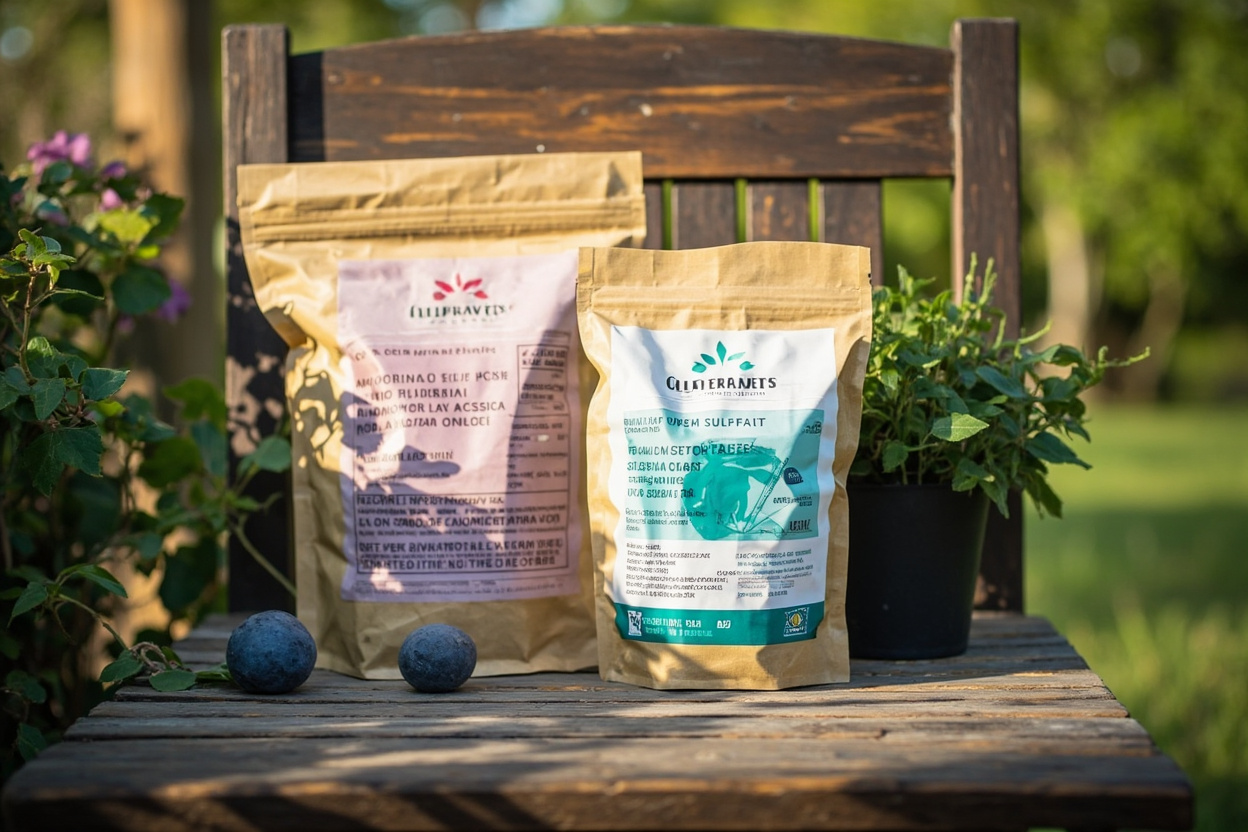
Elemental sulfur is the most reliable long-term acidifying agent because soil bacteria oxidize it to sulfuric acid over weeks to months, creating a genuinely durable pH shift. The application rate depends on current pH and soil composition:
- Sandy loam reducing pH from 6.0 to 4.8: approximately 4 oz (113g) per 10 sq ft (0.9 sq m)
- Clay soil reducing the same pH range: approximately 8–12 oz (226–340g) per 10 sq ft
- Reduce rates by 50% if using sulfur-coated urea or other slow-release acidifying fertilizers
Work the sulfur into the top 4–6 in (10–15 cm) of soil before planting. For established blueberries, top-dress around the drip line and scratch it lightly into the surface — don’t bury it below the root zone. Results take 3–6 months to fully manifest, so test in spring and again in fall before reassessing. Never exceed 1 lb (454g) of sulfur per 100 sq ft (9.3 sq m) per year without professional guidance — excessive acidification creates its own set of toxicity problems.
Pine Bark and Pine Needle Mulch
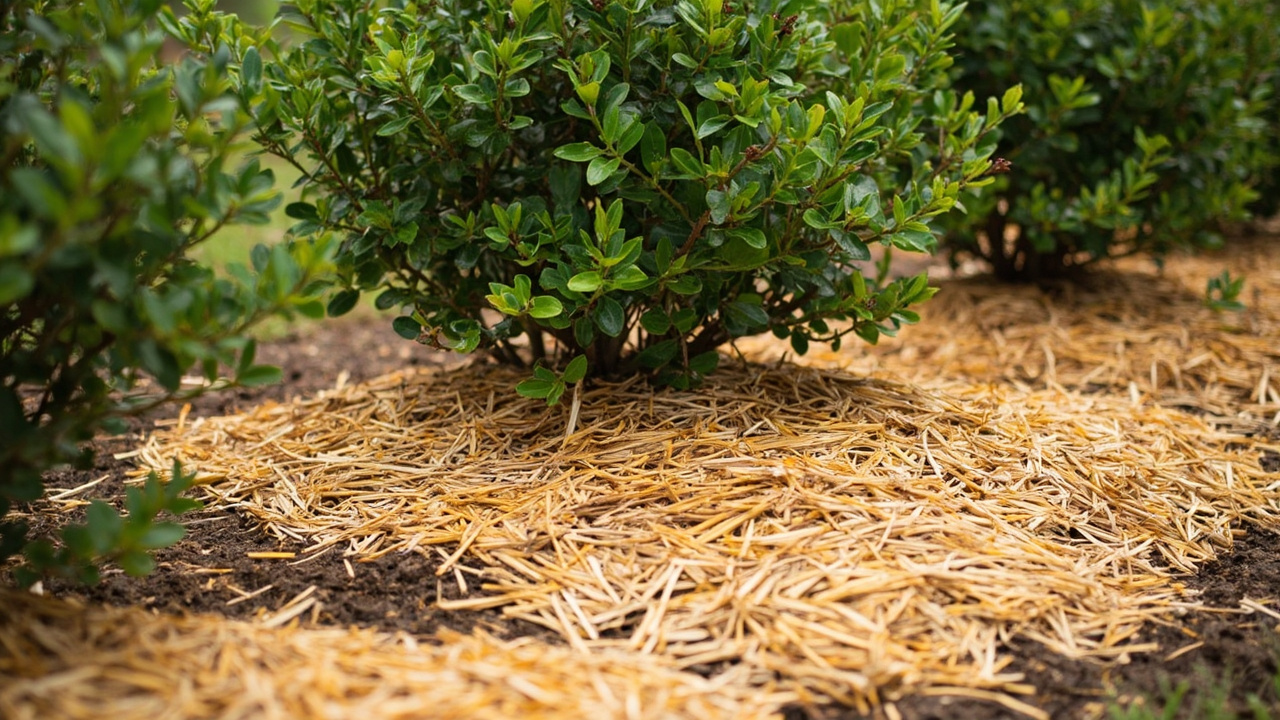
Pine bark and pine needles are slow-acting acidifiers that also improve soil structure and moisture retention. Pine bark mulch in the 1–2 in (2.5–5 cm) depth range contributes measurable acidification over 1–2 years, not weeks. For a faster-acting effect, use aged (not fresh) pine bark — fresh bark ties up nitrogen as it decomposes. This tie-up effect is short-term only but can create visible nitrogen deficiency in young plants if you’re not accounting for it.
In practice, pine-based mulch is best used as a maintenance layer rather than a primary pH-correction tool for soil already above 5.5. Use it in combination with sulfur where pH needs meaningful correction, and as a standalone maintenance layer for soil already within the 4.5–4.8 range.
Sphagnum Peat Moss (Container-Focused Solution)
Sphagnum peat moss is the fastest-acting organic acidifier for container blueberry plants. Mix it into potting medium at 30–50% by volume for containers with pH above 5.5. The effect is immediate and the medium stays acidic longer than pine bark alone because the sphagnum structure resists compaction and maintains the air-filled porosity blueberries need.
The trade-off is sustainability: peat moss breaks down over 12–24 months, and the pH benefit fades as it decomposes. In a container, plan on repotting or top-dressingwith freshpeat every 18–24 months to maintain the acidification effect. For in-ground planting, sphagnum peat moss works best where the existing soil needs not just acidification but also heavy structure modification — heavy clay soils where root penetration is the primary constraint alongside pH.
Aluminum Sulfate vs. Iron Sulfate
Aluminum sulfate acts faster than elemental sulfur (results visible in 2–4 weeks) but carries a toxicity risk: aluminum accumulates in soil and is toxic to blueberry roots at high concentrations. Don’t use aluminum sulfate where you have heavy, poorly drained soil, or where you’re already applying phosphorus (aluminum and phosphorus precipitate together into unavailable forms for both). Iron sulfate is safer but requires larger application volumes to match aluminum sulfate’s effect — use it only where you need a modest pH reduction of 0.3–0.5 units.
The Irrigation Water pH Problem
This is the part most guides skip. Your soil might measure correctly at planting, but if your irrigation water has a high carbonate hardness — common in municipal water supplies, well water in limestone regions, and some Municipal systems — the pH will drift back upward over weeks. For blueberries, water with a pH above 6.5 acts as a liming agent over time, gradually reversing your soil amendments.
Test your irrigation water. If it registers above 7.0, collect rainwater for blueberry irrigation or install a simple acidifying cartridge on your drip system. This single factor — unadjusted irrigation water — is responsible for more blueberry decline in established plantings than any pest or nutrient problem. Consistent irrigation water quality ties directly to the blueberry plant watering schedule — both must be managed together to maintain soil pH stability over time.
Common pH Mistakes That Kill Blueberry Plants
Over-liming before planting: Adding lime to “sweeten” acidic soil before planting blueberries is the most common fatal error. If your bed has a pH of 5.0, that soil does not need sweetening for blueberries — it needs blueberries planted into it. pH 5.0 is acceptable. pH 6.0 is not.
Using composted manure: Even well-aged cow manure is typically alkaline (pH 6.5–7.5) due to calcium and magnesium content from feed ration buffers. This isn’t a problem for most vegetables, but for blueberries it can offset months of sulfur work in a single top-dressing. Use only acid-designed fertilization programs for blueberries — standard organic compost blends are not appropriate.
Not retesting after correction: Applying sulfur once and forgetting it is a recipe for either over-correction (pH below 4.2, toxicity symptoms) or drift back to alkaline conditions within two seasons. Build pH monitoring into your seasonal routine: test container media every 6 months and in-ground beds once per year at minimum.
The Takeaway
Blueberry soil pH requirements are non-negotiable: the plant cannot access iron and manganese above pH 5.5, no matter how much you feed it. Lower soil pH to 4.5–4.8 using elemental sulfur for long-term in-ground correction, sphagnum peat for containers, and pine-based mulch as ongoing maintenance. Test your irrigation water — it might be the silent alkalizer undoing your work. Measure, correct, retest, and maintain. Everything else in blueberry cultivation depends on getting this part right.
For a complete walkthrough of soil prep, variety selection, planting, and the first three years of care, see our complete guide to growing blueberries at home.
From PDF to Excel in one click
Forget retyping line by line. Upload any bank statement, get a spreadsheet you can actually use. Your files are never stored, and you can test the converter with 3 free conversions.
Try it free