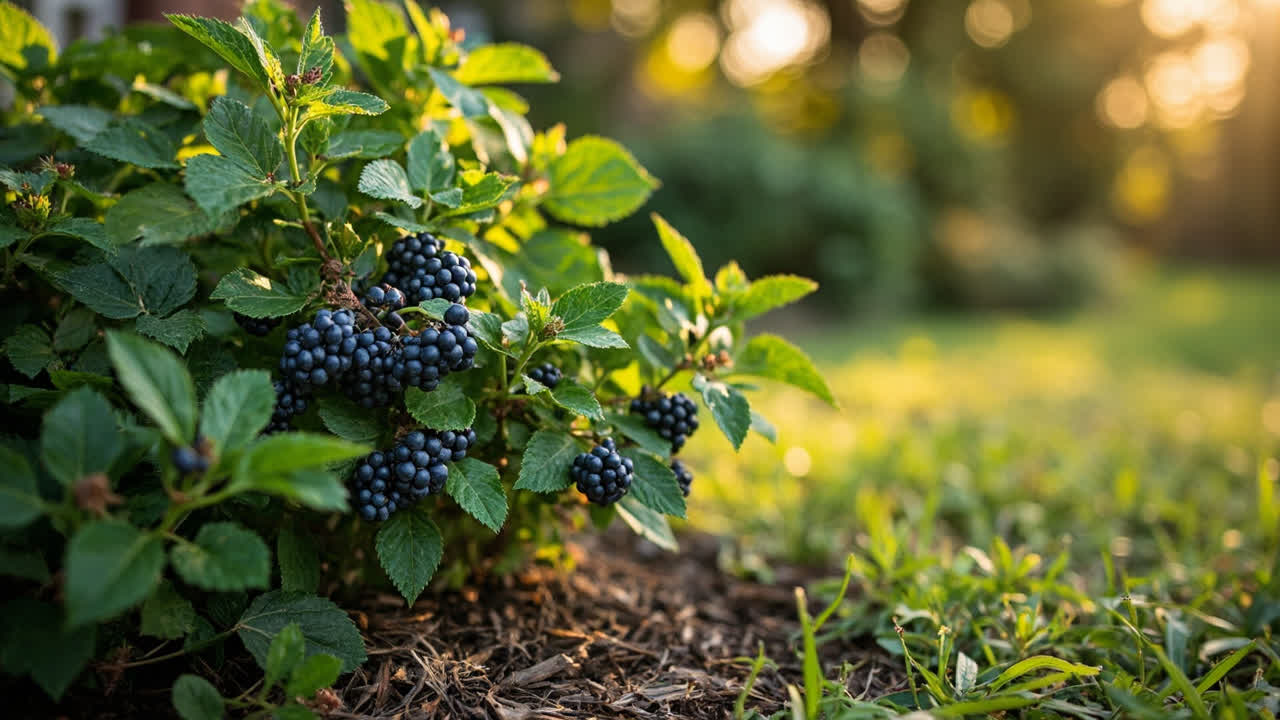
A blueberry bush that was planted correctly and maintained for three years produces three to seven pounds of berries per year — every year, for twenty years or more. That productivity depends almost entirely on one thing: whether the soil pH stays in the 4.5 to 5.5 range. Everything else in blueberry care — watering, fertilizing, pruning — is secondary to that.
This guide covers the maintenance tasks that keep a mature blueberry bush healthy and productive across all seasons. If you are looking for soil preparation and initial planting, see our guide to growing blueberries at home. If your bush is showing decline symptoms — yellow leaves, red leaves, stunted growth — see our save a dying blueberry plant guide for diagnostic steps.
Understanding the Blueberry Root System
Blueberry roots are unlike the root systems of most garden plants. They have no root hairs — the fine, absorptive structures that most plants use to take up water and nutrients — which makes them less efficient at accessing nutrients and more sensitive to both drought and waterlogging.
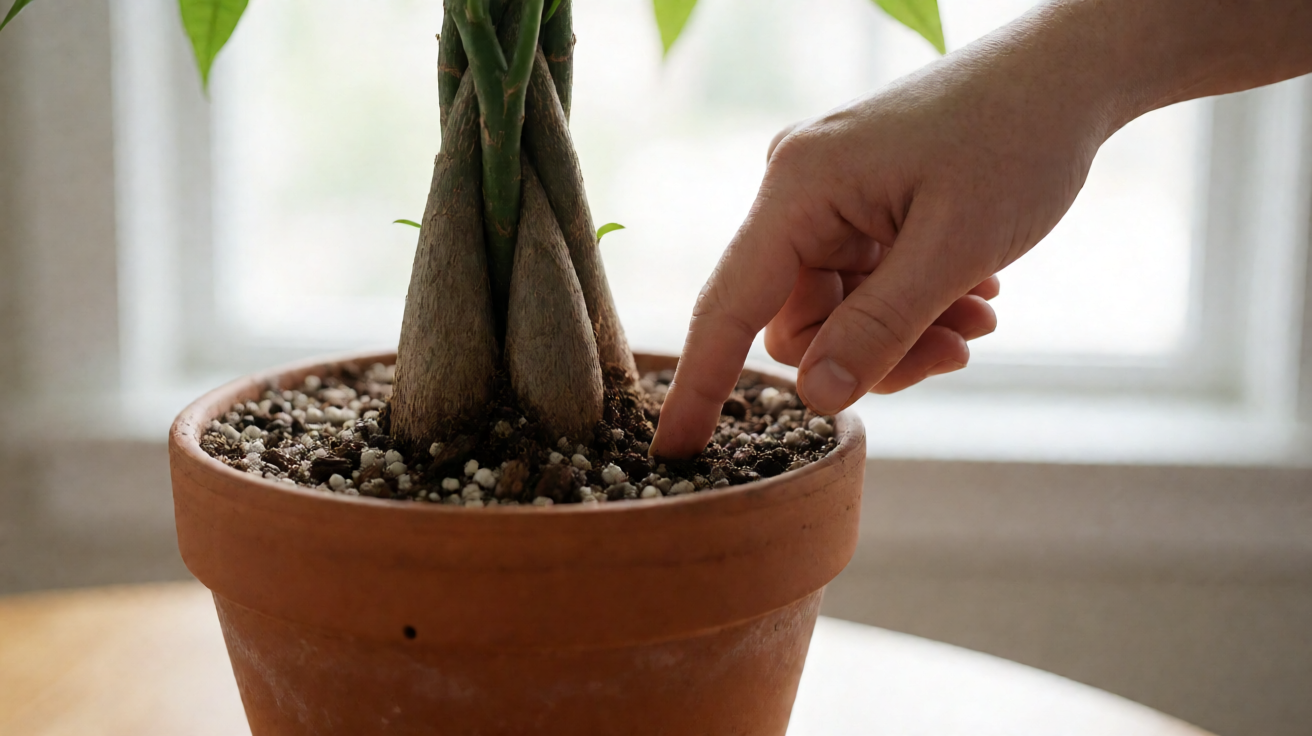
This matters because it shapes every other maintenance decision. Blueberry roots concentrate in the top twelve inches of soil, which means they dry out faster — the same root zone logic for blueberries that applies to container management as well. than the deep roots of a tree or tomato plant. It also means that any disturbance to the top few inches of soil — cultivation, hoeing, heavy mulching — damages more of the root system than it would in a plant with deeper roots.
Working around this means keeping the soil surface undisturbed except for light annual mulching, maintaining consistent moisture, and maintaining the acidic conditions the roots need to function.
—
Seasonal Maintenance Calendar
Late Winter (February to March in most temperate zones):
This is the time for pruning. Before new growth breaks in spring, the bush is dormant and the structure is visible. What you remove now is the previous season’s decision — remove dead wood, old canes that have passed their productive peak, and anything crowding the center.
Late winter is also the time to apply the first round of fertilizer. Use a ammonium sulfate-based fertilizer formulated for acid-loving plants, applied at the rate specified on the product label — typically one to two ounces per bush for mature plants. Scratch it lightly into the soil surface and water in.
Early Spring (March to April):
As new growth begins, check soil pH at the base of the plant with a meter. In container plants, this is critical — container pH can drift upward quickly. If pH is above 5.5, apply a light top-dressing of elemental sulfur (one to two teaspoons per mature bush) to bring it back down.
Monitor for pests as new growth emerges. Aphids and scale insects are the most common blueberry pests in home gardens. A strong spray of water knocks aphids off. Scale requires horticultural oil applied according to label instructions before the buds break.
Summer (June to August):
This is the harvest season and the season of highest water demand. Blueberries need one to two inches of water per week throughout fruit development and into harvest. Consistent moisture prevents the fruit from shriveling and helps the bush size up the current season’s crop while also developing next season’s flower buds.
Do not prune during summer except to remove broken or damaged wood. Summer pruning removes growth that is photosynthesizing and producing the carbohydrates the bush needs for winter hardiness and next year’s crop.
After Harvest (August to September):
Apply a light second fertilizer feeding after harvest to support the bush as it develops flower buds for the next season. Do not fertilize after September — late-season nitrogen encourages new growth that will not harden off before winter and will be damaged by frost.
Reduce watering as the bush slows growth in fall. The goal is to allow the bush to enter dormancy naturally as temperatures drop, not to push continued growth.
Fall (October to November):
Apply a fresh layer of acidic mulch — two to three inches of pine bark, pine needles, or wood chips — around the base of the bush. This moderates soil temperature, conserves moisture over winter, and helps maintain soil acidity as rain and snow push through the mulch.
In zones 6 and below, protect the bush from winter damage by harvesting late-planted fruit and stopping watering early enough that the wood hardens off before frost arrives. Container plants need protection described in the winter care section below.
—
Watering Correctly : The Foundation of Berry Quality
Inconsistent watering produces dry, shrunken berries even on an otherwise healthy bush. Blueberries develop and ripen over a two to four week period, and if the soil dries out during that window, the berries will be smaller than they should be.
Drip irrigation or soaker hoses deliver water exactly where the shallow blueberry roots work — in the top twelve inches of soil — without wetting the foliage. Consistent, shallow watering is covered in our vegetable watering guide., which reduces fungal disease pressure. Overhead sprinklers work but increase the risk of botrytis (gray mold) on developing and ripe fruit.
In container growing, check soil moisture every day during summer. Containers dry out faster than in-ground beds and the consequences of underwatering are more immediate. A deep daily watering in hot weather is better than a light watering twice a day.
—
Fertilizing : What and When
Blueberries need regular nitrogen, more than most garden plants. The preferred nitrogen source is ammonium sulfate, which has the added benefit of acidifying the soil as the nitrogen converts to a plant-available form.
Avoid these fertilizers on blueberries:
Calcium nitrate and other nitrate-based fertilizers raise soil pH, which directly counteracts the acidic conditions blueberry roots need. One application of calcium nitrate can raise soil pH measurably.
Manure and compost — especially mushroom compost and poultry manure — are too alkaline and too strong for blueberries. They can burn roots and further shift pH in the wrong direction.
Signs of nutrient deficiency:
Nitrogen deficiency shows as pale green or yellow leaves, particularly on older growth, with slow new cane growth. Correct with ammonium sulfate applied in early spring at the standard rate for your bush size.
Iron chlorosis shows as yellowing between green leaf veins while the veins themselves remain green. This is almost always a pH problem, not an iron deficiency — even if iron is present in the soil, blueberry roots cannot access it when pH is above 5.5. Correct soil pH before adding iron supplements.
Potassium deficiency shows as browning or scorching on leaf edges and poor fruit development. For more on nutrient deficiency diagnosis and correction, our blueberry soil pH and fertilization guide explains the full nutrient panel and testing methods.. Correct with potassium sulfate applied according to label directions.
—
Winter Care : Protecting the Bush and Container Roots
Blueberry bushes in the ground are cold-hardy to varying degrees depending on variety, but the root system is more vulnerable than the above-ground canes. In zones 5 and below, winter temperatures can damage the roots even if the above-ground canes survive — cold injury is one of the failure modes in the save a dying blueberry plant guide. even if the canes survive.
For in-ground bushes: The best protection is a thick layer of mulch (three to four inches of pine bark or straw) applied in late fall — matching the mulching principles for vegetables used across home gardens. before the ground freezes. This moderates soil temperature fluctuations and prevents the freeze-thaw cycles that heave roots out of the soil.
For container bushes in zones 6 and below: Move containers to an unheated but sheltered location — an unheated garage, a shed, or against a north-facing wall with mulch over the container soil. The container itself needs protection because the root ball will freeze solid in a container in zones 5 and below, and blueberry roots are not reliably cold-hardy enough to survive that without some protection.
Alternatively, bury containers in the garden bed for winter with the container rim slightly above the soil surface to prevent waterlogging. This provides the insulation of the surrounding soil without the root ball being exposed to air temperatures.
The maintenance tasks for blueberry care are not complicated — mostly annual pruning, two fertilizations, consistent watering, and pH monitoring. But they must be done at the right time and in the right sequence, especially the pruning and fertilizing timing. Getting those right keeps a bush productive for decades. Getting them wrong produces a declining, unproductive plant that frustrates the gardener who doesn’t know why.
Turn That PDF Into a Spreadsheet in Minutes
You've seen how to do it manually — now let the tool handle the heavy lifting. Upload your bank statement and get Excel, CSV, or QBO in a few clicks.
Try It Free