
A hydroponic nutrient schedule is the weekly feeding rhythm that keeps a reservoir in the right range between mixes. Without one, the strength drifts toward one extreme or the other inside 5 to 10 days, and the plants show it long before the grower realizes what happened. With one, the same reservoir runs cleanly for the full 7 to 14 day window most home systems target, and the leaves stay the color the seed packet promised.
The reason a schedule matters more than the nutrient brand is that every reservoir is a closed loop. The plant drinks water faster than it drinks salts, so the salt concentration climbs. The plant also leaks small amounts of sugar and root exudate, which feed bacteria and slightly shift pH. A weekly cadence catches both drifts before they pin the nutrient out of range. A schedule does not need to be fancy. It needs to be repeatable: same measurements, same day, same adjustments.
Why a nutrient schedule beats guessing
Guessing works for about a week. After that the reservoir tells on the gardener. Yellowing between the veins, brown leaf tips, leaf cupping, sudden fruit drop, slime in the tank, or a root zone that smells sour instead of clean. None of these symptoms mean the nutrient was wrong when it was mixed. They mean the mixture drifted after mixing, and nothing pulled it back. A nutrient schedule is the discipline that pulls it back.
The first symptom most growers notice is climbing electrical conductivity (EC). Plain water evaporates from the reservoir while salts stay behind, so the concentration creeps up 0.2 to 0.4 mS/cm over a week in a warm room. pH drifts in the same direction because the plant takes up nitrate faster than it takes up cations, which releases hydroxyl ions. Both drifts are normal. Both drifts are fixable. A schedule makes the fix a five-minute task instead of a detective story.
For most home systems running leafy greens, herbs, or strawberries, the schedule below covers everything a grower needs to keep the reservoir in range for the full week between full changes. Fruiting crops like tomatoes and peppers want a slightly different cadence, and that one is covered in the matching section further down. If a specific symptom already has the system off-course, the hydroponic problems and solutions guide walks through the diagnostic tree before any schedule adjustment.
The 4 numbers a weekly schedule must track
Every weekly schedule reduces to four measurements. The grower takes these in the same order, on the same day, every week. If the four numbers are in range, the reservoir is healthy. If any one of them is off, the schedule tells the grower exactly what to adjust.
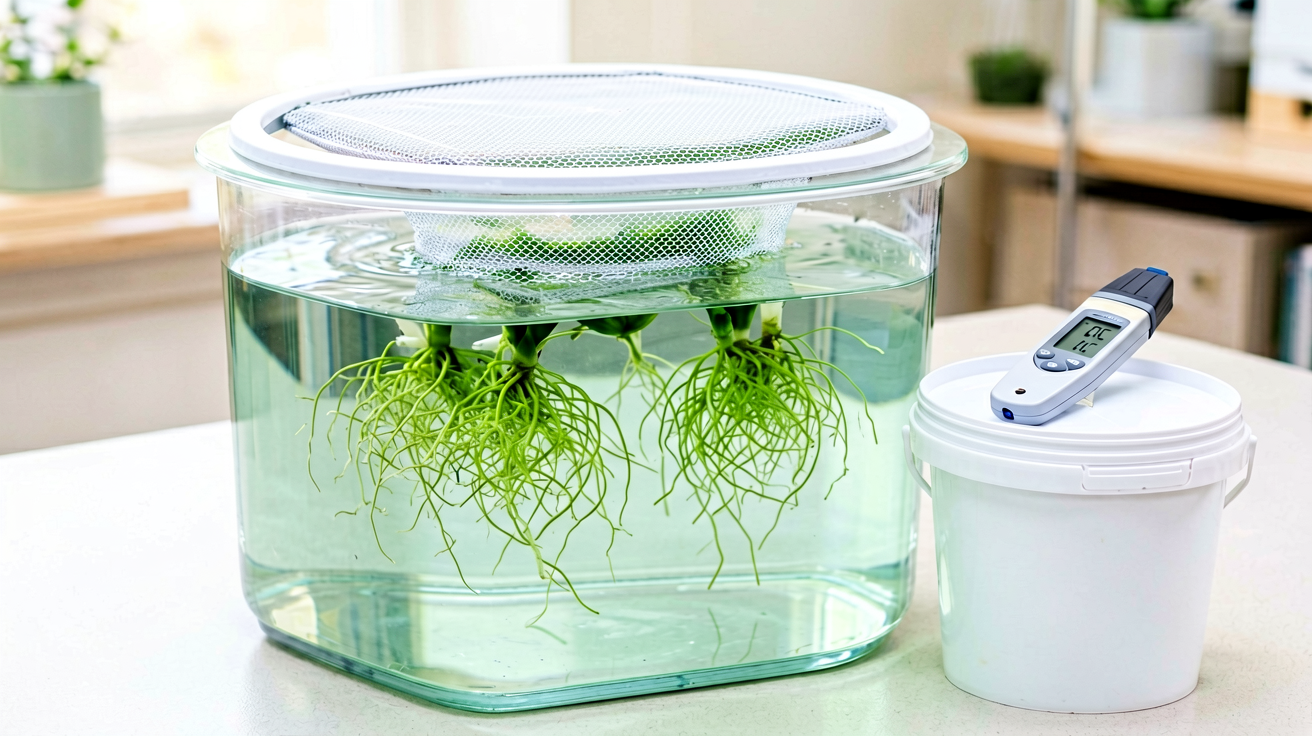
EC (electrical conductivity) is the salt concentration. It tells the grower how strong the nutrient solution is right now. Most leafy greens run at 1.0 to 1.6 mS/cm. Herbs like basil want the higher end. Fruiting crops want 1.8 to 2.4 mS/cm. If EC rises above the target band, plain water goes in to bring it back. If it falls, fresh mixed nutrient goes in. A pen-style EC meter is the cheapest tool that earns its cost in a single bad batch. For the full reading of how EC, ppm, and TDS relate, the EC meter explained guide walks through calibration, temperature compensation, and the two ppm scales.
pH is how acidic or basic the solution is. Hydroponic nutrients are designed to be absorbed most efficiently in a narrow window, generally 5.5 to 6.5. Outside that window the nutrients stay in solution but the plant cannot take them up, and the leaves show deficiencies even when the salt concentration is correct. pH tends to climb in the reservoir as the plant feeds, so most schedule adjustments are pH-down drops rather than pH-up.
PPM (parts per million) is the same measurement as EC, just expressed differently. Some meters report ppm, some report EC, and the conversion depends on the meter scale (500 or 700). Either number works as long as the grower learns the target band on their own meter and stays in it.
Reservoir temperature is the gatekeeper for the other three. Cold reservoirs below 60 F hold more dissolved oxygen but slow root growth. Warm reservoirs above 72 F lose oxygen and grow anaerobic bacteria, which is the path to pythium root rot. The ideal band is 65 to 70 F for most home systems, and the schedule below assumes the grower is holding that range. For systems running warmer than 72 F, the reservoir maintenance schedule covers chillers, ice bottles, and insulated totes as short-term fixes.
A weekly schedule that works in DWC, NFT, and Kratky
The same four measurements look slightly different in each system because the reservoir size, the flow rate, and the number of plants per gallon all change. Here is a 7-day cadence for the three most common home systems.
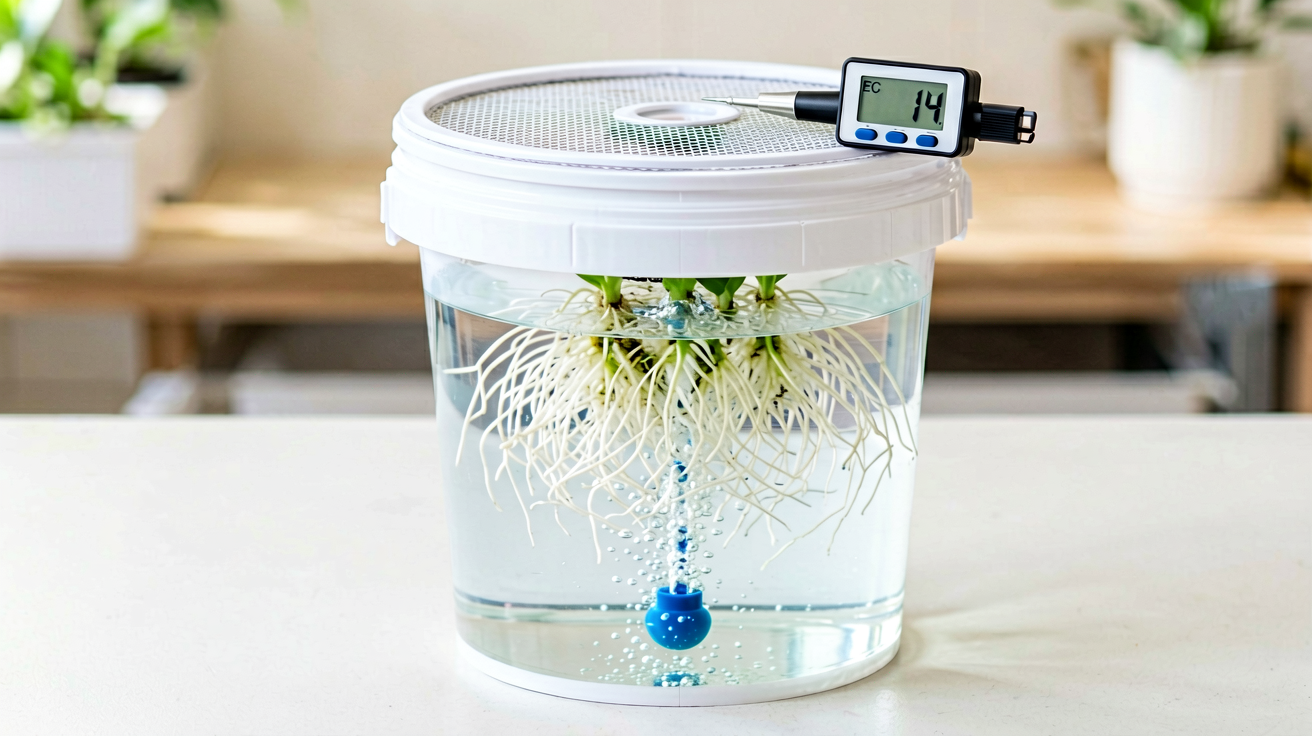
In a deep water culture (DWC) system, the reservoir is typically 5 to 10 gallons under a single lid. The grower mixes nutrients to the target EC, fills the reservoir, drops the lid, and runs the air pump 24/7. Day 1 the EC and pH are at the starting target. By day 4 or 5 the grower tops off with plain water to replace what the plants drank. By day 7 the grower drains the reservoir, rinses the roots with fresh water, and mixes a new batch at full strength. DWC plants grow fast, which means EC climbs quickly, so the mid-week top-off matters more than in the other systems.
In a nutrient film technique (NFT) system, the nutrient flows continuously as a thin film past bare roots in a channel. The reservoir is typically 20 to 40 gallons shared across many channels. The flow runs 24/7, and the schedule focuses on the bulk reservoir rather than per-channel adjustments. Day 1 the grower mixes and fills. Day 3 the grower measures EC and pH at the reservoir and adds water or nutrient to hold the target. Day 7 the grower replaces 25 to 50 percent of the reservoir volume with fresh mixed nutrient, which is enough to reset the salt balance without wasting the full batch. NFT reservoirs last longer than DWC because the volume-to-plant ratio is higher.
In a Kratky system, there is no pump. The plant lowers the water level as it drinks, and an air gap forms above the receding solution. The schedule is simpler because there is no recirculation. The grower mixes to target, fills the container once, and does not touch it until harvest. Kratky systems run best with a starter EC at the lower end of the crop band, because EC will rise over the life of the reservoir as the plant drinks water but not salts. If the Kratky container is small or the crop is long-cycle, the grower checks EC on day 10 and day 20 and tops off with plain water if EC climbs more than 0.3 mS/cm above the starting point. For the system-by-system comparison of how each setup handles reservoir life, the hydroponic systems explained hub pairs each method with its weekly maintenance rhythm.
The single mistake that breaks all three schedules is skipping the weekly drain. A reservoir that has been “topped off” for a month accumulates salts the plants cannot use and a bacterial population the chiller cannot control. The drain day is non-negotiable.
Matching nutrient strength to the crop you grow
Every crop reads the same four numbers but wants a different band. The schedule above is built around a mid-range target, and the breakdown below shows how to shift that target for the most common home crops. EC numbers assume mS/cm on a CF/EC scale (the cheap meters labeled “0 to 10” use the same scale).
Leafy greens like lettuce, arugula, bok choy, and most salad mixes want 0.8 to 1.2 mS/cm. Below that, growth is slow but leaves stay tender. Above that, leaf edges crisp and the taste turns bitter. The lower band also tolerates warmer reservoirs better because the plant drinks less.
Herbs like basil, mint, parsley, and cilantro want 1.0 to 1.6 mS/cm. Basil in particular wants the higher end. Below 1.0 mS/cm, basil grows long stems and pale leaves. Above 1.6 mS/cm, leaf tips brown. If the grower grows multiple herbs in one reservoir, set the target to 1.2 mS/cm and let the basil pull the others along.
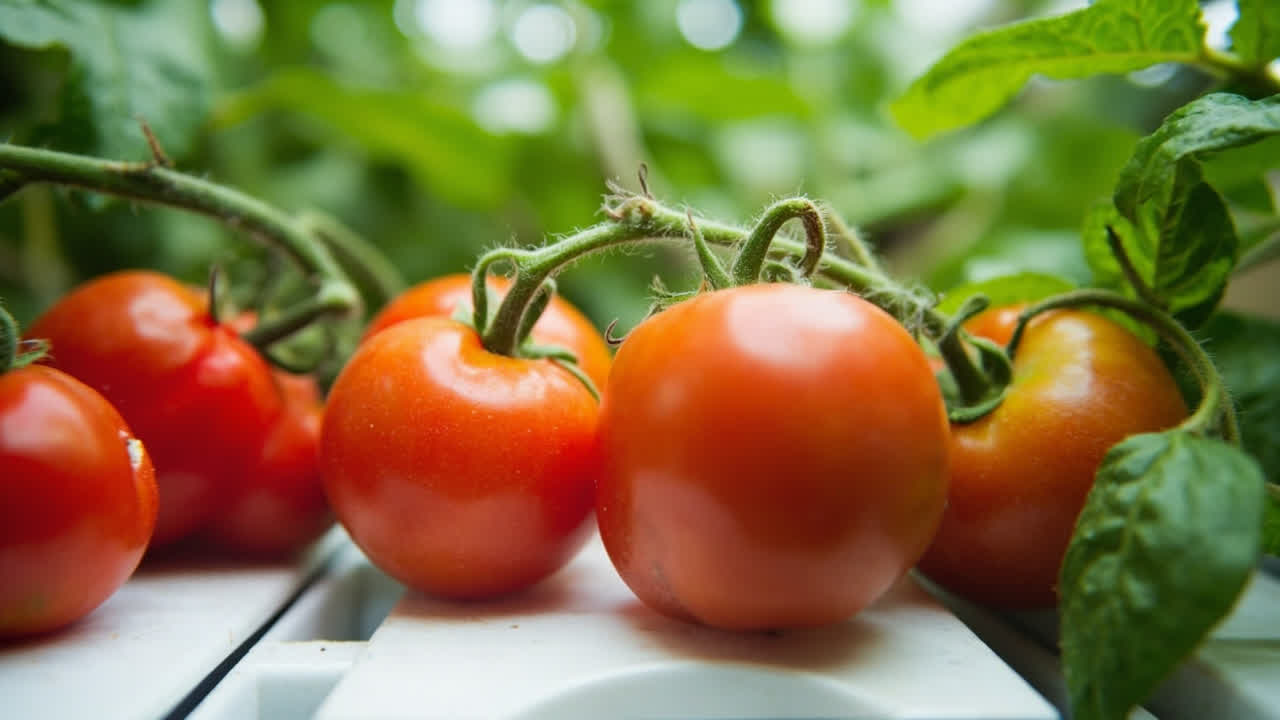
Fruiting crops like tomatoes, peppers, and cucumbers want 1.8 to 2.4 mS/cm. The higher strength drives flower set and fruit fill. Below 1.6 mS/cm the plants stay vegetative and drop blossoms. Above 2.6 mS/cm the leaf tips burn and calcium uptake locks out, which causes blossom end rot on the first fruit truss.
Strawberries want 1.4 to 1.8 mS/cm. They sit between herbs and fruiting crops, which is why growers often run a separate reservoir for strawberries rather than mixing them with tomatoes. Strawberries also want a cooler reservoir, ideally 60 to 65 F, which is a separate conversation from the nutrient strength. For the full crop-by-crop guide on which hydroponic edible runs cleanly in a small system, the best plants for hydroponics guide ranks the same EC bands above by harvest weight and palate.
For home growers who mix from bottled lines, the most recognized names in the trade are General Hydroponics Flora Series, Botanicare, and Advanced Nutrients. All three run a three-part base built around nitrogen, phosphorus, and potassium, and most users add a Cal-Mag supplement to handle calcium and magnesium in tap water that has chloramine or hard water mineral load. The exact NPK ratio shifts between the vegetative and bloom phases of fruiting crops, and the bottle label is the starting recipe rather than the final word.
Microgreens and sprouts need very little nutrient at all. Most growers run plain water with a pinch of nutrient for the first 7 to 10 days, and let the seed’s own reserves carry the crop to harvest. If the grower wants to add nutrient, set EC to 0.4 to 0.6 mS/cm and stop at the cotyledon stage.
How to adjust the schedule when plants tell you something
The schedule is a default. The leaves and the reservoir are the truth. Three feedback signals tell the grower when to override the schedule before the next drain day.
Yellow between the veins on new growth means the pH has drifted out of range and the plant cannot take up iron or manganese even though those nutrients are in the solution. Check pH immediately, adjust to 5.8 to 6.2 with pH-down, and recheck in 24 hours. Yellow on old growth first means nitrogen deficit, which is more common in heavy-feeding crops at the end of a 14-day reservoir cycle.
Leaf cupping and leaf tip burn means the EC has climbed too high. Plain water top-off drops EC back into range, and a partial drain the next scheduled day resets it. Persistent tip burn at full-strength nutrient usually means calcium or potassium running too hot relative to the others, which is a mixing problem rather than a schedule problem.
Sudden slime in the reservoir or a sour smell from the root zone means anaerobic bacteria have taken hold. The schedule did not fail here; the reservoir temperature climbed above 72 F and the dissolved oxygen dropped. The grower pulls the plants, rinses the roots in fresh water, scrubs the reservoir, refills with cold mixed nutrient, and adds an air stone if the system is DWC. The original schedule resumes after the reset.
Nutrient lockout is the silent version of this list, because the salts are in the solution but pH has shut the door. Lockout shows up faster than outright deficiency because it spikes in a single day after a pH swing, not a week after a weak mix. Catching pH first catches lockout first.
These three signals cover about 90 percent of what a home grower will see. The remaining 10 percent is covered in the hydroponic pest and disease control guide, but most readers will not need it if the weekly measurement is consistent.
Common schedule mistakes and how to recover
Three schedule-level errors cost more yield than any nutrient brand choice. Catching them early is the entire point of running a schedule.
Mistake one is mixing nutrients stronger than the crop wants because the seedling “looks hungry.” The first 7 to 10 days of a plant’s life, the cotyledons carry the seedling. Strong nutrient at this stage burns the root tips and the plant never catches up. Start at half the target band for seedlings, and only climb to full strength once true leaves are out and the roots are running white.
Mistake two is “topping off” instead of draining. Topping off raises the salt concentration because the plant drinks water but not salts. After three top-offs in a row, EC has climbed 0.6 to 0.9 mS/cm above the starting point, and the plants start showing stress. The fix is a partial drain on the next scheduled day, replacing 25 to 50 percent of the reservoir volume with fresh mixed nutrient at the target EC.
Mistake three is ignoring the air pump. In DWC and RDWC systems the air pump runs 24/7, and the moment it stops, the roots start suffocating. A simple failure alarm on the air pump costs less than a single crop loss and pays for itself the first time the power blips overnight. For systems without an air pump, the schedule has to include weekly reservoir swaps because there is no oxygen top-up between drains.
A nutrient schedule is not a calendar. It is a measurement routine. The calendar tells the grower when to check. The measurement tells the grower what to do. Once both are running on autopilot, the reservoir works.
For the chemistry behind each measurement, the hydroponics glossary covers EC, ppm, pH, and TDS in one place. For the systems the schedule applies to, the hydroponic systems explained hub walks through DWC, NFT, Kratky, and ebb and flow in more depth. For nutrient mixing ratios and brand-specific recipes, the hydroponics guide has the shortlist.
From PDF to Excel in one click
Forget retyping line by line. Upload any bank statement, get a spreadsheet you can actually use. Your files are never stored, and you can test the converter with 3 free conversions.
Try it free