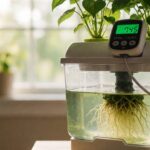

pH stands for “potential hydrogen,” and it measures how acidic or alkaline your nutrient solution is on a scale from 0 to 14.
A reading of 7.0 is neutral — exactly in the middle. Below 7.0, the solution becomes increasingly acidic; above 7.0, it turns increasingly alkaline.
The important thing to understand is that this scale is logarithmic, which means each whole number represents a tenfold change in acidity. A solution at pH 5.0 is not slightly more acidic than 6.0 — it is ten times more acidic.
Why does this matter for your pH levels in hydroponics? Because plants absorb nutrients most efficiently within a relatively narrow band.
When pH drifts outside that band, nutrients can become chemically locked out, even if they are present in abundance.
You can have a perfectly mixed hydroponic nutrient solution with ideal EC readings and still watch your plants struggle, wilt, or develop strange yellowing — and the culprit is almost always pH drift.
If you are new to hydroponics, this is the single most important variable to monitor after you have your hydroponic nutrient solution mixed correctly. pH affects everything.
The Optimal pH Range for Hydroponics
For most hydroponic crops, the sweet spot sits between 5.5 and 6.5. This slightly acidic range is where the majority of essential nutrients — nitrogen, phosphorus, potassium, calcium, magnesium, and trace elements like iron and manganese — remain available for plant uptake. Different crops have slightly different preferences, but that 5.5–6.5 window covers you for leafy greens, herbs, tomatoes, peppers, and most fruiting vegetables.
Here is a practical breakdown:
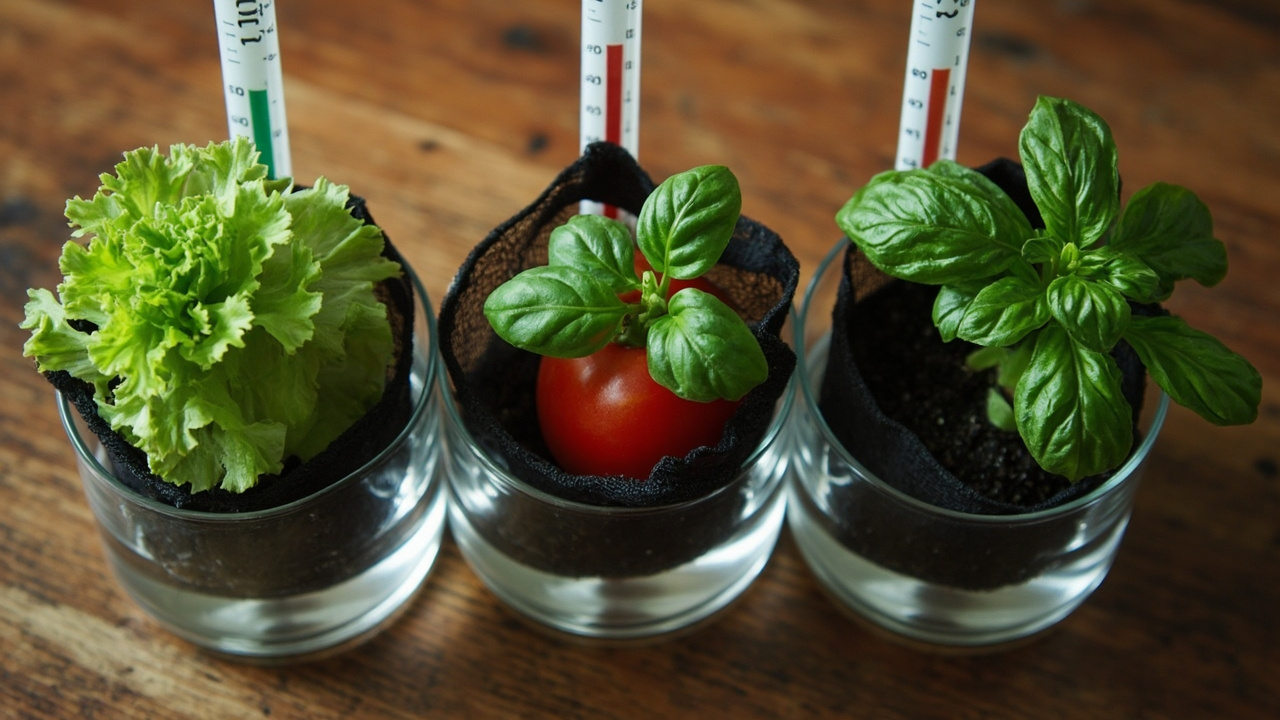
- Leafy greens (lettuce, spinach, basil): 5.5 – 6.0
- Fruiting vegetables (tomatoes, cucumbers, peppers): 5.8 – 6.5
- Strawberries: 5.5 – 6.5
- Herbs (mint, cilantro, parsley): 5.5 – 6.5
Stay within that range consistently and your plants will have the best possible access to the nutrients you are already feeding them. Drift outside it, and problems start immediately — often before you can see any visual symptoms.
pH Below 5.5: Toxicity and Root Damage Risks
When your reservoir pH drops below 5.5, things go wrong fast. At this acidity level, certain nutrients — particularly aluminum and manganese — become over-available to the point of toxicity. Plants exposed to highly acidic solutions often show symptoms that look deceptively like overwatering or fertilizer burn: stunted roots, scorched leaf edges, and purplish discoloration on stems.
The root zone is especially vulnerable. Extremely low pH can damage root membrane integrity, reducing the plant’s ability to absorb water and nutrients simultaneously. In severe cases, root tissue begins to break down, creating an open door for root rot pathogens like Pythium. If you are running a deep water culture system, this risk is amplified because roots are continuously immersed — any drop in pH has a direct and immediate effect on the entire root mass.
Recurring low pH readings often point to a setup problem: over-acidified source water, organic matter breaking down in the reservoir, or nutrient solutions that were mixed too aggressively. Test your source water before every reservoir change and you will catch most of these issues before they kill your plants.
pH Above 6.8: The Lockout Problem
On the other end of the spectrum, pH readings above 6.8 trigger a phenomenon called nutrient lockout. This is arguably more frustrating than acute acidity because plants look hungry — they show classic deficiency symptoms including yellowing leaves, stunted growth, and purple-tinged stems — yet no amount of additional fertilizer seems to help. You increase your EC, you add more nutrients, and nothing changes. That is because the nutrients are physically present but chemically unavailable.
The nutrients most commonly locked out at high pH are iron, manganese, zinc, and copper. These are critical micronutrients, and their deficiency shows up first on new growth — the youngest leaves and shoot tips. If you see interveinal chlorosis (yellowing between the veins) on new leaves while older foliage looks healthy, high pH lockout should be your first suspicion.
High pH is particularly common in NFT systems where water is flowing in a thin film over inert substrates. The constant aeration and evaporation can push pH upward gradually, and if you are not checking daily, you can lose a week or two before you realize your plants have been starving in plain sight.
The pH and EC Interaction: A Silent Starvation
Here is the part that trips up most beginning hydroponic growers: you can have perfect EC and completely wrong pH, and your plants will still starve. EC (Electrical Conductivity) measures the total concentration of dissolved salts in your nutrient solution. It tells you how much nutrition is present. pH tells you whether your plants can actually use it.
Think of it like a locked door. EC tells you there are people waiting outside. pH is the key. You can have a hundred people waiting (high EC) but if the door stays locked (wrong pH), nobody gets in. This is why seasoned hydroponic growers always check pH after adjusting EC — they know these two variables interact in ways that can undermine each other if managed in isolation.
A practical example: you mix a fresh reservoir with an EC of 1.8 mS/cm (perfect for lettuce). Your pH reads 7.4 (too high). You add a phosphorus-based pH reducer, bring the pH to 5.8, and recheck EC — it has dropped slightly because the acid diluted the nutrient concentration. You now top up with a small amount of nutrients to restore EC, and then recheck pH. It has drifted again. This small dance is normal, and it is why pH and EC should be checked together every time you touch your reservoir.
How to Measure pH Accurately
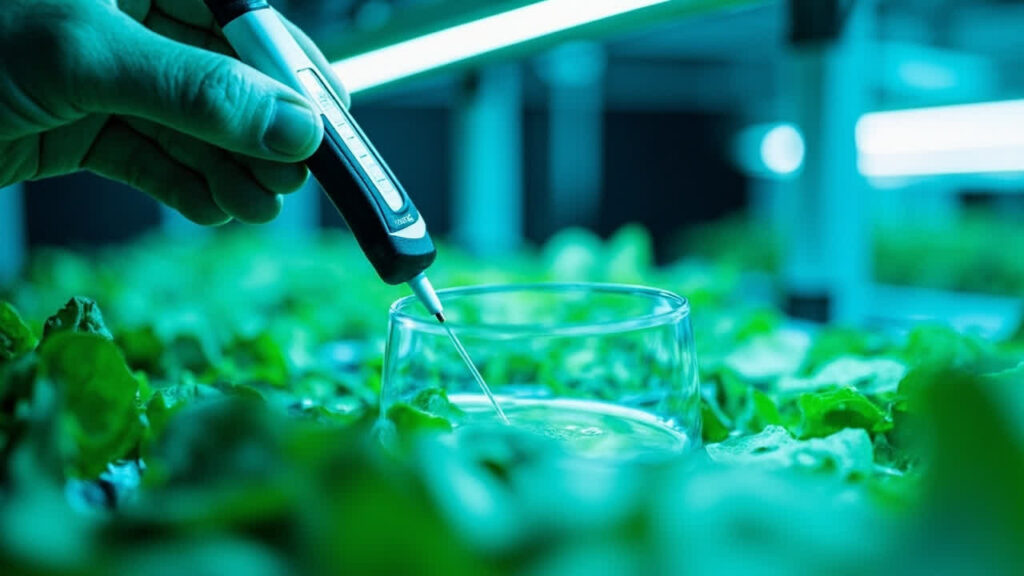
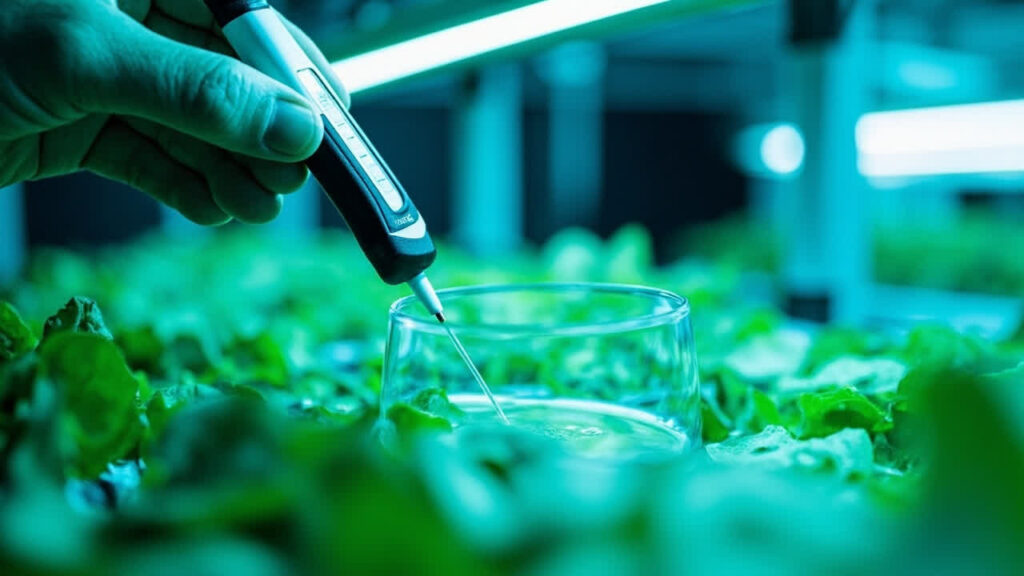
The standard tool for measuring pH in hydroponics is a pH pen — a digital handheld meter with a glass probe. You simply dip the probe into your nutrient solution and read the display. Good pH pens cost between $20 and $80 and are worth every cent. Cheap $10 pens have glass probes that dry out, drift rapidly, and give false readings that can cost you an entire crop.
Beyond having a quality meter, calibration is non-negotiable. pH probes are electrochemical sensors that drift over time. The rule of thumb is to calibrate before every major reservoir change, or at minimum once per week if you are running a continuous system. Calibration requires two buffer solutions: pH 4.0 (for the acidic end) and pH 7.0 (for neutral). Here is the process:
- Rinse the probe in clean water and pat dry — never rub the glass bulb.
- Submerge the probe in pH 7.0 buffer and allow it to stabilize (typically 30–60 seconds).
- Adjust the calibration dial or digital setting until the display reads exactly 7.0.
- Rinse again, pat dry, and repeat with pH 4.0 buffer.
- The display should read 4.0. If it does not, the probe may be worn and needs replacement.
Store your pH pen with the probe submerged in storage solution or clean buffer solution — never let it dry out. A dry probe is a ruined probe within days.
How to Raise and Lower pH in Your Reservoir
Adjusting pH is straightforward once you understand what you are working with. Two categories of products handle most hydroponic pH corrections: pH up and pH down solutions, available at any hydroponic supply store. The active ingredients vary, and using the right one matters.
To raise pH (too acidic):
- Potassium hydroxide (KOH) is the most common pH up agent. It is effective, stable, and raises pH predictably. Use in small increments — 1 ml at a time per gallon — and recheck after stirring.
- Sodium bicarbonate (baking soda) is a budget alternative and will raise pH, but it introduces sodium, which some growers prefer to avoid in sensitive crops. Use sparingly and only if potassium hydroxide is unavailable.
To lower pH (too alkaline):
- Phosphoric acid is the preferred choice. It lowers pH effectively, and the phosphorus it adds is actually beneficial for root development and flowering. Food-grade phosphoric acid is widely available and the safest choice for edible crops.
- Nitric acid is more aggressive and works faster but is also more hazardous to handle. It adds nitrogen, which can be useful in vegetative growth phases but becomes problematic during flowering. Use only if you are comfortable handling strong acids with appropriate PPE.
- Sulfuric acid is another option but less common in hydroponics due to its impact on sulfur levels and potential for corrosive damage to metal components in your system.
Always add pH adjusters to your reservoir after nutrients are fully mixed and dissolved. Adding acid directly to a concentrated nutrient solution can cause localized precipitation, where nutrients bind together and temporarily fall out of solution.
Do Different Hydroponic Systems Need Different pH?
The short answer is: not really — the optimal range stays the same. But the behavior of pH does vary between systems, and understanding those patterns makes management much easier.
In deep water culture systems, roots are submerged constantly. This means pH changes tend to be slower and more stable, but when drift does occur, it affects the entire root mass at once. Daily pH checks are still essential, but the corrective responses tend to last longer once adjusted.
In NFT systems, the thin film of nutrients flowing over the roots is more exposed to atmospheric carbon dioxide, which can gradually lower pH. NFT systems also have less buffering volume — a smaller reservoir feeds a potentially larger root mass, so pH can shift faster after each top-up. Check pH every 24 hours on active NFT runs.
In aeroponic systems, root exposure to air is at a maximum. This creates excellent oxygen availability but also means the root zone pH can shift rapidly due to CO₂ absorption and nutrient interactions at the root surface. Aeroponic growers often find that reservoir pH and root zone pH diverge more than in other systems — what reads in the bucket may not match what is happening at the spray nozzles. Monitoring both locations gives you a more accurate picture.
This brings us to one of the most commonly overlooked aspects of hydroponic pH management: reservoir pH versus root zone pH. Your reservoir reading is a snapshot of your bulk nutrient solution — important, but not the whole story. Root zone pH is what your plants actually experience, and in media-based systems (like those using clay pebbles or rock wool), it can differ meaningfully from the reservoir. If you are seeing unexplained deficiency symptoms despite good reservoir readings, test the pH of your growing medium directly by extracting a small amount of solution from the root zone with a syringe or wicking method.
pH: The Silent Killer in Your Hydroponic Garden
Experienced hydroponic growers will tell you: pH problems are the great imitators. The symptoms look like almost everything else. pH drift can mimic nitrogen deficiency (yellowing lower leaves), overwatering (wilting and drooping), potassium deficiency (scorched leaf edges), magnesium deficiency (interveinal chlorosis), and general root rot (brown, slimy roots).
This is precisely why pH is called the silent killer. Growers add more nutrients because their EC looks fine. They back off watering because the medium looks wet. They treat for fungal infection because the roots look brown. And all along, the real problem was a pH reading of 4.2 or 7.6 in the reservoir. The symptoms resolve only when the pH is corrected — not when the misdiagnosis is treated.
Building a simple habit — check pH every single time you open your reservoir, every single day — eliminates 90% of the “mysterious” problems that plague hydroponic growers. It takes thirty seconds. It costs less than a single failed crop. And it is the difference between a hydroponic garden that thrives and one that merely survives.
pH Levels in Hydroponics
If you are running hydroponic experiments at home and wondering whether your soil-growing friends face the same pH challenges — they do.
Soil pH for houseplants operates on the same principles and the same optimal range, even if the mechanisms differ slightly.
The fundamentals of pH management transfer across growing methods, and understanding them in hydroponics gives you a genuine edge in every type of cultivation.
Master pH levels in hydroponics, and everything else in hydroponics gets dramatically easier to manage.
Turn That PDF Into a Spreadsheet in Minutes
You've seen how to do it manually — now let the tool handle the heavy lifting. Upload your bank statement and get Excel, CSV, or QBO in a few clicks.
Try It Free