
A houseplant glossary is the page you bookmark on day one and return to whenever a care guide says “bright indirect light” or “etiolation” without explaining what those mean. This A-Z covers every term Aqualogi uses across all 54 houseplant clusters, so you can keep reading without bouncing to Google.
You are mid-research on an indoor houseplant guide right now. You hit a phrase that doesn’t belong to you yet. This page owns that term: defines it, ties it to what the reader actually does in practice, and hands off the how-to-execute to the right indoor houseplant care guide. No padding, no marketing, no encyclopedia crawl.
How to Use This Glossary
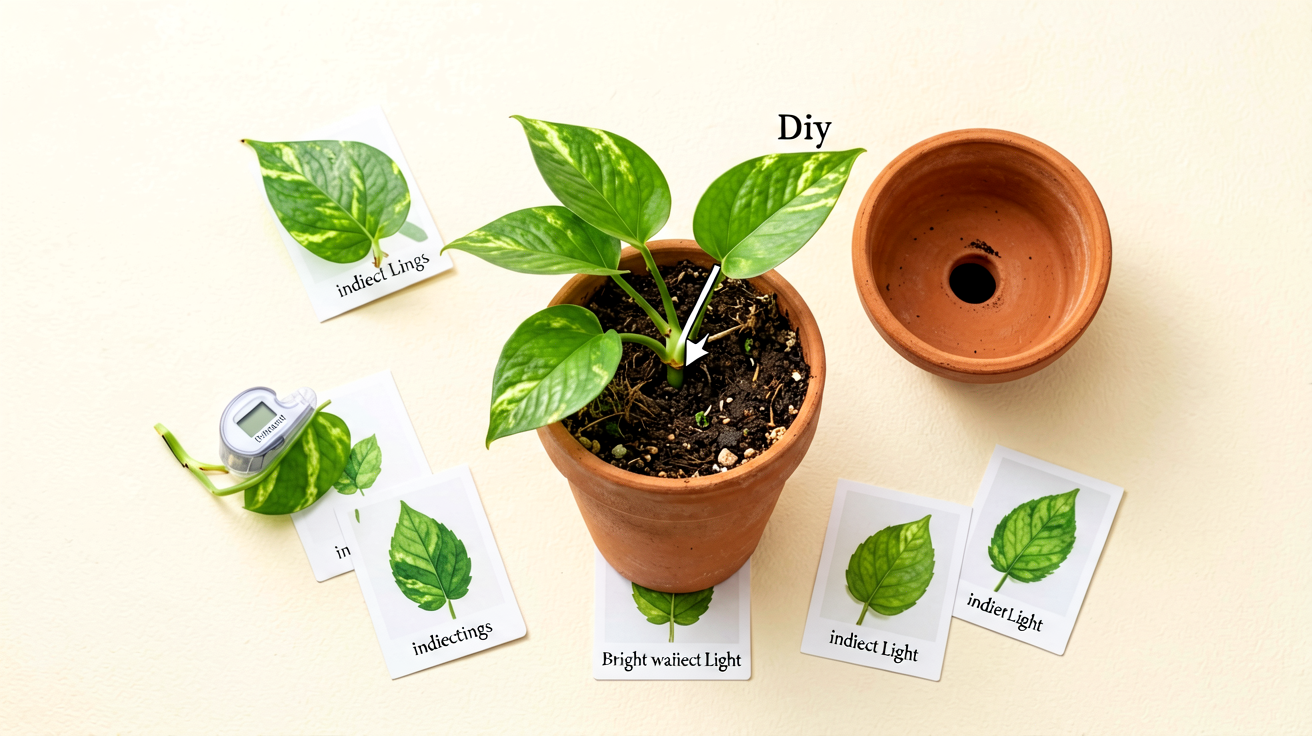
Skim to the category you need: anatomy, light, water and humidity, soil and fertilizer, pests and problems, or safety and selection. Each entry gives you the definition first, one sentence on why it matters in practice, and a link to the deep guide that owns the how-to. The figure between the light and water sections maps the most-searched terms to a single image so you can see them at a glance.
This glossary does not own watering schedules, light positioning, or pest treatment. Those live in the deep guides linked from each entry. It owns terminology and definitions only. If you want the action plan for “bright indirect light,” the indoor plant light requirements guide walks through window placement and grow-light setup. If you need a single hub that ties every Aqualogi houseplant care page together, start with the indoor houseplants hub.
Plant Anatomy & Growth Terms
Node. The bump on a stem where a leaf, root, or new shoot can grow. Every houseplant cutting that roots in water or soil does so from a node, which is why propagation guides point to it. For a step-by-step on taking and rooting cuttings, see the indoor houseplant care hub.
Internode. The smooth stem section between two nodes. Long internodes mean the plant stretched toward light; short internodes mean it grew under steady, adequate light. You will see this term on every Aqualogi propagation guide.
Crown. The base of the plant where stem meets root. In rosette plants (African violet, peace lily) the crown is the growth center; burying it too deep causes rot.
Growing tip (apical meristem). The very top of a stem where new leaves unfold. Pinching the growing tip forces the plant to send out lateral branches instead of one long vine.
Lateral branch. A side shoot that grows from a node when the growing tip is removed or the apical dominance breaks down. More lateral branches mean a fuller, bushier indoor houseplant.
Pinching. Removing the growing tip with your fingernails or clean snips to trigger lateral branching. Pinching is the cheapest way to make a pothos or philodendron look full instead of leggy.
Etiolation. Stretching caused by too little light. The stem gets long and pale, the internodes stretch, and new leaves come in small. Etiolation does not reverse, but new growth can return to normal once light improves.
Stretching. The visible symptom of etiolation. Long gaps between leaves on a stem that should be tight and bushy.
Leggy. The everyday word for a stretched plant with sparse foliage. Often caused by etiolation, sometimes by age. Pinching back to a node and adding light usually fixes it.
Light & Sunlight Terms
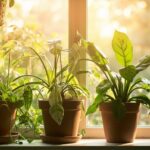
Bright indirect light. Light that pours into a room but never lands directly on the leaves. One to two meters back from an east-facing window, or near a south-facing window behind a sheer curtain. Bright indirect light is the standard target for most tropical foliage: pothos, philodendron, monstera, calathea, prayer plant, and most indoor houseplant favorites. For the full placement guide, see indoor plant light requirements.
Direct sun. Sunlight that hits the leaves without anything between them and the sky. Outdoor sun on a patio, or an unobstructed south-facing window at noon. Direct sun scorches the leaves of most houseplants within hours.
Low light. A room where you can read a book during the day without turning on a lamp, but the sun never directly enters. Hallways, interior rooms, north-facing windows in winter. Low light supports snake plant, ZZ plant, pothos, and a short list of others (see indoor plant light requirements for the full matchup.
Medium light. Light brighter than low light but dimmer than bright indirect. A north-facing window with open sky, or a few feet back from a small east window. Most flowering houseplants need at least medium light to set bud.
Foot-candles. The unit used to measure light intensity at plant level. One foot-candle equals the light from one candle at one foot. Bright indirect light runs roughly 100 to 400 foot-candles; direct sun runs 1,000+; low light sits under 50.
Grow light. A full-spectrum LED or fluorescent fixture used to supplement or replace sunlight indoors. Modern grow lights are rated by PAR (photosynthetically active radiation) and listed in foot-candles or PPFD.
East-facing window. Gets soft morning sun and bright indirect light for the rest of the day. The default “bright indirect” window for an indoor houseplant.
South-facing window. The brightest window in northern hemisphere homes. Direct sun at noon. Best for cacti, succulents, and sun-loving foliage; too intense for most tropicals unless sheer-curtained.
North-facing window. The dimmest window in northern hemisphere homes. Consistent indirect light, no direct sun. Suits low-light plants; struggles with bright-light species.
Filtered light. Light that has passed through a sheer curtain, a tree outside the window, or frosted glass. Functionally similar to bright indirect light for most houseplants.

Water & Humidity Terms
Watering schedule. A rough rhythm of when to water (every 7 to 14 days for most tropicals in active growth; less in winter), not a fixed date. For the full schedule logic, see the indoor plant watering schedule guide.
Dry between waterings. The rule that the top 2 to 3 centimeters of soil should feel dry before the next watering. Prevents root rot, the single most common cause of death for indoor houseplants.
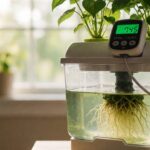
Soil moisture. The amount of water currently held in the potting mix. Test with a finger, a chopstick, or a moisture meter. Never on guesswork.
Drainage. The ability of water to flow through the soil and out of the pot. Without drainage, water sits in the root zone and the plant suffocates.
Drainage hole. The hole at the bottom of a pot that lets excess water escape. Every houseplant pot should have one. Cachepots without drainage holes work only if you remove the plant for watering and let it drain before returning.
Root rot. A fungal infection that turns healthy roots to brown mush. Caused by soil staying wet too long. The plant wilts even though the soil is wet. Recovery is possible if caught early (see how to save a dying plant.
Overwatering. Watering too often, or letting the soil stay wet. The symptom is root rot, drooping leaves, and yellowing lower foliage. The fix is drier soil and a better-draining mix.
Underwatering. Watering too little or letting the soil dry out completely for too long. The symptoms are crispy brown tips, curling leaves, and bone-dry soil pulling away from the pot edges.
Humidity. The amount of water vapor in the air. Most tropical houseplants prefer 50 to 60 percent relative humidity; average homes sit at 30 to 40 percent in winter. For the full setup guide, see the indoor plant humidity guide.
Relative humidity (RH). The percentage of moisture the air can hold at a given temperature. A hygrometer measures it. Tropical indoor houseplants want 50 percent and up; desert plants want under 30 percent.
Humidifier. An electric device that adds water vapor to the air. The most reliable way to raise humidity for an indoor houseplant, especially in winter. Cool-mist ultrasonic models are the common choice.
Pebble tray. A shallow tray of water filled with pebbles, with the pot sitting on top of the pebbles (not in the water). Boosts humidity a few percent right around the plant. Useful as a supplement, not a substitute for a humidifier.
Misting. Spraying a fine water mist onto the leaves. The humidity spike lasts minutes, not hours. Helpful for humidity-loving tropicals in dry homes but not a long-term solution.
Transpiration. The process by which a plant releases water vapor through its leaves. The faster the transpiration, the more water and humidity the plant needs. High transpiration also drives nutrient uptake from the roots.
Tap water. Municipal water straight from the faucet. Fine for most houseplants; problematic for sensitive species (calathea, prayer plant, spider plant) because of chlorine and fluoride buildup over months.
Filtered water. Water passed through a carbon filter (Pitcher Brita, under-sink filter, or zero-water pitcher). Removes chlorine and most sediments; fluoride depends on the filter.
Rainwater. Naturally soft water with no chlorine or fluoride. Excellent for houseplants. Collect from a clean outdoor barrel during rain.
Distilled water. Water with minerals removed. Use only for sensitive species; lacks calcium and magnesium that most plants need in trace amounts.
Fluoride. A chemical added to many municipal water supplies. Accumulates in leaf tips and causes brown, crispy edges on spider plants, prayer plants, and dracaena over time.
Chlorine. A disinfectant in tap water. Volatilizes if you let the water sit out overnight; most houseplants tolerate it. Sensitive species prefer filtered or rainwater.
Soil, Pot & Fertilizer Terms
Indoor potting mix. A soilless blend of peat or coco coir, perlite, and vermiculite, sometimes with pine bark. Lighter and better-draining than garden soil. Garden soil compacts in pots and kills indoor houseplant roots.
Well-draining soil. A mix that lets excess water flow out fast while holding enough moisture for roots. The defining trait of any good houseplant mix.
Peat. Decomposed sphagnum moss. The base of most indoor potting mixes. Holds moisture but is acidic, so many mixes blend it with lime.
Perlite. The white, porous volcanic rock you see in potting mixes. Lightens the mix and improves drainage. Essential for indoor houseplant health.
Vermiculite. A silvery mineral that holds water and nutrients. Holds more moisture than perlite; used in seed-starting and mixes for thirsty plants.
Cachepot. A decorative outer pot without drainage. The plant sits in its own nursery pot inside the cachepot. Useful for style; never water a plant in a cachepot without removing it first.
Terracotta. Unglazed clay. Porous, so it wicks moisture out of the soil. Best for indoor houseplant species that hate wet feet (snake plant, ZZ, succulents). Risky for moisture-lovers.
Root-bound. When the roots have wrapped around the inside of the pot so many times there is little soil left. Common in plants that have not been repotted for 2+ years. Fix by moving up one pot size and teasing the roots apart.
Pot-bound. Same as root-bound. The plant has run out of room; water runs straight through without absorbing.
Four-inch pot, six-inch pot. Standard nursery pot sizes by inner diameter. The rule of thumb for repotting is to go up one size (4 to 6, 6 to 8): never jump two sizes at once.
NPK. The three numbers on a fertilizer label, in order: nitrogen (N), phosphorus (P), potassium (K). A 10-10-10 is balanced; a 3-1-2 is foliage-leaning (more leaf growth, less bloom push).
Nitrogen. Drives leaf and stem growth. The N in NPK. Deficiency shows as pale, slow-growing foliage.
Phosphorus. Drives root development and bloom. The P in NPK. Deficiency shows as dull leaves and no flowers on flowering species.
Potassium. Drives overall plant vigor and disease resistance. The K in NPK. Deficiency shows as weak stems and scorched leaf edges.
Cal-Mag. A calcium and magnesium supplement. Used when water is RO, distilled, or very soft. Plants need these trace minerals and rainwater alone may not provide enough.
Slow release. A fertilizer coated to release nutrients over weeks or months. Lower maintenance than liquid feeding; less control over timing.
Fertilizer. Plant food. For most indoor houseplants, feed at half strength every 2 to 4 weeks during active growth (spring and summer); stop in winter.
Nutrient deficiency. When a plant lacks one or more essential nutrients. Yellow leaves with green veins (chlorosis) often signal iron or magnesium deficiency; overall pale color signals nitrogen deficiency.
Chlorosis. Yellowing of leaf tissue while the veins stay green. Usually iron, manganese, or magnesium deficiency. Sometimes a root issue (compaction, rot). See indoor plant leaves turning yellow for the diagnostic.
Pest & Problem Terms
Mealybug. A small, soft, cottony white pest that clusters in leaf joints and undersides. Slow-moving but destructive. Wipe off with a cotton swab dipped in 70 percent rubbing alcohol, then treat weekly with insecticidal soap until gone. Full identification guide at indoor plant pests identification.
Spider mite. A tiny, near-invisible pest that makes fine webbing on the underside of leaves and causes stippled, dusty-looking foliage. Thrives in dry indoor air. Boost humidity and treat with insecticidal soap or neem oil.
Fungus gnat. Small black flies that hover around the soil and lay eggs in moist potting mix. The larvae feed on fungi and tender roots. The fix is letting the top 2 centimeters of soil dry between waterings and using sticky traps for adults.
Aphid. A small, soft, pear-shaped pest that clusters on new growth. Green, black, or pink depending on species. Knock off with water and treat with insecticidal soap.
Scale. A small, hard, immobile bump on stems or leaves. Looks like part of the plant. Wipe off with a cotton swab dipped in rubbing alcohol and treat weekly.
Whitefly. Tiny white moth-like insects that fly up in a cloud when the plant is disturbed. Common on indoor houseplant yellowing foliage. Treat with insecticidal soap and sticky traps.
Insecticidal soap. A potassium-salt-based spray that suffocates soft-bodied pests. Safe on most houseplants when used as directed. Avoid spraying in direct sun or on heat-stressed foliage.
Neem oil. A plant-based oil that disrupts pest feeding and reproduction. Smells strong; effective on mealybugs, spider mites, aphids, and scale. Apply in the evening to avoid leaf burn.
Yellow leaves. Older lower leaves yellowing on a healthy plant is normal aging. Yellow leaves on new growth, with green veins, signals chlorosis. Pattern-matched yellowing across the whole plant often signals watering problems. See indoor plant leaves turning yellow.
Leaf drop. Sudden loss of leaves, usually triggered by a shock: change in light, a cold draft, a missed watering cycle, or repotting. Most indoor houseplants recover within weeks if the underlying issue is fixed.
Brown tips. Crispy brown edges on leaf tips. The three common causes are low humidity, mineral buildup from tap water, and fertilizer burn. Each has a different fix.
Leaf curl. Leaves curling inward or downward. Most often underwatering, low humidity, or a draft. Sometimes pest damage from aphids on the underside.
Crispy edges. Same root cause as brown tips: dry air, mineral buildup, or fertilizer burn. See indoor plant leaves turning yellow for matching fixes.
Leaf edges. The outer margin of a leaf, where the first damage usually shows. Brown, crispy, or curling edges are how an indoor houseplant tells you something is off in its environment before the whole leaf is lost.
Safety, Selection & Style Terms
Pet-safe. A label that means a plant is non-toxic to cats and dogs if chewed or eaten. The single source of truth for pet-safe status is the ASPCA toxic and non-toxic plants list. Never trust an unsourced “pet-safe” claim without checking ASPCA directly.
Toxic. A label that means a plant contains compounds that can irritate or harm pets or humans if ingested. Severity varies from mild mouth irritation (pothos, philodendron) to organ damage (lilies in cats). Cross-check every toxic claim against ASPCA before recommending.
ASPCA. The American Society for the Prevention of Cruelty to Animals. Their toxic and non-toxic plants database is the standard reference for pet-safe indoor houseplant claims. Every Aqualogi pet-safe reference links back to ASPCA.
Cats. Common indoor houseplant grazers. Chewing leaves is part of normal feline behavior. Pet-safe plant selection matters most for cat households.
Dogs. Common indoor houseplant grazers, especially puppies. Same pet-safe logic as cats: check ASPCA for every plant before bringing it home.
Non-toxic houseplants. Plants confirmed safe by ASPCA for cats and dogs. Examples include spider plant, Boston fern, parlor palm, calathea, prayer plant, African violet, peperomia, and most orchids. Always verify each species on ASPCA, because “non-toxic” varies by exact species.
Low-maintenance. A label for indoor houseplants that forgive irregular watering, low humidity, and average home light. Snake plant, ZZ plant, pothos, and cast iron plant are the textbook low-maintenance picks.
Beginner houseplant. A plant that thrives with basic care and recovers from beginner mistakes (missed watering, low light, dry air). Pothos, snake plant, spider plant, ZZ plant, and peace lily are the common beginner picks.
Easy houseplant. Same general meaning as beginner houseplant: forgiving, low-demand, and widely available.
Indestructible. Marketing label, usually for cast iron plant or ZZ plant. Accurate in practice: both survive months of neglect, low light, and inconsistent watering.
Forgiving. A plant that bounces back from mistakes. The opposite of “fussy.” Most beginner houseplant picks are forgiving because they tolerate a wide range of conditions.
Office desk. The standard low-to-medium light, dry-air environment. Plants that thrive on office desks usually tolerate fluorescent light and inconsistent watering. Pothos, ZZ plant, snake plant, and peace lily are the canonical office desk indoor houseplant picks (see the umbrella hub at indoor houseplants guide for the full list.
Foliage plant. A plant grown for leaves, not flowers. The category that covers most tropical indoor houseplants: pothos, philodendron, monstera, calathea, prayer plant, ZZ plant, snake plant.
Tropical foliage. A foliage plant from a tropical origin, used to warm temperatures, indirect light, and steady humidity. The majority of indoor houseplants fall into this category.
Flowering houseplant. An indoor houseplant grown for blooms. African violet, peace lily, anthurium, begonia, and orchid are the common picks. Usually need brighter light than foliage plants.
Hanging basket. A pot suspended from a ceiling hook or wall bracket. Suited to trailing indoor houseplants like pothos, philodendron, string of pearls, and spider plant. For plant-specific terminology on those, see the spider plant glossary and the prayer plant glossary), sister glossaries that go deeper on individual species.
If your indoor houseplant is already showing the symptoms covered above, the next page is how to save a dying plant. Bookmark this glossary. Every Aqualogi care guide links back to the terms defined here.
From PDF to Excel in one click
Forget retyping line by line. Upload any bank statement, get a spreadsheet you can actually use. Your files are never stored, and you can test the converter with 3 free conversions.
Try it free