Bird of Paradise gets a reputation as an outdoor plant — and with good reason. In warm climates, Strelitzia is a landscape staple. But indoors, in a container, given the right conditions, it is an entirely viable houseplant. The key word is right. What makes Bird of Paradise frustrating in a living room is the same thing that makes it spectacular when it works: it has specific environmental needs, and those needs do not match a typical heated, air-conditioned, centrally lit home without some deliberate adjustments.
The three variables that matter most for indoor Strelitzia are light, humidity, and the seasonal rhythm. Everything else — watering, temperature, feeding — follows from those three. Get the light right, manage the humidity actively, and adjust care seasonally, and a healthy Bird of Paradise in a decent-sized container can live and look good indoors for a decade or more. Get them wrong and you will spend years watching it slowly deteriorate while wondering what went wrong.
This page is the indoor-specific companion to the main Bird of Paradise care guide. That pillar covers the general care fundamentals. Here, we focus on the adjustments that make Strelitzia work specifically inside a home — window placement, supplemental lighting, humidity solutions, seasonal transitions, and the indoor-specific troubleshooting patterns.
Can Bird of Paradise (Strelitzia) Grow Indoors?
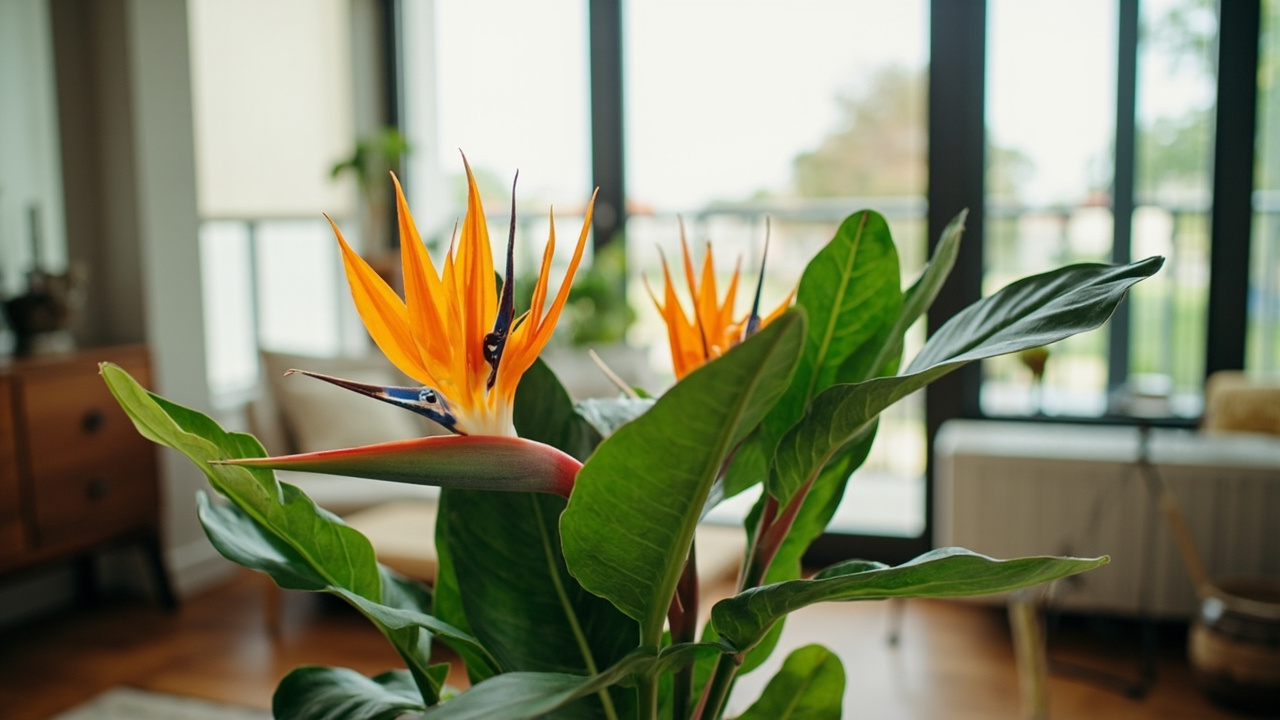
Yes — Bird of Paradise can grow indoors, and some specimens are genuinely impressive as houseplants. The honest ceiling, however, matters: most indoor Strelitzia will reach 6 to 8 feet at maturity in a container, which is a substantial plant. S. reginae is the more manageable indoor option at 3 to 6 feet. S. nicolai will push toward the ceiling faster and needs more light to maintain its scale without becoming leggy.
The bloom question is where expectations need resetting. Outdoors in full sun, a mature Strelitzia — generally 4 to 5 years old or older — will flower reliably once or twice a year. Indoors, flowering is the exception rather than the rule without dedicated supplemental lighting. The majority of indoor Bird of Paradise owners will enjoy the foliage — which is spectacular on its own — without ever seeing the crane-like flowers. If bloom matters to you, plan for a grow light setup specifically designed to trigger flowering, not just to keep the plant alive.
Light Indoors: Window Placement and Supplemental Grow Lights
Light is the first and most critical variable. Strelitzia needs a lot of it — more than most indoor spaces naturally provide. The rule is simple: the best indoor spot for Bird of Paradise is the room with the most natural light, as close to the window as possible, with no obstructions blocking the light path.
A south-facing window is ideal. In a south exposure, a Bird of Paradise within 2 to 3 feet of the glass can receive enough photons to grow actively and maintain deep green foliage colour. An east or west-facing window can work for S. reginae if the plant is within 2 feet of the glass. North-facing windows almost never provide enough light for healthy Strelitzia growth — the plant will survive but it will not thrive, and new leaves will be smaller and paler than those they replace.
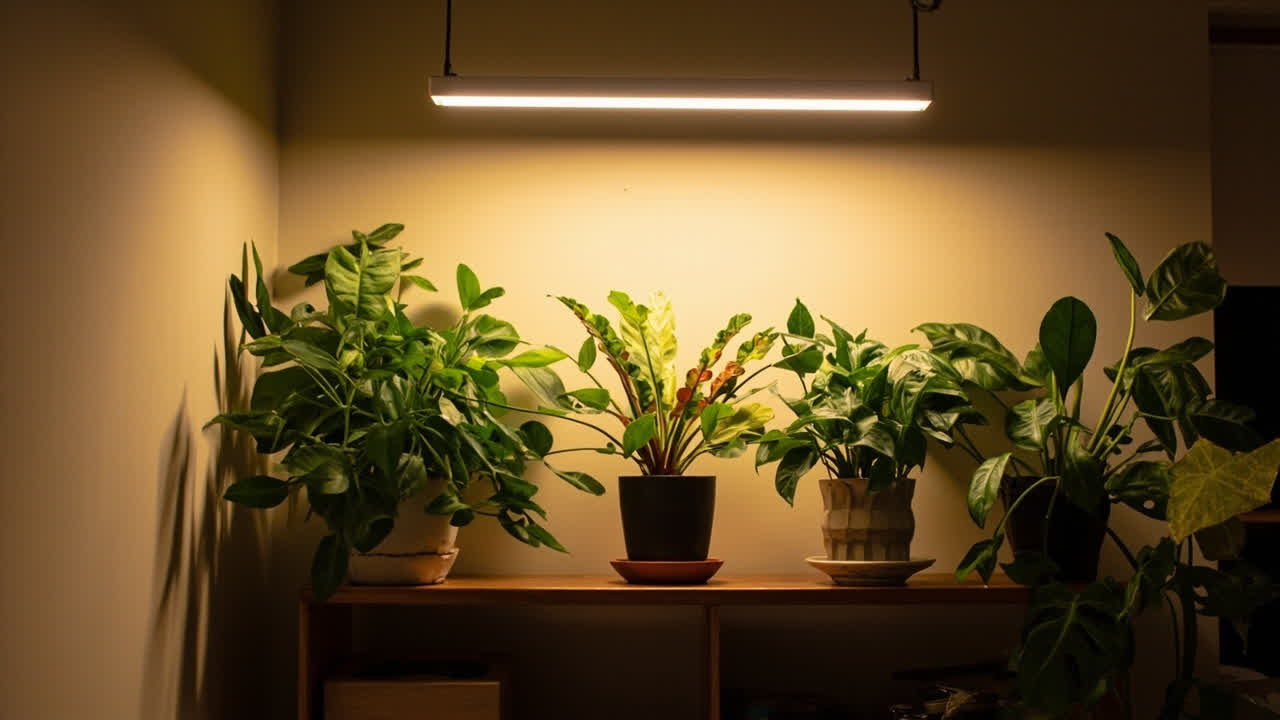
The reality for most homes is that natural window light alone is insufficient for a healthy indoor Bird of Paradise year-round, particularly in winter when daylight hours drop and the sun’s angle shifts. This is where supplemental grow lights become essential rather than optional. A full-spectrum LED grow light in the 4000 to 6500K colour temperature range, positioned 12 to 24 inches above the foliage and run for 10 to 12 hours a day, can replicate enough of the sun’s photon density to support active growth and maintain foliage quality. Clip-on grow lights work well for a single plant; for larger specimens, a pendant-style LED panel covering a broader area is more effective. The cost of a functional LED grow light setup is now under $50, and the difference it makes to Strelitzia health indoors is substantial.
Humidity Management Indoors
Indoor air is almost always drier than what Strelitzia wants. In summer, with windows open and ambient moisture, the gap is manageable. In winter, with central heating running, it is the primary source of the leaf splitting and brown edge problems that indoor Bird of Paradise owners report most.
The target is 50% to 65% relative humidity around the plant. Most homes sit between 20% and 40% in winter. That gap is real and it matters.
The solutions, ranked by effectiveness:
- Humidifier: The most effective option. A small cool-mist humidifier rated for the room size — look for at least 1 gallon per day output for a bedroom or small living room — running consistently near the plant delivers meaningful, measurable humidity. Set it on a hygrometer-triggered outlet if possible to maintain a consistent level. A humidifier alone can cut leaf splitting by half within a few weeks.
- Pebble tray: A saucer filled with gravel and water, with the pot sitting on the gravel above the waterline. This creates a localised humidity zone immediately around the plant. The effect is modest — roughly a 5% to 10% relative humidity increase directly above the tray — but it is continuous, requires no electricity, and is meaningful for plants near windows where evaporative loss is higher.
- Plant grouping: Plants transpire collectively and create a shared humid microclimate. Grouping your Bird of Paradise with other tropicals amplifies the effect of any one humidifier or pebble tray. This is the lowest-cost option but requires committed space.
- Regular misting: Misting the leaves raises humidity momentarily but the effect lasts 15 to 30 minutes before the water evaporates. It does not meaningfully affect ambient humidity and can encourage fungal problems if water sits on leaves in low-light conditions. Not recommended as a primary strategy.
One honest trade-off: if your home air is very dry — particularly in winter in cold climates with forced-air heating — some degree of leaf splitting on your Bird of Paradise is likely regardless of your humidity management. You are reducing the severity, not eliminating it. Focus on getting new leaves to split less; accept that some older leaves may show wear.
Temperature and Air Circulation
Indoor Strelitzia is comfortable in the same temperature range as most people: 65°F to 85°F (18°C to 29°C). That is the practical sweet spot. The issues arise at the edges: temperatures consistently below 60°F (15°C) slow growth noticeably, and anything approaching 50°F (10°C) risks cold damage.
The indoor-specific dangers are cold exterior walls and air-conditioning drafts. A Bird of Paradise placed against a north-facing exterior wall in an old building in winter is sitting in a cold zone that may be 5°F to 10°F cooler than the ambient room temperature — and cooler at night still. Move it 2 to 3 feet away from exterior walls, especially if the wall is uninsulated. Similarly, AC vents pointing directly at the foliage will cause localised cold stress that shows as stunted new growth and brown leaf tips on the side facing the vent.
Air circulation is the underrated variable. Indoor air is often stagnant, and stagnant conditions in the presence of high humidity create an environment where fungal spores can establish on leaf surfaces. A ceiling fan running on low periodic oscillation, or a small fan placed 3 to 4 feet from the plant and pointed to create gentle air movement across the foliage, reduces fungal risk without creating the draft problems that a direct blast would cause. This is especially worth implementing if you live in a humid climate or run a humidifier near the plant consistently.
Seasonal Indoor Care: Summer vs Winter
Indoor Strelitzia still responds to seasonal cues — primarily light and temperature — even inside a climate-controlled home. The care rhythm shifts noticeably between the two seasons.
In summer (roughly April through September in the northern hemisphere): increase watering frequency as growth accelerates. A healthy Bird of Paradise in active growth can put out a new leaf every 4 to 6 weeks and will drink more accordingly. Check the soil every 5 to 7 days and water when the top 2 inches are dry. If you have a balcony, terrace, or shaded garden area, moving the plant outside for the summer months is one of the best things you can do for it — just introduce it to direct sun gradually to avoid leaf scorch.
In winter: the plant’s growth pace slows as light levels drop, even in a well-lit room. Reduce watering frequency accordingly — stretching to every 10 to 14 days is typical. This is also when indoor humidity crashes most severely due to central heating, which is when the humidifier becomes critical rather than optional. If you are running grow lights, extend their runtime slightly in winter to compensate for the shorter photoperiod — 12 hours rather than 10 is a reasonable target. Fertilizing should be reduced or stopped entirely from October through February; feeding a plant in low-light winter dormancy leads to salt build-up and root stress.
The other winter dynamic: doors and windows open and close more frequently as people come and go, creating short sharp cold drafts. Be conscious of where your Bird of Paradise sits relative to frequently opened doors in cold weather.
Troubleshooting Indoor Bird of Paradise Problems
Most indoor Bird of Paradise problems cluster into four patterns. Here is how to identify and address each.
Leaf splitting from dry indoor air: The most common complaint and the most expected. Low humidity causes leaf edges to lose moisture faster than the blade can replace it, and the leaf tears along its natural fracture lines. Increase ambient humidity with a humidifier. Accept that some splitting on older leaves is normal; new leaves produced in higher humidity will split less or not at all.
Slow or stalled growth: Almost always a light issue. Insufficient photons are the primary growth limiter for indoor Strelitzia. If the plant has not produced a new leaf in 2 to 3 months during the growing season, the light is inadequate. Add or upgrade grow lights before adjusting water or fertilizer — those are not the limiting factor here.
Yellowing leaves: One or two older leaves yellowing from the bottom is normal — the plant is shedding old growth. Widespread or rapid yellowing usually indicates overwatering, root rot from chronically wet soil, or cold stress from a draft or exterior wall chill. Check the root ball if the pot feels heavy despite the surface being dry — root rot makes soil repel water rather than absorb it.
Brown leaf tips and edges: Typically caused by low humidity, inconsistent watering, fertiliser salt accumulation, or fluoride sensitivity from tap water. Flush the pot thoroughly with room-temperature filtered water if salt build-up is suspected. If the air is dry, address the humidity. If watering has been erratic, establish a consistent check routine — water when the top 2 inches of soil are dry, not on a fixed weekly schedule.
Turn PDF Bank Statements Into Workable Spreadsheets
Your bank statement is a mess of numbers, but your books shouldn't be. Use our converter to get Excel, CSV, or QBO files — ready for QuickBooks.
Try It Free Now