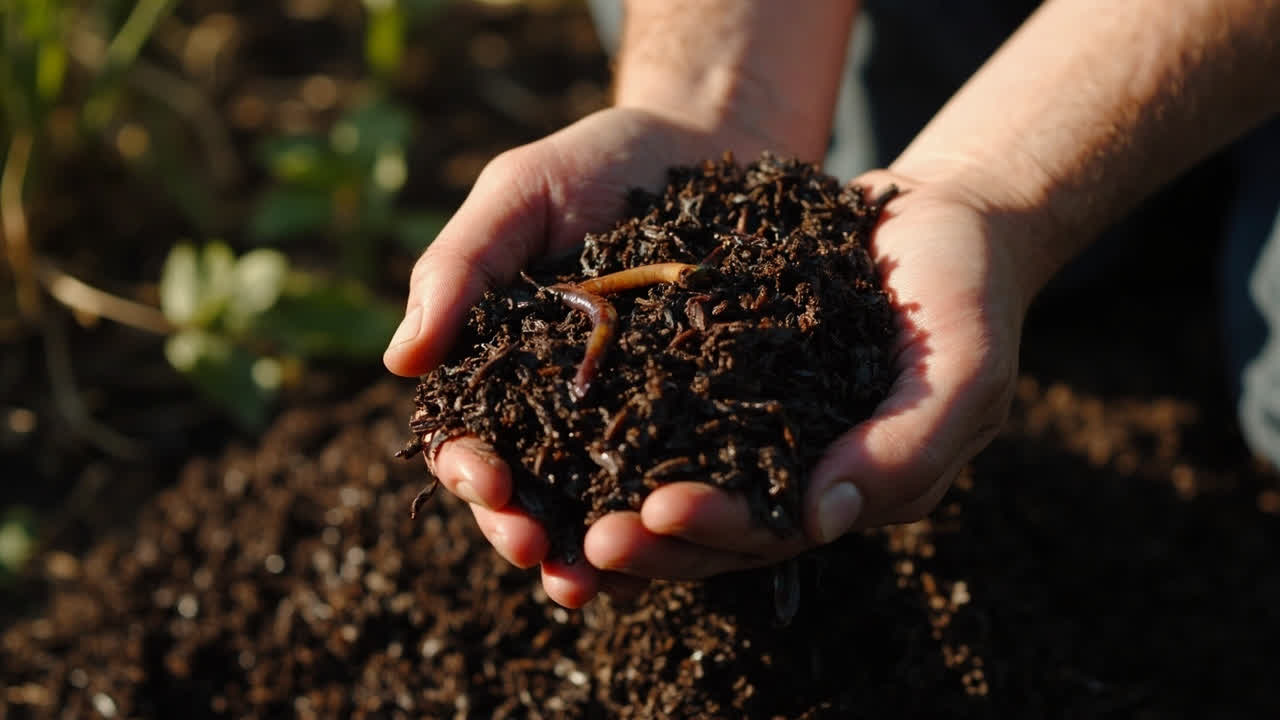
Use worm castings at 10% to 20% of the total soil mix for most pots, raised beds, and transplant holes. That means 1 part worm castings to 4 to 9 parts soil or potting mix, depending on how rich and moisture-retentive the mix already is.
The amount changes because worm castings are not just a mild fertilizer. They also change how the mix holds water, how fine the texture feels around roots, and how much microbial activity is added at once. A cactus pot, a tomato transplant, and a leafy houseplant do not need the same dose.
This guide is a practical rate sheet. It focuses on how much to use, when to use less, and how often to reapply without turning good soil into a dense, over-amended mix.
The Safe Range: 10% to 20% of the Soil Mix
For most plants, the safest worm castings rate is 10% to 20% by volume. In a 10-quart batch of potting mix, that means 1 to 2 quarts of worm castings. In a small 1-gallon pot, it means roughly 1.5 to 3 cups mixed through the potting medium.
The lower end, around 10%, is best for seedlings, succulents, cacti, herbs in small pots, and any plant already growing in a rich commercial mix. The higher end, around 20%, fits hungry vegetables, depleted container soil, and repotting mixes where the base medium is mostly peat, coco coir, bark, or mineral drainage material.
More is not automatically better. Worm castings are gentle, but a mix that is too heavy with fine organic material can hold moisture longer than the roots want. The first sign is not usually fertilizer burn; it is slower drying, sour-smelling soil, or weak roots in a pot that stays damp. For the broader soil-building role behind these rates, the main guide to worm castings explains what they do beyond simple feeding.
Quick Reference Rates by Use Case
If you are not measuring by soil volume, use the situation as the guide. These rates are conservative enough for normal home gardening and still high enough to make worm castings useful.
| Use case | Practical amount | Best timing | Use caution when |
|---|---|---|---|
| New potting mix | 10% to 20% of total volume | Before planting or repotting | The mix already contains compost or slow-release fertilizer |
| Houseplant top dressing | 1/4 to 1/2 inch over the soil surface | During active growth | The pot drains slowly or fungus gnats are active |
| Vegetable transplant hole | 1/4 to 1/2 cup per small transplant, 1 cup for large tomatoes or peppers | At planting | The seedling is stressed, wilted, or freshly hardened off |
| Raised bed refresh | 1/4 to 1/2 inch spread over the bed | Before planting or between crops | The bed already has a thick compost layer |
| Seed starting mix | 5% to 10% of total volume | Before sowing | The mix is fine-textured or stays wet for days |
For indoor containers, the dedicated guide to worm castings for house plants covers pot-size timing and surface application in more detail.
How to Measure Worm Castings Without Guessing
You do not need a perfect scale. Volume is more useful than weight because worm castings vary in moisture. A damp bag can weigh much more than a drier bag while adding the same practical amount to the mix.
- For a 1-gallon pot: mix in 1.5 to 3 cups of worm castings, or use 2 to 4 tablespoons as a light top dressing.
- For a 5-gallon container: mix in about 1/2 to 1 gallon of worm castings if you are building the soil from scratch.
- For a transplant hole: add a small handful for herbs and leafy greens, 1/2 cup for medium vegetable starts, and up to 1 cup for large fruiting plants.
- For a raised bed: spread a thin 1/4 to 1/2 inch layer and scratch it into the top few inches instead of burying a thick band in one spot.
- For repeat feeding: use lighter surface applications rather than remixing the root zone every time.
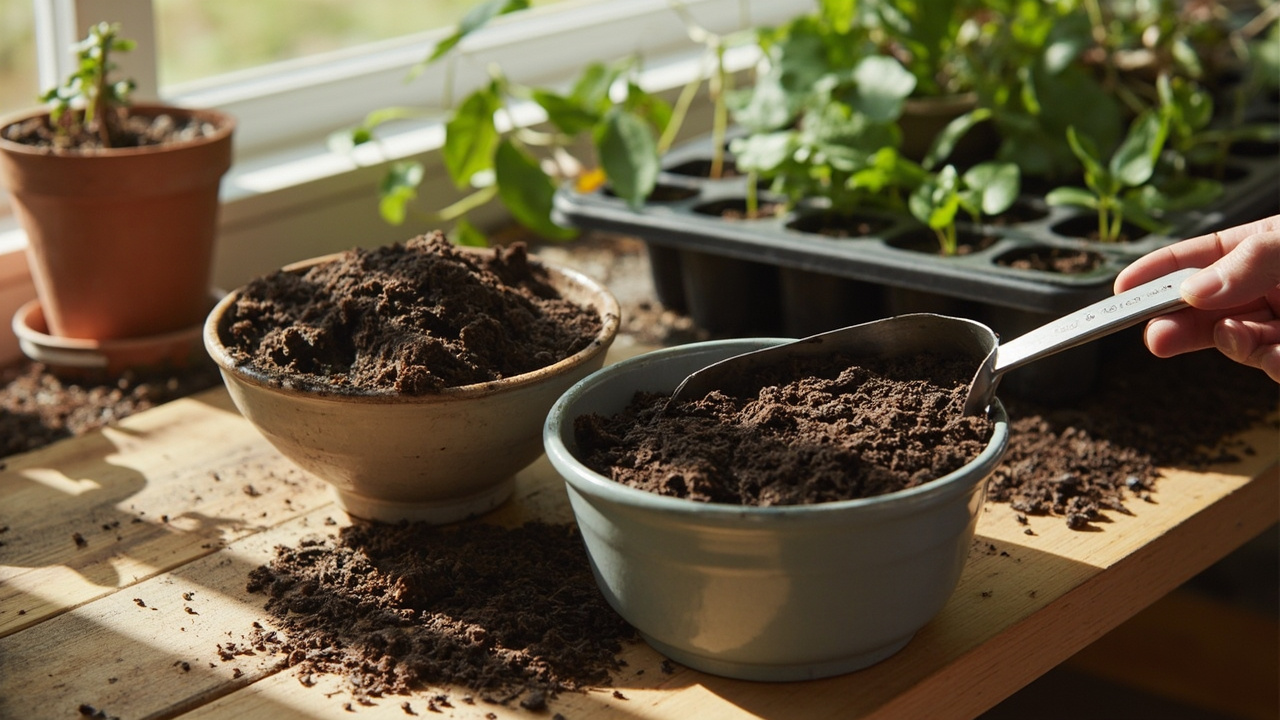
Distribution matters as much as quantity. A cup of worm castings mixed through the root zone is safer and more useful than the same cup packed directly against tender roots. For outdoor food crops, worm castings in vegetable gardens need wider spacing and lighter repeat applications than small pots.
When Less Is Better
Use less worm castings when the growing medium is already dense, wet, or rich. The common mistake is treating castings as harmless because they are organic. They are gentle compared with many fertilizers, but they still add fine particles and organic matter that can slow drying in containers.
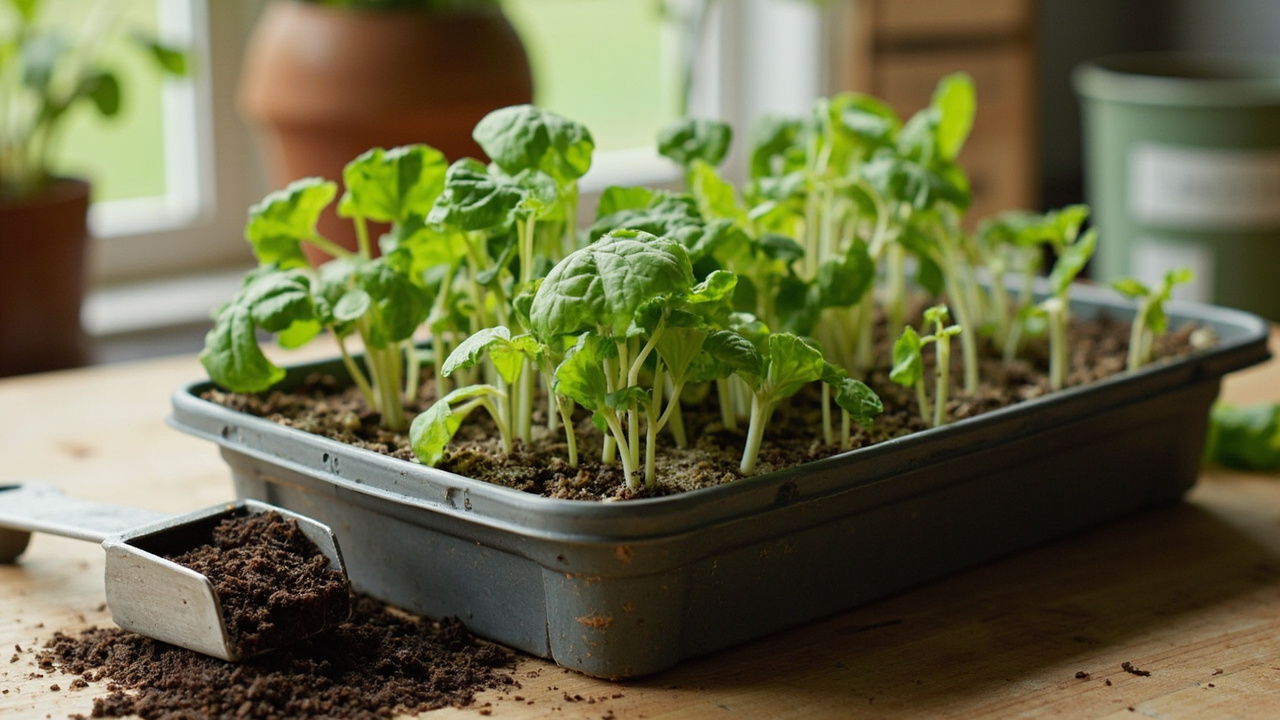
Seedlings are the clearest example. A small amount of worm castings can support early root growth, but a seed-starting mix with too much fine organic material can stay damp around the stem. That creates better conditions for damping-off than for strong seedlings. For seed starting, 5% to 10% is usually enough.
Use the lower end of the range for succulents, cacti, snake plants, ZZ plants, and any plant in a pot without generous drainage. Also use less when you top dress repeatedly. A thin layer every few months is different from stacking fresh material on the surface every time you water.
If the bed already has a lot of decomposed organic matter, the difference between worm castings vs compost matters more than simply adding more material. Compost can bulk up soil structure at a larger scale; worm castings are better used as a concentrated biological amendment.
How Often to Reapply Worm Castings
For houseplants, reapply a light top dressing every 8 to 12 weeks during active growth. Skip or reduce applications in winter if the plant is growing slowly, because roots are using less water and nutrients then.
For vegetable beds, apply worm castings before planting and again around heavy feeders when flowering or fruiting begins. Tomatoes, peppers, squash, and cucumbers can use a small side dressing midseason, but leafy greens usually need less unless the bed is depleted.
For repotting, mix worm castings into the fresh medium once rather than adding them again immediately after the plant settles. Give the roots two to four weeks to grow into the new mix before deciding whether a top dressing is needed.
The reason repeat applications can stay small is that the main benefits of worm castings come from biology and structure as much as nutrients. You are refreshing the root-zone environment, not trying to force a fast fertilizer response.
The Practical Rule
When in doubt, start with less and watch how the soil behaves after watering. A good worm castings rate should make the mix feel alive and crumbly, not heavy, sticky, or slow to dry.
- Use 10% for sensitive plants, seedlings, small pots, and rich mixes.
- Use 15% as the standard middle rate for most container plants.
- Use 20% for hungry vegetables, depleted mixes, and new raised-bed blends.
- Top dress lightly instead of repeatedly remixing established roots.
- Stop adding more if the soil stays wet longer than it used to.
That last point is the real guardrail. Worm castings work best when they improve the root zone without taking over the physical structure of the soil.
Turn PDF Bank Statements Into Workable Spreadsheets
Your bank statement is a mess of numbers, but your books shouldn't be. Use our converter to get Excel, CSV, or QBO files — ready for QuickBooks.
Try It Free Now