Pothos light requirements are simple in principle: bright, indirect light for around 8 to 10 hours a day, with direct sun reserved for less than an hour of gentle morning exposure. Pothos will tolerate a dim corner longer than most house plants, but tolerance is not the same as thriving. A pothos grown in steady, indirect light will push out larger leaves with stronger variegation, while one parked in a back hallway will slowly trade its markings for a leggier, slower habit.
Most of the confusion around pothos light comes from the words themselves. Direct light means the sun’s rays hit the leaves without anything in between. Indirect light means the room is bright, but the sun is filtered through a curtain, a tree outside the window, or reflected off a wall. Bright indirect is the goal; low light is what pothos merely survives in. Knowing which zone you have is the first step.
This guide covers the exact light range pothos prefers, what too much or too little light looks like on a real plant, when a grow light is worth adding, and how to shift the plant through the seasons. By the end you will be able to place a pothos with confidence and read the leaves when something is off. For broader day-to-day care beyond light, the pothos care guide covers watering, soil, and humidity in full.
What Counts as the Right Light for Pothos
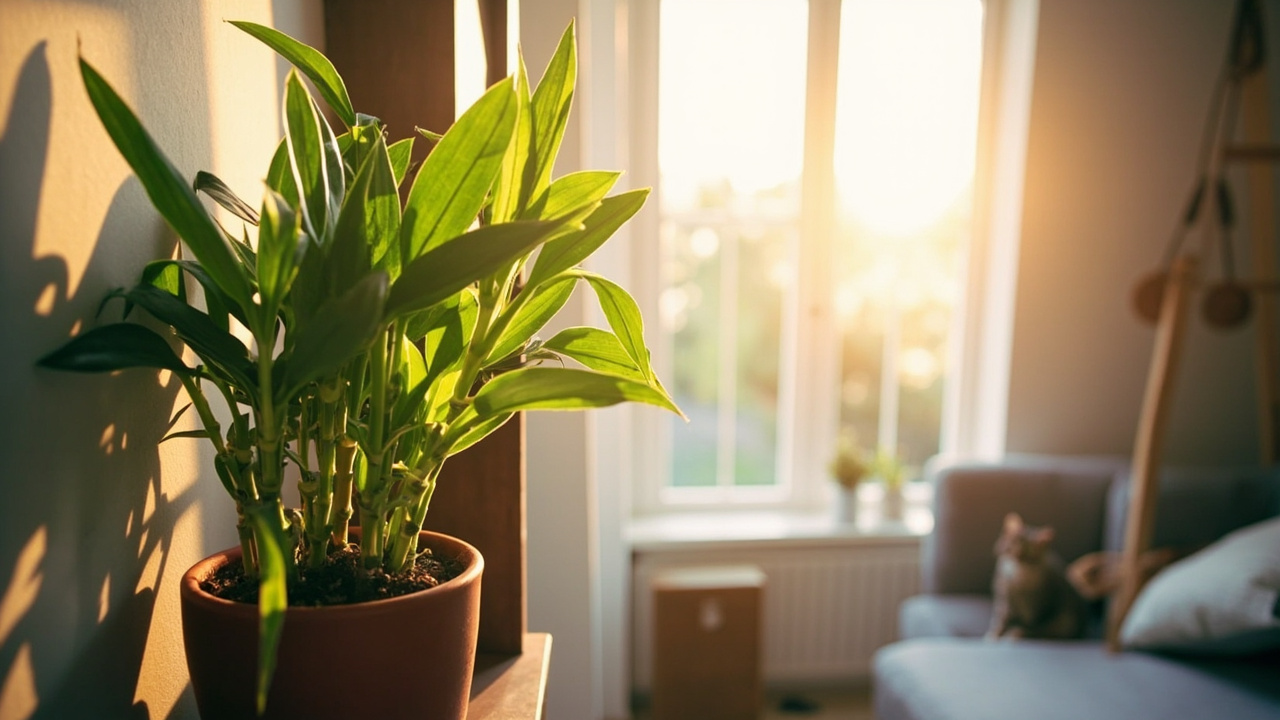
Bright, indirect light is the sweet spot. In practical terms, that means a spot 1 to 2 meters from an east- or west-facing window, or 2 to 3 meters from a south-facing window, where the leaves are clearly lit but the sun does not fall directly on the foliage. A pothos in this position will grow visibly each month, with new leaves unfurling at roughly 4 to 6 week intervals during the growing season.
Direct sunlight is the part most beginners get wrong. A south-facing window with no curtain can scorch a pothos in a single afternoon, especially in summer when outdoor temperatures climb past 29°C (85°F). The leaves are thin and waxy, not leathery like a succulent, so they cannot dissipate the heat. Pothos evolved as an understory vine in the forests of French Polynesia, climbing up tree trunks where the canopy breaks the light into dappled patches. Aim to mimic that, not a sun-baked patio.
A reliable way to test a spot without a meter is the shadow test. Hold your hand a foot above the leaves at the brightest time of day. A sharp, defined shadow means direct light; a soft, blurred shadow means bright indirect; no visible shadow means low light. Pothos wants the soft shadow. If the spot passes the test, the plant will reward you with full, variegated growth within a season.
Signs Your Pothos Is Getting Too Much Light
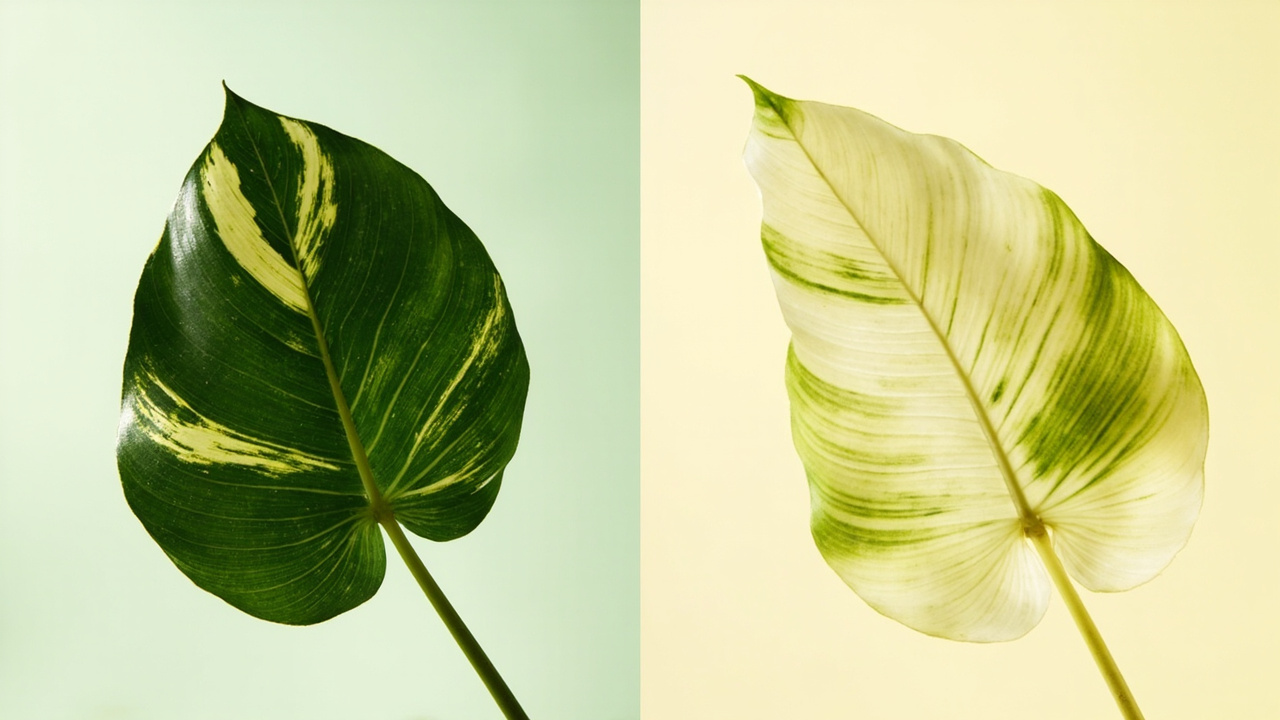
The first sign of too much light is faded or bleached variegation. A golden pothos that used to throw bold yellow patches will start sending out leaves where the yellow turns pale, almost white, and the green portions look washed out. This is the chlorophyll being damaged faster than the plant can replace it. The same symptom shows up on marble queen and manjula pothos as a chalky, dull pattern instead of a crisp one.
Leaf scorch comes next. You will see brown, crispy patches on the parts of the leaf most exposed to the sun, usually starting at the tips or along the central vein. Unlike a fungal spot, scorch does not spread through the leaf over days. It shows up where the sun hit hardest and stays put. In severe cases, an entire leaf will curl inward as the plant tries to reduce the surface area catching light.
If you catch it within a week or two, the plant usually recovers. Move it 1 to 2 meters back from the window, or hang a sheer curtain to cut the intensity by roughly 40 to 60 percent. New leaves will come in with normal color. The trade-off is honest: leaves that have already bleached will not green back up, and severely scorched ones should be pruned so the plant can redirect energy to healthy growth. Most pothos bounce back fully within two months once the position is corrected.
Signs Your Pothos Is Getting Too Little Light
Too little light is the more common problem, and it shows up more slowly. The first clue is the gap between leaves getting longer. A healthy pothos pushes out new leaves 3 to 5 cm apart along the vine. In low light, the internodes stretch to 8 cm or more as the plant literally reaches for the window. This is the leggy growth everyone complains about, and it is reversible only on new growth, not on the existing vine.
New leaves also get smaller. A pothos that once pushed out hand-sized leaves will start producing ones barely larger than a thumbnail. The plant is conserving energy because photosynthesis is not keeping up with demand. Variegation fades too: a marble queen that used to throw half-white, half-green leaves will start sending out mostly green ones, because green tissue is more efficient at capturing limited light. Yellowing of older lower leaves is a common companion symptom, and the full diagnosis of when yellowing is light-related versus watering-related is covered in yellow leaves.
The realistic timeline is this: if you move a pothos from a dim spot into bright indirect light, you will see new growth respond within 3 to 4 weeks, with leaf size and variegation improving over the following 2 to 3 months. Stretched stems will not shrink back, so most people choose to prune and let the plant regrow from the base. That is normal and not a sign of a sick plant; it is just pothos rebalancing to its new light budget.
Artificial Light and Grow Lights
A grow light is worth adding when the brightest spot in the room still fails the shadow test. North-facing windows in winter, interior rooms with no exterior walls, and basement setups all fall into this category. Pothos does not need a powerful light. A full-spectrum LED panel rated around 20 to 40 watts, hung 30 to 60 cm above the plant and run on a 12 to 14 hour timer, will replace a moderately bright window for pothos purposes. Foot-candle targets of 100 to 200 at the leaf surface are the realistic range; anything above 400 tends to push growth faster than the rest of the plant can support without extra feeding.
The metric that matters more than watts is the spectrum. Pothos responds well to light in the 4000K to 6500K range, which sits in the cool white to daylight band. Warm yellow bulbs below 3000K encourage stretching, the same way a window with too little blue light would. Lumens are a less useful spec for plants than for humans, because lumens weight green-yellow heavily and pothos uses a broader range; if the bulb is sold as full-spectrum and the kelvin rating is in the right band, the numbers on the box are close enough.
Honest expectation: a grow light keeps a pothos alive and growing, but it will not produce the dense, vivid foliage of a plant in a bright window unless the setup is dialed in. Expect to see measurable new growth within 4 to 6 weeks of running a 12-hour daily cycle. If the leaves are pushing pale or stretched, raise the light a few centimeters and shorten the cycle. Light and water demand move together, so as light goes up, you will also need to revisit your rhythm; the watering guide walks through how to adjust without overcorrecting.
Seasonal Adjustments and Moving Your Plant
Light changes more than people expect across the year. In the northern hemisphere, a south-facing window in December delivers roughly 10 percent of the light it gets in June at the same hour, while a north-facing window drops to near-darkness. The pothos that looked great in March can quietly slow down by November, not because the plant changed, but because the room did. A quick seasonal audit every 2 to 3 months catches this before it shows up as leggy growth.
Useful seasonal moves:
- Spring: As daylight stretches past 12 hours, ease the pothos back from windows that get hot afternoon sun, especially south- and west-facing ones.
- Summer: Add a sheer curtain or shift 1 to 2 meters back from the window if leaves show any fading or curling at the edges.
- Fall: Move the plant closer to the brightest window as the sun drops in the sky and the angle becomes more horizontal.
- Winter: If a grow light is not on the table, rotate the plant a quarter turn every week so all sides get their share of the limited window time.
For growers with multiple cultivars on the same shelf, the heavy variegation types (manjula, marble queen, pearls and jade) need roughly 20 to 30 percent more light than a solid golden pothos to hold their markings, and a quick reference for which cultivar tolerates what is in the varieties guide. The honest answer to “is my pothos getting enough light” almost always comes back to the leaves themselves: full color, tight internodes, and steady new growth mean the position is right; stretched stems, small leaves, or fading variegation mean it is time to move.