Not all Pothos plants look the same. The Epipremnum aureum species has produced a remarkable range of cultivated varieties over the years — each with distinctive leaf patterns, colours, and growth habits. If you have been keeping Pothos for a while, you have probably come across more than one variety and wondered what the differences are. Here is a guide to the most popular Pothos varieties and what makes each one distinct.
The Core Varieties
Golden Pothos (Epipremnum aureum)
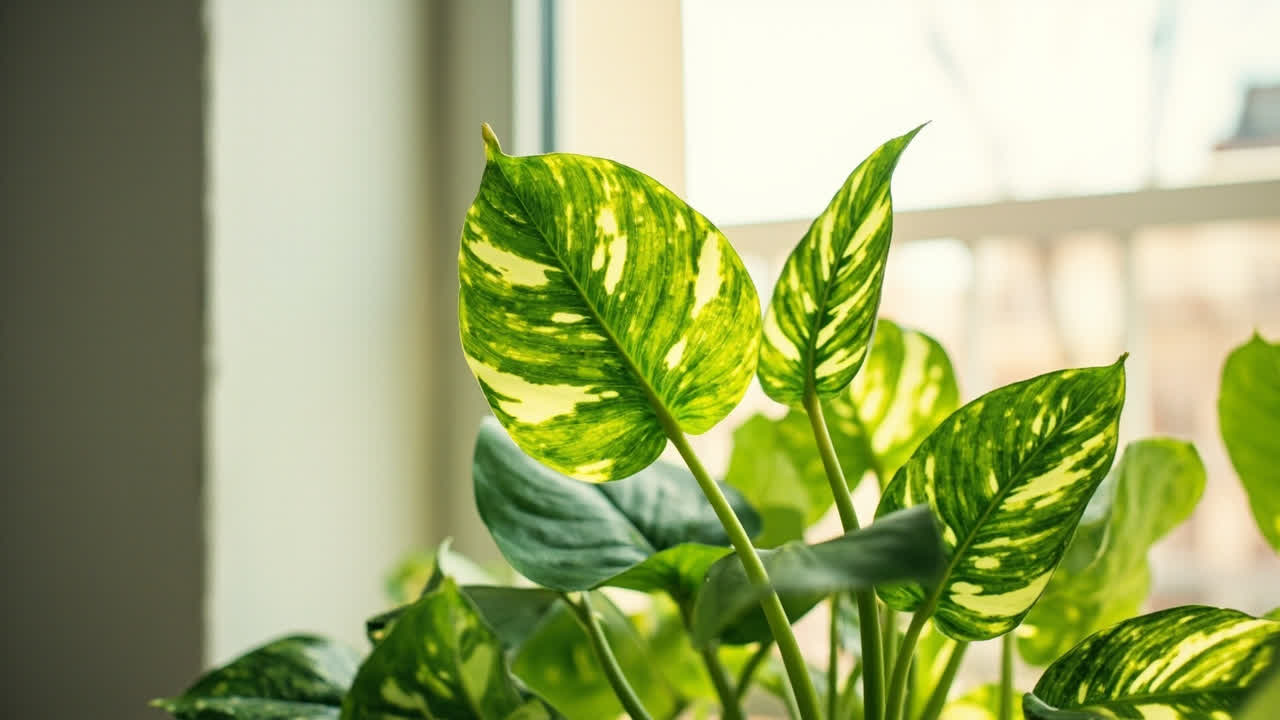
The original and the most common. Deep green heart-shaped leaves with irregular yellow-to-cream variegation scattered across the surface. This is the variety most people start with. It is also the most vigorous and forgiving — the variegated sections contain less chlorophyll per square centimetre, meaning the plant can stillphotosynthesise effectively even on leaves that are mostly cream. This is why Golden Pothos tolerates lower light better than most other variegated varieties.
Variegated Varieties
Marble Queen Pothos (Epipremnum aureum ‘Marble Queen’)
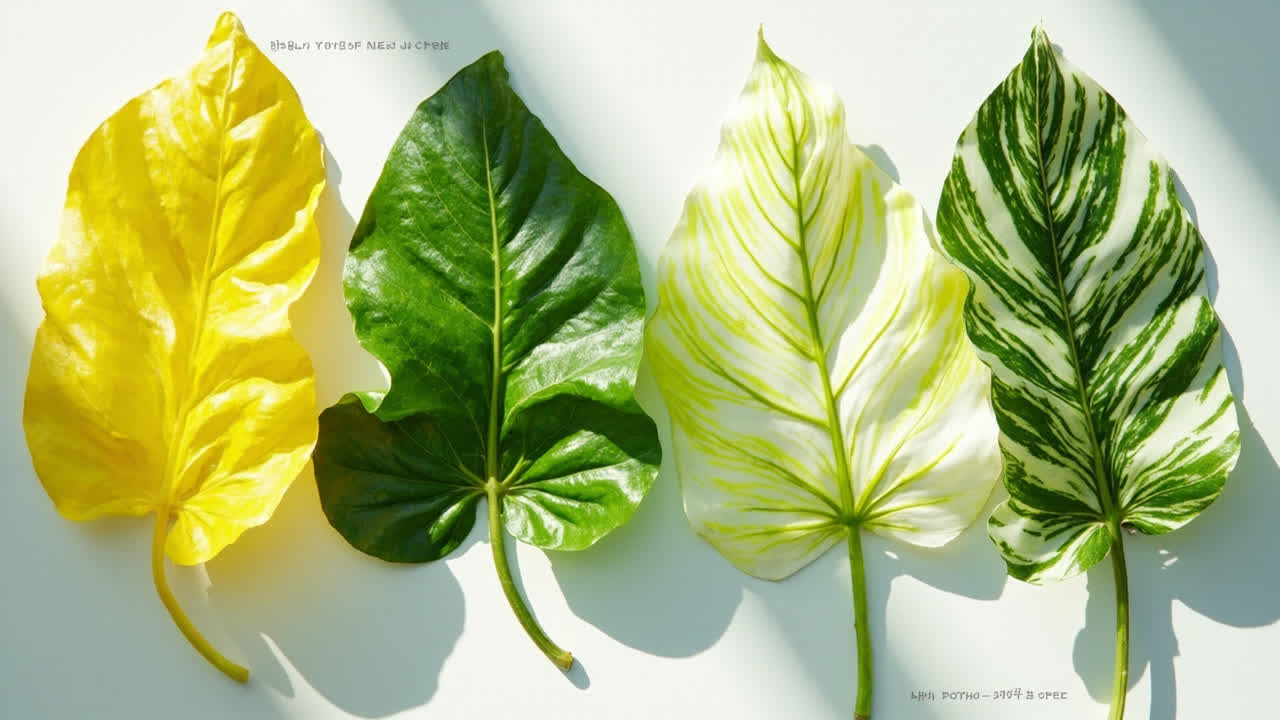
One of the most popular varieties, distinguished by heavy cream-white variegation covering 50 to 70 percent of the leaf surface. The green portions appear in irregular patches and streaks, creating a marbled effect. Marble Queen grows slightly slower than Golden Pothos because the heavily variegated sections have less chlorophyll — the plant cannot produce energy as efficiently on white tissue.
This variety needs more light than a fully green Pothos. In low light, the new leaves emerge with less variegation — the plant essentially “retrieves” chlorophyll from the white sections to compensate. If you want to keep the variegation strong, give Marble Queen bright indirect light, and accept that it will grow slower than Golden.
Neon Pothos (Epipremnum aureum ‘Neon’)
The brightest variety. The leaves are a solid, saturated chartreuse-to-lime green that almost glows under light. Unlike other variegated forms, Neon is not variegated — it is simply a genetic variant with much higher chlorophyll density and a different pigmentation profile. The lack of variegation means it tolerates low light better than Marble Queen and grows faster. The solid colour also makes it one of the easiest varieties to assess for health — any yellowing from stress or disease shows up clearly against the uniform green.
Manjula Pothos (Epipremnum aureum ‘Manjula’)
A patented variety developed by University of Florida researchers. The leaves are broad and almost rounded in shape, with creamy white variegation in irregular patches — different from Marble Queen in that the variegation tends to follow the leaf veins rather than spread across the surface randomly. The overall look is softer and more pastel. Manjula Pothos is significantly slower growing than other varieties and needs more light to maintain its variegation. It is also harder to find and more expensive when you do find it.
N’Joy Pothos (Epipremnum aureum ‘N’Joy’)
A compact, slower-growing variety with sharp white-and-green variegation. Unlike the irregular patches of Marble Queen, N’Joy has a more defined pattern — the white tends to concentrate around the edges of the leaf or in distinct patches, with deep green in the centre. The leaves are smaller and more rounded than most other varieties, giving the plant a denser, bushier appearance even when trailing. N’Joy is particularly sensitive to low light — in dim conditions it reverts to mostly green leaves.
Growing and Caring for Different Varieties
The care differences between varieties are subtle but worth knowing:
- Light requirement: Neon and Golden are the most tolerant of low light. Marble Queen and Manjula need more. N’Joy needs the most consistent bright indirect light to maintain variegation.
- Growth rate: Golden and Neon grow fastest. Marble Queen grows moderately. N’Joy and Manjula are the slowest.
- Variegation stability: If a variegated variety starts producing all-green leaves, it needs more light. The plant is “reverting” because it cannot sustain the high-energy-cost white tissue in the available light.
All varieties have the same water, temperature, and humidity requirements — the differences are primarily about light and growth rate.
Where to Find Them
Most Singapore nurseries and plant shops carry Golden, Marble Queen, and Neon regularly. N’Joy and Manjula appear less frequently and command higher prices. For rare varieties, online plant shops in Southeast Asia are a better source than physical nurseries in Singapore, which tend to stock primarily the three common varieties.
For general Pothos care, see the Pothos Plant Care guide. For propagation, see Propagating Pothos from Cuttings.
From PDF to Excel in one click
Forget retyping line by line. Upload any bank statement, get a spreadsheet you can actually use. Your files are never stored, and you can test the converter with 3 free conversions.
Try it free