Aeroponics for beginners means learning a soilless growing method that feeds plants by spraying nutrient mist directly onto roots suspended in air. The defining entity is the enclosed root chamber, and that matters because roots get both moisture and oxygen without sitting in soil, coco coir, or standing water.
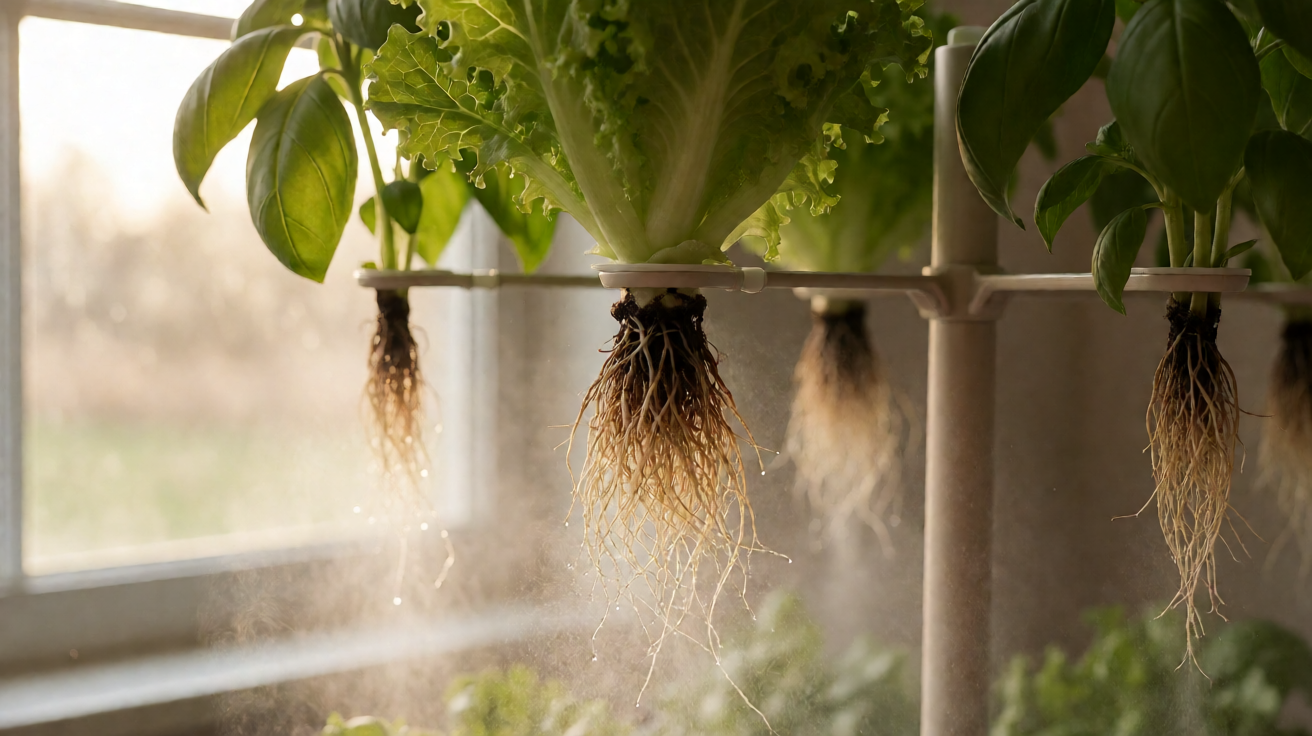
If the term sounds high-tech, the mechanism is still straightforward. An aeroponic system holds the plant at the top, keeps the roots hanging below, and mists those roots on a timer, which is why growers use it when they want faster growth and cleaner root access than many traditional setups can provide.
For most home gardeners, the real decision is not whether aeroponics looks impressive. The useful context is whether you want a method that can grow very quickly but asks for closer equipment checks than a pot of soil or a basic reservoir system.
What Is Aeroponics?
Aeroponics is a branch of hydroponics where roots are exposed to air and fed with a fine nutrient mist instead of being surrounded by a solid growing medium. That relationship matters because aeroponics uses the same water-based nutrition as other hydroponic methods, but changes the delivery mechanism to maximize root oxygen.
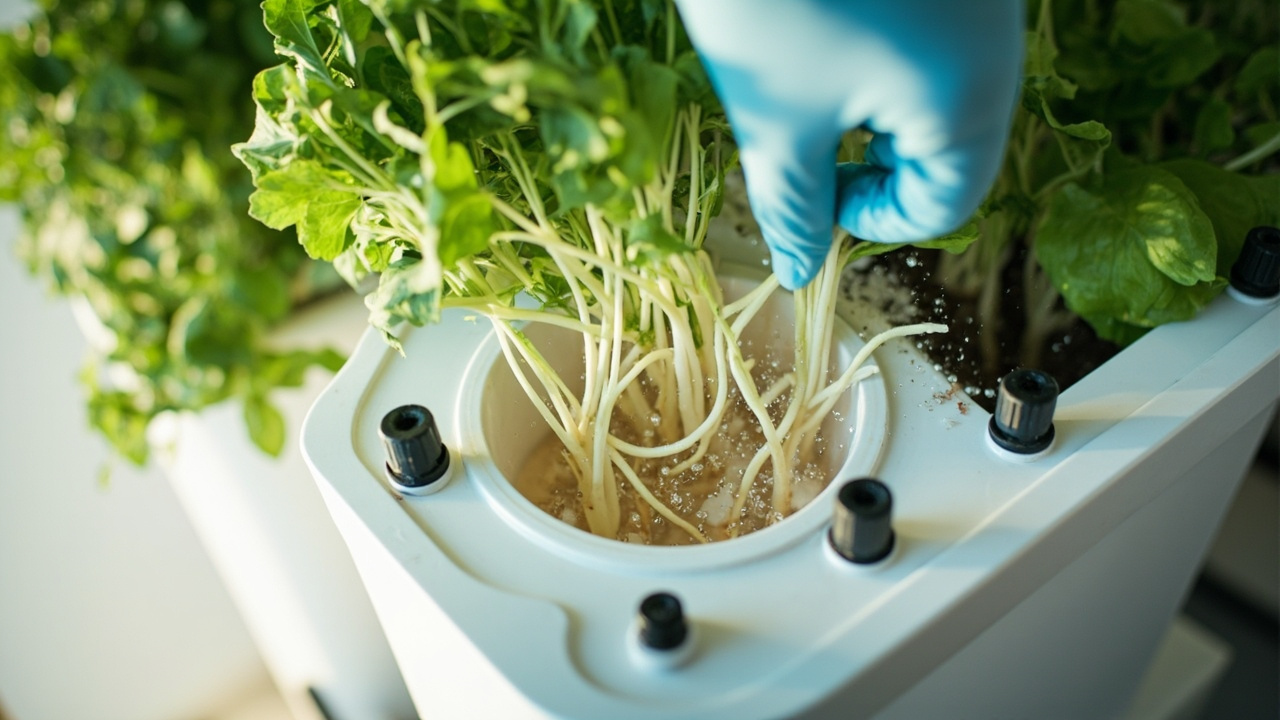
The root zone is the entity that makes aeroponics distinct. In soil, roots move through particles that hold both water and air, and in many hydroponic systems roots stay in contact with flowing or pooled solution, but in aeroponics the roots spend most of their time hanging freely between short misting cycles.
That design changes plant behavior in a practical way. When roots receive steady moisture and abundant oxygen at the same time, leafy crops like lettuce, basil, and arugula can put on growth quickly because the root surface meets less resistance than it would in a dense or waterlogged medium.
Aeroponics is often described as advanced because the hardware looks more technical than a bucket or pot. The honest context is that the biological idea is simple, but the reliability of the pump, timer, and nozzle matters more here than it does in a system with built-in moisture backup.
How Aeroponics Works
An aeroponic system usually has five core parts: a reservoir, a pump, tubing, misting nozzles, and a dark root chamber. The dark chamber matters because roots want moisture and oxygen, but they do not benefit from constant light, which can encourage algae, heat, and unnecessary stress.
The pump moves nutrient solution from the reservoir into the misting line. The nozzle turns that liquid into tiny droplets, and the timer repeats the cycle at short intervals, which creates the wet-dry rhythm that defines aeroponics.
Why exposed roots grow so fast
Exposed roots can absorb oxygen more easily than roots sitting in a heavy, saturated environment. That oxygen access matters because root respiration powers nutrient uptake, and strong nutrient uptake usually shows up above the chamber as faster leaf expansion and stronger vegetative growth.
This is where aeroponics separates itself from deep water culture. In DWC, roots remain in oxygenated nutrient water most of the time, while in aeroponics roots hang freely and get fed in bursts, so oxygen access is naturally higher but equipment reliability becomes more important.
Aeroponics also works differently from NFT systems. NFT lets a thin film of nutrient solution pass along root surfaces continuously, while aeroponics atomizes the solution and sprays it directly, which means there is less standing water around roots but also less forgiveness if a cycle is missed.
What a beginner should notice in the first week
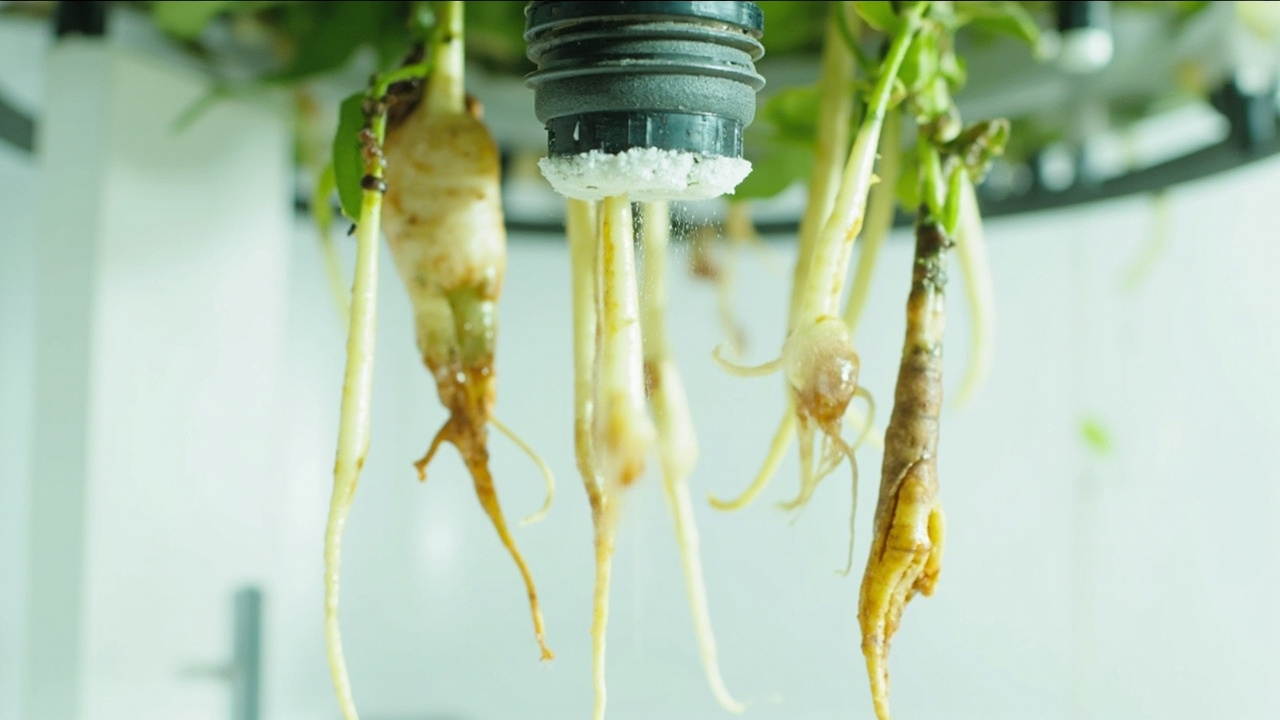
Your first week with aeroponics should feel more like observation than panic. A healthy chamber usually shows white or cream-colored roots, a clean reservoir smell, and a consistent mist pattern, and those signals help you tell the difference between a normal startup and an early system problem.
The fastest failure in a beginner setup is usually a missed spray event. A clogged nozzle, stuck timer, or weak pump can dry root tips faster than many new growers expect, which is why physically checking for visible mist is more useful than trusting that the equipment is probably fine.
Aeroponics vs Other Growing Methods
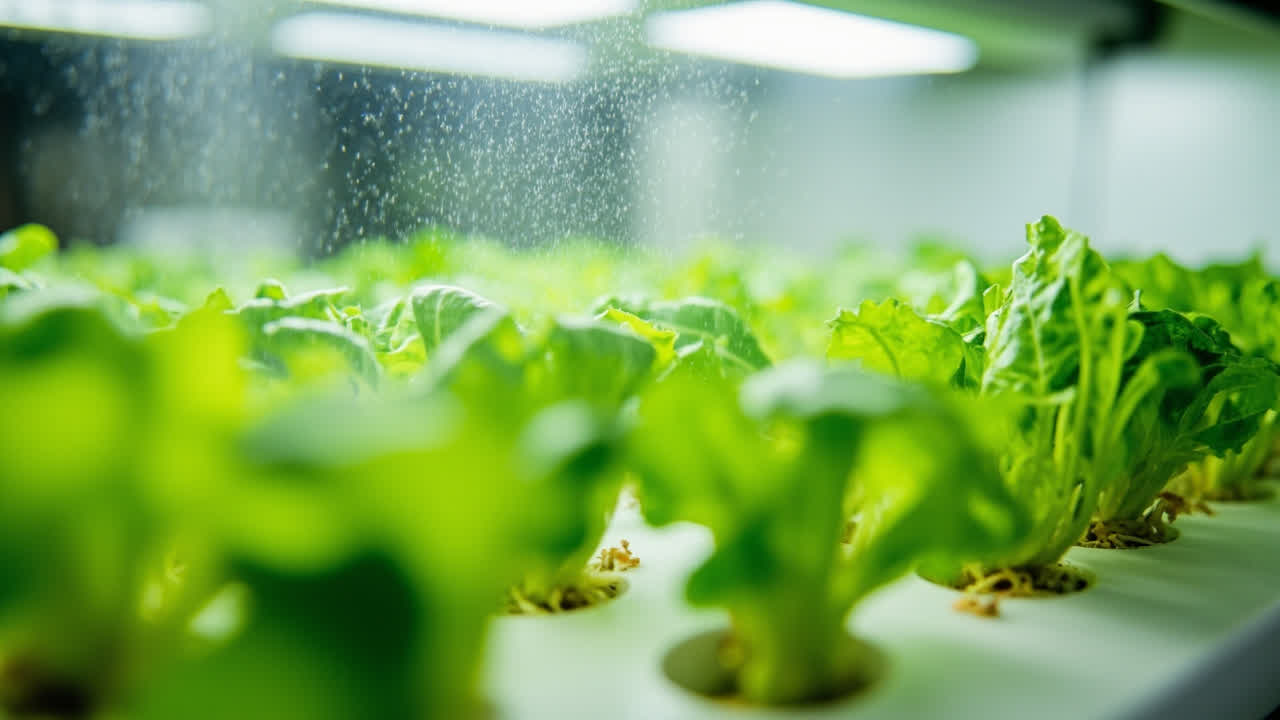
Aeroponics is not automatically the best method for every home gardener. The useful comparison is how it balances growth speed, setup complexity, cost, and daily attention against soil, DWC, and NFT.
| Method | Setup Complexity | Daily Attention | Cost to Start | Growth Speed | Beginner Friendliness |
|---|---|---|---|---|---|
| Aeroponics | High | Moderate to high | High | Very fast | Moderate |
| Soil | Low | Low to moderate | Low | Moderate | High |
| DWC | Moderate | Moderate | Moderate | Fast | High |
| NFT | Moderate | Moderate | Moderate | Fast | Moderate to high |
Soil is the most forgiving option because the potting mix stores moisture after you water. That buffer matters because a missed check in soil rarely becomes a same-day emergency, while an aeroponic chamber depends on each mist cycle reaching the roots correctly.
DWC is often the easier hydroponic starting point because the reservoir itself protects the root zone from drying. Aeroponics can outperform DWC in oxygenation and speed, but that advantage only appears when the nozzle pattern, timer schedule, water temperature, and nutrient balance all stay consistent.
NFT sits in the middle for many beginners. The system still depends on water movement, but the flow path is easier to see and troubleshoot than fine mist delivery, which is why plenty of growers learn root behavior in NFT or DWC before moving into aeroponics.
What Plants Grow Best in Aeroponics
Leafy greens are the easiest entry crop because they grow quickly and respond visibly to small changes in feeding. Lettuce, spinach, bok choy, kale, and arugula usually adapt well to aeroponic roots, which makes them ideal for learning timing, spacing, and reservoir maintenance without waiting months for a result.
Herbs are another strong beginner category. Basil, mint, cilantro, parsley, and dill appreciate oxygen-rich roots, and the context is that frequent harvesting gives you quick feedback on whether your mist cycles and nutrient strength are actually supporting healthy regrowth.
Most home systems still rely on standard hydroponic nutrients rather than improvised fertilizers. That input matters because aeroponic nozzles need a clean, fully dissolved solution, so formulas designed for hydroponics are usually safer than anything with sediment, compost particles, or organic residue.
Strawberries can also do very well in aeroponics because the plants stay fairly compact while the roots benefit from high oxygen exposure. The practical context is that fruit stays cleaner than it would in a soil bed, although good light and pollination still matter if you want steady production instead of just healthy foliage.
Small peppers and compact tomatoes can grow aeroponically too, but they raise the difficulty. Their larger canopy and heavier fruit load increase the demand on support, feeding, and root space, so they usually make more sense after you have already run greens successfully for a full cycle.
Root vegetables are the least natural fit for beginners. Carrots, radishes, and beets need stable shaping conditions around the edible root, and that means a general-purpose aeroponic chamber can produce uneven or awkward development unless it was designed specifically for those crops.
The Pros and Cons of Aeroponics
The biggest advantage of aeroponics is speed. High root oxygen levels support rapid respiration and nutrient uptake, and that often translates into faster vegetative growth when light, temperature, and nutrient concentration are already in the correct range.
Aeroponics is also efficient with water because the system recirculates a relatively small volume of nutrient solution. The reservoir is the central entity here, and that matters because you can grow a useful amount of produce indoors without repeatedly saturating new media or dumping large volumes of runoff.
Another advantage is cleanliness. There is no bagged soil to store, no muddy spill under the stand, and fewer soil-borne pests arriving with potting mix, which makes aeroponics appealing for gardeners working in apartments, laundry rooms, or compact grow spaces.
The biggest drawback is equipment dependency. A failed pump, blocked nozzle, disconnected tube, or power outage can stress roots within hours, and that makes aeroponics less forgiving than methods where roots remain surrounded by water or moisture-retentive media.
Cost is the second drawback. Even a small beginner setup usually needs a timer, sealed chamber, net pots, pump or mister, and cleaning supplies, so the starting budget is often higher than a simple DWC tote or a shelf of soil-grown herbs.
The last drawback is attention. Aeroponics rewards growers who like checking root color, spray consistency, reservoir level, and water temperature regularly, and that daily involvement feels satisfying for a tinkerer but burdensome for someone who wants a mostly hands-off garden.
Common Beginner Mistakes and How to Avoid Them
Most aeroponic problems are not mysterious. They come from a few predictable failures in mist delivery, solution balance, or spacing, and that is good news because each one becomes manageable once you know what to watch.
Clogged nozzles
Clogged nozzles are the most common mechanical failure in small systems. Mineral buildup or debris narrows the spray pattern, which leaves part of the root mass dry, so beginners should use clean water, inspect nozzles often, and keep a spare set ready before performance drops.
Nutrients mixed too strong
Aeroponic roots absorb water and minerals quickly, so overfeeding shows up fast. Burned root tips or stalled growth often come from solution strength that is too aggressive for young plants, which is why a lighter starting mix is usually safer than following the maximum bottle rate on day one.
pH drift
Ignoring pH levels creates false deficiency symptoms. The nutrient solution may contain enough fertilizer, but the plant cannot access it efficiently when pH drifts out of range, so regular testing matters just as much as the nutrients themselves.
Power and timer failures
A timer can stick, a pump can overheat, and a power strip can trip without warning. The practical fix is to confirm the mist cycle physically each day, especially in warm weather, because an exposed root system has almost no reserve moisture if the spray stops.
Overcrowding the chamber
Too many plants in one chamber creates tangled roots, poorer airflow, and uneven spray coverage. Beginners usually get better growth from fewer plants with enough room for roots and leaves to expand than from trying to fill every opening immediately.
Should You Start Aeroponics as a Beginner?
Aeroponics is a realistic beginner method if you enjoy systems, do not mind checking equipment, and want fast growth more than maximum simplicity. The method rewards consistency, which makes it a good fit for gardeners who like measuring, observing, and fine-tuning rather than watering by feel once a week.
You are more likely to enjoy aeroponics if you can answer yes to three questions. Can you check the system daily, can you keep a small reservoir clean, and can you accept a higher startup cost in exchange for faster growth and a soil-free setup?
You may be happier starting with soil, DWC, or Kratky if your goal is low maintenance. Those methods provide a wider safety margin, and that matters because most beginners learn faster when the system forgives one missed check or one imperfect adjustment.
A practical first step is to run one small chamber or propagator for two weeks before committing to a larger tower. That trial period teaches you how your roots, timer, and nutrient solution behave in your actual room temperature, and it is the quickest way to find out whether aeroponics feels exciting or annoying in daily use.
If you want the shortest honest answer, aeroponics is worth trying when you like precision and want a fast, clean indoor garden. If you want the easiest possible method, start elsewhere first and come back to aeroponics once you are comfortable managing water, nutrients, and plant roots in a controlled system.
Turn any PDF statement into a clean sheet
Skip the typos and the hours of copying. Our converter handles any bank statement format and outputs Excel, CSV, or QBO for QuickBooks. No file retention, free to try.
Convert your statement