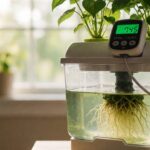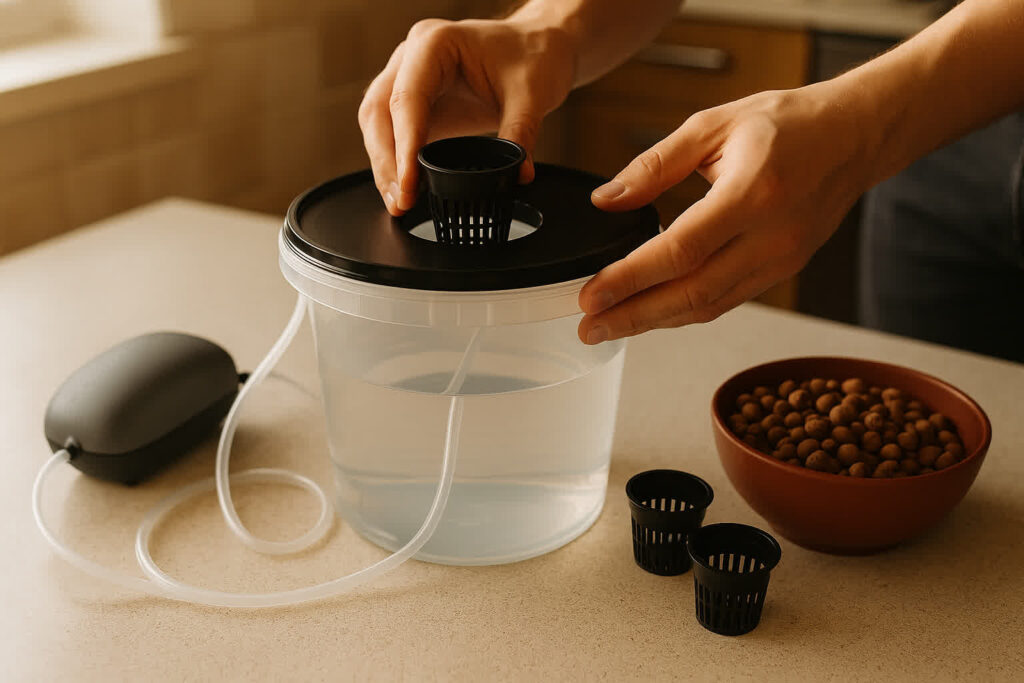

Deep water culture hydroponics (DWC) suspends plant roots directly in an oxygenated hydroponic nutrient solution, delivering faster growth than soil while eliminating the disease risks that come from compacted, wet media. The system works by keeping roots in constant contact with nutrients and oxygen — two inputs that soil simply cannot supply consistently — which makes DWC one of the most efficient hydroponic systems for beginners to set up and run at home.
Unlike traditional soil gardening, where roots hunt for nutrients through fragmented media, deep water culture places everything the plant needs in a single reservoir. Roots grow fast because they expend zero energy searching for food. For home gardeners who want to grow fresh lettuce, basil, or cherry tomatoes without dealing with soil-borne pests or daily watering, DWC is the entry point that delivers results in weeks, not months.
This guide covers everything you need to build, run, and harvest from your first deep water culture system — with specific numbers, honest trade-offs, and the practical details that actually matter when you’re standing in a hydroponic supply aisle.
How Deep Water Culture Works
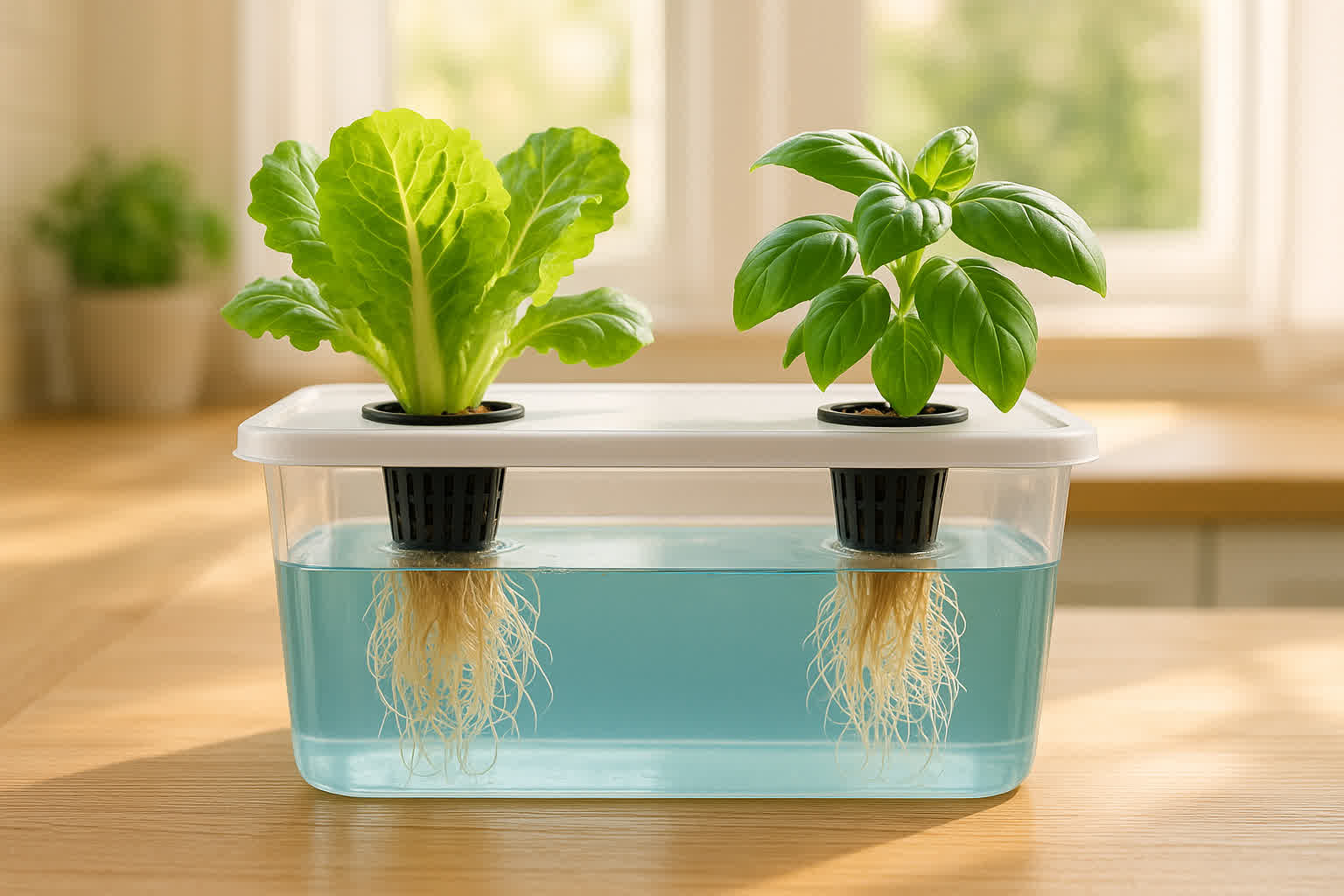
Deep water culture hydroponics works by submerging plant roots in a nutrient-rich reservoir while an air pump forces oxygen through an air stone into the solution. The air stone breaks the incoming air into tiny bubbles, saturating the water with dissolved oxygen that roots need to respire. Without this constant oxygenation, roots suffocate — even though they’re surrounded by water.
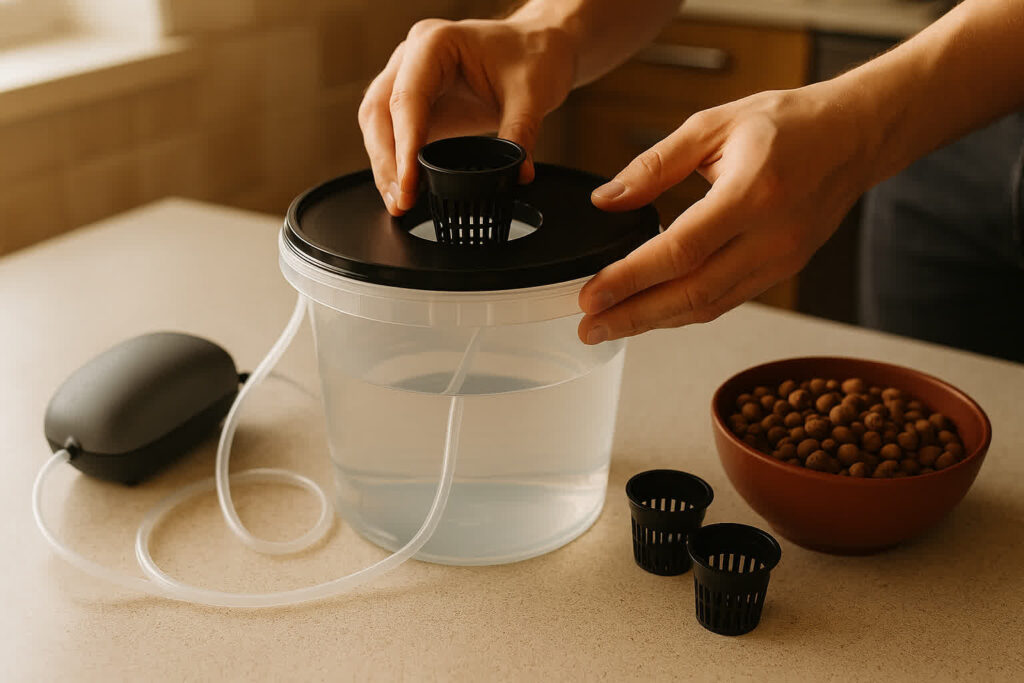
The hydroponic reservoir holds the nutrient solution, typically a 3 to 5 gallon bucket depending on plant size. Net pots sit in the lid of the bucket, filled with an inert hydroponic growing medium like clay pebbles that anchor the plant while allowing roots to dangle freely into the solution below. The growing medium holds no nutrients of its own — its only job is to support the plant structurally while the solution below does the feeding.
The mechanism is straightforward: roots absorb nutrients directly from the solution in their dissolved ionic form, bypassing the microbial breakdown process that soil requires. Plants grown in DWC consistently reach harvest size in roughly half the time of their soil counterparts because energy that would otherwise go into root exploration goes instead into foliar growth and fruit production.
Equipment You Need for DWC
A functional deep water culture system requires five core components: a light-tight reservoir, net pots, an air pump, an air stone, and a growing medium. Each piece has a specific job, and cutting corners on any one of them creates problems downstream.
Reservoir and Net Pots
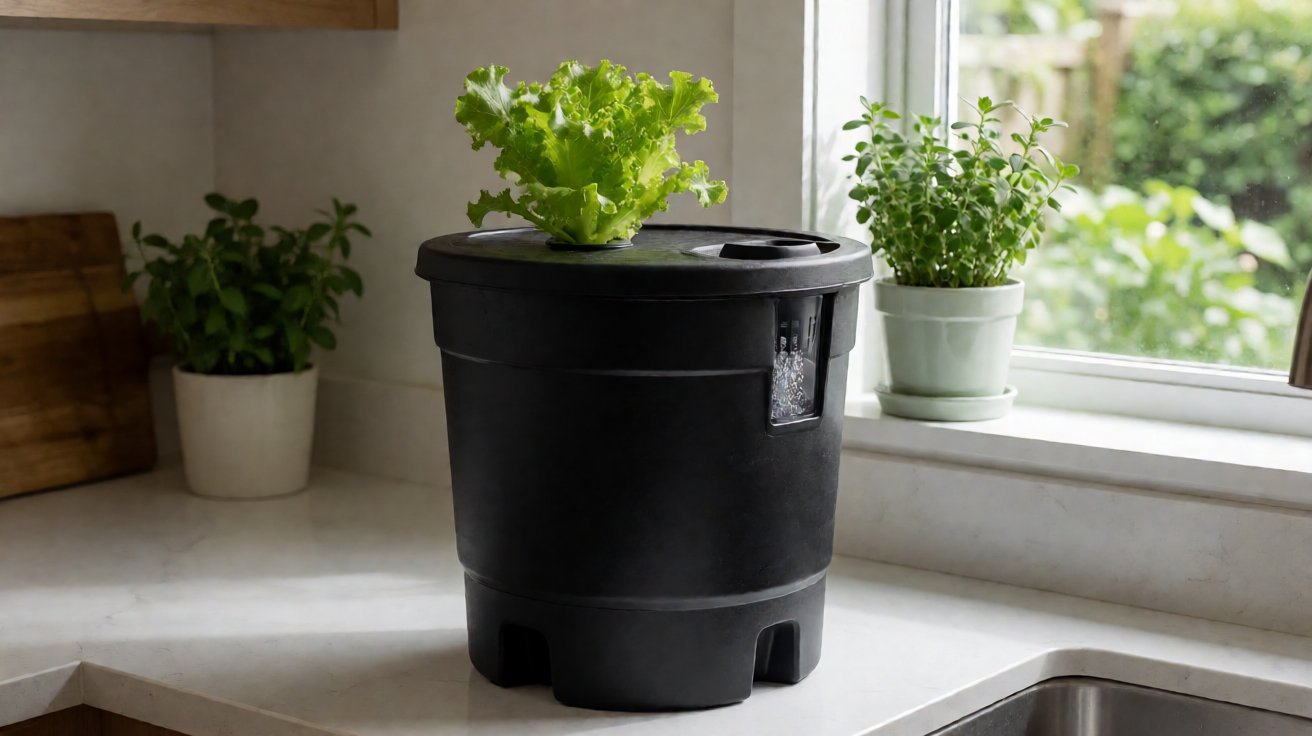
The reservoir stores your hydroponic nutrient solution and shields roots from light, which promotes algae growth and raises water temperature. Black or opaque containers block light completely; clear reservoirs must be wrapped in blackout material. For leafy greens like lettuce and herbs, a 3-gallon bucket works well. For larger plants like tomatoes, a 5-gallon bucket or dedicated DWC tote provides the root volume and nutrient buffer they need.
Net pots sit in holes cut into the reservoir lid. They range from 2 inches to 6 inches in diameter — choose based on plant size rather than preference. The mesh walls allow roots to grow through into the solution below. Fill net pots with clay pebbles or perlite — both inert media that provide grip for young seedlings without compacting.
Air Pump and Air Stone
The air pump runs continuously, pushing air through tubing to one or more air stones submerged in the reservoir. Air stones diffuse the airflow into fine bubbles that dramatically increase the surface area of air in contact with the water. The larger the bubble surface area, the more oxygen dissolves into solution.
Sizing the air pump matters more than most guides admit. A pump rated below 50 gallons per hour (GPH) struggles to maintain dissolved oxygen in warm rooms above 24°C, where plants drink and respire fastest. For a single 5-gallon DWC bucket, a 50–100 L/min air pump with a standard air stone provides adequate oxygenation under most conditions. In hotter climates or with fruiting plants, a stronger pump or multiple air stones prevent root hypoxia.
Growing Medium
Clay pebbles are the most common choice for DWC because they are pH-neutral, reusable, and drain freely without holding excess moisture against the stem. Rinse them thoroughly before first use — factory dust and fine particles can clog young root tips. Perlite works as a cheaper alternative but floats more readily when water levels rise, making it better suited for experienced growers who can manage reservoir levels precisely.
Nutrients and Water Chemistry
DWC demands precise water chemistry because roots sit directly in the nutrient solution — there is no soil buffer to absorb imbalances. Two tools are non-negotiable: an EC meter and a pH meter. Without both, you are guessing.
EC Levels for Vegetative Growth
Electrical conductivity (EC) measures the concentration of dissolved nutrients in solution. Higher EC means more nutrients available; too-low EC means deficiencies develop fast. For most leafy greens in DWC, an EC range of 1.2–2.0 mS/cm supports vigorous vegetative growth. Lettuce thrives at the lower end (1.2–1.5), while basil and other herbs perform better at 1.5–2.0. Fruiting plants like tomatoes push higher — 2.0–3.5 as they shift into bloom — but start lower to avoid salt stress on young plants.
Check EC every 2–3 days and top up with concentrated nutrients or plain water to maintain target levels, depending on whether the solution has concentrated (raise EC with nutrient mix) or diluted (add water to bring EC down). Topping up is always safer than full reservoir changes if you are maintaining the system regularly.
pH Range and Why It Matters
Even with perfect nutrient levels, wrong pH locks out entire nutrient groups. DWC plants absorb nutrients most efficiently when pH sits between 5.5 and 6.5, with 5.8–6.2 as the sweet spot for most crops. Below 5.5, calcium and magnesium become unavailable even if present in the solution. Above 6.5, iron and manganese precipitate out of solution — appearing in your reservoir as cloudy water while your plants show deficiency symptoms.
Check pH daily in DWC because the small solution volume reacts faster to plant uptake than large soil beds. Phosphoric acid lowers pH; potassium hydroxide raises it — use food-grade acids and add in small increments, remeasuring after each addition.
Temperature, Light, and Spacing
Beyond equipment and nutrients, three environmental variables determine whether your DWC system thrives or stalls: solution temperature, light exposure, and plant spacing. Each one is simple to control once you know the target range.
Solution Temperature
Keep your hydroponic reservoir solution between 18°C and 22°C. Warmer water holds less dissolved oxygen — above 24°C, root respiration consumes oxygen faster than the air stone can replenish it, creating conditions where pythium (root rot) establishes. Below 16°C, nutrient uptake slows dramatically and plants stall. In practice, this means placing your reservoir away from heat sources, using reflective insulation in warm rooms, and in extreme cases, adding a water chiller to maintain 20°C in summer.
Light Cycles for Leafy Greens
Most hydroponic systems for beginners grow under artificial light, especially indoors. Leafy greens perform best on an 18 hours on, 6 hours off cycle — this mimics long summer days and drives rapid vegetative growth before plants bolt or exhaust the solution. Tomatoes and fruiting crops shift to 16/8 or 14/10 cycles once they enter the flowering stage, signaling the plant to redirect energy from leaves to fruit.
Run lights on a timer, not manually. Inconsistent light hours stress plants and can trigger premature bolting in lettuce or flower drop in tomatoes. Position LED grow lights 30–45 cm above the canopy, adjusting as plants grow to prevent light burn on upper leaves.
Plant Spacing in DWC
Give each net pot adequate clearance — crowding triggers competition for light and reduces airflow between plants, raising humidity at the leaf surface and inviting fungal issues. For lettuce and herbs, 15–20 cm spacing between net pot centers works well. For tomatoes in 5-gallon buckets, one plant per bucket is the maximum; two tomato plants in a single reservoir will deplete nutrients and crowd roots before either reaches harvest size.
DWC for Leafy Greens vs. Fruiting Plants
Deep water culture handles both leafy greens and fruiting crops, but the system configuration shifts based on what you’re growing. Understanding this distinction before you build saves you from rebuilding.
Leafy Greens: The DWC Sweet Spot
Lettuce, spinach, basil, cilantro, and chard are ideal for deep water culture because they have modest root systems, fast growth cycles, and do not require structural support — these rank among the best plants for hydroponics for beginners. For these crops, a simple 3-gallon bucket per plant or a multi-plant channel system works perfectly. Seedlings started in rock wool cubes transfer into net pots filled with clay pebbles within 10–14 days of germination, going from seed to harvest in as little as 28–35 days depending on variety and light intensity.
Fruiting Plants: More Support Required
Tomatoes, peppers, and cucumbers grow aggressively in DWC but demand stronger infrastructure. A 5-gallon bucket minimum per plant, a trellis or cage for support, and regular pruning of lower leaves to improve airflow around the reservoir opening are essential. For hydroponic tomato growing, deep water culture produces excellent results — but only if the root zone stays cool, oxygenated, and free of pathogens. Expect 60–90 days from transplant to first ripe fruit, with yields that far exceed soil-grown counterparts when nutrient and pH targets are maintained.
The Honest Trade-Offs of DWC
Deep water culture hydroponics is forgiving in some ways and unforgiving in others. Knowing the failure modes before you encounter them keeps small problems from becoming crop failures.
Root Temperature Vulnerability
The biggest single point of failure in DWC is root temperature. Unlike soil, which moderates root zone temperature through thermal mass, a small reservoir can swing from optimal to lethal within hours on a hot day. When solution temperature exceeds 26°C, dissolved oxygen plummets and pythium (root rot) can establish in under 48 hours, turning roots from white and firm to slimy and brown. Once pythium takes hold, the plant cannot be saved — the only fix is prevention through temperature control and clean technique.
Power Outage Risk
Because DWC depends entirely on continuous air pump operation, a power outage longer than 2–4 hours can suffocate roots in warm conditions. If you run DWC in a location with unreliable power, a battery-backup air pump or small UPS connected to your air pump provides insurance. For occasional short outages, keeping the reservoir full and cool reduces the severity of oxygen depletion, but it is not a permanent solution.
Nutrient Deficiency Moves Fast
Because the reservoir holds a finite volume of solution, nutrient deficiency symptoms appear faster in DWC than in soil where mineral reserves accumulate over time. A nitrogen deficiency in DWC can express visibly within a week of EC dropping below target. The speed of symptom development is actually an advantage — once you correct the imbalance, recovery is equally rapid. But it requires active monitoring, not set-and-forget management.
Choosing Your First DWC Setup
The size of your first deep water culture system determines what you can grow, how forgiving the system is, and how quickly you’ll see results. Here is the decision framework based on practical experience:
For lettuce, herbs, and baby greens, start with a 3-gallon bucket DWC system. One bucket, one air pump, one net pot per plant. Three buckets connected to a single air pump via T-valve tubing give you flexibility to grow multiple varieties without complexity. Cost for this setup runs approximately $40–60 for the buckets, pump, net pots, clay pebbles, and basic EC/pH meters — less than a month of premium salad greens at the grocery store.
For tomatoes, cucumbers, or peppers, commit to a 5-gallon bucket DWC system per plant. Larger plants consume nutrients and water faster, which actually makes them easier to manage than tiny lettuce buckets that seem to need refilling every other day. The bigger reservoir also provides more thermal mass, reducing temperature swings and extending the safe window during power outages or hot afternoons.
If you are unsure which direction to go, start with leafy greens. They fail faster, which means you learn faster. Once you have the monitoring habit down — EC every 2–3 days, pH daily, root inspection weekly — scaling to fruiting crops is a straightforward next step.
When to Harvest from Deep Water Culture
Harvest timing in DWC is faster and more predictable than soil because you control every variable. The timeline removes guesswork once you know what to look for.
For leafy greens, most varieties reach harvest size in 28–35 days from transplant into the DWC system. Indicators that lettuce is ready include: full leaf canopy visually covering the net pot, leaves reaching the light and beginning to cup upward slightly, and roots visibly white and healthy through the clear reservoir wall. Cut outer leaves first, leaving the growing tip intact for continued production — a technique called cut-and-come-again harvesting that extends each plant’s productive window by 2–3 weeks.
For basil, harvest from the top down — cutting the main growing tip triggers branching and produces a bushier, more productive plant. For hydroponic tomato growing, harvest when fruit reaches full color on the vine. Tomatoes continue to ripen after picking, but the sugar-to-acid balance is higher when ripened on the plant, giving superior flavor compared to soil-grown supermarket varieties that are harvested green for shipping.
The first harvest is your validation that the system worked. If plants grew from seed to plate in under five weeks without soil, without daily watering, and without weed pressure — deep water culture has delivered exactly what hydroponic farming promises.
From PDF to Excel in one click
Forget retyping line by line. Upload any bank statement, get a spreadsheet you can actually use. Your files are never stored, and you can test the converter with 3 free conversions.
Try it free