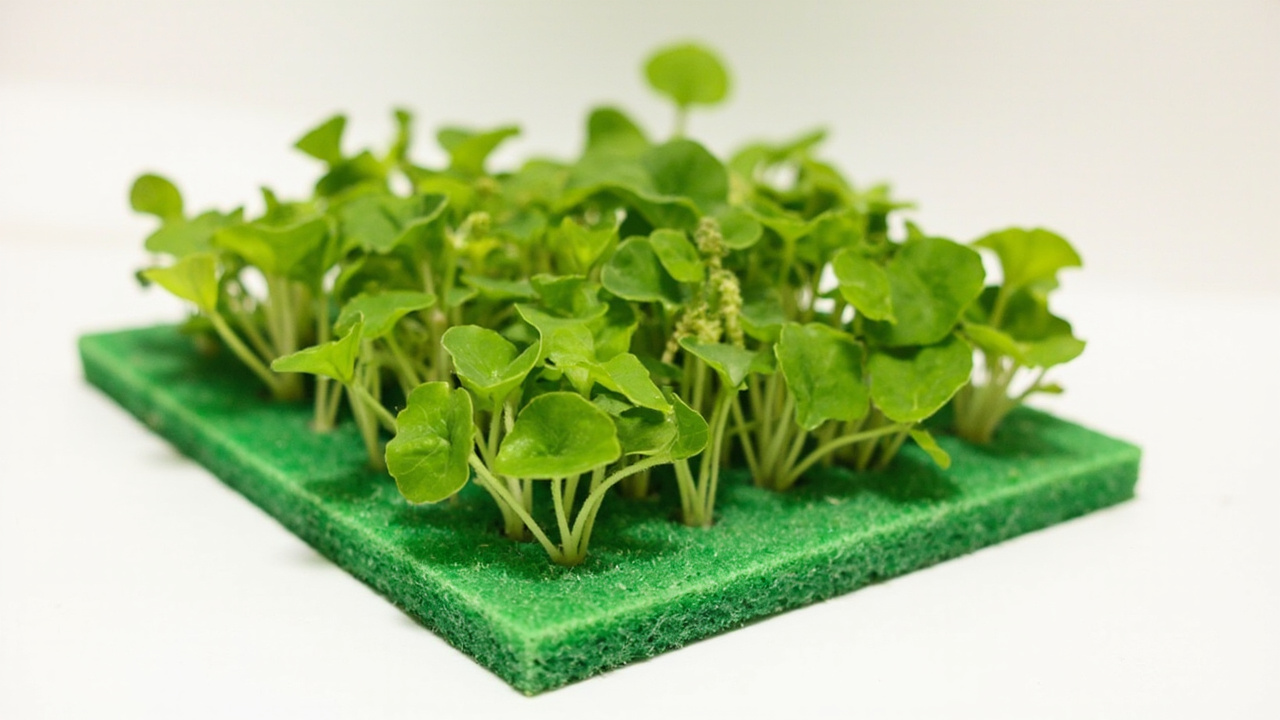
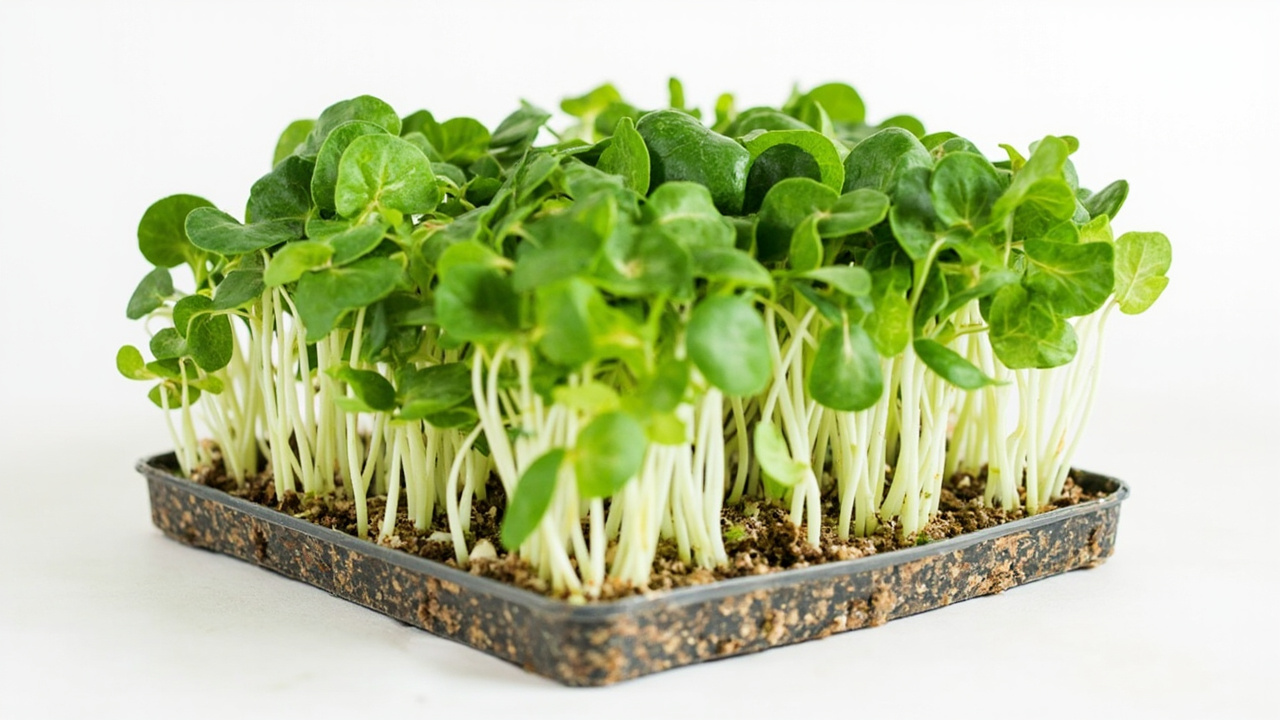
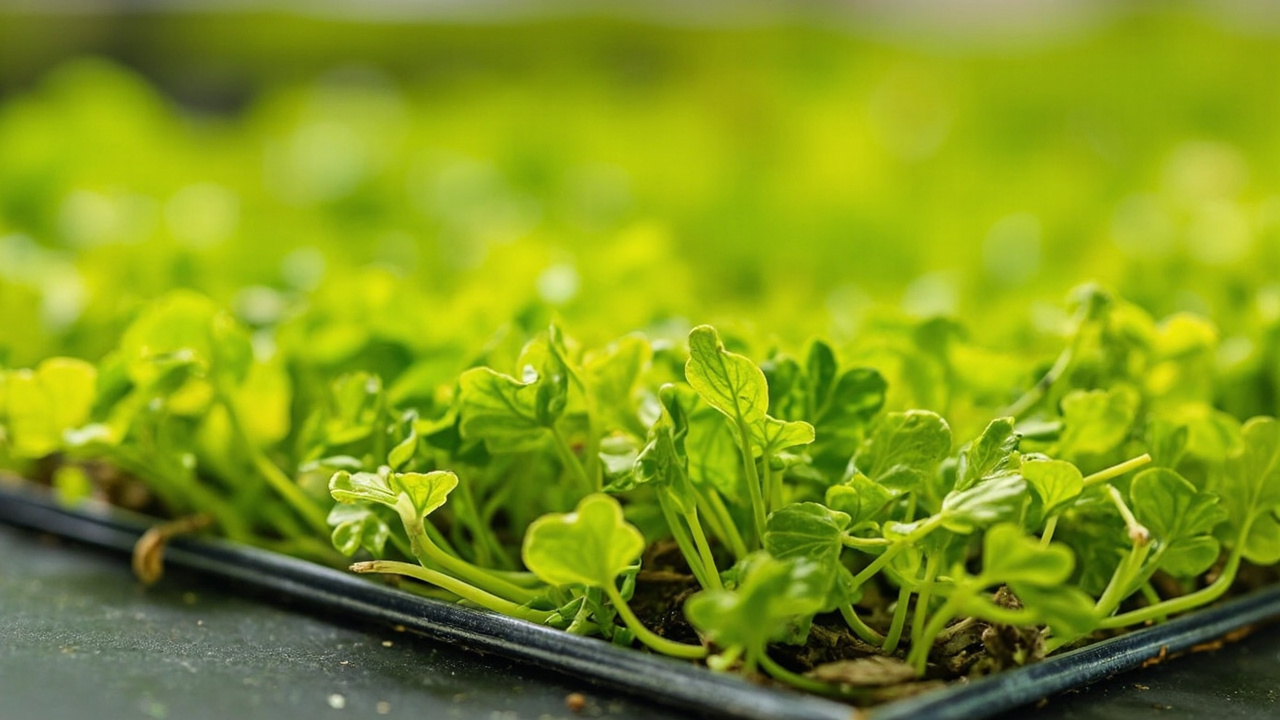
Water microgreens by misting at sowing, keeping the surface evenly damp during germination, and switching to bottom watering once the seedlings are upright. The goal is even moisture around the roots, not constant wetness around the stems.
Microgreens are dense, shallow, and fast. That makes watering feel simple, but it also means mistakes show quickly. Too little water gives patchy germination and crisp edges. Too much water creates sour media, weak stems, and a better environment for mold.
The Watering Rule For Microgreens
The core rule is to keep the root zone moist while keeping the canopy as dry as practical. This watering rhythm fits the full tray cycle in how to grow microgreens. Early on, seed needs surface moisture. Later, roots can drink from below.
That shift matters because leaves and stems are crowded. If you keep misting the canopy after germination, water sits between seedlings where airflow is weakest. Bottom watering lets the medium wick moisture upward without wetting the edible growth every day.
Misting During Sowing And Blackout
At sowing, mist the surface enough to settle seed against the medium. Seed size from the microgreens seeds guide changes how quickly the surface dries. Small brassica seeds need gentle, even moisture. Larger pea and sunflower seeds often need soaking before they ever reach the tray.
During the blackout period, check the tray daily. The surface should stay damp, not glossy or pooled. If the cover is dripping heavily, vent it briefly or reduce watering. Most fast crops only need a few covered days, so do not build a permanently wet chamber.
Bottom-Watering After Germination
Bottom watering works best with nested microgreens trays. A perforated tray holds the crop; a solid tray underneath holds water long enough for the medium to wick it upward.
- Lift the growing tray and pour a shallow layer of water into the bottom tray.
- Set the growing tray back down so the medium can wick moisture upward.
- Wait 10 to 20 minutes, then check the surface and tray weight.
- Pour off water that remains in the lower tray.
- Repeat when the tray feels lighter and the surface is no longer evenly damp.
The exact frequency depends on the room. A warm shelf under lights may need daily water. A cool humid room may need less.
How Medium And Light Change Watering
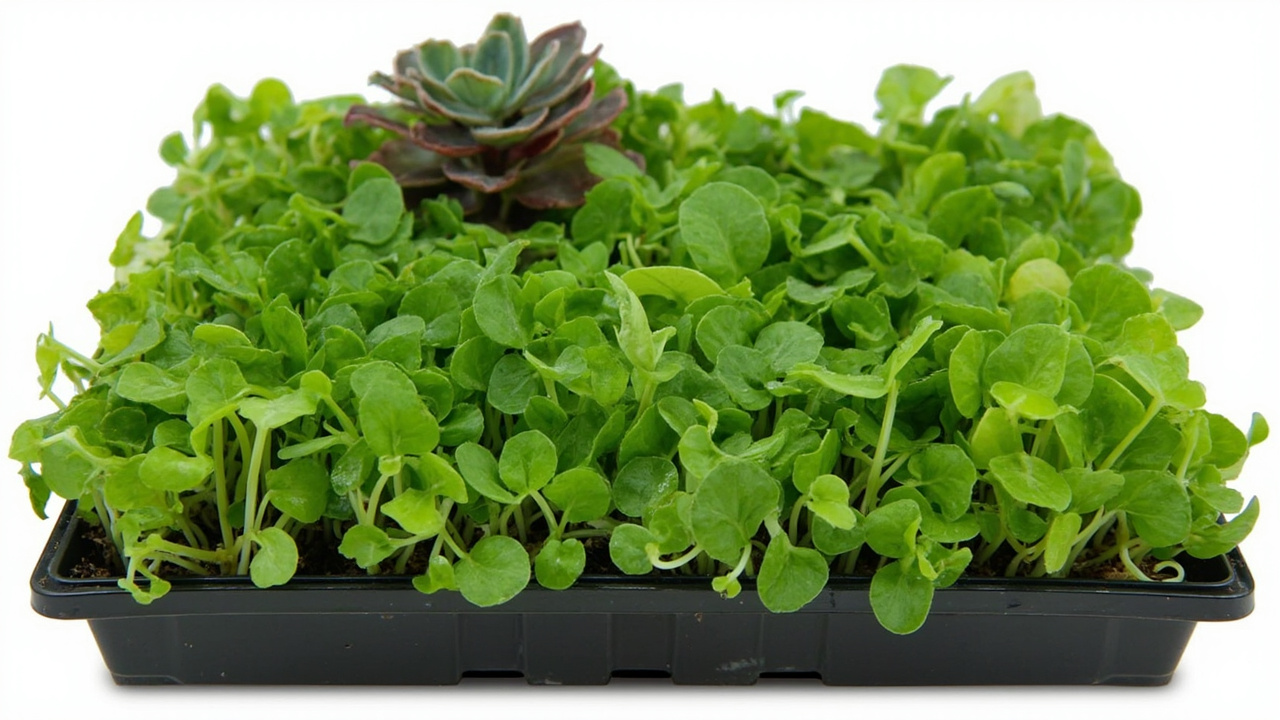
Watering only makes sense with the behavior of your microgreens growing medium. Coco coir holds moisture evenly but can stay wet if packed too thick. Fiber mats dry faster at the edges. Seed-starting mix may stay damp longer than it looks on the surface.
Light changes the rhythm too. Brighter light and airflow dry the tray faster. Weak light leaves stems soft and the canopy humid for longer. The honest trade-off is that the same watering amount can be perfect under one setup and too much under another.
Judge the tray by weight, surface feel, smell, and stem posture rather than a fixed schedule.
Signs You Are Overwatering Or Underwatering
Pale stretched stems may be water stress, but they can also point to microgreens light requirements. Look for the full pattern.
- Overwatering: sour smell, glossy surface, weak stems, slow dry-down, fuzzy growth near the base.
- Underwatering: crisp edges, stalled seedlings, light tray weight, medium pulling away from the tray sides.
- Uneven watering: strong center growth with dry corners or bare patches.
If unsure, water less often but more evenly from below. Then adjust one tray at a time.
Watering Before Harvest
Letting the surface settle before the microgreens harvest keeps stems cleaner. Do not harvest from a muddy, freshly soaked tray unless the crop is wilting and cannot wait.
The best final day is slightly moist below, dry enough above, and clean around the stems. That balance gives you a crisp cut, less grit, and microgreens that store better after harvest.
Turn PDF Bank Statements Into Workable Spreadsheets
Your bank statement is a mess of numbers, but your books shouldn't be. Use our converter to get Excel, CSV, or QBO files — ready for QuickBooks.
Try It Free Now