Six hours of direct sun is the minimum oregano tolerates. Eight to ten is where it crosses from surviving to producing the volatile oils that give it flavor.
Missouri Botanical Garden classifies Origanum vulgare as a full-sun plant based on its native Mediterranean habitat: rocky south-facing slopes where cloud cover is rare from May through September. Below six hours, oregano does not immediately die — it etiolates slowly, growing long pale internodes, and most gardeners do not connect the leggy look with low oil content. The fix is moving it to full sun and waiting for new compact growth; the existing stretched stems will never produce sun-equivalent flavor.
The full care routine — soil, water, fertilizer, troubleshooting — is on our oregano plant care guide; this page zooms in on the two variables that kill oregano fastest.
Indoor Light — Making Windowsills and Grow Lights Work
Growing oregano indoors is possible, but it requires accepting a flavor ceiling. A south-facing windowsill in the Northern Hemisphere delivers the most intense natural light available indoors, and even this is typically equivalent to 3-4 hours of direct sun rather than the 6-8 hours oregano needs. East- and west-facing windows provide 2-4 hours of direct light — insufficient for compact growth or strong flavor. North-facing windows are not viable for oregano under any circumstances.
The practical solution for indoor growers is supplemental lighting. UC IPM recommends a full-spectrum LED grow light positioned 15-30 cm (6-12 inches) above the plant canopy on a 14-hour daily timer. Look for a panel rated at least 2,000 lux at the leaf surface — many budget LED shop lights deliver only 500-800 lux, which is not enough. If you are growing oregano alongside other Mediterranean herbs like rosemary, the same grow light setup works for both. The light should cover the entire plant evenly; oregano at the edge of the light cone will still etiolate. Run the light from early spring through autumn, and reduce or eliminate it during winter dormancy when the plant naturally slows.
Even with optimal grow light setup, indoor oregano will rarely match the flavor intensity of outdoor-grown plants. The reason is spectrum: natural sunlight delivers a broader and more intense UV-B range than most affordable LED panels, and UV-B exposure is a key trigger for volatile oil production. Indoor oregano under good grow lights will be usable in cooking and far better than store-bought dried oregano — but it will not deliver the punch of a plant grown in eight hours of Mediterranean sun.
Seasonal adjustment matters indoors too. When winter day length drops below ten hours and the sun angle lowers, even south-facing windows deliver significantly less light. Reduce watering frequency during this period — the plant’s water uptake drops with light levels, and soil stays moist longer. Overwatering in low-light winter conditions is the most common cause of indoor oregano death.
The Root Rot Problem — Why Overwatering Kills Oregano First
Oregano’s root system is shallow, fine, and fast-draining by evolutionary design. In its native habitat, brief rainfall events soak rocky slopes and drain within hours. The roots capture water quickly and then experience rapid drying. When that same root system sits in moist potting mix for days — especially in a plastic pot with limited drainage — fungal organisms that are present in virtually all soils colonize the root tissue and begin breaking it down. This is root rot, and it is the single most common cause of oregano death in home gardens.
The two primary culprits are Phytophthora and Pythium — water molds (oomycetes) that thrive in saturated soil with poor aeration. They enter through root tips and wounds, then spread upward through the root cortex into the crown. Phytophthora is more aggressive in warm conditions (above 20°C/68°F), while Pythium tolerates cooler temperatures and is more common in overwintered indoor plants. Both produce identical above-ground symptoms: yellowing lower leaves, wilting despite moist soil, and eventual crown collapse.
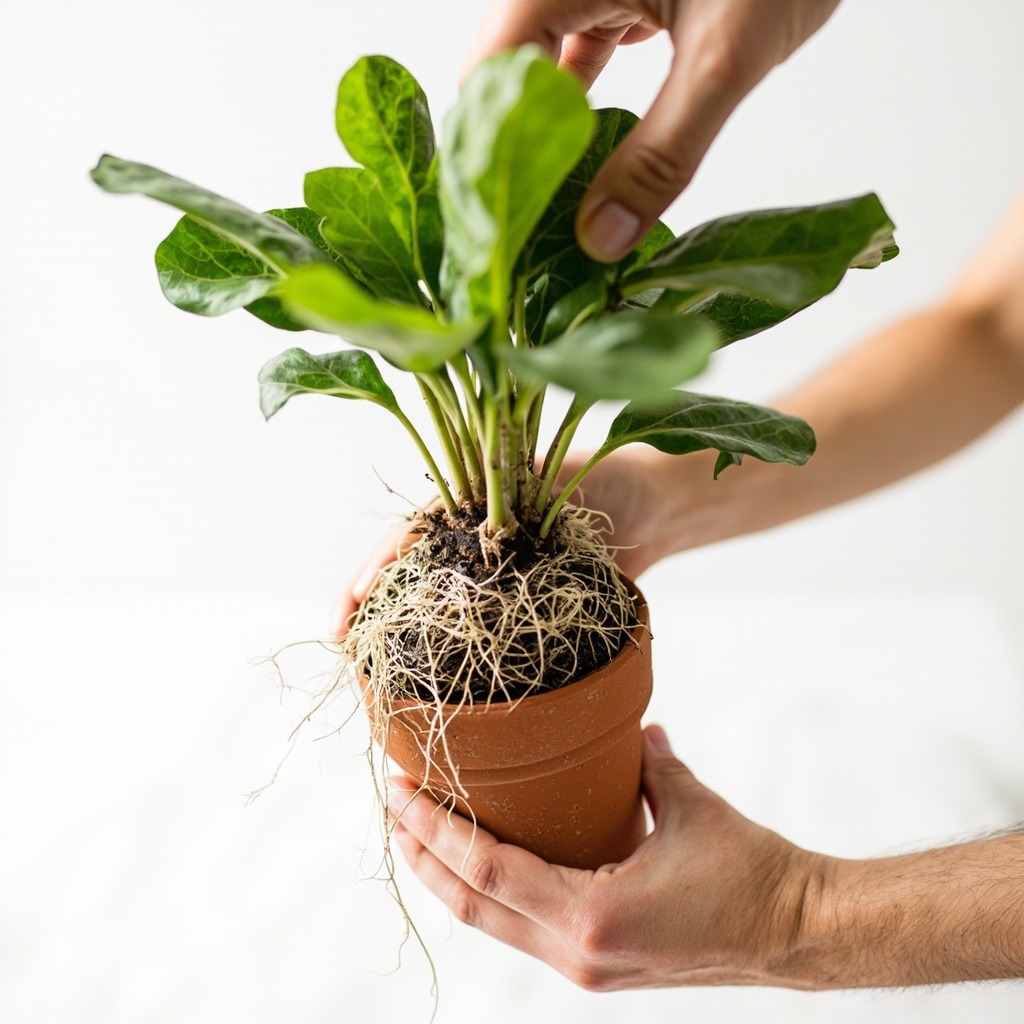
Early detection is critical because root rot is reversible only in its initial stages. The first sign is lower leaves turning yellow while upper growth still looks healthy — this is the fungus working upward from the root tips. If the soil feels moist and the plant is wilting, stop watering immediately. Remove the plant from the pot and inspect the roots: healthy oregano roots are white or pale tan and firm. Infected roots are brown, soft, or mushy, and the outer cortex may slough off when you gently pull the root between your fingers.
Advanced root rot is unmistakable. The entire root system is blackened and collapses when touched. The crown — where stems meet roots — is soft and may have a faintly foul smell. The plant pulls free from the soil with no resistance because the roots have disintegrated. At this stage, the plant cannot be saved as-is, but you can take stem cuttings from any remaining healthy growth and start over. This is why early detection matters: once the crown is compromised, the plant is gone.
The Soak-and-Dry Method — A Watering Protocol That Works
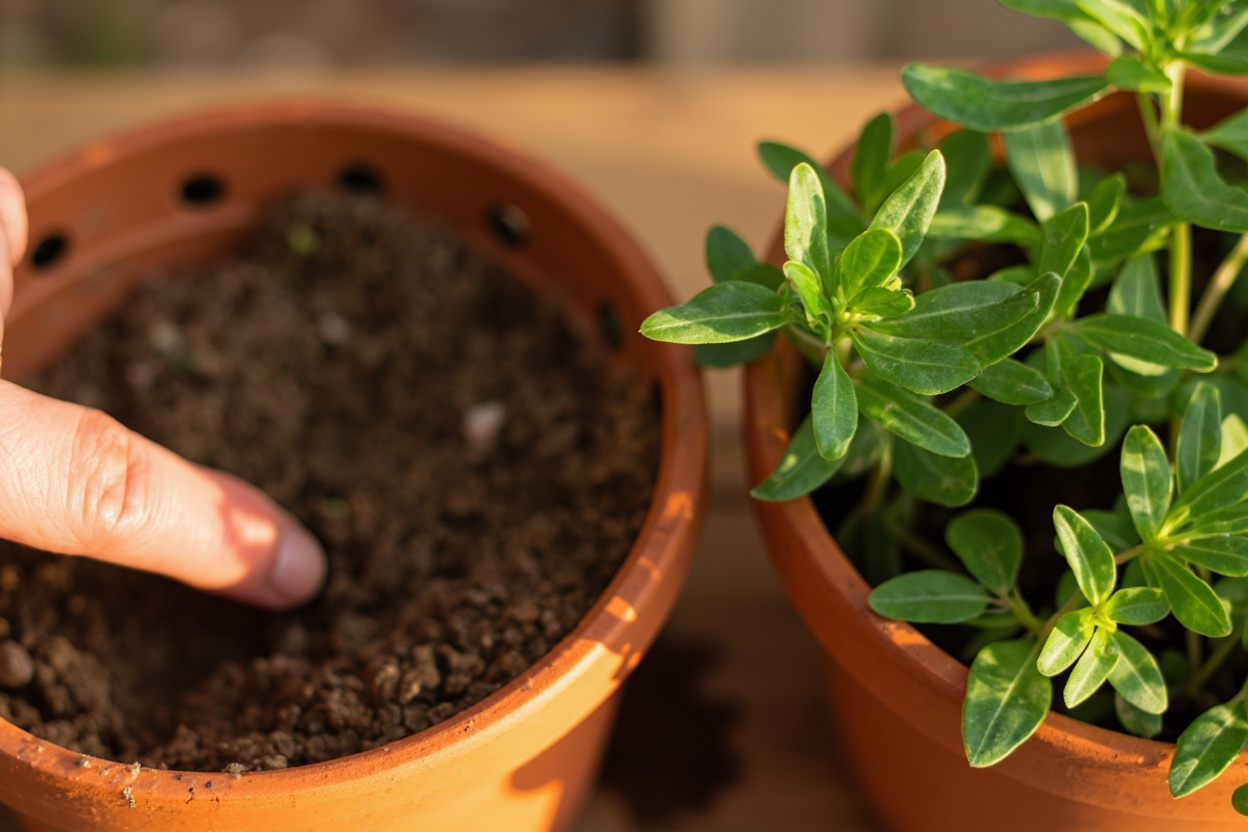
The correct way to water oregano is the soak-and-dry method: water thoroughly until water runs freely from the drainage holes, then do not water again until the top 5 cm (2 inches) of soil is completely dry. This mimics oregano’s natural cycle — a brief deluge followed by rapid drying — and it prevents the chronic moisture that triggers fungal infection. If your oregano is already showing yellow leaves, jump to our oregano yellow leaves guide for the full diagnostic.
The finger test is your primary tool. Insert your index finger into the soil to the second knuckle (approximately 5 cm / 2 inches). If you feel any moisture at all, do not water. If the soil is completely dry at that depth, water thoroughly. In a terracotta pot in full summer sun, this might mean watering every 5-7 days. In a plastic pot in partial shade, it might mean every 10-14 days. There is no calendar schedule — the soil tells you when, not the date.
A secondary indicator is the leaf test. Well-hydrated oregano leaves are firm, slightly thick, and held at a 45-90 degree angle from the stem. When the plant begins to need water, the leaves feel marginally thinner and may angle slightly downward. This is the ideal watering point — the plant is slightly thirsty but not stressed. Do not wait for visible wilting: oregano leaves that are visibly drooping have already experienced significant moisture stress, and repeated wilting episodes weaken the plant and reduce flavor.
Container material significantly affects drying time. Terracotta is porous and wicks moisture through the pot walls, so soil dries roughly 30-50% faster than in a plastic pot of the same size. Glazed ceramic falls between the two. If you use plastic, be more conservative with watering — the soil will stay moist longer, and the margin for error is smaller. Always use a pot with at least one drainage hole, and never let the pot sit in a saucer of standing water.
Seasonal Watering Calendar — Adjusting Through the Year
Newly transplanted oregano needs a different watering regime than established plants. During the first 2-3 weeks after transplanting, water every 3-4 days to keep the top 2.5 cm (1 inch) of soil consistently moist — not wet, but not dry. This establishment phase allows the fine root system to grow into the surrounding soil. Once you see new growth emerging from the center of the plant (typically week 2-3), transition immediately to the drought-tolerant soak-and-dry regime.
During active growth (spring through autumn), watering frequency depends on temperature, light, pot size, and soil composition. In hot, sunny conditions with a terracotta pot, expect to water every 5-7 days. In cooler, cloudier weather or with plastic pots, every 10-14 days is more typical. The finger test remains your guide regardless of season. Outdoor plants in the ground may need no supplemental water at all in regions with regular rainfall — oregano is one of the few herbs that performs better with too little water than too much.
Winter dormancy changes everything. Outdoor plants in zones 5-7 go fully dormant: growth stops, leaves may drop, and the plant survives on stored root energy. Watering during dormancy should be minimal to none — perhaps once a month during extended dry spells, and never when the ground is frozen. Indoor container plants slow dramatically but do not fully dormant. Water only when the soil is bone-dry throughout the pot, which may be every 2-3 weeks in a cool room with limited light.
The single most useful rule in oregano watering: when in doubt, wait another day. Oregano tolerates underwatering far better than overwatering — the same principle applies to thyme watering and other Mediterranean herbs. A thirsty oregano plant recovers within hours of watering. An overwatered oregano plant may take weeks to show symptoms, by which point the damage is often irreversible. If you are not sure whether to water, skip it and check again tomorrow.
Quick Diagnostic — Is Your Oregano Thirsty, Drowning, or Starved for Light
Most oregano problems fall into one of three categories, and the symptoms are distinct once you know what to look for. Stretching — long internodes, stems reaching toward the light, sparse foliage — means insufficient light. Move to full sun or add a grow light. Yellowing lower leaves with wilting despite moist soil means overwatering and likely root rot. Stop watering, check the roots, and repot in dry soil. Thin, dry leaves with crisp edges and dry soil means underwatering — water deeply and the plant recovers within hours.
The touch test combines three observations. First, check soil moisture with the finger test. Second, feel the leaf firmness — thick and turgid means adequately hydrated, thin and papery means thirsty. Third, examine the stem base — firm and green means healthy, soft and brown means crown rot. Combine these three data points: dry soil + thin leaves = water now; wet soil + yellow leaves + soft stem = root rot, stop watering; dry soil + firm leaves + compact growth = the plant is fine, leave it alone.
Recovery timelines vary by problem. Etiolated plants produce new compact growth within 2-3 weeks of light correction, but existing leggy stems never recover — prune them back. Overwatered plants that catch early (yellowing just beginning, roots still mostly white) recover in 2-4 weeks after repotting in dry soil and stopping water. Severely root-roted plants with blackened crowns cannot be saved — take cuttings from any green growth and restart. Underwatered plants recover within hours of a deep watering.
Knowing when to give up is part of good gardening. If the crown is soft, the roots are black, and there is no green growth at the base, the plant is not coming back. Do not wait weeks hoping for recovery — the fungal infection will spread to any nearby plants in shared soil. Remove the plant, discard the soil, sterilize the pot, and start fresh with a cutting from a healthy plant or a new nursery purchase. Our save dying oregano guide covers stem-rescue and re-rooting techniques for borderline cases. Oregano is inexpensive and fast-growing from cuttings; nursing a dead plant is not worth the effort or the risk to your other herbs.
From PDF to Excel in one click
Forget retyping line by line. Upload any bank statement, get a spreadsheet you can actually use. Your files are never stored, and you can test the converter with 3 free conversions.
Try it free