Lucky bamboo can grow in either water or soil — but the two methods produce very different results over time. Most plants arrive in a glass vase with water and pebbles, and that setup works fine for 1–2 years as a decorative accent. For long-term health, thicker stalks, and a plant that lasts 5+ years, soil is almost always the better choice. The growing medium changes how roots develop, how the plant accesses nutrients, and how quickly problems like root rot or yellowing stalks appear.
This isn’t a matter of preference alone. Lucky bamboo grown in water develops thinner, more fragile roots that are vulnerable to bacterial infection and algae buildup. In soil, the same plant builds a denser root system, accesses a steady supply of nutrients, and grows noticeably faster. The trade-off is that soil requires more active maintenance — repotting, drainage management, and a fertilizing schedule.
This guide compares both methods across seven dimensions: root health, growth speed, maintenance effort, lifespan, common problems, nutrient delivery, and suitability for different growing conditions. By the end, you’ll know which method fits what you actually want from the plant.
How Lucky Bamboo Roots Actually Work in Each Medium
Lucky bamboo (Dracaena sanderiana) is not true bamboo at all — it’s a tropical dracaena species that happens to tolerate semi-aquatic conditions. It can grow in water, but it genuinely thrives in soil. The root structure it develops in each medium tells the whole story.
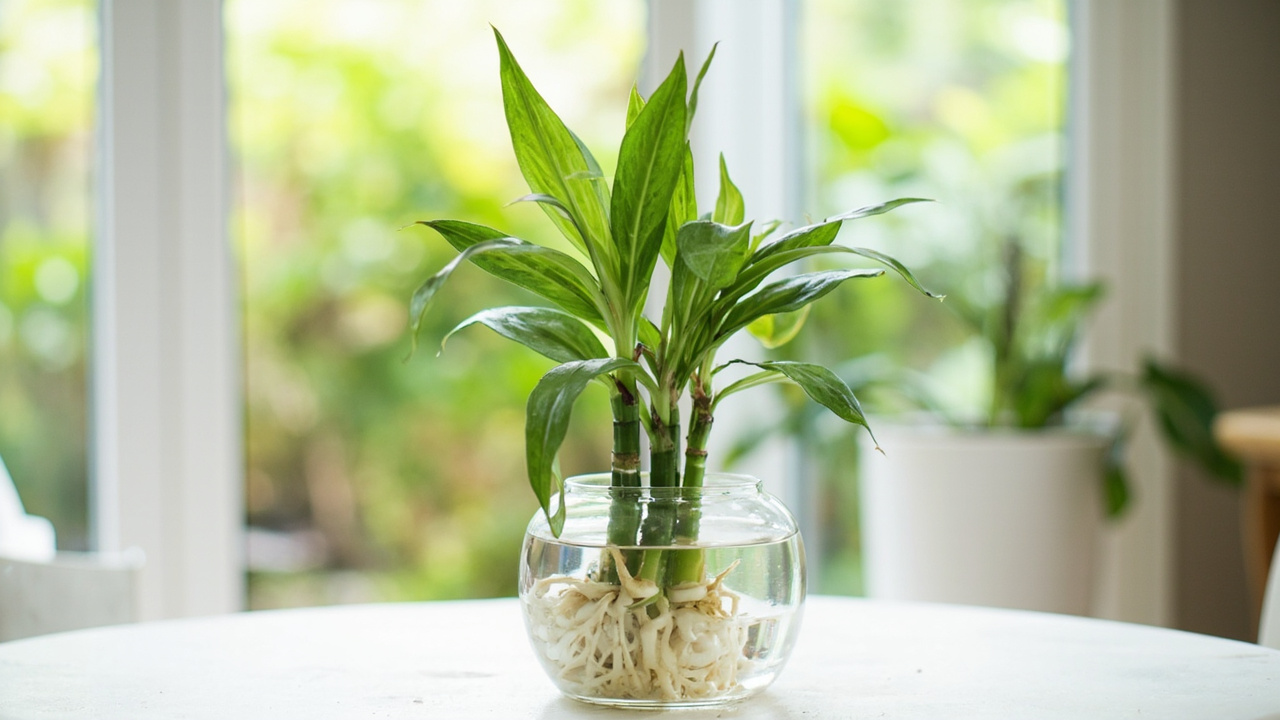
In water, roots stay thin, stringy, and white. They absorb dissolved nutrients directly from the water column, which works as long as you’re consistently adding liquid fertilizer. But these water roots lack the protective structures and symbiotic microbial relationships that soil-grown roots develop. They’re efficient at short-term nutrient uptake but fragile over long periods.
In soil, roots grow thicker and branch out with fine root hairs. These hairs dramatically increase surface area for nutrient absorption. The soil itself acts as a buffer — it holds nutrients, releases them gradually, and supports beneficial bacteria and mycorrhizal fungi that help the plant process food more effectively. That’s why soil-grown lucky bamboo produces stronger stalks, more offshoots, and noticeably faster upward growth compared to water-grown plants of the same age.
Growing Lucky Bamboo in Water: The Complete Method
Growing lucky bamboo in water is straightforward, but doing it right requires more attention than most people realize. The key factors are water quality, water changes, and consistent but light feeding.
Use distilled or bottled water whenever possible. Tap water contains chlorine and fluoride, both of which cause yellow leaf tips and browning stalk edges over time. If you must use tap water, let it sit uncovered for 24 hours so chlorine can off-gas — though this won’t remove fluoride. Spring water is a good middle-ground option.
Change the water every 7-10 days. Stagnant water breeds bacteria and algae, and dissolved oxygen drops as the plant consumes it. When you change the water, rinse the roots gently under room-temperature running water to remove any slime buildup. Refill to 1-2 inches above the root base — never submerge the stalks themselves, as this promotes rot.
Add liquid houseplant fertilizer at one-quarter strength every 2-3 water changes. Lucky bamboo is a light feeder, and over-fertilizing in water burns the roots quickly. A drop or two of standard liquid fertilizer (like a 10-10-10 blend diluted to quarter strength) is plenty. Skip fertilizer entirely if the plant looks healthy and is producing steady growth.
Use clean pebbles, marbles, or glass gems for support at the base. Avoid gravel with sharp edges — it traps organic debris and makes cleaning difficult. Wash the pebbles during every water change to prevent algae buildup on their surfaces.
The main advantages of water culture are visual clarity and simplicity. You can see the roots, monitor health easily, and there’s no soil mess. The downsides accumulate over time: slow growth (typically 2-4 inches per year), increasing nutrient deficiency, and a higher risk of root rot if you fall behind on water changes. Most water-grown lucky bamboo plants peak around year 2 and start declining after that.
Growing Lucky Bamboo in Soil: The Complete Method
Switching lucky bamboo to soil unlocks significantly better growth and a much longer lifespan, but the setup matters more than most beginners expect. Drainage is the single most important factor — lucky bamboo roots will rot in waterlogged soil faster than in stagnant water.
Use a well-draining potting mix. A simple blend of 1 part peat moss (or coco coir), 1 part perlite, and 1 part coarse sand works well. This provides enough moisture retention while ensuring excess water drains through quickly. Avoid heavy garden soil or anything labeled “moisture control” — those hold too much water for a plant that’s prone to root rot.
Choose a pot that’s about 2 inches wider than the root ball. A pot too large holds excess moisture around unused soil, encouraging fungal growth. Make sure the pot has drainage holes at the bottom — this is non-negotiable. A terracotta pot is ideal because it wicks away moisture from the sides, reducing the risk of overwatering.
Water when the top 1 inch of soil feels dry to the touch, which works out to roughly every 7-10 days depending on your home’s humidity and temperature. Stick your finger into the soil — if it’s dry up to your first knuckle, it’s time to water. Water thoroughly until it runs from the drainage holes, then empty the saucer after 15 minutes. Never let the pot sit in standing water.
Fertilize once a month with a diluted balanced fertilizer. A 10-10-10 blend at half strength works well during the growing season (spring through early fall). Cut back to every 6-8 weeks during winter when growth naturally slows. Signs of under-fertilization in soil include pale leaves and very slow new growth. Signs of over-fertilization include brown leaf tips and a white crust on the soil surface.
The practical advantages of soil are substantial. Soil-grown lucky bamboo produces 4-8 inches of new growth per year, develops stronger stalks, and can live 5-10 years or longer with proper care. The main trade-offs are that you can’t visually inspect the roots, overwatering is a real risk, and there’s the inevitable soil mess factor. But for a plant you plan to keep long-term, soil delivers noticeably better results.
Water vs Soil: Side-by-Side Comparison
| Factor | Water | Soil |
|---|---|---|
| Growth rate | Slow (2-4 inches/year) | Moderate (4-8 inches/year) |
| Lifespan | 1-3 years typical | 5-10+ years |
| Maintenance | Change water weekly | Water when dry (every 7-10 days) |
| Nutrient needs | Liquid fertilizer every 2-3 changes | Monthly granular/liquid |
| Root rot risk | Medium (stagnant water) | Medium (overwatering) |
| Best for | Decorative arrangements, gifts | Long-term growth, outdoor |
| Cost | Low (just container + pebbles) | Low-medium (pot + soil) |
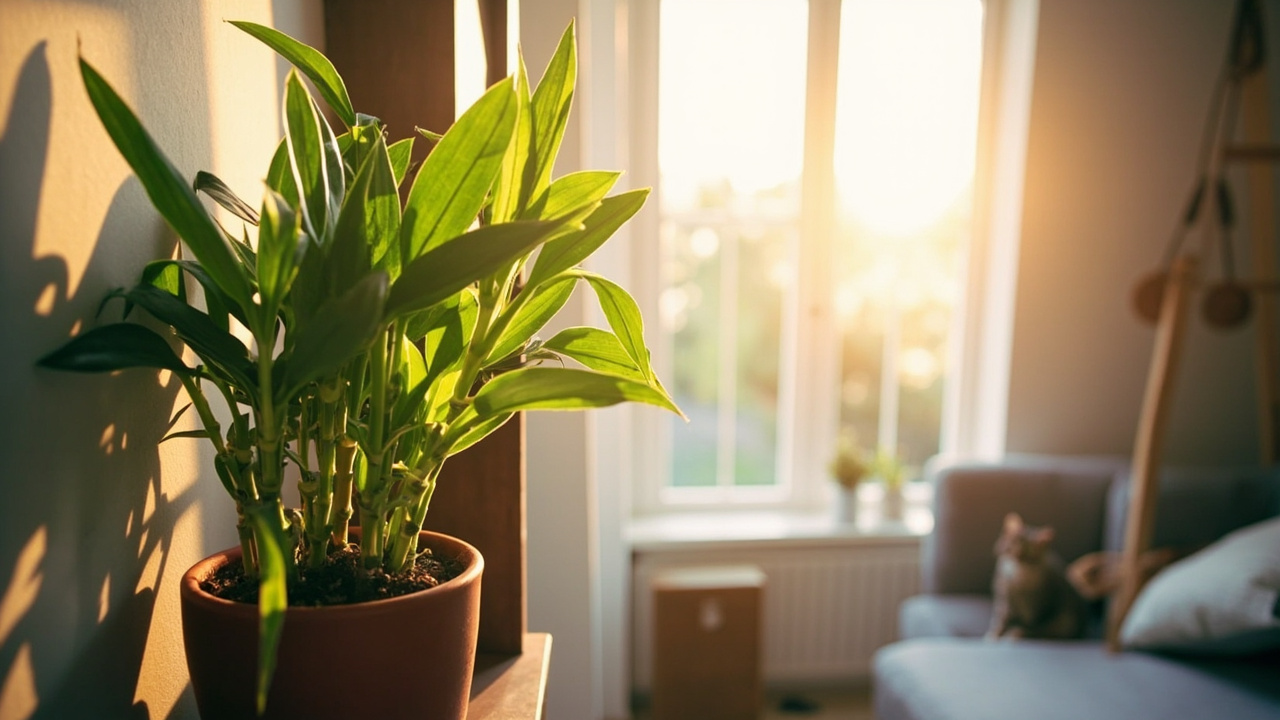
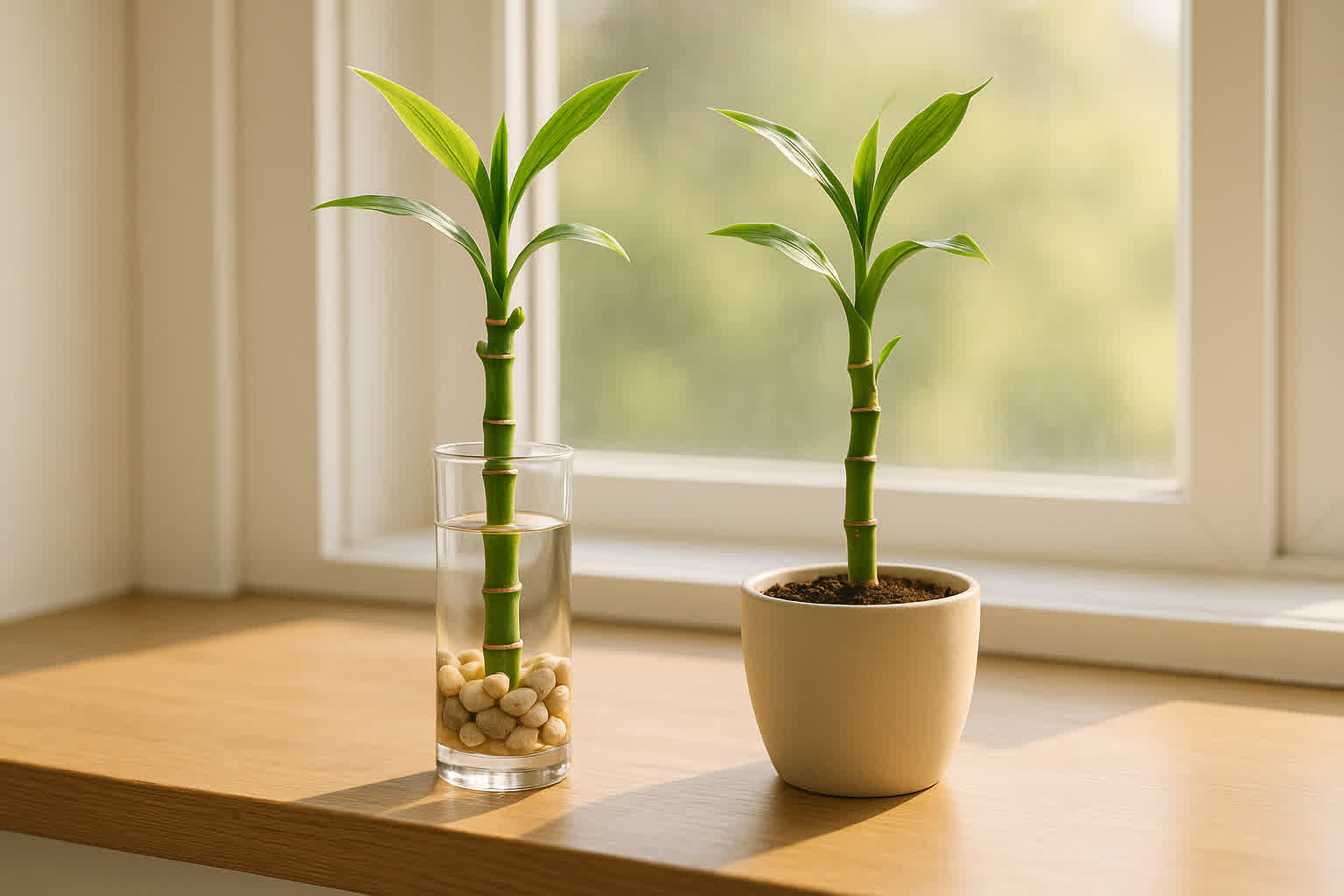
Lucky bamboo in water (left) vs soil (right) — both methods work, but they produce different growth rates and maintenance needs.
The numbers tell a clear story. Soil-grown plants grow faster, live longer, and require less frequent intervention once established. Water-grown plants look cleaner and are easier to monitor, but they plateau early. Neither method is wrong — they just serve different purposes.
Can You Switch Lucky Bamboo from Water to Soil (and Vice Versa)
Both transitions work, but neither is instant. The plant needs time to develop the right type of roots for its new environment.
For a water-to-soil transition, expect a 2-4 week adjustment period. During this time, some lower leaves may yellow and drop — that’s normal and not a sign of failure. The thin water roots need to develop thicker, soil-adapted structures. To make the switch, gently remove the plant from its water container, rinse the roots, and plant it in pre-moistened soil at the same depth it was sitting in water. Keep the soil consistently moist (not soggy) for the first 2 weeks, then transition to the regular watering schedule. Avoid fertilizing during the adjustment period — the plant is stressed enough without nutrient pressure.
For a soil-to-water transition, trim back the soil roots by about one-third. Soil roots are too thick and branching to function well in water. After trimming, place the plant in a clean container with distilled water, keeping the water level just above the cut root ends. New water-adapted roots will begin growing within 1-2 weeks. Change the water every 5 days during this transition period to keep it oxygenated. Don’t add fertilizer until you see at least 1 inch of new white root growth.
The best time to make either switch is during the active growing season (spring or early summer). Avoid transitioning during winter dormancy — the plant lacks the energy reserves to regrow roots effectively when growth has naturally slowed.
Which Method Should You Choose?
Your decision comes down to three practical questions: how long you want to keep the plant, how much maintenance you’re willing to do, and what visual setup you prefer.
Choose water if: you want a decorative arrangement for under 2 years, you prefer the clean look of a glass container with pebbles, you’re reliable about weekly water changes, or the plant is a gift where aesthetics matter more than longevity. Water culture also makes sense for office desks and small spaces where soil mess would be a problem.
Choose soil if: long-term plant health is your priority, you want to see real growth (new shoots, taller stalks, thicker stems), you travel occasionally and can’t commit to weekly water changes, or your plant has been in water for over a year and growth has noticeably slowed. Soil is also the better option if you eventually want to move the plant outdoors to a shaded patio or garden bed during warmer months.
There’s no penalty for starting in water and switching to soil later. In fact, that’s what most experienced growers recommend — enjoy the clean water setup while the plant is young, then transition to soil when growth starts to plateau, typically around the 12-18 month mark. If you start noticing persistent brown tips on your lucky bamboo despite regular water changes, that’s often the plant’s way of signaling it’s outgrown the water-only setup.
For plants already showing stress — whether it’s a dying lucky bamboo that needs revival or one with drooping leaves — switching to fresh soil with proper drainage often provides the recovery boost that water culture can’t. The soil buffers nutrients, supports root recovery, and gives the plant a more stable growing environment while it bounces back. If you’re dealing with fixing brown tips on lucky bamboo caused by fluoride exposure, soil also dilutes and filters those compounds better than straight water.
Understanding that lucky bamboo is actually a dracaena species rather than true bamboo also helps explain why it responds so well to soil — it evolved as a tropical understory plant with access to rich, well-draining forest floor substrate, not standing water.
Lucky Bamboo in Water vs Soil: Making the Right Choice for Your Plant
Both growing methods work for lucky bamboo, but they produce meaningfully different outcomes. Water gives you a clean, low-maintenance decorative plant for 1-3 years. Soil delivers stronger growth, better long-term health, and a lifespan that can stretch past a decade.
The most practical approach for most home growers is to start in water (since that’s how most plants are sold) and transition to soil after the first year when growth naturally slows. The switch takes about a month and is rarely fatal when done during the growing season with proper aftercare.
Whichever method you pick, the fundamentals stay the same: use clean water or well-draining soil, feed lightly, avoid submerging stalks, and watch for early warning signs like yellowing leaves or mushy roots. Catch those early, and your lucky bamboo will stay healthy in either medium.
From PDF to Excel in one click
Forget retyping line by line. Upload any bank statement, get a spreadsheet you can actually use. Your files are never stored, and you can test the converter with 3 free conversions.
Try it free