Lucky bamboo that looks stretched, pale, or strangely thin is usually not asking for more fertilizer. It’s asking for better light. That’s the part people miss. They assume a low-light plant can live anywhere, then wonder why the stems lean and the leaves lose color. Here’s the real light range that keeps it steady.
What light lucky bamboo actually wants
Lucky bamboo is Dracaena sanderiana, and it behaves like a dracaena, not a cactus. It likes bright indirect light – the kind that fills a room without beating on the leaves. If your plant is in a dim corner, it’ll survive for a while, but it won’t thrive. Survival and health are not the same thing.
How much light is enough
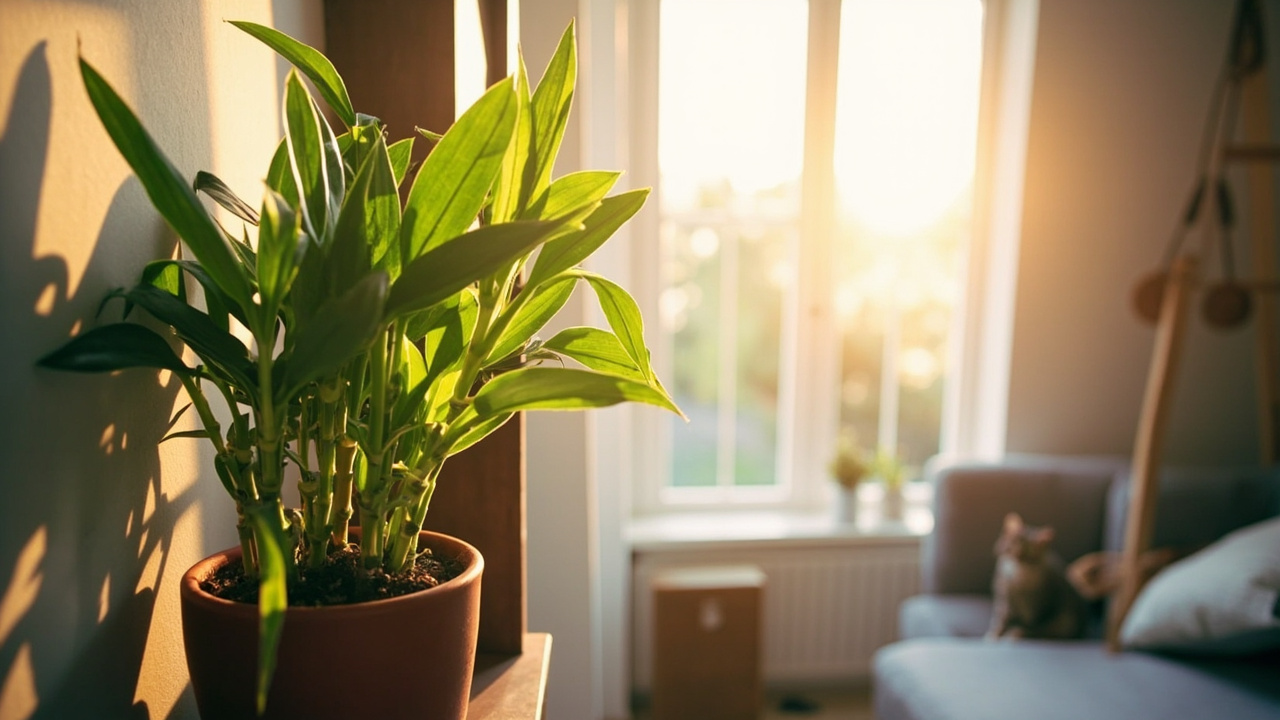
Think in hours, not vibes. Around 4-6 hours of bright indirect light daily is a good target. That doesn’t mean direct sun through glass. It means enough light that you can read comfortably nearby without the plant baking. After you move it into better light, new growth should come in more compact within a few weeks.
What too little light looks like
Low light causes leggy stems, slow growth, and pale leaves. The plant stretches toward the nearest window because that’s what weak light does. If the stems are leaning hard, don’t blame the pot. The light is the issue. The tradeoff is obvious: low light is tolerated, but it produces weaker structure.
How to place it indoors
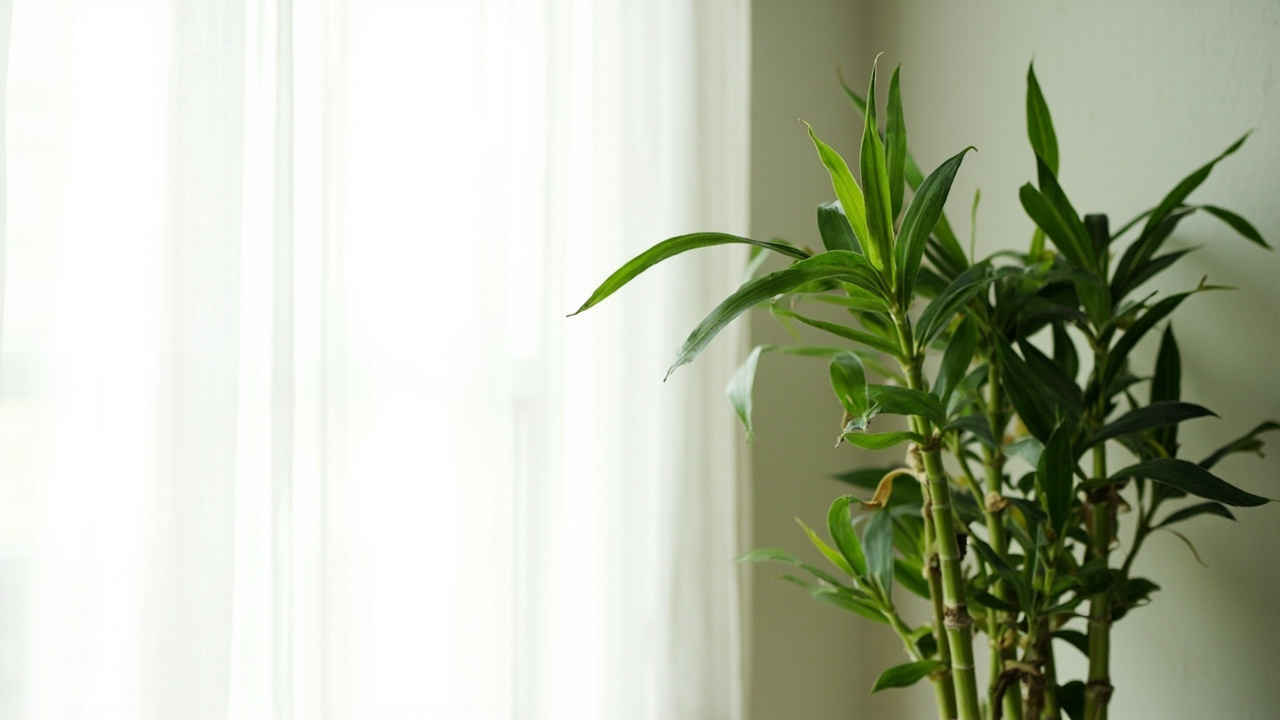
The best spots are near an east-facing window, or a few feet back from a south- or west-facing window with a sheer curtain. That gives brightness without scorch. If you only have a darker room, put the plant as close to the best natural light source as possible and rotate it weekly. After rotating, the lean should start to correct over time.
Avoid direct afternoon sun
Direct afternoon sun is too much for the leaves. It can bleach or scorch them, especially in hot climates. If the leaves look washed out or crisp at the edges, move the plant immediately. After the move, the damage stops spreading, but the old tissue won’t repair itself.
Use artificial light only if needed
A simple grow light can help if your room stays dark most of the day. Keep it on a timer for about 10-12 hours, and don’t hang it right on top of the plant. After a week or two, you’ll know whether the stems are staying greener and tighter.
How light affects water-grown plants
Water-grown lucky bamboo can fool people because the roots stay hidden and the leaves may look fine for a while. But low light plus stagnant water is a slow decline. The plant still needs enough energy to keep its roots and stalks healthy. If the water stays clean but the light stays weak, you’ll still see slow decline over time.
Watch for stretched growth
Stretching is the signal. If new leaves are smaller and farther apart, or the stem starts bending, increase light first. Do that before you reach for fertilizer. After the light improves, growth should look more compact and intentional.
What temperature should accompany the light
Keep the plant in roughly 65-90°F / 18-32°C. Light and temperature work together here. A bright spot that also runs hot near a window can dry the plant out faster than you’d expect. If the room feels warm enough for you to leave a fan on, the plant may need more water checks too.
When to move the plant
If the leaves are pale, the stems are leaning, or new growth is thin, move the plant closer to brighter indirect light now. Don’t wait for a dramatic collapse. After you move it, the next growth cycle will tell you whether the light was the missing piece.
For the rest of the care system, pair this with Lucky Bamboo Care for Beginners. If you are still deciding between setup styles, Lucky Bamboo in Water vs Soil helps with the tradeoff. And if your plant is already showing stress, Lucky Bamboo Turning Yellow is the next article to read.
Turn PDF Bank Statements Into Workable Spreadsheets
Your bank statement is a mess of numbers, but your books shouldn't be. Use our converter to get Excel, CSV, or QBO files — ready for QuickBooks.
Try It Free Now