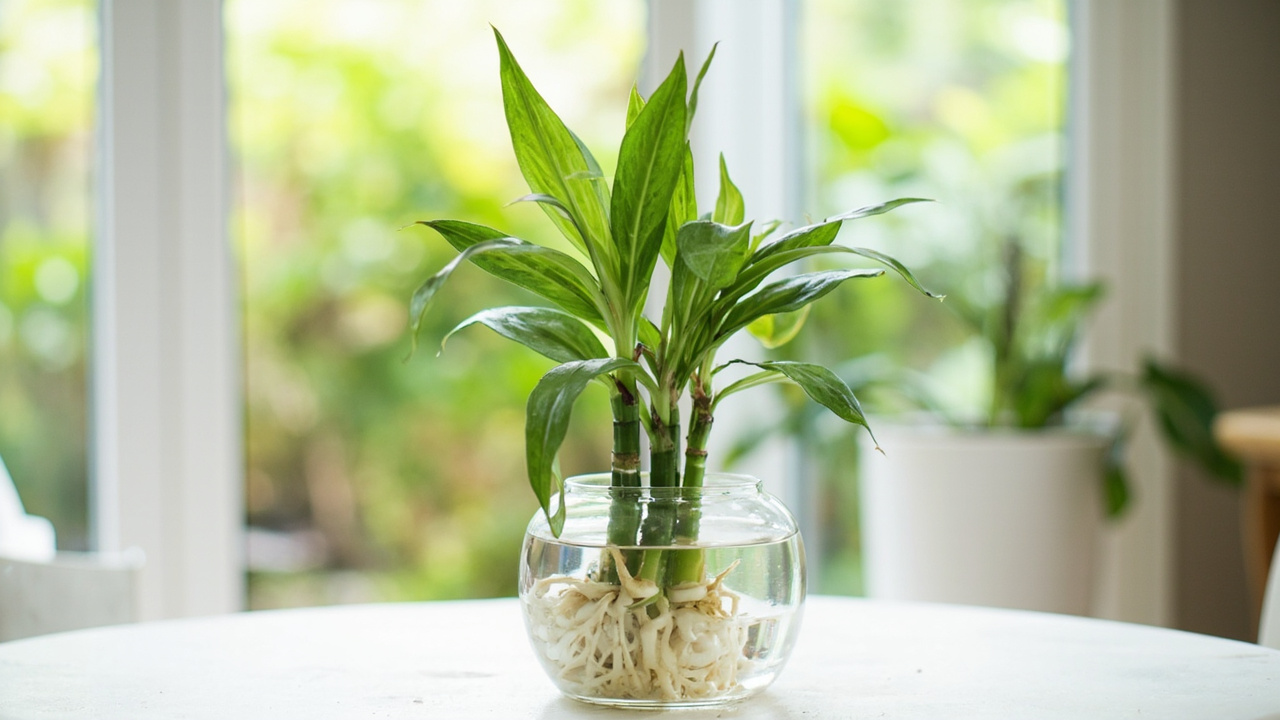
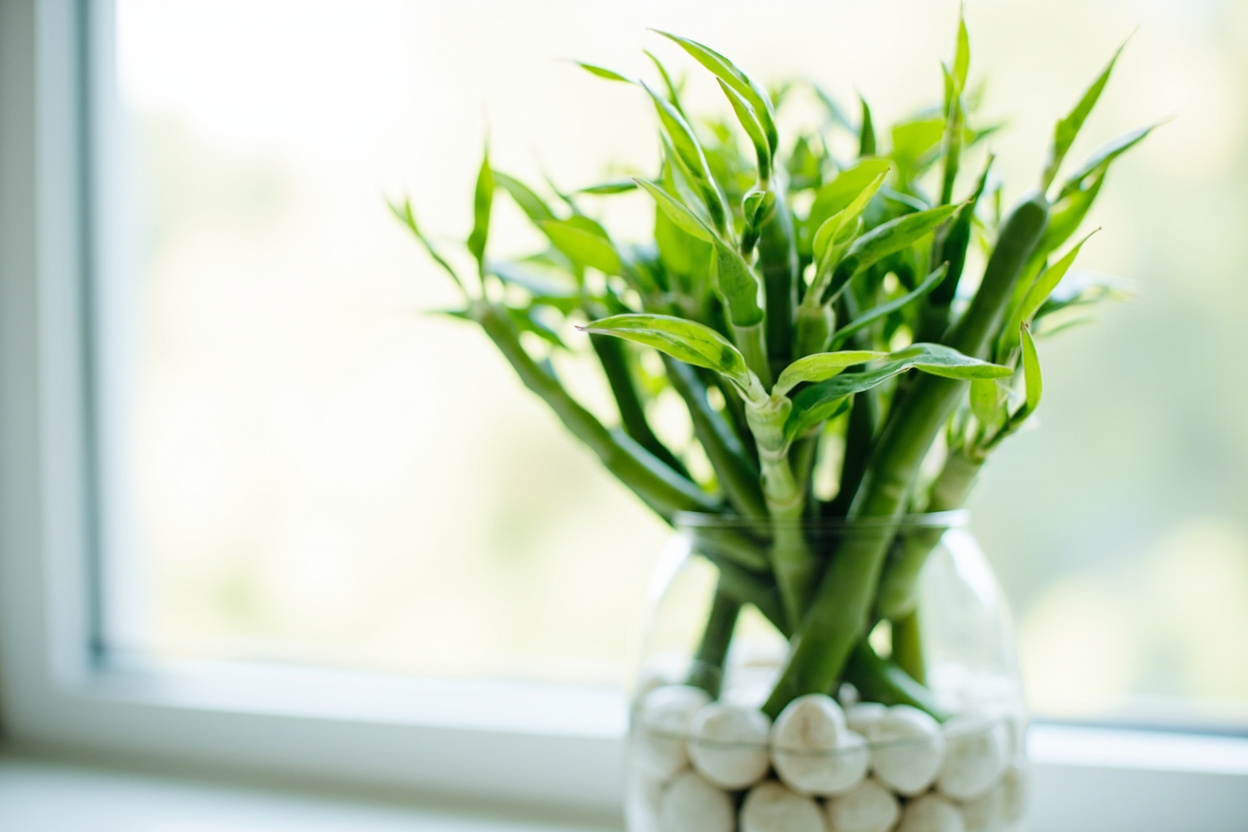
Lucky bamboo grows in two very different environments — water with pebbles or soil in a pot — and both have one thing in common: the plant does not need much feed to stay healthy. Most problems people see with lucky bamboo are not caused by too little fertilizer but by too much, and knowing where that line sits changes everything about how you care for the plant long-term.
The plant is a Dracaena sanderiana, not a true bamboo, which means it has lower nutritional demands than actual grasses (see the full care overview in our lucky bamboo care guide). In water, nutrients come almost entirely from whatever you add yourself — there is no soil reservoir to fall back on. In soil, the medium holds some fertility on its own, so the feeding schedule shifts accordingly. Getting this wrong is the single most common mistake with lucky bamboo, and it usually shows up as brown tips, yellow leaves, or stunted growth that gets misdiagnosed as something else entirely.
How Often to Fertilize Lucky Bamboo in Water
Water-grown lucky bamboo depends on you for every nutrient it receives, which makes timing and concentration critical. Add fertilizer every 6–8 weeks (roughly every 2 months) during the growing season from spring through early autumn. In winter, when growth naturally slows, extend that gap to every 3 months or skip feeding altogether until new growth resumes.
A single drop of diluted liquid fertilizer per litre of water is enough for most water-grown specimens — not a full teaspoon, not a capful, just one drop. Some growers use aquarium water from a healthy tank as a natural alternative, which provides trace nutrients without the risk of concentrated salts building up in the container. If you are using standard liquid houseplant fertilizer, dilute it to one-tenth of the label strength before adding it to the water.
Within 1–2 weeks of feeding, you should see the newest leaf or growth point deepen in colour and the stalk firm up slightly. If the tips of existing leaves turn brown within days of feeding, the concentration was too high — change the water immediately and wait 6 weeks before trying again with a further diluted dose.
How Often to Fertilize Lucky Bamboo in Soil
Soil-grown lucky bamboo has a small buffer because the medium itself holds some nutrients, so feeding can be slightly more generous but should still follow a conservative schedule. Apply a diluted liquid houseplant fertilizer once a month during the active growing months, roughly April through September. Reduce to every 6–8 weeks in autumn and stop feeding entirely over winter.
Use a balanced fertilizer with an NPK ratio around 6-6-6 or 10-10-10, mixed at half the strength recommended for typical houseplants. For example, if the label calls for 1 teaspoon per litre of water, use ½ teaspoon per litre for your lucky bamboo. The extra dilution accounts for the fact that Dracaena sanderiana is not a heavy feeder — more fertilizer does not mean more growth, it means more problems.
After feeding, water lightly until the soil is evenly moist but never waterlogged. Overwatering right after fertilizing can push the diluted nutrients too deep into the root zone too quickly, reducing how efficiently the plant can absorb them. Within 2–3 weeks, new leaf growth at the centre of the plant tells you the feeding was well-received.
Signs You Are Over-Fertilizing Lucky Bamboo
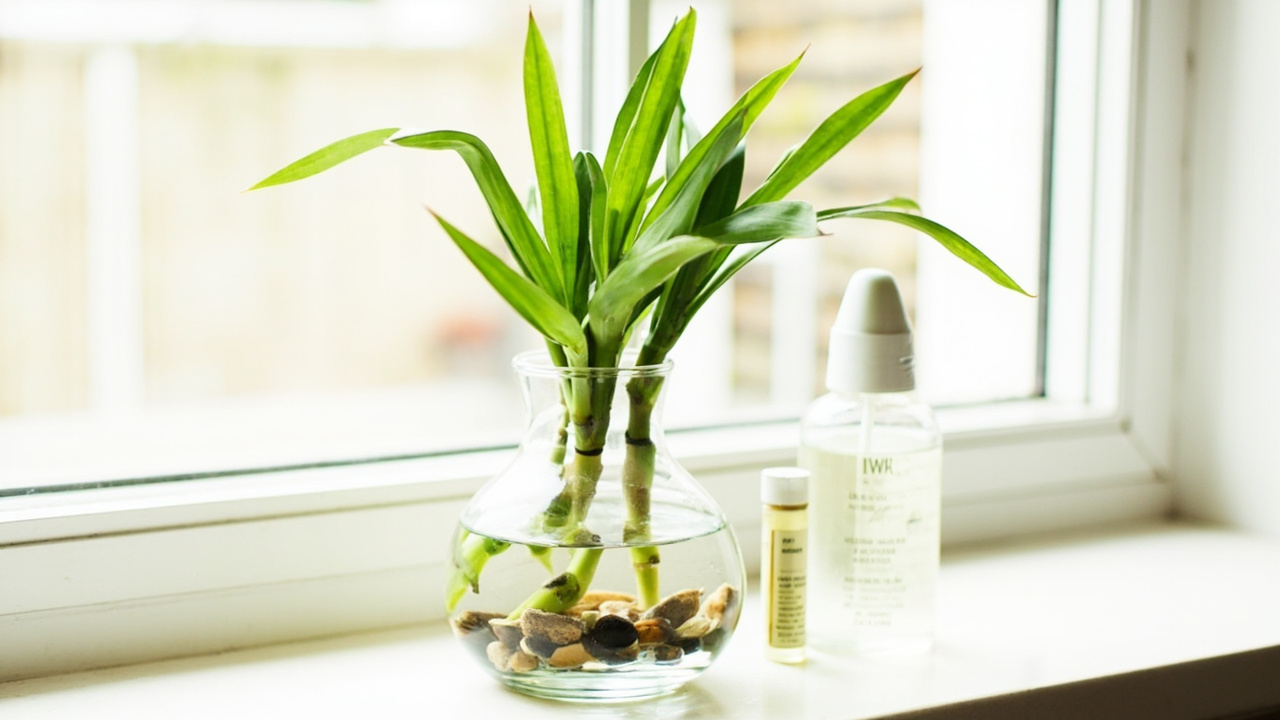
Over-fertilizing is more common and more damaging than under-fertilizing for lucky bamboo, and the symptoms are easy to mistake for other problems. Brown leaf tips are the most frequent sign, often appearing within a few days of a feeding. The tips turn crisp and dry from the edge inward, which is different from the soft, mushy appearance of true root rot. Yellow leaves, especially on the lower or older stalks, appear when salt buildup in the medium overwhelms the root system (see our guide to yellowing lucky bamboo leaves for the full symptom breakdown).
What to Do When Over-Fertilizing Happens
If your water-grown plant shows signs of over-fertilization, remove it from its container and rinse the roots gently under lukewarm water at 68°F / 20°C. Refill the container with fresh water — no fertilizer — and do not add any feed for at least 10–12 weeks. For soil-grown plants, flood the pot with clean water until it runs freely from the drainage hole, then allow it to drain completely. Repeat this flushing process 2–3 times over 24 hours to wash residual salts through the soil. Resume feeding at half the previous concentration and only after the plant shows clear recovery, which may take 4–6 weeks.
Preventing Salt Buildup
In water culture, salt buildup comes from concentrated fertilizer sitting in still water. The fix is straightforward: change the water completely every 2–3 weeks, not just topping it up. This removes accumulated salts and gives you a clean slate for the next feeding cycle. In soil culture, white crust on the surface of the potting mix near the edges of the container is a reliable early warning sign of fertilizer salt accumulation — when you see it, switch to plain water for the next 2–3 watering cycles before resuming fertilizer at a lower dose. Choosing the right growing medium is covered in our comparison of lucky bamboo in water versus soil.
What Type of Fertilizer to Use for Lucky Bamboo
Lucky bamboo is not fussy about fertilizer type, but the form matters more than the brand. Liquid water-soluble fertilizers are the best choice because they mix evenly and are easy to dilute precisely. Powder or granule fertilizers are harder to dissolve properly in water culture and can settle unevenly in soil, creating hotspots of concentration that burn roots.
A balanced or slightly nitrogen-heavy formula works well — something close to 6-6-6 or 10-10-10 NPK. High-nitrogen formulas encourage leafy green growth over tall, lanky stalks, which suits the look most people want from their lucky bamboo. Avoid fertilizers with added weed preventer or pesticide, as these compounds can harm Dracaena species even in tiny concentrations.
Aquarium water remains one of the most reliable and low-risk fertilizer options for water-grown lucky bamboo. It contains naturally occurring trace elements and beneficial microbes in a form that plants can absorb efficiently without the risk of salt concentration spikes. The tradeoff is consistency — unless you have an established aquarium, you may not have a steady supply. When relying on bottled or mixed fertilizer, err on the side of underfeeding rather than overfeeding, because lucky bamboo recovers from slight nutrient deficiency more readily than it recovers from fertilizer burn.
Seasonal Feeding Schedule for Lucky Bamboo
Light levels and temperature drive lucky bamboo’s growth rate, which means feeding should follow the seasons rather than a fixed calendar. In spring, when daylight hours increase and temperatures rise above 65°F / 18°C, resume your normal feeding schedule after the winter rest period. Growth is most vigorous from May through August, so this is when consistent feeding matters most. In September or October, as daylight decreases and growth slows, gradually reduce the frequency. By November, most lucky bamboo plants are effectively dormant and will not use added nutrients efficiently.
Temperature affects how well the plant can absorb nutrients more than most people realise. If your plant is growing in a room that stays consistently below 60°F / 16°C — a cold hallway, a drafty window, an air-conditioned space — its metabolism slows enough that fertilizer salts accumulate faster than it can process them. In these conditions, halve the frequency you would use in a normally heated room and watch closely for brown tip symptoms in the weeks that follow.
The key to keeping lucky bamboo healthy through the year is less feed, more attention. Watch how the plant responds after each feeding — new growth colour, leaf firmness, the condition of the root system — and let that guide your adjustments rather than following a rigid schedule. A plant that gets a light dose every 2 months and lives in clean water will almost always outperform one that receives full-strength fertilizer monthly. If you are starting fresh, our Dracaena sanderiana care guide covers the setup process from the beginning.
Turn That PDF Into a Spreadsheet in Minutes
You've seen how to do it manually — now let the tool handle the heavy lifting. Upload your bank statement and get Excel, CSV, or QBO in a few clicks.
Try It Free