Lucky bamboo (dracaena sanderiana) survives conditions that would kill most houseplants. It doesn’t need soil, tolerates low light, and asks for very little. That hardiness also means problems develop slowly — by the time you notice something’s wrong, the issue has usually been building for weeks.
The three most common lucky bamboo problems are yellowing stems, root rot in water culture, and leaf edge browning. Each has a clear cause chain. Fix the cause and the plant typically recovers if you catch it early enough.
Yellowing Stems : The Most Common Lucky Bamboo Problem
Yellow stems on lucky bamboo almost always point to one of three causes: direct sunlight burning the plant, chlorine or fluoride in tap water, or nutrient excess from over-fertilizing. The yellowing starts at the top of the stem or in patches along the length — not at the base like root rot.
Lucky bamboo turning yellow happens because the plant is sensitive to excess light intensity. Unlike most houseplants that crave indirect bright light, dracaena sanderiana naturally grows on forest floors with filtered, dim light. A windowsill that gets two hours of direct sun is enough to trigger yellowing within a week.
Tap water is the second major cause. Lucky bamboo kept in water culture absorbs everything in the water — including chlorine (present in most municipal supplies at 0.5–2 ppm) and chloramine (used in some water treatment). Fluoride, added to many municipal water supplies for dental health, also causes yellowing in dracaena species. If your tap water is fluoridated, the plant will show it within 30–60 days of being placed in it.
Over-fertilizing is the third cause. Lucky bamboo doesn’t need much — a single drop of liquid fertilizer per month is enough for a stalk in a 6-inch vase. Growers who add fertilizer every watering create salt buildup that burns the root zone and subsequently yellows the stems.
How to fix it: move the plant out of direct sun immediately. Switch to filtered, distilled, or rainwater — anything without chlorine, chloramine, and fluoride. If the stem yellowing is in patches and the base is still firm and green, the plant will likely push new growth from the top once conditions improve. Remove yellowed stalks if the yellowing has spread to more than 50% of the stem height — the tissue won’t recover.
Root Rot : The Silent Killer in Water Culture
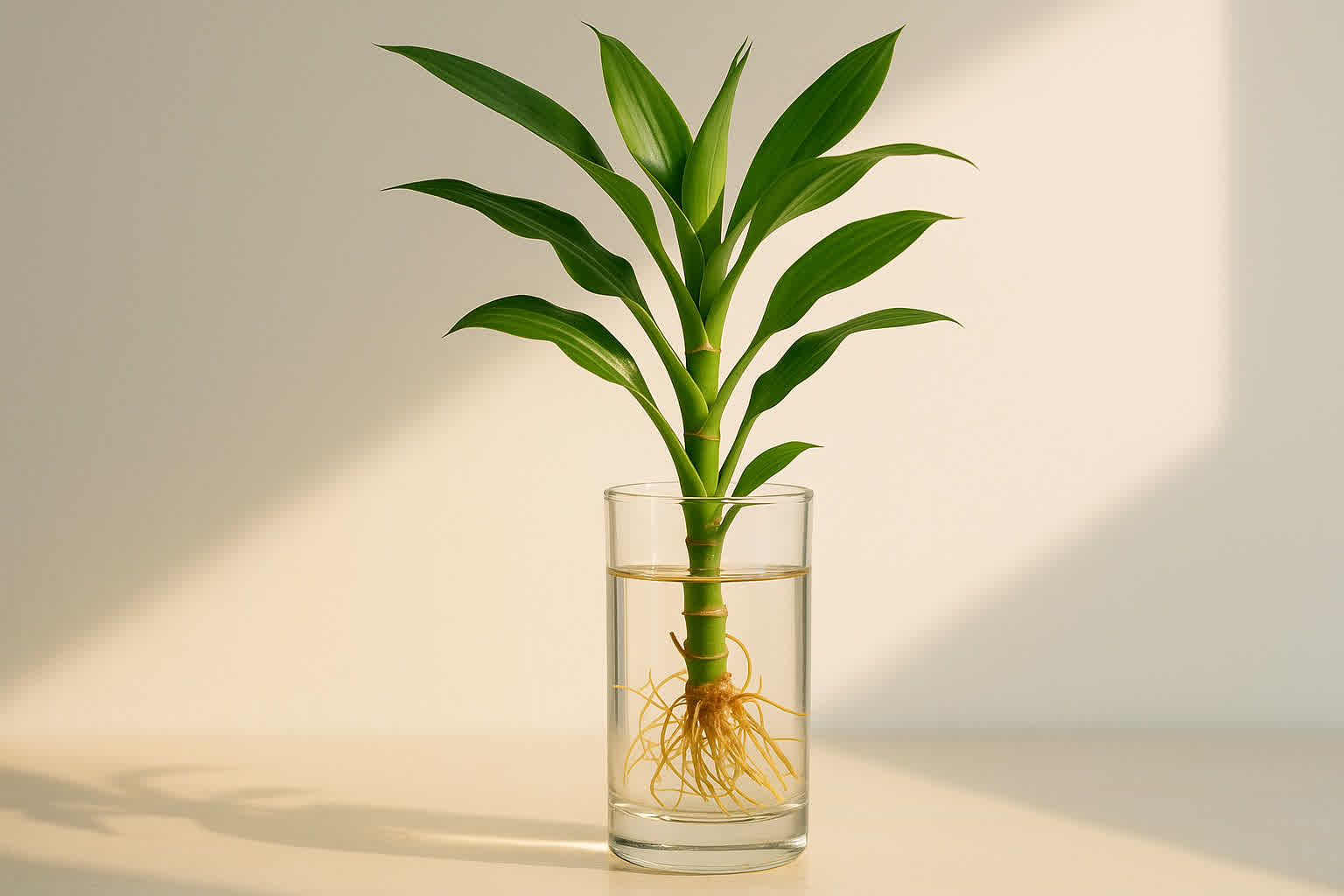
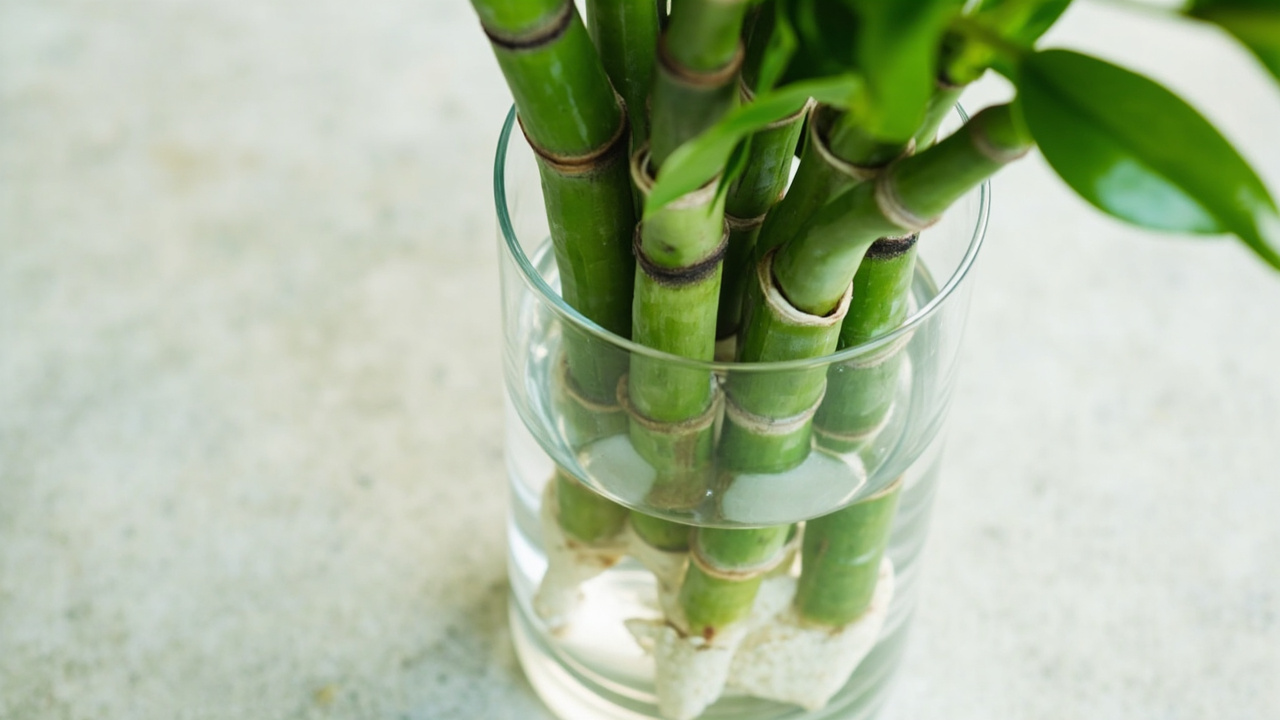
Lucky bamboo grown in water develops root rot when the water isn’t changed regularly, when the container is too small for the root mass, or when organic debris (dead root fragments, fallen leaves) accumulates in the water and decomposes.
Root rot in lucky bamboo looks different from most plants. The roots turn from white to brown and become slimy, but the stem base also turns soft when you press it — that’s the diagnostic indicator. In soil-grown lucky bamboo, root rot shows as yellowing leaves and a soft base. In water culture, you’ll see the brown mushy roots first.
The problem with root rot in water culture is that it spreads fast. Unlike soil, where you can dry out the medium to kill anaerobic bacteria, water culture provides a constant medium for pathogen growth. Once rot starts in a water vase, it can reach the stem base within 48–72 hours.
How to save a dying lucky bamboo when root rot is present: remove the plant from water immediately. Cut away all brown, mushy roots with sterile scissors. Rinse the container thoroughly. Refill with fresh filtered water. Add a single drop of hydrogen peroxide (3%) to the water to boost oxygen without harming the plant. Check the stem base daily — if it stays firm, the plant is recovering. If the softness spreads, the rot has reached the vascular tissue and the stalk won’t recover.
Prevention: change water every 7–10 days regardless of appearance. Rinse roots under running water during each change. Use a container wide enough that roots have room to spread — overly narrow vases compress roots and create anaerobic pockets.
Leaf Tip Browning and Crispy Edges
Browning leaf tips on lucky bamboo usually means the air is too dry, the water is too cold, or the roots are sitting in water that’s been changed too infrequently. It can also indicate fluoride toxicity from tap water — the leaf tips are where the plant dumps excess minerals it can’t process.
The distinction between causes: dry air browning appears as crispy edges spreading inward from the leaf margin. Cold water browning causes dark brown tips but the rest of the leaf stays green. Fluoride toxicity shows as yellowing then browning starting at the leaf tip and moving back in a gradient.
Fixing dry air: lucky bamboo adapts to average home humidity (40–60%) but suffers below 30%. In heated rooms in winter or air-conditioned spaces in summer, humidity can drop to 20–30%, causing tip burn within weeks. Move the plant away from heating vents and air conditioner vents. If the dry air is persistent, mist the leaves every 2–3 days with filtered water.
Fixing cold water: if your lucky bamboo is near a window in winter where water temperature drops below 55°F (13°C), roots go dormant and stop absorbing water — which shows as leaf tip burn even though the soil seems fine. Move the vase away from cold glass or add a layer of insulation between the vase and the window.
Fixing fluoride toxicity: switch to distilled or rainwater immediately. Fluoride accumulates in dracaena leaf tips and causes progressive browning that won’t stop until the water source changes. Once you switch water, existing damaged leaf tips won’t heal but new growth will come in clean.
Stalks Turning Soft or Mushy
This is the advanced stage of either root rot that has reached the stem or bacterial infection. Soft stalks on lucky bamboo cannot be reversed — the internal vascular tissue has been destroyed. However, if only the bottom 1–2 inches are soft and the upper stem is still firm, you may be able to propagate from the healthy top.
How to propagate a soft-stalk lucky bamboo: cut the firm top section at least 3 inches above the soft zone with a sterile knife. Remove the lower leaves to expose two leaf nodes. Place in fresh filtered water with the cut end submerged. Position in bright indirect light at 65–75°F (18–24°C). Roots will develop from the nodes within 4–8 weeks. Once roots are 2+ inches long, pot in well-draining soil or continue in water culture.
The original soft base won’t recover and should be discarded along with any yellowed portions of the original stalk.
Prevention: The Simple Routine That Keeps Lucky Bamboo Healthy
Lucky bamboo’s reputation for being indestructible comes from growers who follow a simple but consistent care routine: fresh water every 7–10 days, filtered or distilled (never tap in fluoridated areas), bright indirect light (no direct sun), fertilizer once a month at most, and immediate removal of any yellowing stalks before the problem spreads.
The plant’s growth rate in water culture is slow — maybe 1–2 inches of new stem growth per year under average home conditions. If your lucky bamboo is putting out new leaves regularly (even if older ones have tip burn), the plant is healthy. The cycle of old leaf tip burn and replacement is normal, not a sign of systemic decline.
Bottom Line
Lucky bamboo problems are almost always water-related — the quality, temperature, or freshness of the water it’s sitting in. Direct sun causes yellowing. Fluoridated tap water causes tip burn. Infrequent water changes cause root rot. The fix is almost always: move to better light, switch to filtered water, and change the water every week. The plant is more forgiving than most houseplants, but it still needs basic consistency to thrive.
From PDF to Excel in one click
Forget retyping line by line. Upload any bank statement, get a spreadsheet you can actually use. Your files are never stored, and you can test the converter with 3 free conversions.
Try it free