If your lucky bamboo has started looking tired, yellow is the first color that makes people panic. The frustrating part is that yellowing rarely means one single thing. It usually means the plant is telling you the roots, water, light, or temperature are off. The good news? You can usually fix it once you know where the stress started.
Why lucky bamboo turns yellow
Lucky bamboo is not true bamboo. It is Dracaena sanderiana, and that matters because dracaenas react fast to poor water quality and stubbornly wet roots. Have you ever noticed yellowing starting on a single stalk or leaf tip and assumed the whole plant was dying? That’s usually too dramatic. Yellowing often begins as a local stress signal before it becomes a full decline.
Chlorine, fluoride, and hard water
Tap water is one of the most common causes. Chlorine and fluoride can burn the tissue slowly, especially if you never flush the container. If your water is hard, mineral buildup can also coat the roots and reduce uptake. The tradeoff is simple: tap water is easy, but it is often the least forgiving choice for lucky bamboo.
Switch to filtered, distilled, or rain water, then change the water completely every 7-14 days. After the swap, new growth should stay greener within 2-4 weeks. Old yellow tissue will not turn green again, so don’t wait for a miracle there.
Too much direct sun
Bright indirect light is ideal. Direct sun can bleach the leaves, especially through glass in a hot room. If the plant sits near a south- or west-facing window, move it back a few feet or behind a sheer curtain. After moving it, the next new leaves should come in healthier if light was the problem.
Cold or heat stress
Lucky bamboo likes roughly 65-90°F / 18-32°C. Below that range, growth slows. Above it, the plant loses moisture faster than the roots can replace it. If the plant sits near an AC vent, drafty window, or heater, yellowing is often the first visible complaint.
How to diagnose the cause fast
Start with the roots and the water. That’s where the real story usually sits. If the water smells stale, feels slimy, or has a white crust on the container, you’re already looking at a water-management problem.
Check the stalk and roots
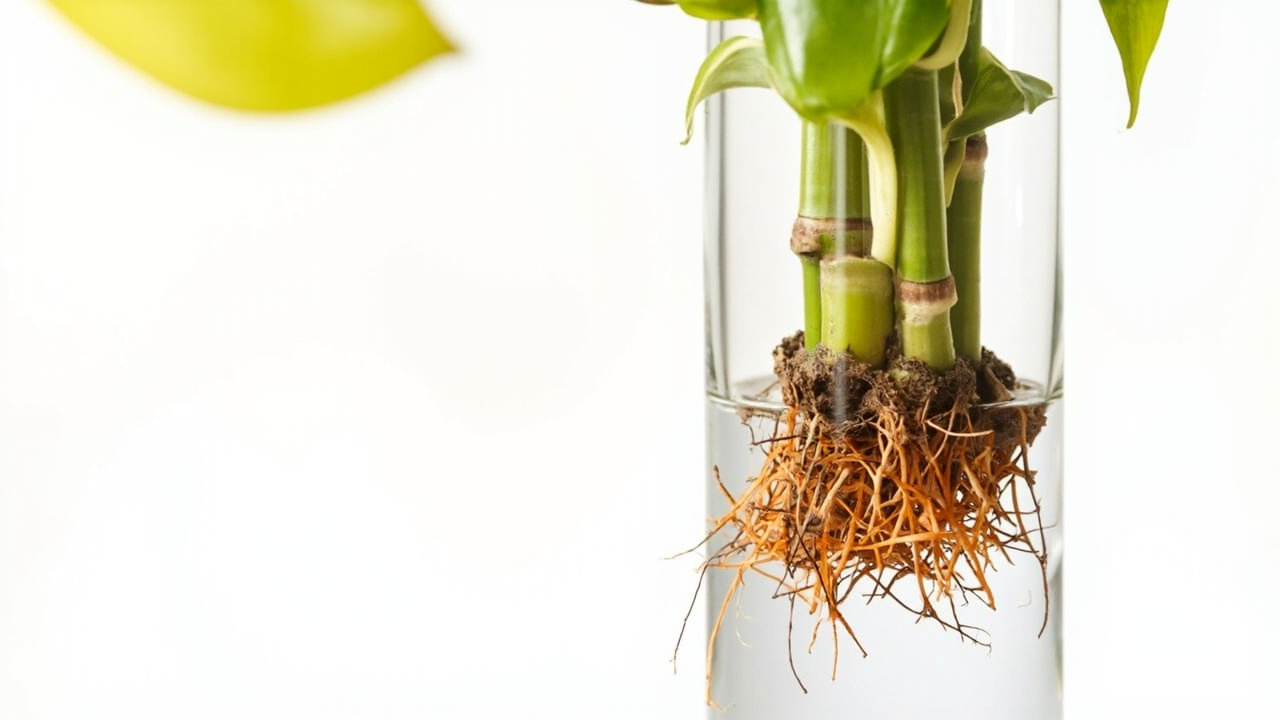
Healthy stalks stay firm. Soft, mushy, or translucent sections mean rot. Roots should look pale and tidy, not brown and foul-smelling. If you find rot, trim the damaged roots with sterile scissors, rinse the container, and refill with fresh water. After trimming, the plant should stabilize within a week or two if enough healthy root remains.
Check recent changes
Did you move it, feed it, or switch water sources? That’s the clue. Lucky bamboo often reacts within days or weeks, so recent changes matter more than the long-term routine you think has been harmless.
What to do right now
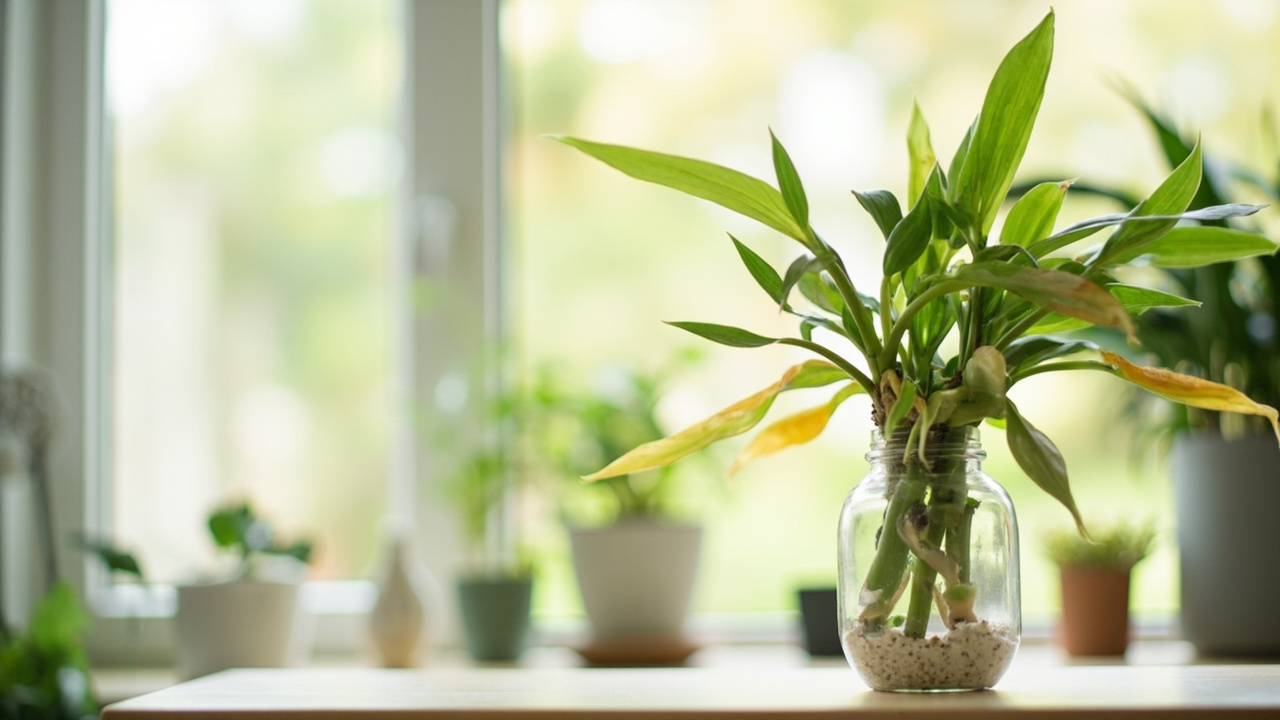
Yellowing that starts at the tips usually means early stress. Yellowing that spreads through the stalk means the problem has been building longer. Either way, act in the same order: clean water first, then light, then temperature, then feeding.
Flush the container
Remove the plant, rinse the roots gently, wash the container, and refill with fresh water. If you want to keep pebbles, rinse those too. After this reset, the next 7 days are about observation, not feeding.
Pause fertilizer
Fertilizer burn can yellow lucky bamboo fast. If you fed it recently, stop immediately. After you stop, the plant has a chance to recover without extra salt stress, which is exactly what it needs.
Move it into softer light
Give it bright but indirect light. A spot 3-6 feet from a window often works better than the windowsill itself. After the move, watch the newest growth rather than the oldest leaves.
When yellowing is not reversible
Can a yellow stalk turn green again? No. That’s the hard truth. Once tissue has lost chlorophyll, the color doesn’t come back. What you can save is the plant’s next growth. If the stalk is still firm, the plant may recover fully. If it is soft and hollow, cut losses and propagate from healthy sections instead.
Prevent yellowing from coming back
Use a stable water routine
Change the water every 1-2 weeks and don’t let it sit cloudy. After each change, the roots should look clean and the container should smell neutral. That routine does more than any fancy feed.
Keep feeding minimal
Lucky bamboo needs very little fertilizer. Feed too often and you’ll create the exact salt stress you’re trying to avoid. A diluted dose every 2-3 months is enough for most indoor setups, and even that can be skipped if the plant looks healthy.
If you want the broader setup rules next, pair this page with Lucky Bamboo Care for Beginners and the water setup comparison in Lucky Bamboo in Water vs Soil. For placement questions, Lucky Bamboo in Bathroom helps when the issue is environment, not roots.
Turn PDF Bank Statements Into Workable Spreadsheets
Your bank statement is a mess of numbers, but your books shouldn't be. Use our converter to get Excel, CSV, or QBO files — ready for QuickBooks.
Try It Free Now