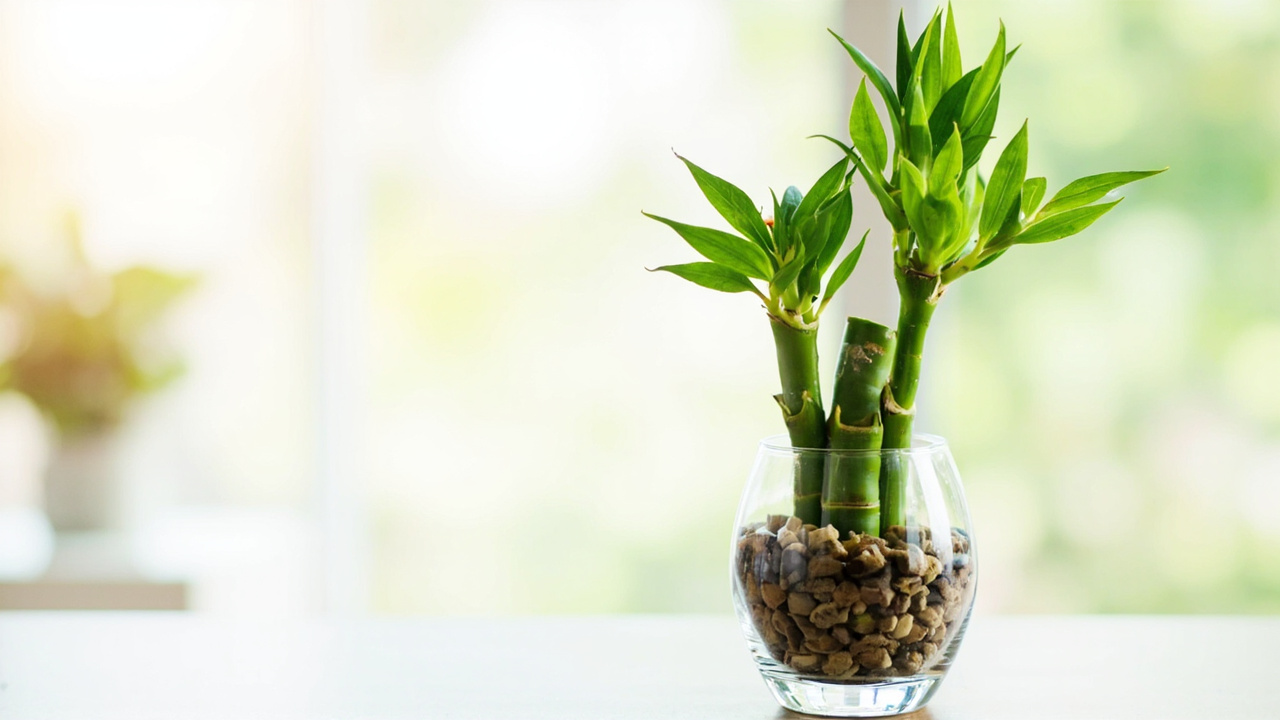
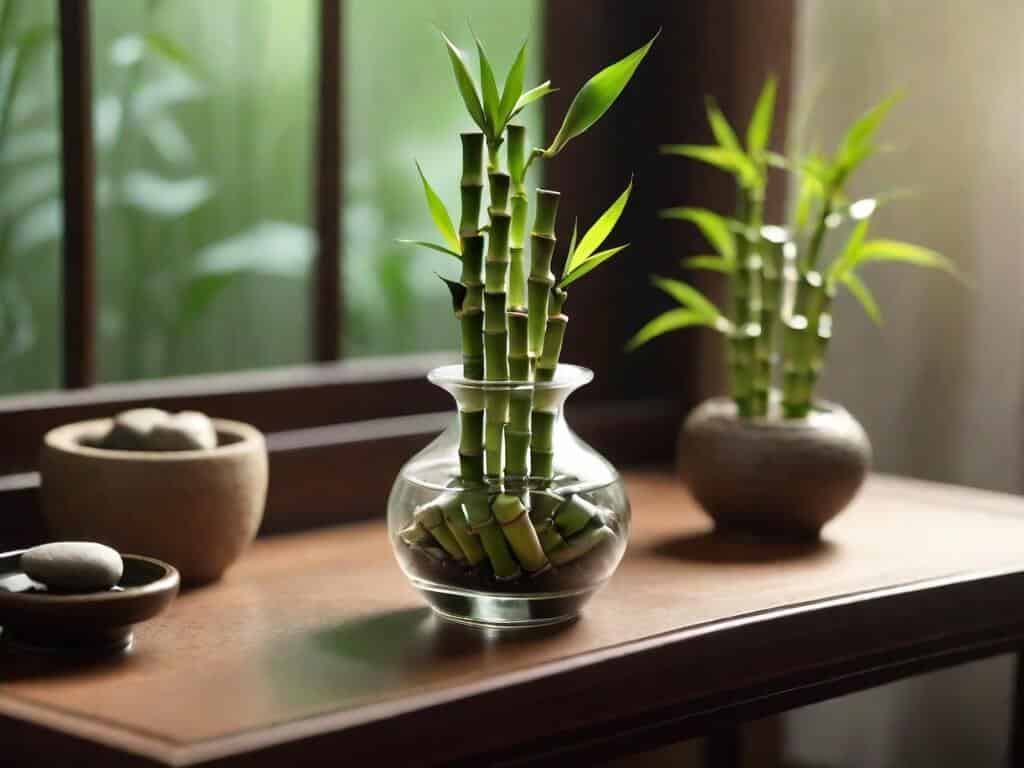
Dracaena braunii and Dracaena sanderiana are both sold as “lucky bamboo” but they are different species with distinct appearances and care needs. Dracaena braunii has straight, upright stalks with long, ribbon-like green leaves. Dracaena sanderiana has slightly twisted, grey-green leaves and often grows in curly or spiral patterns. Both are native to Africa, not Asia, and neither is a true bamboo — they belong to the Asparagaceae family, not the grass family.
The care requirements differ in one important way: Dracaena sanderiana tolerates higher humidity and lower light better than Dracaena braunii. This makes sanderiana the better choice for bathrooms, kitchens, and rooms with north-facing windows. Dracaena braunii prefers brighter indirect light and will show brown leaf tips in dry air below 40% humidity. Both can grow in water or soil, but sanderiana adapts to water culture more readily and is less likely to develop root rot when grown hydroponically.
This guide covers the physical differences that help you identify each species, the care adjustments each requires, and how to keep either one long-term.
Physical Differences: How to Tell Them Apart
Stems: Dracaena braunii has smooth, straight, upright stalks that resemble bamboo canes. The stalks are typically 1-2 inches thick and grow vertically without twisting. Dracaena sanderiana has thinner, more flexible stalks that often curve or spiral, especially when grown in arrangements with multiple stalks. The twisting is natural, not a sign of stress.
Leaves: Dracaena braunii produces long (6-12 inches), narrow, vibrant green leaves that arch gracefully from the top of each stalk. The leaves are flat and ribbon-like. Dracaena sanderiana has shorter (4-8 inches), slightly twisted, grey-green leaves with a more upright growth habit. The grey-green color is the quickest visual identifier — if the leaves have a silvery or blue-green cast, it is sanderiana.
Growth habit: Dracaena braunii grows taller and more upright, reaching 3-5 feet indoors over several years. Dracaena sanderiana stays more compact, typically 1-3 feet, and produces more side shoots, giving it a bushier appearance. Both grow from rhizomes underground, but sanderiana produces more offsets at the base.
Care Differences
Light: Both prefer bright, indirect light. Dracaena braunii tolerates direct morning sun for 1-2 hours; direct afternoon sun scorches its leaves. Dracaena sanderiana handles lower light conditions better — it survives in north-facing rooms where braunii would decline. In low light, braunii drops lower leaves and becomes leggy; sanderiana maintains its form but grows more slowly.
Water: When grown in water, change the water every 7 days for both species. Use distilled or filtered water — chlorine in tap water causes brown leaf tips within 2-3 weeks. Dracaena sanderiana is more tolerant of tap water than braunii, but both perform better with filtered water. When grown in soil, water when the top inch of soil feels dry. Overwatering causes root rot in both species, but sanderiana recovers faster because its roots are more adapted to wet conditions.
Humidity: Dracaena sanderiana thrives in 60-80% humidity, making it ideal for bathrooms and kitchens. Dracaena braunii prefers 40-60% humidity and develops brown leaf tips in dry air. If your home has forced-air heating that drops humidity below 30% in winter, sanderiana is the better choice. For braunii in dry conditions, mist leaves daily or use a humidity tray.
Temperature: Both prefer 65-85°F (18-29°C). Below 55°F (13°C), both species suffer cold damage — leaves develop brown patches and growth stalls. Dracaena sanderiana is slightly more cold-tolerant, surviving brief dips to 50°F (10°C), while braunii shows damage below 55°F (13°C). Keep both away from air conditioning vents and drafty windows in winter.
Common Problems and Solutions
Yellow leaves indicate overwatering (in soil) or bacterial growth (in water). For soil-grown plants, reduce watering frequency and ensure the pot has drainage holes. For water-grown plants, change water more frequently — every 5 days instead of 7 — and rinse the roots and container to remove bacterial film.
Brown leaf tips indicate low humidity, chlorine in water, or fertilizer burn. Switch to filtered water, increase humidity, and reduce fertilizer concentration. Trim brown tips with clean scissors for appearance — the damage itself does not spread.
Stalk softening or mushiness indicates advanced root rot. If the base of the stalk feels soft, the plant is likely beyond recovery. However, you can still propagate healthy upper sections: cut 4-6 inch sections above the soft area, remove lower leaves, and place in fresh water. Roots will develop from the nodes within 2-3 weeks.
Propagation
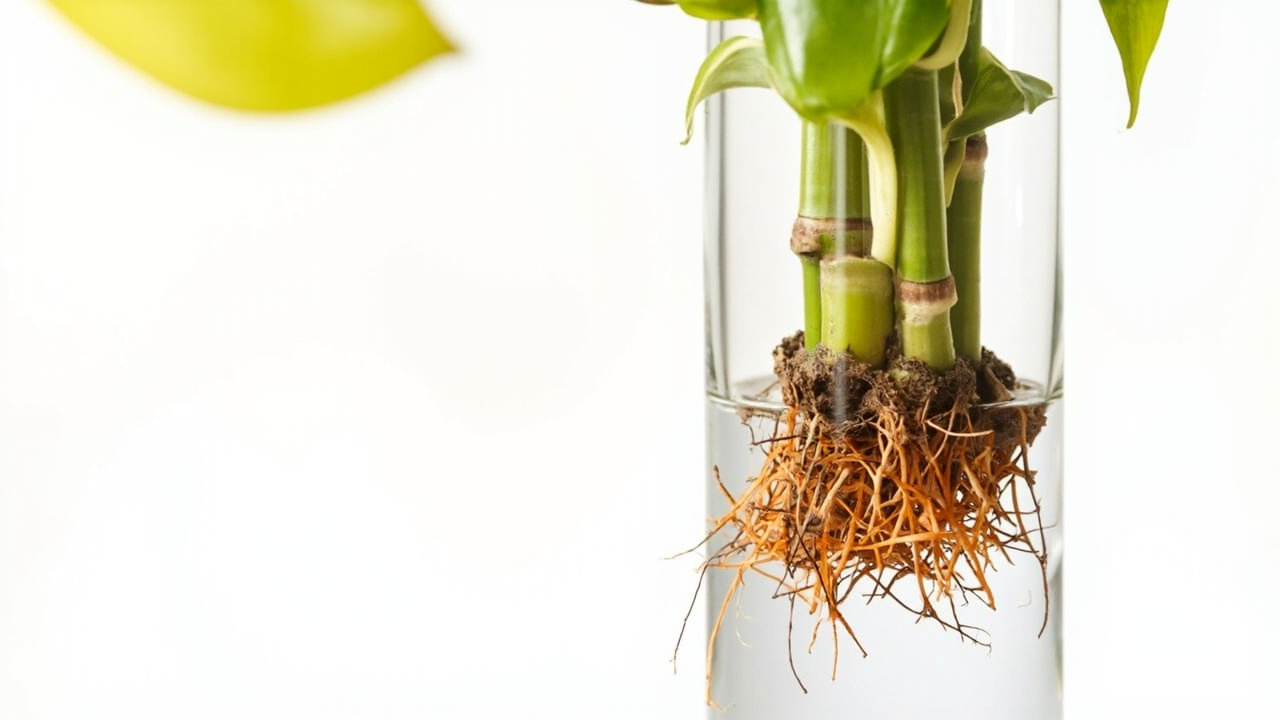
Both species propagate easily from stem cuttings. Cut a healthy stem 1/4 inch below a node (the raised ring on the stalk) with a clean, sharp knife. Remove the lower 2-3 leaves to expose the nodes. Place the cutting in distilled water with the nodes submerged. Roots emerge within 2-4 weeks at 70-75°F (21-24°C). Once roots are 2-3 inches long, transplant to soil or continue growing in water. The original stalk will produce new side shoots from the cut point within 4-6 weeks.
For arrangements with multiple stalks, propagate when the parent plant becomes too tall or leggy. Cuttings root best in spring and summer when growth is active. Winter cuttings take 2-3 times longer to root and have a higher failure rate.
For more on lucky bamboo care, see our lucky bamboo water vs soil guide and our how to save a dying lucky bamboo.
Turn That PDF Into a Spreadsheet in Minutes
You've seen how to do it manually — now let the tool handle the heavy lifting. Upload your bank statement and get Excel, CSV, or QBO in a few clicks.
Try It Free