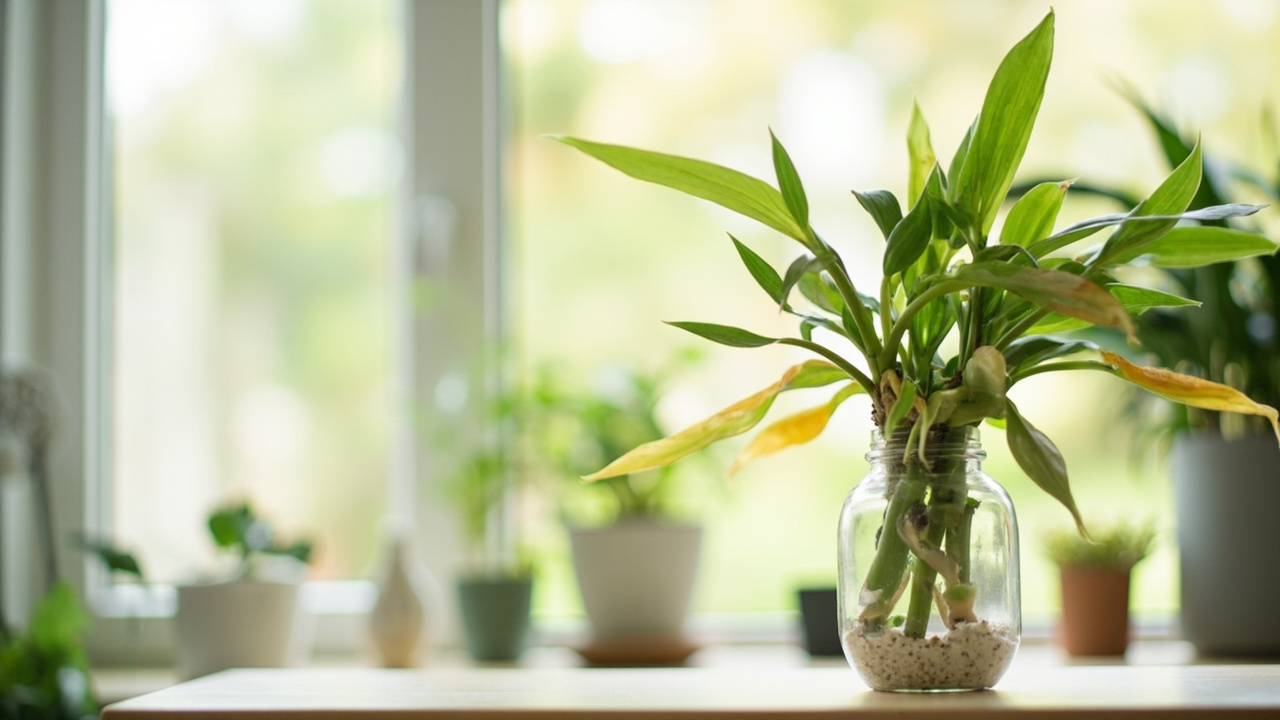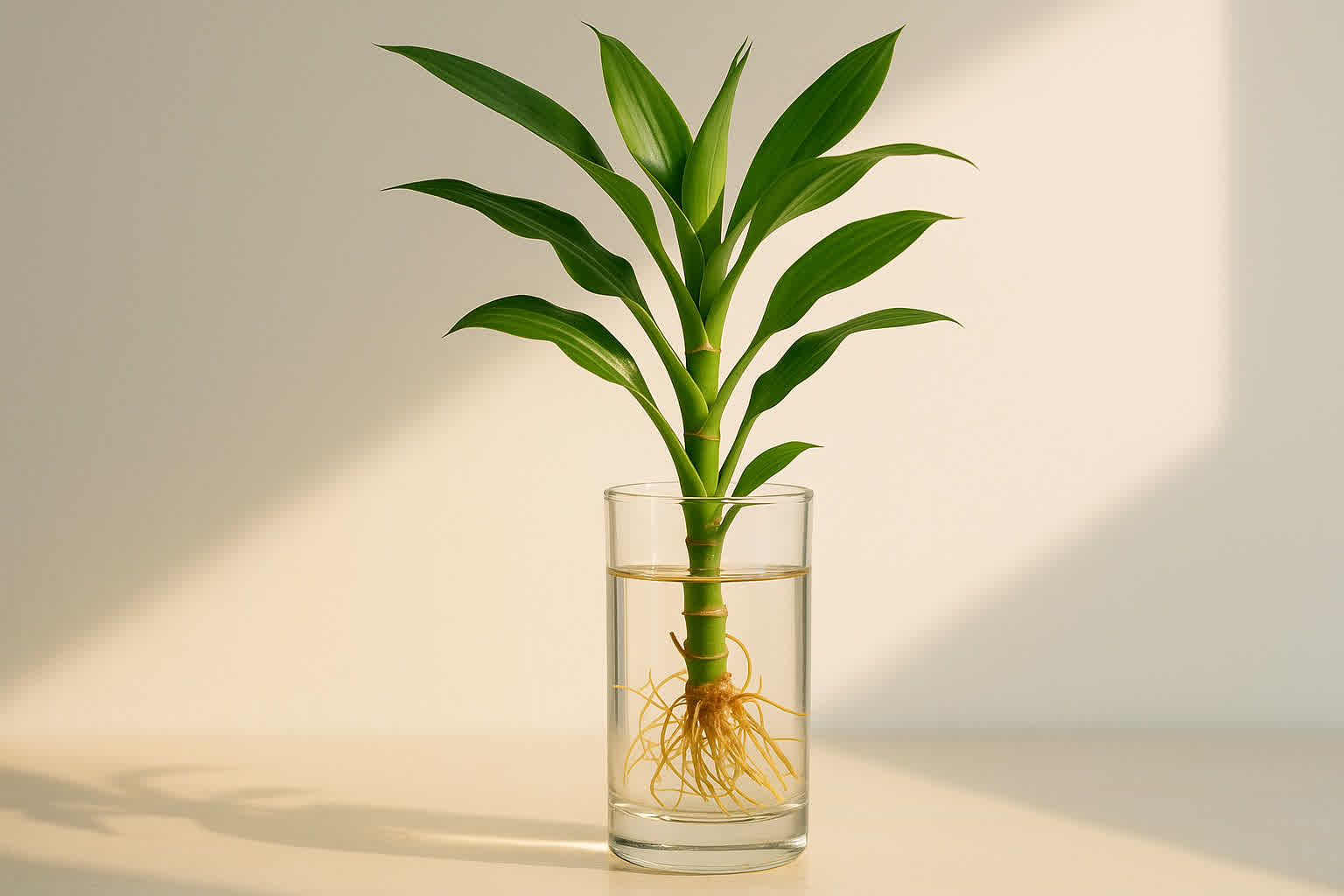

Most dying lucky bamboo can be saved if you diagnose the cause within the first 2 weeks of visible decline. The rule that matters: lucky bamboo is not a true bamboo but Dracaena sanderiana, and its water-culture roots suffocate in anaerobic water within 7-10 days without a change. Once you know what the plant is showing you, the revival path is straightforward. Wrong treatment — like adding fertilizer to rotting water — kills it in 14 days.
Diagnosis first, always. Yellow stems from water-culture root rot demand a completely different response than dry brown tips from fluoride or low humidity. Lucky bamboo sends specific signals when something is wrong. The key is matching the symptom to the cause before you do anything with the vase water.
This article walks through symptom-by-symptom diagnosis, the exact revival protocol for each cause, and an honest recovery timeline. If the main stem has gone completely soft or hollow past week 3, propagation from a healthy side stem is the only path forward — and that works, but it takes 2-3 weeks to see new roots and 3-6 months before the cutting grows a full crown of leaves.
What Your Lucky Bamboo Is Telling You (Symptom Diagnosis)
Dracaena sanderiana communicates distress through its stems and leaves before the root system fails completely. A yellowing lower stem from water-culture rot looks different from yellowing caused by fluoride or cold stress. Check each symptom against the table below, then jump directly to the revival section. Read: lucky bamboo yellow leaf diagnosis.
| Symptom | Cause | Recovery Chance | Action Within |
|---|---|---|---|
| Yellow lower stem pulling out easily with slimy roots | Water-culture root rot from anaerobic water | Good if upper stem firm | 24 hours |
| Soft, hollow main stem that bends under light pressure | Advanced stem rot — usually fatal | Low — propagate from side shoots | Immediately |
| Brown leaf tips with yellow halos | Fluoride or chlorine in tap water | High after water source change | 1 week |
| Smelly, cloudy vase water | Bacterial growth from infrequent water changes | High after thorough cleanup | 24 hours |
| Yellow leaves + mushy stem at base | Root rot extending upward into stem | Moderate | 24 hours |
| Pale bleached leaves with brown patches | Too much direct sunlight | High after light correction | 1 week |
| Sudden yellowing after a cold night | Cold damage below 60°F (15°C) | Low for damaged stems | Immediately |
| Wilting in soil-grown lucky bamboo | Overwatering or compacted soil | High after repotting | 1 week |
If you see multiple symptoms at once, start with the slimy roots and smelly water. Water-culture rot kills fastest and demands attention within 24 hours. Brown leaf tips from fluoride accumulate over weeks and can wait while you fix the water hygiene.
Lucky Bamboo Water-Culture Root Rot (The #1 Killer)
Lucky bamboo plants fail in water culture more than any other cause because their roots are adapted to moist soil, not continuous submersion. After 7-10 days without a water change, oxygen levels in the vase water drop and anaerobic bacteria colonize the root surface. The roots turn slimy and brown, then begin dying back. Once roots fail, the stem above loses its water uptake and yellowing spreads upward. Read: lucky bamboo root rot recovery.
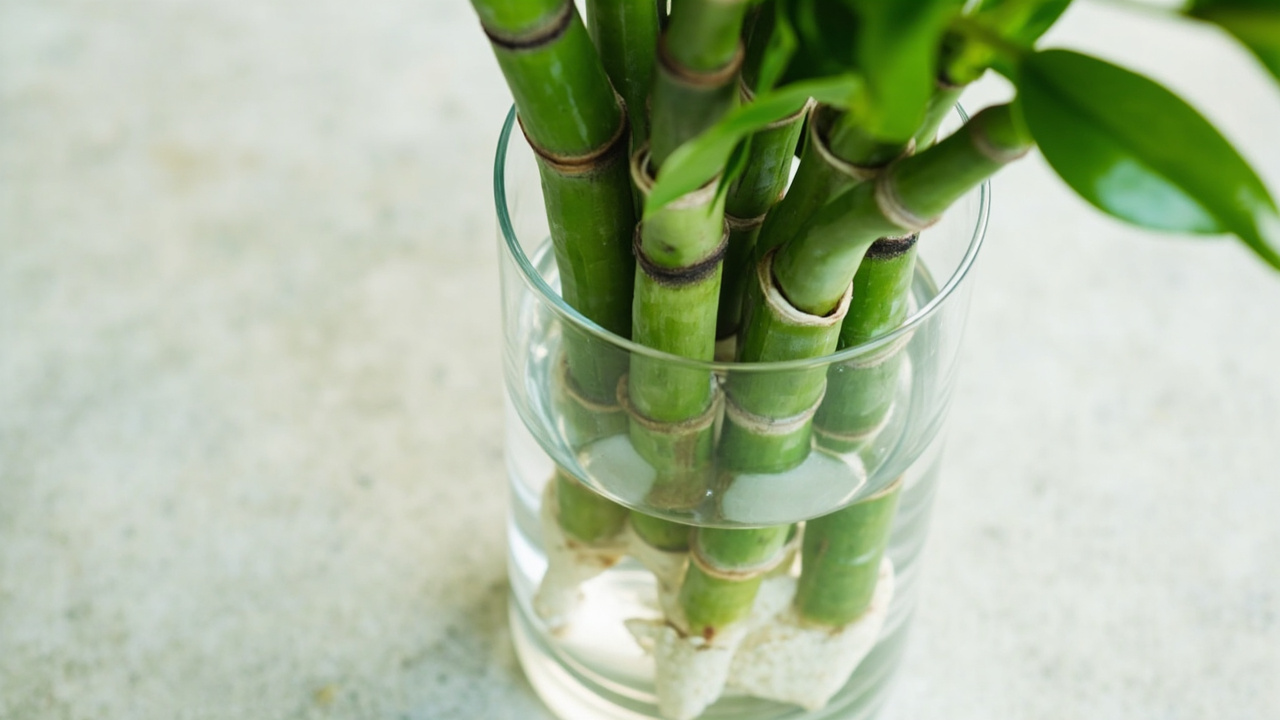
Here is how to assess whether your plant is salvageable. Lift the stems out of the vase and inspect the roots. Healthy roots are firm and white or pale yellow. Rotting roots are slimy, brown or black, and pull away with light pressure. Inspect the main stem at the base by gently squeezing. A healthy stem feels firm and resists pressure. A rotting stem softens, may ooze liquid, and often smells musty.
If the main stem is soft or hollow, propagation from a side shoot is the only path forward. Skip to section 5. For plants with firm main stems and at least some white roots, follow these steps in order:
- Remove all stems from the vase and discard the old water immediately. Rinse the vase with hot water and a small amount of dish soap, then rinse thoroughly.
- Trim every slimy brown root back to firm white tissue with sterilized scissors. Cut away any soft translucent sections of stem at the base — leave only firm green or cream tissue.
- Rinse the remaining healthy roots under lukewarm running water to remove all traces of bacterial slime.
- Soak the trimmed roots in diluted hydrogen peroxide (1 part 3% H₂O₂ to 4 parts water) for 5 minutes to kill surface bacteria.
- Refill the vase with filtered, distilled, or 24-hour-aged tap water (letting chlorine and partial fluoride evaporate). Keep water level just below the stem joint — submerged leaves rot fast.
- Add fresh clean pebbles or glass beads to anchor the stems. Reused pebbles harbor bacteria even after washing — replace them or sterilize in boiling water for 10 minutes.
New white roots appear in 2-3 weeks. Change the vase water every 7 days during recovery to prevent anaerobic buildup. If slimy roots return within 2 weeks, the rot is systemic and propagation may be safer than continued water culture.
Lucky Bamboo Revival: Switching from Water to Soil
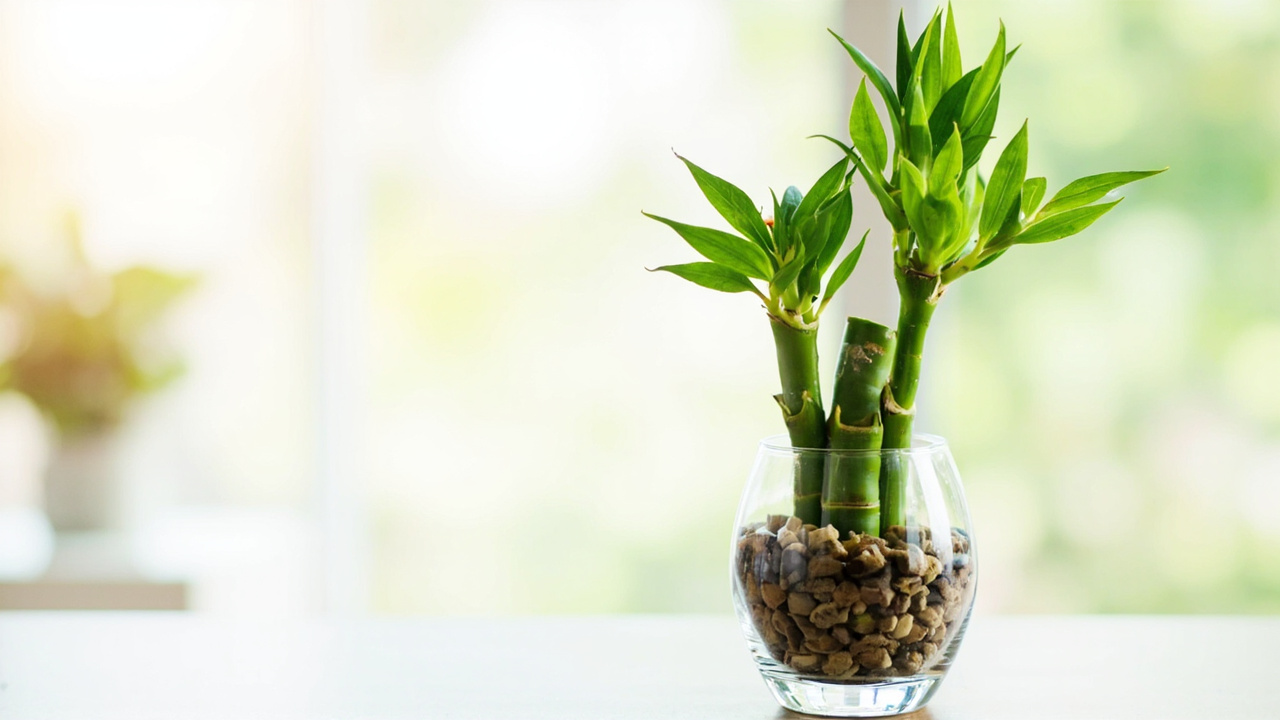
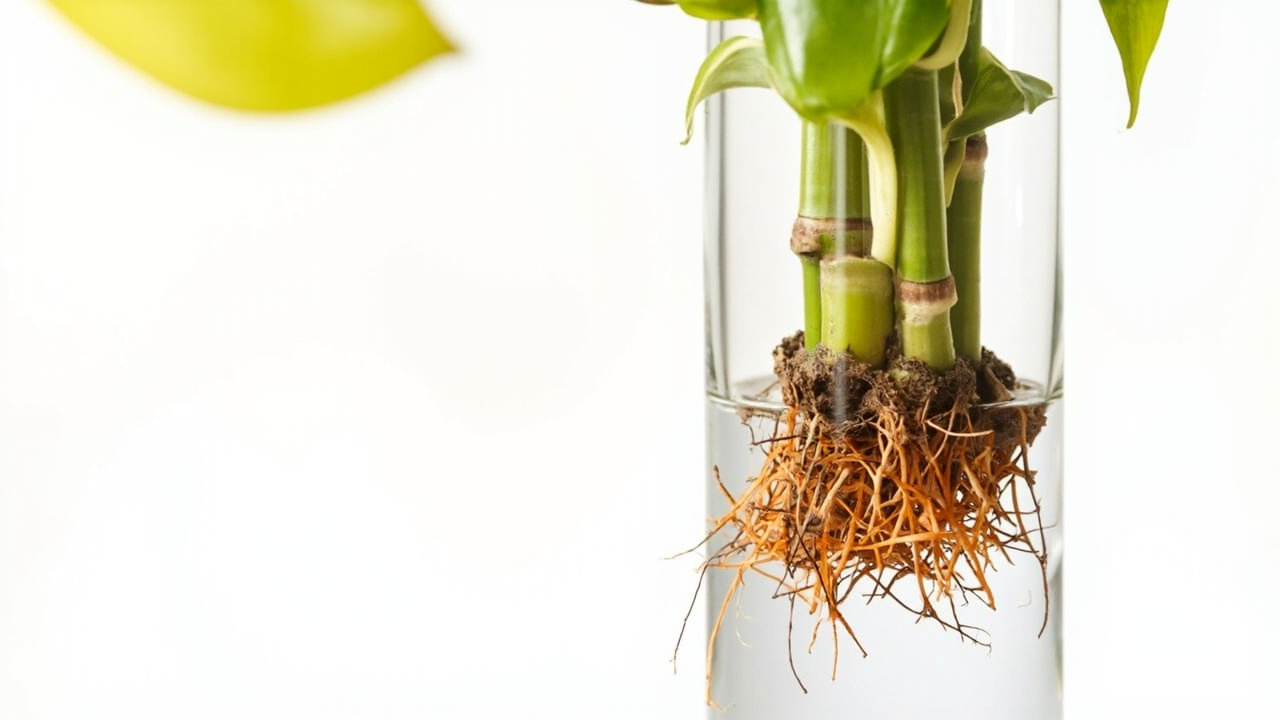
If water culture keeps failing, switching to well-draining soil often saves lucky bamboo that cannot sustain itself in standing water. Use this protocol when you have confirmed root rot in water culture and want a more forgiving medium.
- Gather your tools: sterilized scissors, fresh well-draining potting mix with perlite, a clean pot with drainage holes, and filtered water.
- Remove the stems from the old vase and trim all slimy roots back to firm white tissue. Cut any soft stem sections at the base to firm cream-colored tissue.
- Rinse the trimmed roots under lukewarm running water, then soak in diluted hydrogen peroxide (1:4 with water) for 5 minutes.
- Air-dry the stems on a paper towel in a warm, shaded spot for 1 hour. This calluses the cuts and prevents transplant shock.
- Layer 1 inch of coarse gravel at the bottom of the pot, then fill halfway with fresh potting mix. Set the stems at the same depth as before in the water vase.
- Fill in around the roots with more mix, pressing gently to eliminate air pockets. Leave 1 inch of space below the pot rim for watering.
- Water lightly with filtered water until it just starts to drain from the bottom holes. Do not water again until the top 1 inch of soil dries — overwatering in fresh soil kills recovery fast.
- Place in bright indirect light, away from cold drafts. A north or east-facing window with consistent 65-80°F (18-27°C) is ideal. Within 2-3 weeks, new white roots should anchor the plant.
Do not fertilize during recovery. Lucky bamboo rarely needs fertilizer; any added nutrients burn recovering roots. Wait until 2 months of healthy new growth before resuming optional feeding at half-strength.
Lucky Bamboo Leaf and Stem Problems: Fluoride, Cold, and Stem Rot
Not all decline starts in the roots. Lucky bamboo faces three common non-root causes of damage — fluoride and chlorine sensitivity, cold shock, and direct sun scorch. Each requires a specific fix — and in the case of cold damage, honesty about what will not recover.
Fluoride and chlorine burn. Lucky bamboo is extremely sensitive to fluoride and chlorine in tap water. Brown leaf tips with yellow halos appear first, accumulating over 2-4 weeks of regular watering. The damage is permanent — affected tips will not regenerate. Trim brown tips with sharp scissors at an angle, mimicking the natural leaf shape. Switch to filtered, distilled, or 24-hour-aged tap water to prevent new damage.
Cold shock. Temperatures below 60°F (15°C) for more than a few hours trigger yellowing and stem softening. The plant survives if the main stems remain firm. Move it away from drafty windows and doors immediately. New growth returns over 2-3 months if the root system is intact and water is warm.
Direct sun scorch. Pale bleached leaves with brown patches mean too much direct sunlight. Lucky bamboo evolved in shaded understory conditions. Move the plant to a spot with bright indirect light — a north-facing window or a few feet back from a south-facing one. New leaves will grow in healthy once light exposure is corrected.
Stem rot progression. Soft, hollow, or mushy sections of main stem usually mean rot has reached the stem from the roots. Cut the stem 1-2 inches above the soft section with a sterile blade. If the cut interior is white and firm, the upper portion can be propagated. If it is brown or hollow throughout, the plant is too far gone.
Lucky Bamboo Propagation: Saving Genetics When the Plant Is Gone
When the main stems have failed or the root system is beyond saving, stem-cutting propagation becomes the rescue plan. You cannot save the parent plant — but its genetics survive in healthy upper-stem sections with at least one node intact. Read: lucky bamboo care guide.
Cut a healthy upper-stem section 4-6 inches long with at least one node (the horizontal ring or joint along the stem). Place the cutting in a small glass of filtered or distilled water, submerging only the bottom 2 inches — not the leaves. New white roots emerge from the submerged node within 2-3 weeks.
Once roots reach 1-2 inches, transfer the cutting to a small pot with well-draining mix or keep it in water with weekly changes. Treat exactly like a mature lucky bamboo. A limitation worth knowing: variegated cultivars like ‘White Stripe Victory’ or ‘Lotus’ do not always propagate true from cuttings. The new growth often reverts to plain green. If variegation matters, division of the rooted stems is the only method that preserves the pattern.
If the parent plant still has one firm stem section, propagation can run alongside recovery. That way you have a backup even if the original fails.
Lucky Bamboo Recovery Timeline: What to Expect
- Week 1: Stabilize. No more yellowing spreading up the stem within 3-4 days of fixing water hygiene or moving to soil. If new yellowing appears above the water line after day 5, rot is still active — re-cut stems above the damage.
- Week 2-3: Root development. If in water culture, new white roots should be emerging from the cut ends and from nodes. If in soil, do not tug to check — wait for new leaf growth as the sign.
- Week 3-4: First visible sign. A new leaf unfurls from the top of the stem, or side shoots emerge from a node. This is the earliest reliable signal that the plant is out of danger.
- Month 2-3: Confirmed recovery. Multiple new leaves and visible active root growth. Resume normal water-change cadence and check fluoride levels in your water source.
- Month 3-6: Full recovery. Full recovery depends on original damage extent. A plant that lost all its leaves may take 6 months to regrow a full crown. Patience, not more fertilizer, solves this.
If at any point the plant continues declining despite correct care, the answer is usually that the stem’s vascular system has failed somewhere you cannot see. At that stage, propagate from any remaining green stem sections and start fresh. Standard Dracaena sanderiana (the plain green lucky bamboo) is widely available and tolerates neglect almost indefinitely when water hygiene and source are correct from the start.
Long-Term Lucky Bamboo Care After Revival
Reviving a lucky bamboo is half the work. Keeping it alive long-term means three habits that stop the same failure from repeating.
Change the vase water every 7 days minimum. In summer or warm rooms, every 5 days is safer. Use filtered, distilled, or 24-hour-aged tap water to prevent fluoride burn on leaf tips. Add water to keep the level steady between changes, but do full changes weekly to prevent anaerobic bacterial buildup. Anchor stems with fresh pebbles or glass beads — reused pebbles harbor bacteria even after washing.
Keep the plant in bright indirect light but away from direct southern sun in summer. North or east-facing windowsills with consistent 60-85°F (15-29°C) work best. Cold drafts below 60°F (15°C) cause stem yellowing within 24 hours — move plants away from doors and drafty windows before winter sets in.
Decide once whether to grow in water culture or soil. Water culture is easier to monitor root health but requires weekly attention. Soil is more forgiving long-term once established — water only when the top 1 inch of soil is dry, typically every 1-2 weeks. Do not fertilize more than once every 6 weeks during the growing season at half-strength. Skip feeding entirely in winter — over-fertilization burns roots and triggers the same rot that almost killed the plant the first time.
Turn That PDF Into a Spreadsheet in Minutes
You've seen how to do it manually — now let the tool handle the heavy lifting. Upload your bank statement and get Excel, CSV, or QBO in a few clicks.
Try It Free