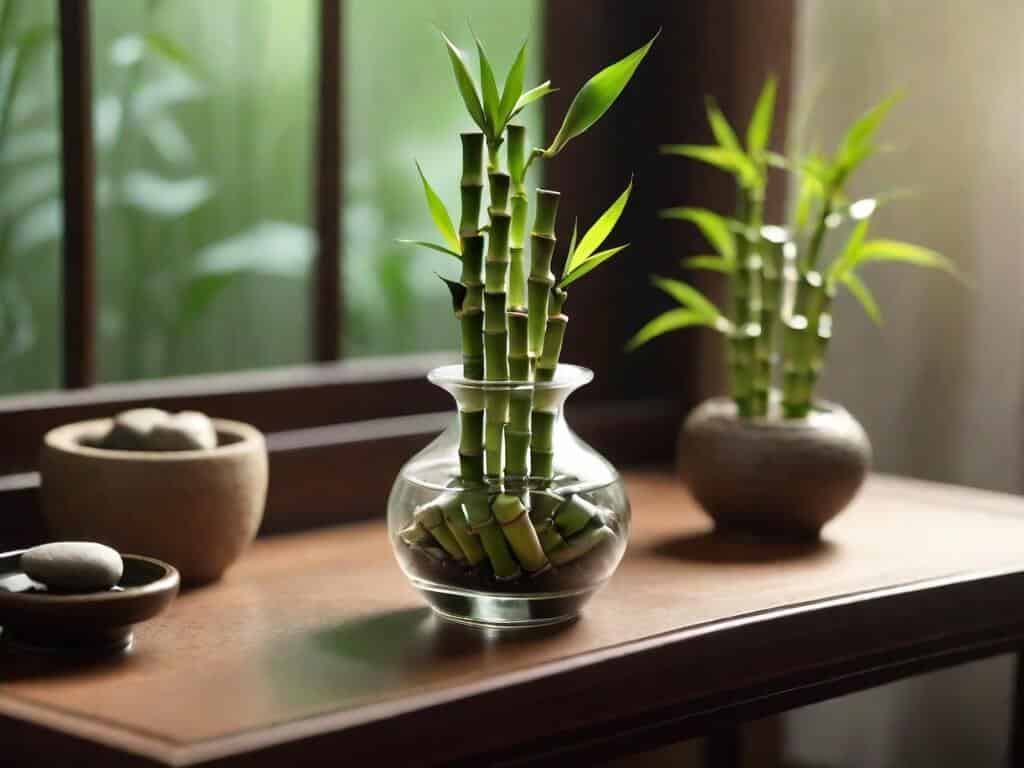
Lucky bamboo in bathroom setups can work well when the room has bright, indirect light and steady airflow. Lucky bamboo, which is actually Dracaena sanderiana rather than true bamboo, comes from warm, humid understory conditions, so a bathroom often matches its humidity needs better than a dry bedroom or office.
That said, the room itself is not the deciding factor. A bathroom with a frosted window and gentle ventilation can support healthy growth, while a dark windowless bathroom can slowly weaken the plant even if the air feels tropical after every shower.
Many people search this because they have seen feng shui advice or because bathrooms seem naturally good for tropical plants. Both ideas contain part of the truth, but lucky bamboo responds to light, water quality, temperature, and container hygiene, which is why one bathroom works beautifully and another becomes a slow decline zone.
Is a Bathroom Good for Lucky Bamboo? The Short Answer
A bathroom is usually a good place for lucky bamboo if the plant gets enough filtered daylight and is not trapped in stale, constantly wet air. Lucky bamboo tolerates lower light better than many houseplants, but it still needs enough energy to keep stems firm, leaves green, and new growth compact.
The easiest way to judge the room is simple: if you can comfortably read in the bathroom during the day without turning on a light, the plant has a fair chance there. If the bathroom stays dim all day and only looks bright when the ceiling light is on, lucky bamboo will stretch, pale, and eventually lose vigor.
Humidity is the bathroom advantage, but light is the bathroom test. A lot of plant problems start when growers focus on steam from showers and forget that photosynthesis still drives the plant’s long-term health.
What Makes a Bathroom Work, or Not, for Lucky Bamboo
A bathroom works because lucky bamboo is adapted to warm, moist air and filtered light rather than harsh full sun. Those same baseline needs are covered in broader dracaena sanderiana care requirements, and the bathroom question is really about whether this room can meet those needs consistently.
Humidity helps the leaves lose water more slowly, which means the plant is less likely to develop dry edges from indoor air. That matters most in air-conditioned homes where living rooms can run dry for long stretches, while bathrooms often return to a more forgiving humidity level once showers add moisture to the air.
Light decides whether that humidity becomes a benefit or a trap. In a bright bathroom, the plant can use the water and warmth to maintain steady growth, but in a dark bathroom the same moisture can sit around the container and roots without enough light-driven growth to balance it.
Temperature also matters more than many people expect. Lucky bamboo grows best around 65 to 85 degrees Fahrenheit, so a bathroom that stays within that range supports healthy metabolism, while a chilly guest bathroom or a room with cold winter drafts can slow root activity and make the plant look tired.
Humidity, Light, Temperature, and Airflow, the Four Bathroom Factors
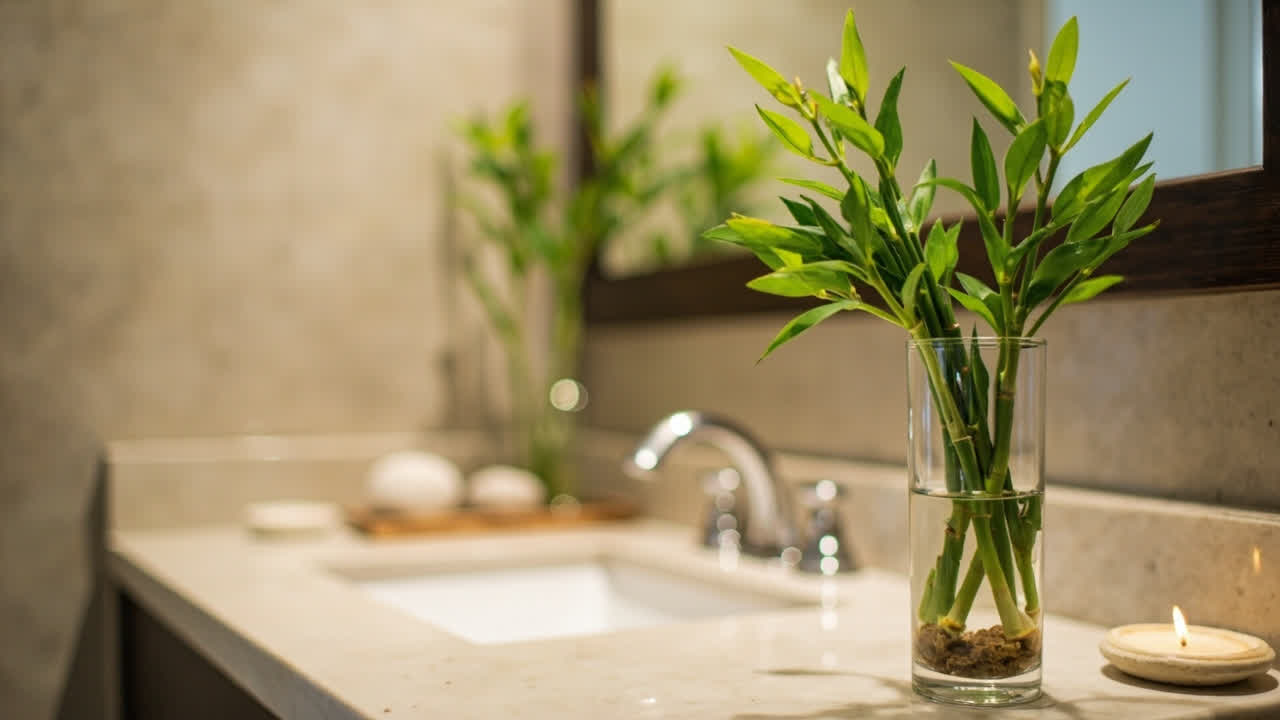
The best way to assess a bathroom is to break it into four separate conditions instead of asking whether bathrooms are good in general. Lucky bamboo responds to each factor on its own, so one strong condition cannot fully rescue three weak ones.
Humidity
Moderate to high humidity is genuinely useful for lucky bamboo because the leaves stay supple and the plant loses moisture more slowly. That makes bathrooms attractive locations in dry homes, especially when the plant sits several feet away from direct steam rather than right on the shower ledge.
Very high humidity becomes less helpful when it is paired with poor airflow. A room that stays damp for hours after bathing encourages algae on glass containers and can keep soil-grown plants wetter than expected.
Light
Bright, indirect light is the strongest predictor of success. A bathroom window with frosted glass, a sheer curtain, or bright reflected daylight gives lucky bamboo enough energy without exposing it to harsh direct afternoon sun that can bleach leaves.
Windowless bathrooms are the weak point in most online advice. Lucky bamboo may survive for a while under ordinary bulbs, but survival is not the same as healthy growth, and the stems usually become thin, pale, and stretched when the room never receives usable daylight.
Temperature
Warm, stable temperatures support steady growth because lucky bamboo is a tropical dracaena, not a cold-tolerant cane plant. Short steam spikes from showers are usually harmless, but repeated drops below about 60 degrees Fahrenheit can stress roots and slow recovery from other problems.
Bathrooms near exterior walls can shift more than you think. Tile, windows, and exhaust fans sometimes create cold pockets at night, so the spot beside the sink may feel warmer to you than it does to a plant sitting still for twenty-four hours.
Airflow
Airflow prevents the room from staying swampy after humidity rises. An exhaust fan, open door, or slight window ventilation helps the container dry on the outside, slows algae growth, and reduces the chance that soil stays soggy for too long.
Good airflow does not mean a strong draft. Lucky bamboo still dislikes blasts of hot or cold air, so the goal is gentle air exchange rather than a direct fan stream hitting the leaves.
The Trade-offs: What Bathrooms Get Wrong
Bathrooms fail lucky bamboo most often when growers assume moisture solves everything. In reality, a humid room can speed up several problems if the container, growing medium, and light level are not matched to the plant’s actual needs.
Water culture is the first trade-off. If you are growing lucky bamboo in water, a warm bathroom with some light can also become an ideal place for algae, especially in clear glass jars where light reaches the water column all day.
Soil culture has its own version of the same problem. Potting mix dries more slowly in a humid bathroom, which means a watering routine that works in the living room can leave roots too wet here and reduce oxygen around them.
Tap water quality is another overlooked issue. Lucky bamboo is sensitive to fluoride, chlorine, and mineral buildup, so bathroom tap water that sits in older pipes or carries extra sediment can leave brown tips even when the placement itself seems correct.
Steam is not always harmless either. A single hot shower will not cook the plant, but repeated blasts of very hot moist air from a shelf directly above the shower can push leaf tissue beyond what this dracaena handles comfortably.
When a Bathroom Works, and How to Set It Up
A bathroom works best when it falls into one of two categories: a bright windowed room, or a darker room where you are willing to add artificial light. The setup should follow the room type rather than a one-size-fits-all routine.
- A bright bathroom can support lucky bamboo with natural indirect light.
- A windowless bathroom needs a small grow light on a daily timer.
- Both setups need clean water, a stable container, and gentle ventilation.
Windowed bathroom setup
A windowed bathroom is the easiest option because natural indirect light does most of the heavy lifting. Place lucky bamboo near the window but not pressed against hot glass or cold panes, and aim for a spot where the plant receives several hours of bright ambient light.
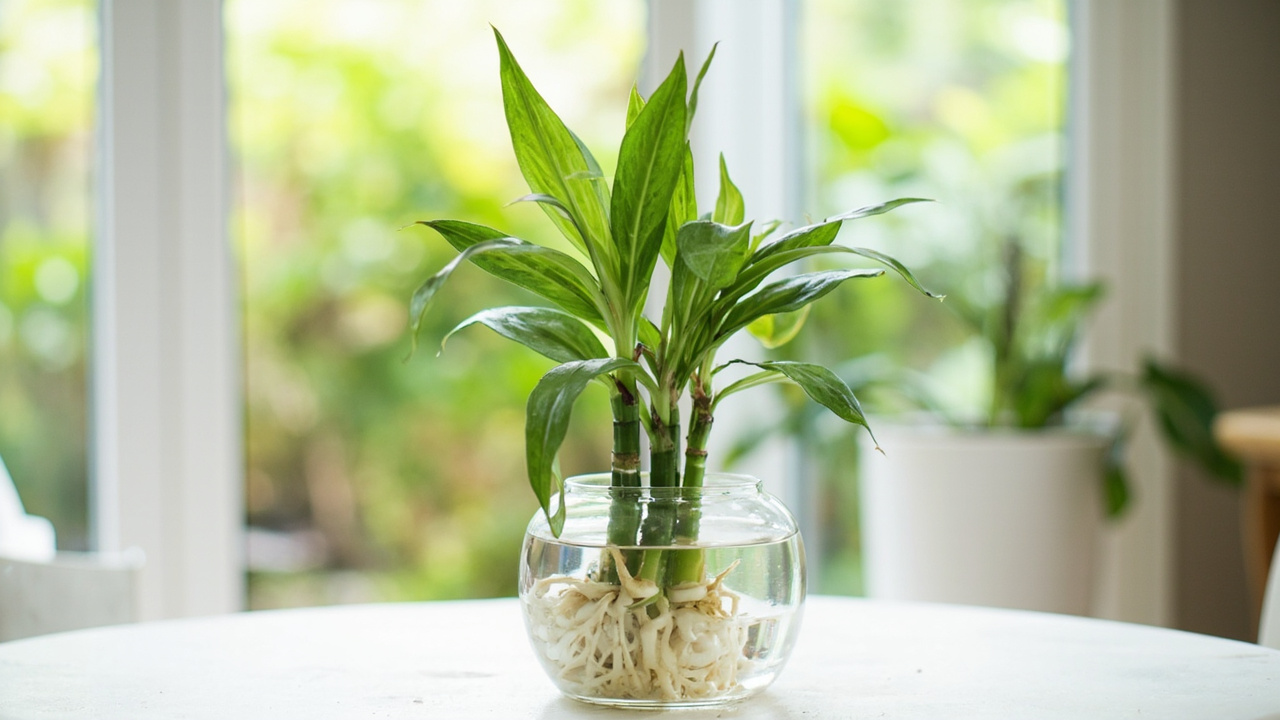
Use filtered or distilled water in a clean container, and keep the roots submerged while the canes stay above the waterline. An opaque or ceramic container is often smarter than clear glass because it blocks light from feeding algae in the water.
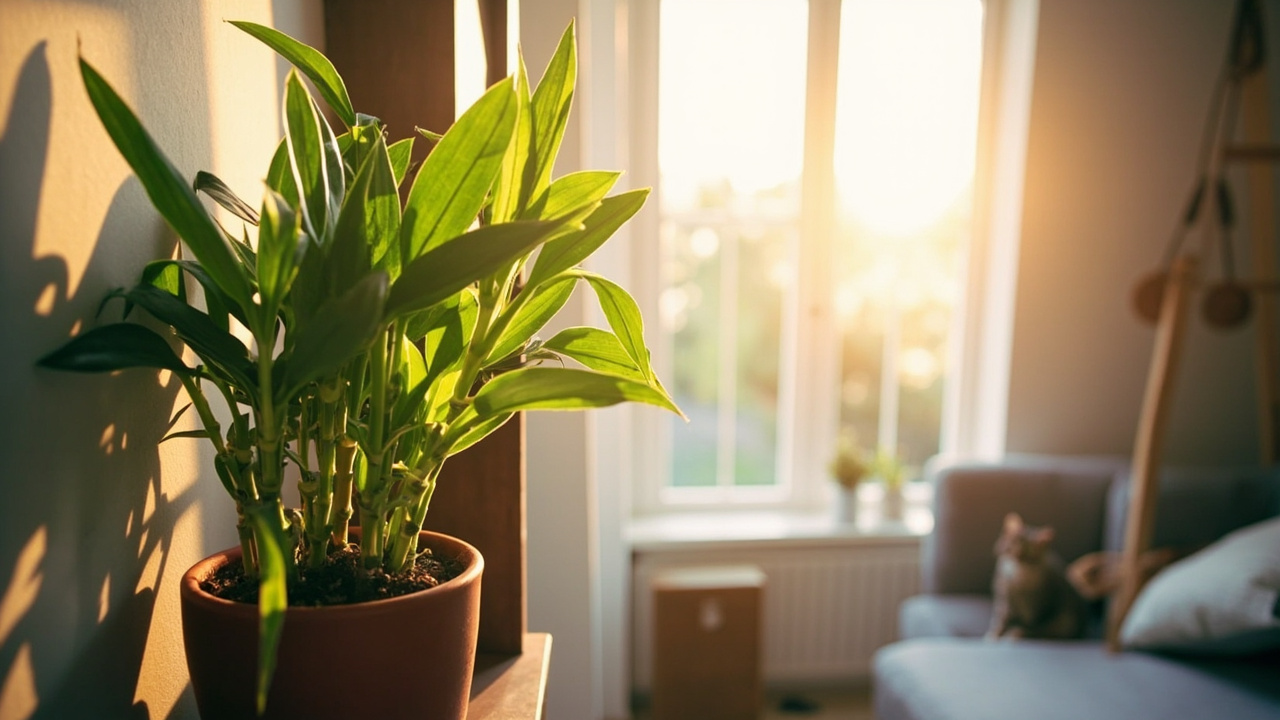
If you grow the plant in soil instead of water, use a pot with a drainage hole and water only when the upper inch begins to dry. Bathroom humidity slows evaporation, so the potting mix usually needs fewer waterings here than in drier rooms.
Windowless bathroom setup
A windowless bathroom can still hold lucky bamboo, but only if you treat it as a low-light project that needs support. A small full-spectrum grow light on a timer for 10 to 12 hours a day gives the plant the consistent energy the room itself cannot provide.
Keep the plant away from direct steam and away from the darkest corners, even with a grow light. Light intensity drops fast with distance, so a lamp placed too high or too far away can look bright to your eyes while still being too weak for steady plant growth.
In either bathroom type, clean the container every seven to ten days and rotate the plant a quarter turn every week or two. Those small habits keep algae, mineral film, and one-sided leaning from becoming long-term problems.
Feng Shui and Lucky Bamboo in the Bathroom
Feng shui advice often says lucky bamboo can balance bathroom energy because the plant is associated with growth and the bathroom is associated with draining water energy. That cultural interpretation is useful context because many readers first hear about bathroom placement through feng shui rather than plant care sources.
From a horticultural perspective, the idea only holds up when the room also meets the plant’s physical needs. Lucky bamboo does not respond to symbolism alone, so the best way to reconcile both views is simple: if the placement feels meaningful to you, keep it there only when the light, temperature, and water quality are good enough for healthy growth.
That balance is actually reassuring. You do not need to choose between cultural meaning and plant biology, because a bathroom placement can satisfy both when the environment is truly suitable.
Long-Term Care: Keeping Lucky Bamboo Healthy in a Bathroom
Bathroom-grown lucky bamboo needs a slightly different maintenance rhythm because humidity changes how fast water evaporates and how quickly algae appears. A routine that feels minor in month one matters much more after three or four months in the same spot.
Change water every seven to ten days for plants grown hydroponically, and rinse the container walls each time to remove slippery biofilm before it thickens. That simple cleaning schedule matters more in a bathroom because warmth and light together speed up microbial growth.
Trim dead leaves promptly and inspect the roots during water changes. Healthy roots look firm and pale, while mushy brown roots point to poor water quality, stagnant conditions, or early rot that should be cut away with clean scissors.
Watch seasonal shifts in the room as well. A bathroom that feels bright in the dry season or summer can become much dimmer during long cloudy stretches, so lucky bamboo sometimes needs to move closer to the window or under supplemental light for part of the year.
Feed lightly if the plant is actively growing, but do not overdo fertilizer in a bathroom setup. A very dilute liquid houseplant fertilizer every couple of months is enough for most containers, and excess nutrients in water culture can feed algae as much as they feed the plant.
Signs Your Bathroom Lucky Bamboo Is Struggling
Lucky bamboo usually shows stress early if you know where to look. The most common warning signs are yellowing leaves, brown tips, limp growth, foul-smelling water, and roots that feel soft instead of crisp.
Leaf edge damage is often a water-quality clue rather than a location problem alone. If you notice brown or yellow tips on lucky bamboo, the cause is often fluoride, chlorine, salt buildup, or inconsistent watering rather than bathroom humidity itself.
Pale new growth and wide spacing between leaves usually signal insufficient light. In a bathroom context, that often means the plant is surviving on overhead room lighting instead of getting real daylight or a proper grow light.
Green film on the container walls points to algae, which tells you that light is reaching nutrient-rich water and the cleaning schedule is too loose. Algae is not always fatal by itself, but it reduces the clean, stable root environment lucky bamboo prefers.
Soft stems or blackened roots are more urgent. Those symptoms often mean rot has started, and the fastest fix is to remove damaged roots, disinfect the container, replace the water, and move the plant to a brighter spot with better air exchange.
If a Bathroom Isn’t Right, Best Alternatives
If your bathroom stays dark, cold, or poorly ventilated, moving lucky bamboo is the smarter choice. A bright bedroom dresser, office shelf near a window, or kitchen counter with filtered daylight usually offers more stable light while still keeping the plant out of harsh sun.
The ideal alternative is any spot with bright ambient light, room temperatures above the low sixties, and enough visibility that you remember to clean the container regularly. Lucky bamboo is flexible about décor, but it is not flexible about the basic environmental signals that keep its roots and leaves functioning well.
This is worth remembering if you feel attached to the bathroom idea. The best placement is not the most stylish or symbolic one, but the one where the plant can grow steadily without showing stress every few weeks.
Bottom Line
Lucky bamboo can do very well in a bathroom when the room provides indirect light, stable warmth, clean water, and enough airflow to keep humidity from turning stagnant. If your bathroom has those conditions, it is a practical home for the plant; if it does not, add a grow light or move lucky bamboo to a brighter room before stress signs start to build.
Turn PDF Bank Statements Into Workable Spreadsheets
Your bank statement is a mess of numbers, but your books shouldn't be. Use our converter to get Excel, CSV, or QBO files — ready for QuickBooks.
Try It Free Now