Stores call it lucky bamboo, but it isn’t bamboo at all. Dracaena sanderiana is a tropical African dragon tree that tolerates water culture better than almost any other woody houseplant — which is why it has survived in stores under the wrong name for decades. The confusion matters because most people grow it as if it were a true aquatic, and that’s where the trouble starts.
Lucky bamboo in clear vases looks decorative and low-maintenance. It is neither once you understand what it actually needs. The plant is native to tropical forest floors where it gets bright, indirect light filtered through a canopy, consistently moist soil, and humidity above 60%. Replicate that, and you’ll have the same plant for 10–15 years. Let it fend for itself in a dim corner with tap water and you’ll be buying a new one in 6 months.
What Lucky Bamboo Actually Needs
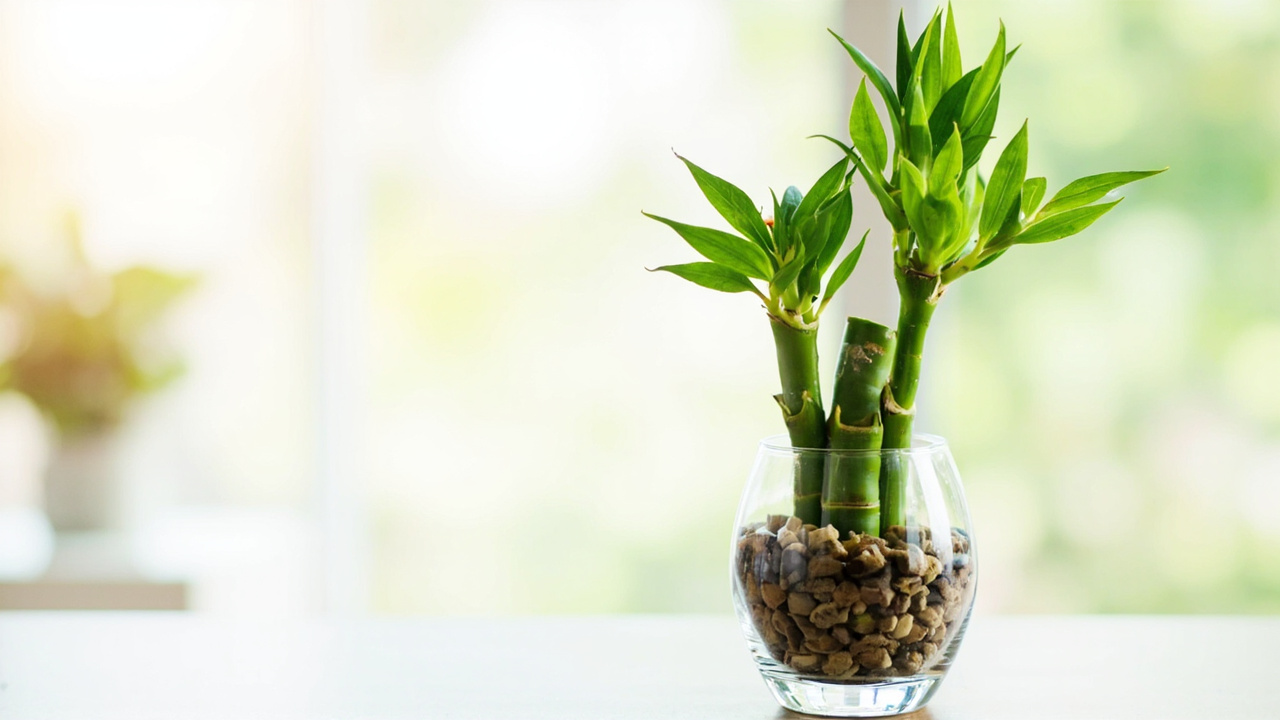
The reason lucky bamboo fails in homes isn’t neglect — it’s the wrong environment being presented as the right one. A clear glass vase with pebbles and tap water is appealing to humans, not to Dracaena sanderiana.
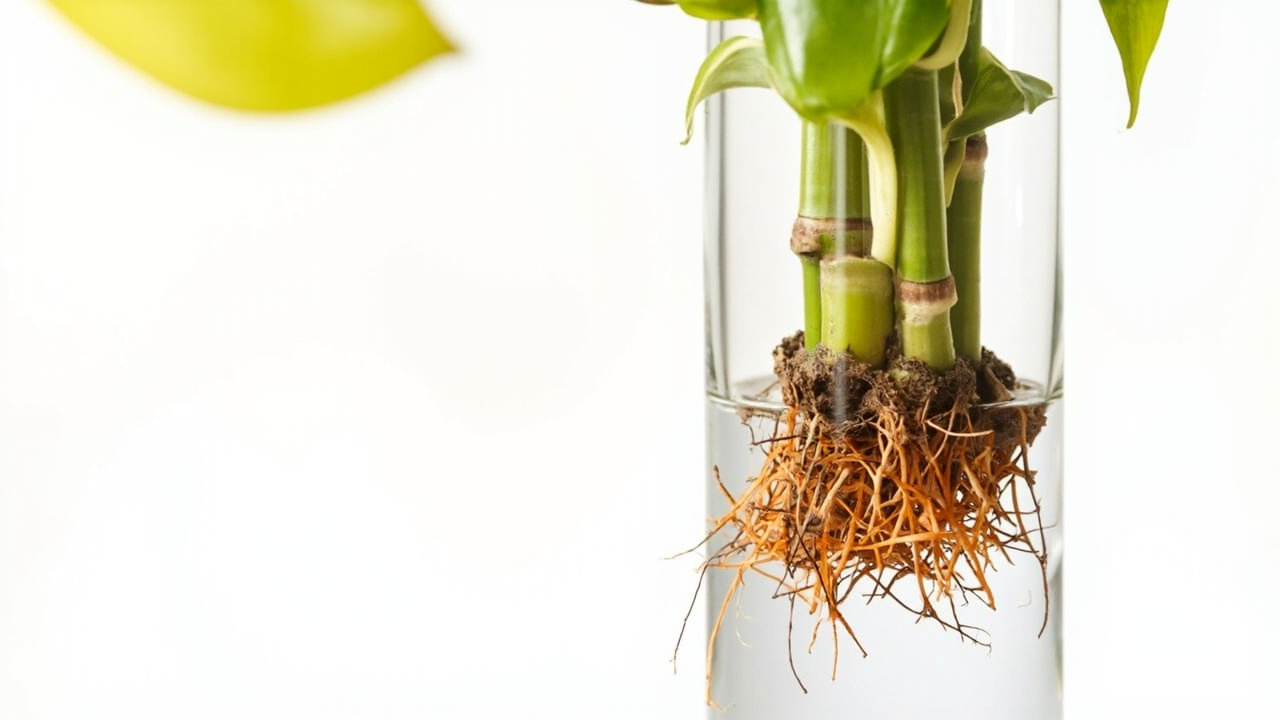
The trade-off with water culture specifically: roots sitting in static water accumulate salts from tap water that the plant cannot process. Over time, those salts burn root tips, causing the roots to turn orange or brown instead of white, and the plant loses vigor. Changing the water weekly delays but doesn’t prevent this. The alternative is soil culture, which gives better long-term results for most growers.
Water Culture : What Actually Works
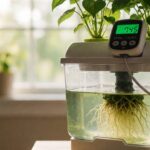
If you want to keep the vase aesthetic: use distilled or rainwater only. Tap water contains fluoride, chlorine, and dissolved solids that cause tip burn on lucky bamboo within 3–4 months of continuous use. Change the water every 5–7 days and rinse the roots gently under running water each time to remove the slimy bacterial film that builds up on root surfaces.
Keep the water level no higher than 1–2 inches (2.5–5 cm) above the root crown — the upper roots need oxygen, not submersion. Fully submerged root systems in deep water go anaerobic and produce a sulfide smell within 2 weeks.
Soil Culture : The More Reliable Method
Plant lucky bamboo in a well-draining potting mix (1 part peat or coco coir, 1 part perlite or coarse sand) in a pot with drainage holes. Water when the top 1 inch (2.5 cm) of soil feels dry — never let the pot sit in standing water. Soil-grown lucky bamboo tolerates tap water better because the soil microbiome neutralizes more of the fluoride before it reaches the roots.
Light : The Most Misunderstood Need
Lucky bamboo tolerates low light better than most tropical plants, but “tolerates” isn’t the same as “prefers.” In low light, the plant grows slowly or not at all, produces pale new leaves, and loses the deep green color that makes it attractive. What it cannot tolerate is direct sun — the leaves scorch at 75°F (24°C)+ in direct light, producing brown edges and dead patches within days.
The ideal spot: bright indirect light within 3–4 feet (1–1.2 m) of an east-facing window, or filtered light from a north-facing window. A few hours of gentle morning sun is fine. Afternoon direct sun from a south or west window will burn the leaves in summer.
Signs Your Light Is Wrong
Too dark: new leaves emerge progressively paler green or yellow between the veins (nitrogen deficiency symptoms caused by slowed metabolism, not actual nutrient lack). The plant hasn’t died — it’s just waiting. Move it closer to a window and new growth will green up within 3–4 weeks.
Too bright: brown or yellow patches on the uppermost leaves, especially on the side facing the window. The leaf tissue dies from heat buildup where the sun concentrates through the window glass.
Temperature and Humidity
Lucky bamboo is tropical — it stops growing below 60°F (16°C) and can sustain cold damage below 50°F (10°C). If you grow it in water on a desk near a drafty window in winter, the roots sitting in cold water are effectively chilled, which suppresses root function even if the air temperature reads fine.
Keep it in rooms that stay between 65–80°F (18–27°C) year-round. In summer, it tolerates outdoor placement in shade once night temperatures are reliably above 60°F (16°C). Bring it back inside before fall cool fronts arrive.
Humidity above 60% keeps the leaves looking fresh. In dry indoor air (common in winter with heating), the leaf tips turn brown first — a condition called tip burn that is cosmetic but permanent. Daily misting helps, but the more reliable fix is a pebble tray beneath the pot (for soil culture) or grouping it with other tropicals that collectively raise the humidity around them.
Watering and Fertilizing
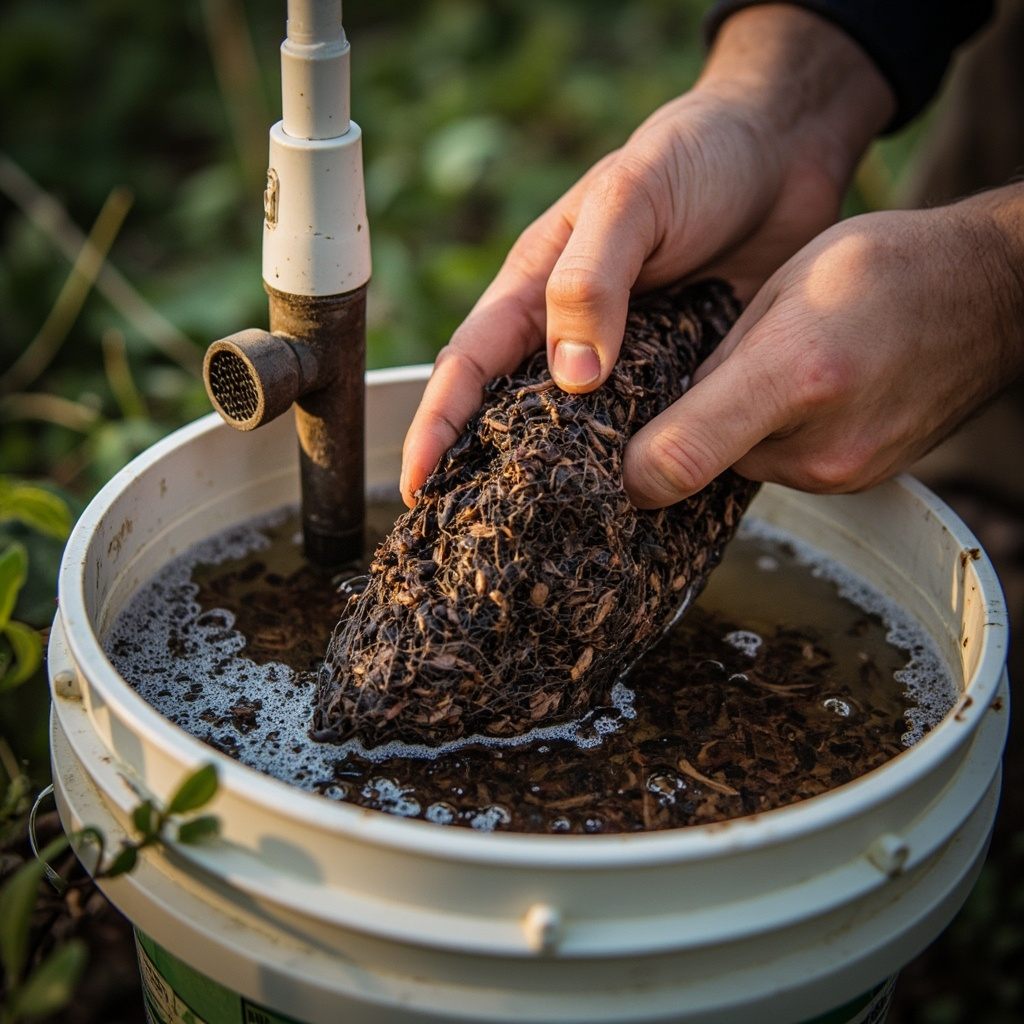
For water culture: add a single liquid fertilizer drop per month only — not per week. Lucky bamboo in water has no soil to buffer excess nutrients, and over-fertilization in water culture is the fastest way to kill it. The signs: leaf tips turn brown, roots go orange/brown instead of white, and the water develops a green algal bloom. If you see these signs, flush the roots, change the water, and stop fertilizing for 6 weeks.
For soil culture: fertilize monthly during spring and summer with a balanced liquid fertilizer diluted to half the strength recommended for typical houseplants. Flush the soil monthly by running plain water through the pot until it drains from the bottom — this prevents salt accumulation in the root zone.
Why Over-Fertilizing Is Easy in Water Culture
In soil, the mineral particles and organic matter bind and slowly release nutrients. In water culture, everything is immediately bioavailable — the roots absorb what they can immediately and the rest just accumulates in the water. Even a “normal” dose of liquid fertilizer in a vase is effectively 5–10x stronger than it would be in soil.
Pruning and Shaping
Lucky bamboo grows in a single cane that can reach 3–5 feet (90–150 cm) indoors. You control height by cutting the growing tip — the plant will branch just below the cut with two to three new growth points within 4–6 weeks. Each cut point becomes a fork in the plant’s structure.
To cut: use clean, sharp scissors or a pruning saw for thick canes. Cut at an angle 1⁄4 inch (6 mm) above a node (the raised ring where leaves or roots emerge). The node is where new growth will emerge. If you cut above a node, the cane above it dies back to the nearest node below the cut.
Never remove more than 30% of the plant at once — it needs sufficient leaf area to photosynthesize and feed the root system. Prune in spring or summer during active growth; pruning in fall or winter when growth has slowed means the cut points may not branch and just seal over without producing new shoots.
Rotating for Even Growth
Lucky bamboo grows toward light. Rotate the container or pot a quarter turn every 2–3 weeks to keep growth even and prevent the plant from leaning permanently toward the window. A leaning plant isn’t a problem structurally, but it looks better with regular rotation.
Why Lucky Bamboo Yellows : and How to Fix It
Yellow leaves on lucky bamboo almost always point to one of three causes: too much direct light, over-fertilization in water culture, or fluoride in tap water. Less commonly, root rot from water that’s been sitting too long in a warm room, or transplant shock if it was moved from soil to water recently.
The fix for light-related yellowing: move to a shadier spot and remove the yellow leaves by cutting them at the stem — they won’t recover. New leaves will come in healthy green if the light is corrected.
The fix for fertilizer burn: flush roots under running water for 2 minutes, replace the water, and cut fertilizer to half the previous amount. If the plant is in soil, flush the pot thoroughly with plain water and let it drain completely before the next watering.
lucky bamboo turning yellow has a specific cause in most cases — once you’ve identified it, the fix is immediate. Unlike many plant problems, yellowing from environmental causes starts reversing within 2 weeks of correction.
For propagating new plants from cuttings, lucky bamboo propagation walks through the step-by-step from cut to rooted plant. For understanding how it relates to other Dracaena species, dracaena genus explained covers the whole plant family.
Turn PDF Bank Statements Into Workable Spreadsheets
Your bank statement is a mess of numbers, but your books shouldn't be. Use our converter to get Excel, CSV, or QBO files — ready for QuickBooks.
Try It Free Now