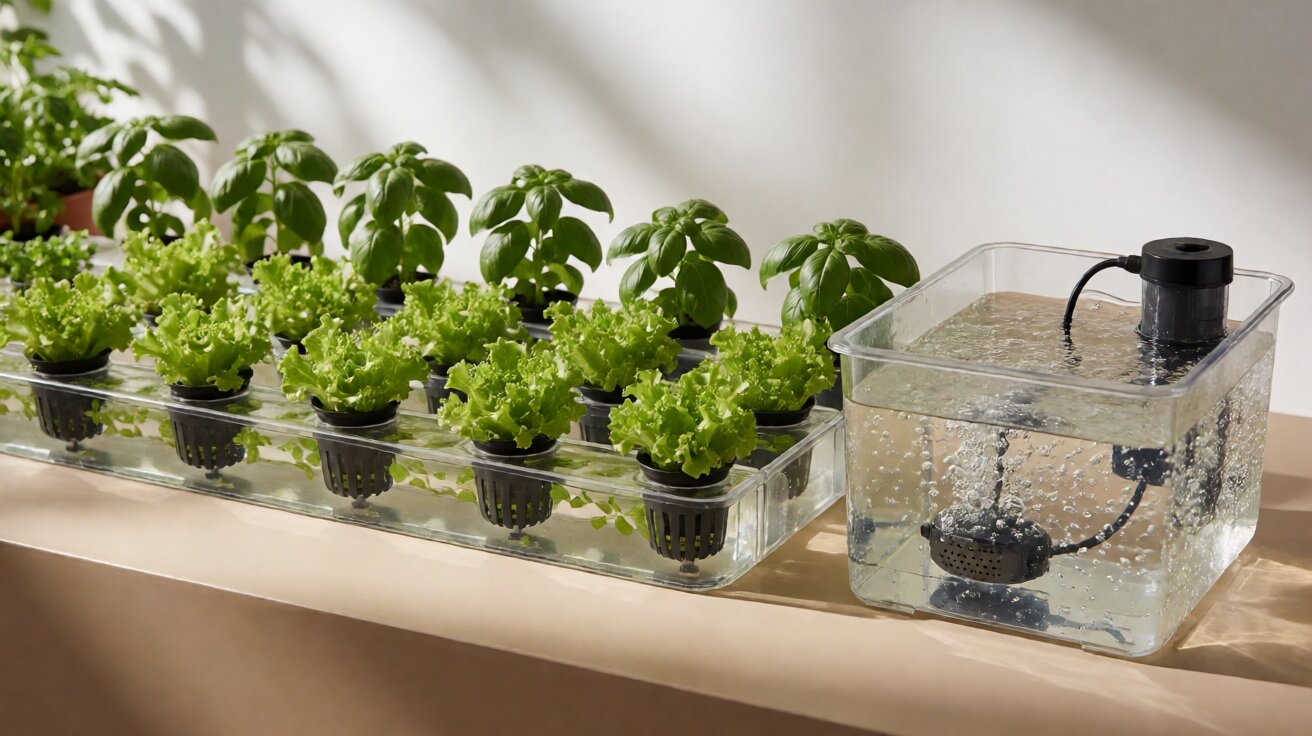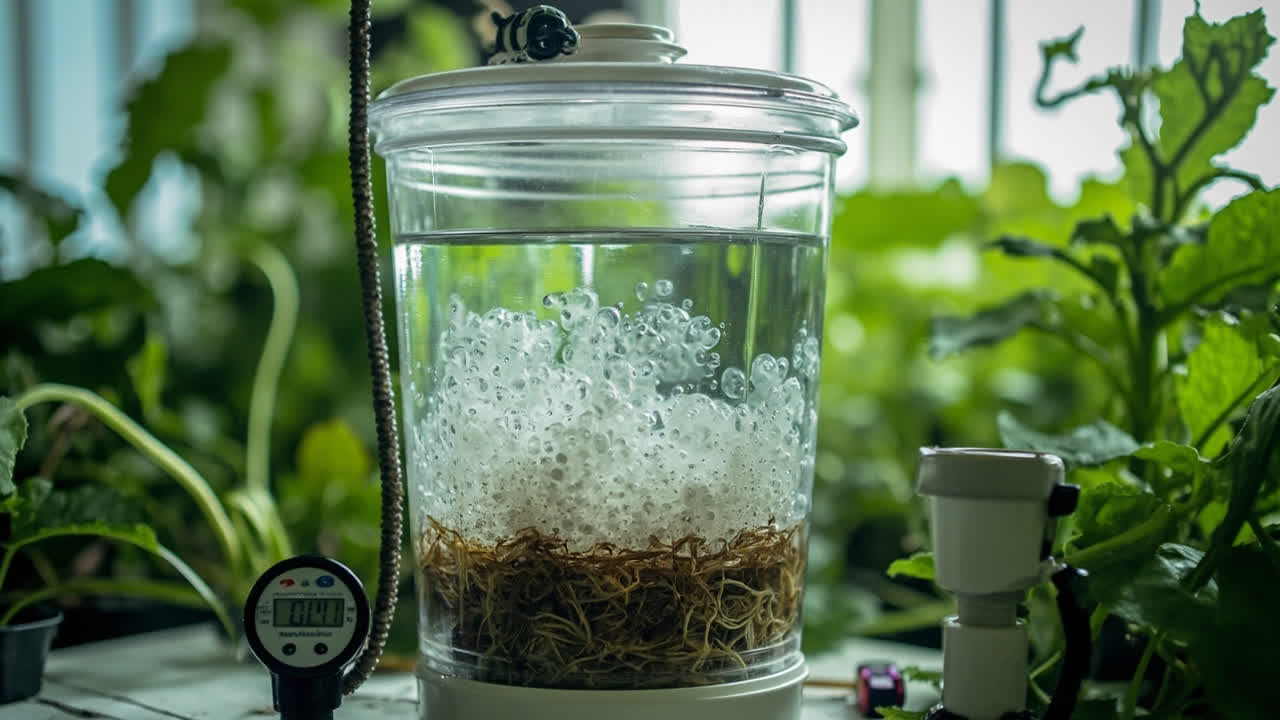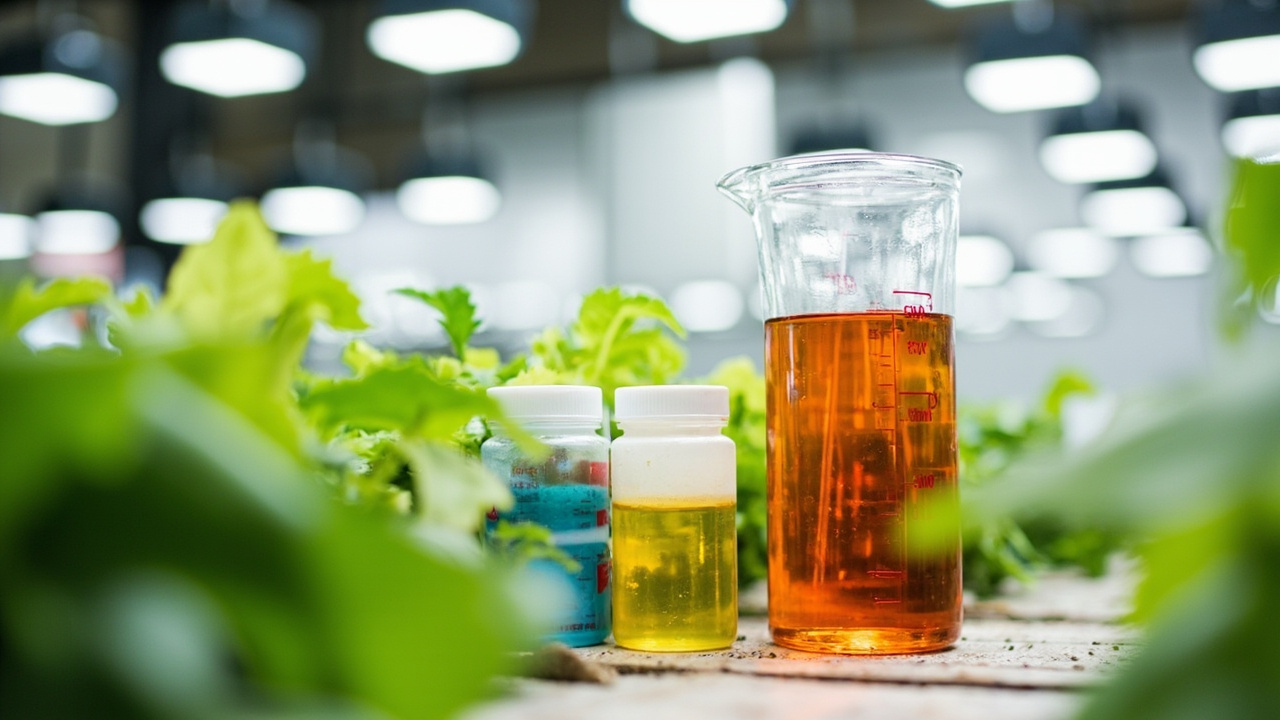

Hydroponic gardening gives you total control over what your plants eat — but that control lives entirely in the nutrient solution. Mix it right, and your lettuce, basil, or tomatoes grow faster than they ever could in soil. Get it wrong, and plants show deficiency symptoms within days. This guide walks you through every decision point so you can mix a reliable solution confidence, whether you run a DWC bucket, NFT channel, or media-based system.
A nutrient solution is simply water that carries dissolved mineral salts. Those salts break apart into ions — electrically charged particles that plant roots absorb directly. The three numbers on a bottle of hydroponic nutrient fertilizer (like 3-2-1) refer to nitrogen, phosphorus, and potassium, but a complete formula also includes calcium, magnesium, iron, manganese, and trace elements like zinc and boron. Each ion plays a specific role in plant health, and the balance between them matters as much as the total amount.
Two numbers define solution quality: EC (electrical conductivity) and pH. EC measures how strongly the water conducts electricity, which correlates to total dissolved salts — the same metric any hydroponic farming nutrient recipe has to balance — a proxy for nutrient strength. pH measures acidity on a 0–14 scale and determines whether certain ions stay available for root absorption. Together, EC and pH tell you whether your plants can actually use what you give them.
Understanding EC and pH in a Hydroponic Nutrient Solution
EC is expressed in units like mS/cm (millisiemens per centimeter) or sometimes CF (conductivity factor, common in the UK and Australia). A higher EC means a stronger solution; a lower EC means a weaker one. For most home hydroponic crops, an EC of 1.2–2.0 mS/cm covers the seedling and early vegetative stage. As plants grow larger and demand more food, the EC rises to 2.0–2.5 mS/cm during peak vegetative growth, and some fruiting crops like tomatoes handle 2.5–3.5 mS/cm during bloom and fruit development.
pH works on a logarithmic scale. In hydroponics, the sweet spot sits between 5.5 and 6.5. Below 5.5, certain nutrients — especially calcium and magnesium — become less available even if they are present in the solution. Above 6.5, iron and phosphorus start to precipitate out, meaning they form solid particles the roots cannot absorb. Most home gardeners aim for 5.8–6.2 as a practical target range that keeps the widest range of nutrients accessible.
Water temperature is the third variable that often gets overlooked. Root function slows dramatically in cold water below 65°F (18°C), reducing nutrient uptake even when EC and pH are correct. Conversely, water above 80°F (27°C) holds less dissolved oxygen and creates conditions favorable for root pathogens like Pythium. The ideal range for most hydroponic systems is 68–72°F (20–22°C). In practice, this means placing your reservoir in a climate-controlled space and monitoring temperature during hot summers or cold winters.
A Beginner Recipe Framework for Hydroponic Nutrient Solution
You do not need brand-name products to build a functional nutrient solution. A complete formula requires six macronutrient groups and at least four micronutrients. The macronutrients are nitrogen (N), phosphorus (P), potassium (K), calcium (Ca), magnesium (Mg), and sulfur (S). The micronutrients are iron (Fe), manganese (Mn), zinc (Zn), and boron (B). Some gardeners add copper (Cu) and molybdenum (Mo) for completeness.
The simplest approach for beginners is to use a two-part liquid nutrient system — one bottle for calcium nitrate and another for a blend of magnesium sulfate and potassium salts, with a separate iron chelate source. This separation prevents calcium and phosphate or sulfate from reacting to form insoluble precipitates while stored in the same concentrate. Follow the manufacturer’s mixing order (see the next section), and you get a complete, stable solution.
If you prefer a single-component approach, use a high-quality water-soluble hydroponic fertilizer powder that dissolves completely in warm water. Look for a formula labeled complete or all-in-one. Avoid garden soil fertilizers — they often contain insoluble particles and are not designed for the direct root contact of hydroponics.
Target ranges by growth stage:
- Seedlings and cuttings: EC 0.8–1.2 mS/cm, pH 5.8–6.2
- Early vegetative (first true leaves): EC 1.2–1.8 mS/cm, pH 5.8–6.2
- Peak vegetative growth: EC 1.8–2.5 mS/cm, pH 5.6–6.2
- Flowering and fruiting: EC 2.5–3.5 mS/cm, pH 5.5–6.1
These ranges work for common crops like lettuce, basil, kale, bok choy, tomatoes, peppers, cucumbers, and strawberries. Adjust based on what you observe in your plants rather than chasing a specific number. [[LINK:hydroponic-lettuce-growing-guide|lettuce in hydroponic systems]] often thrives at the lower end of the range, while fruiting vegetables prefer the higher end.
The Correct Mixing Order to Prevent Precipitate
Mixing order matters because some nutrients react with each other when combined at full strength. Calcium and phosphate are the classic problem pair — when mixed directly, they form calcium phosphate precipitate, which drops out of solution and becomes unavailable to plants. The same risk exists between calcium and sulfate.
The safe mixing sequence for a two-part system:
- Fill your reservoir with clean, room-temperature water (68–72°F / 20–22°C). Never mix concentrates directly together — always dilute each one separately first.
- Add Part A (usually the calcium nitrate component) to the full reservoir volume and stir or circulate with an air stone for 30 seconds.
- Add Part B (magnesium sulfate, potassium salts, and phosphates) to the same reservoir and stir again for 30 seconds.
- Add iron chelate last, stirring thoroughly.
- Check pH and adjust if needed (see the pH adjustment section below).
- Check EC with a calibrated meter and dilute with plain water if the reading is above your target range for the current growth stage.
Always add nutrients to water, never add water to concentrated nutrients. Adding water to concentrate creates a localized high-concentration zone where precipitates can form before the solution fully dilutes.
Diluting Concentrated Nutrients Safely
Hydroponic nutrient concentrates are typically sold as liquids or powders at 100x or 1000x strength. Diluting correctly is critical — under-diluting burns plant roots with excess salts, while over-diluting leaves plants hungry.
For liquid concentrates, the label states the dilution rate (usually ml per liter of water). Use a clean syringe or graduated cylinder for small volumes, or a measuring cup for larger reservoirs. Pour the concentrate into the filled reservoir, not the other way around. Never eyeball the dose — EC meters are inexpensive and eliminate the guesswork.
For powder concentrates, dissolve the measured amount in a small amount of warm water first (not hot — extreme heat damages some nutrient compounds). Stir until completely dissolved, then add the solution to your reservoir. Undissolved powder settling at the bottom of a mixing bucket is a common cause of nutrient imbalances.
After mixing, always calibrate and measure your EC and pH. These two readings tell you what the plant actually experiences, regardless of what the label promised or what formula you started with. [[LINK:how-to-test-ph-for-hydroponics|Testing pH in hydroponic systems]] regularly takes less than two minutes and prevents most nutrient-related problems before they show symptoms in the foliage.
When and How to Change Your Reservoir
Nutrient solutions shift in composition over time. Plants selectively absorb certain ions, leaving others to build up. Evaporation concentrates salts. Microbial activity can alter pH. Even with perfect daily top-ups of plain water to replace evaporation losses, the solution eventually drifts out of the ideal balance.
General guidelines for home systems:
- DWC (deep water culture) buckets: Change the full reservoir every 7–14 days, depending on plant size and water temperature. Larger plants in warm conditions consume nutrients faster and warrant shorter change intervals.
- NFT (nutrient film technique) channels: Change every 5–10 days because the thin film exposes solution to more atmospheric oxygen and temperature variation.
- Ebb-and-flow and media-based systems: Change every 7–14 days, similar to DWC.
- Kratky (passive DWC): Typically a single-fill system for each growth cycle, so the solution is not changed mid-cycle — top up with fresh dilute solution as the reservoir depletes.
Between changes, top up with plain pH’d water daily to compensate for transpiration and evaporation. This keeps the root zone stable. Only top up with dilute nutrient solution if the EC drops significantly below your target range, which usually indicates that plant uptake has depleted the solution faster than evaporation concentrates it.
When you do change the reservoir, scrub the container with a soft brush, rinse thoroughly, and check for root debris or algae buildup. A clean reservoir prevents pathogen carryover between cycles. [[LINK:hydroponic-system-cleaning|Cleaning your hydroponic system]] properly between grows is one of the simplest and most effective things you can do to prevent disease.
Adjusting for Hard Water vs. Soft Water
Your source water changes the recipe. Hard water contains significant calcium and magnesium before you add any nutrients. Soft water has been through ion exchange and contains very little mineral content, sometimes replacing calcium and magnesium with sodium.
Test your water with a TDS (total dissolved solids) meter or, better yet, a laboratory water test. Look specifically for calcium, magnesium, and bicarbonate (alkalinity) levels. This information tells you how much of each element your water already provides.
For hard water (calcium above 100 mg/L or significant alkalinity):
- Account for the existing calcium and magnesium by subtracting them from your nutrient target. You may need a lower-calcium nutrient formula or a reduced dose of the calcium component.
- Watch alkalinity — high bicarbonate buffers the solution pH and makes it harder to control. Use a pH-down acid (phosphoric acid is common in hydroponics) in small increments.
- If calcium and magnesium are already at or above target levels, consider running a softer water source or using a reverse osmosis filter to strip the excess minerals.
For soft water (sodium above 50 mg/L after softening):
- Calcium and magnesium will be low or absent. Choose a nutrient formula with higher calcium and magnesium levels, or supplement with calcium nitrate and magnesium sulfate separately.
- Softened water sometimes carries elevated sodium, which plants do not want. If your softener uses sodium for the ion exchange, consider blending softened and unsoftened water, or install a reverse osmosis system for hydroponic use.
- Check your sodium level with a meter. Aim for below 50 mg/L sodium in the final solution.
Whether your water is hard or soft, always start every reservoir with a baseline reading of your plain water EC and pH. This gives you an accurate starting point before nutrients go in.
Troubleshooting Common Nutrient Solution Problems
Most problems in hydroponics trace back to the solution — either its concentration, its pH, or its temperature. Use this table to diagnose and correct the most common issues quickly.
| Symptom | Likely Cause | Fix |
|---|---|---|
| Leaves turning yellow from the bottom up (older leaves first) | Nitrogen deficiency — plants use N as they grow | Check EC. If low, add nutrient solution to bring EC into target range for current growth stage. |
| Leaves dark green but slow or stunted growth | Nitrogen excess or phosphorus toxicity | Dilute the reservoir with plain pH’d water until EC drops to the low end of the target range. Let plants recover for a few days. |
| Leaf edges look burned or brown and crispy | Potassium or calcium deficiency, or nutrient burn from excess salts | Measure EC. If it is high, dilute. If EC is normal, check calcium and potassium levels and supplement if needed. |
| New leaves turning pale or yellow while older leaves stay green | Iron deficiency — common when pH rises above 6.5 | Test pH. Lower to 5.8–6.2 range using pH-down acid. Check iron chelate presence and dose if pH was not the issue. |
| Purple or red discoloration on leaf undersides or stems | Phosphorus deficiency (in young plants) or natural pigmentation in certain varieties | Check if the variety is known for color (e.g., some basil varieties). If P is likely deficient, add a small amount of phosphorus source and retest EC. |
| Wilting despite wet root zone | Water temperature too cold (below 65°F / 18°C) or root pathogen (Pythium) | Check reservoir temperature. If cold, bring it into the 68–72°F range gradually. If temperature is fine, inspect roots for brown slimy material and treat with a hydroponic-safe root rot product. |
| Algae buildup in reservoir or channels (green slime) | Light exposure to nutrient solution | Cover reservoir and all exposed channels with opaque material. Clean existing algae with a hydrogen peroxide solution (3 ml of 3% H2O2 per liter of reservoir water). Change solution if heavily contaminated. |
| pH drifting up rapidly after each adjustment | High alkalinity (bicarbonates) in source water | Use reverse osmosis or distilled water for the reservoir. If not possible, use phosphoric acid for pH control — it also adds a small amount of phosphorus. |
Whenever you adjust EC or pH, wait 15–20 minutes and remeasure before making a second adjustment. Solutions take time to stabilize after additives are introduced.
DIY Nutrient Solution vs. Bottled Products: Weighing the Trade-offs
You have two broad paths: mixing your own salts from individual compounds, or buying a prepared bottled or powdered nutrient product. Neither is universally superior — the right choice depends on your goals, budget, and tolerance for complexity.
Prepared bottled nutrients offer convenience and consistency. You mix two or three bottles (or one powder bag), add water, and measure EC and pH. Formulas are designed to stay stable in concentrated form and to mix cleanly when diluted. For most home gardeners growing greens, herbs, and common vegetables, a quality bottled product produces excellent results with minimal effort. The trade-off is cost — bottled nutrients cost more per feeding than individual salts, and you pay for the convenience of pre-blended ratios.
DIY salt mixing brings the cost per feeding down significantly and gives you precise control over every element. If you are growing at scale — multiple large systems — mixing your own can cut nutrient costs by 50–70%. The complexity rises accordingly: you need to source individual salts (calcium nitrate, magnesium sulfate, potassium nitrate, monopotassium phosphate, and chelated iron, among others), measure each one accurately on a gram scale, and understand the interaction between each element. One miscalculated addition affects the whole balance.
A practical middle ground exists: use a quality bottled product for macronutrients (N-P-K and calcium-magnesium) and supplement specific micronutrients as needed based on what your plants show you. This gives you the reliability of a proven formula with the flexibility to address specific deficiencies as they appear. [[LINK:hydroponic-fertilizer-comparison|Comparing hydroponic fertilizer options]] helps you evaluate cost, ingredient quality, and ease of use before committing to a system.
Quick Reference: Mixing and Maintaining a Hydroponic Nutrient Solution
- Always mix nutrients into water, never water into concentrate
- Add calcium-component nutrients first, phosphate/sulfate components second, iron last
- Target pH 5.5–6.5 (practical sweet spot: 5.8–6.2)
- Target EC 0.8–3.5 mS/cm depending on crop and growth stage
- Keep water temperature 68–72°F (20–22°C)
- Change full reservoir every 7–14 days for active systems
- Top up evaporation daily with plain pH’d water
- Test plain water for calcium, magnesium, alkalinity, and sodium before setting your formula
- Adjust for hard or soft water by accounting for baseline mineral content
- Scrub and rinse the reservoir completely between nutrient changes
A well-managed nutrient solution removes the biggest variable that limits hydroponic success. Once your EC, pH, and temperature sit consistently in the right ranges, plants grow with remarkable speed and vigor. The good news is that all three parameters are straightforward to measure, inexpensive to adjust, and entirely within your control. [[LINK:beginner-guide-to-hydroponics|Beginner hydroponics guide]] can help you choose a system that fits your space and goals before you mix your first batch of solution.
Turn any PDF statement into a clean sheet
Skip the typos and the hours of copying. Our converter handles any bank statement format and outputs Excel, CSV, or QBO for QuickBooks. No file retention, free to try.
Convert your statement