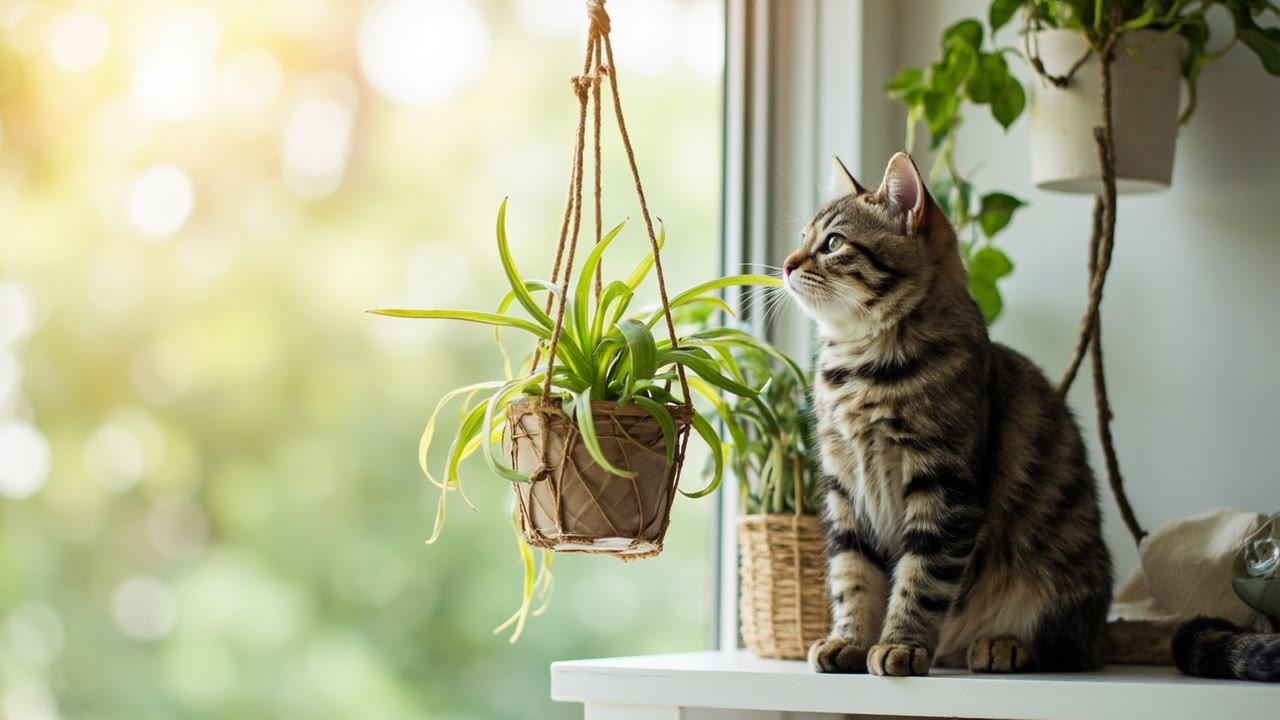
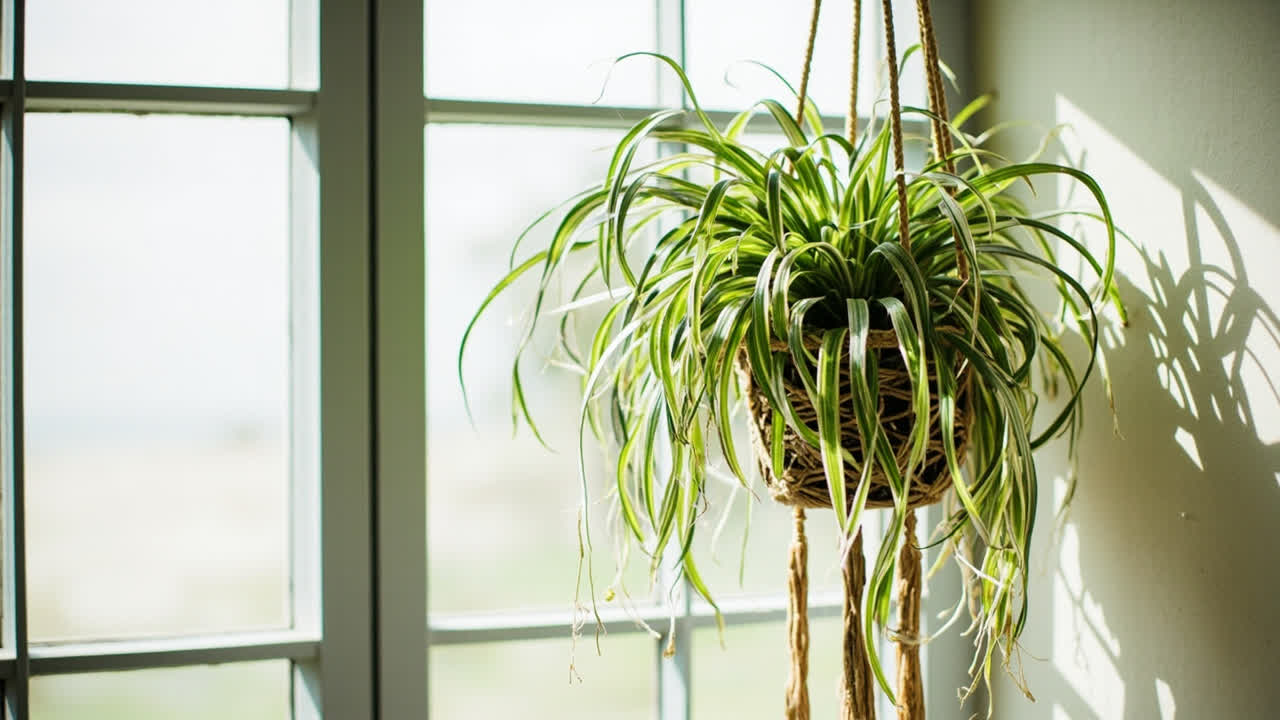
A spider plant in a hanging basket is one of those combinations that looks like it was designed to exist together. The plant’s natural growth habit — arching, cascading, producing long stems trailing with spiderettes — makes a hanging display the closest thing to how it grows in the wild.
If you are deciding between a pot on a shelf and a basket on the ceiling, go with the basket. Your spider plant will look better for it, and so will the room.
This guide covers everything from choosing the right basket and potting mix to watering in a suspended set-up and managing spiderettes as they grow.
The care principles are the same as general spider plant care, but there are a few specific adjustments that matter when the pot is hanging rather than sitting on a surface.
Choosing the Right Hanging Basket
Material matters more for hanging spider plants than it does for pots on shelves. Terracotta and ceramic baskets look beautiful but are heavy — a terracotta basket with wet soil can be genuinely difficult to hang securely, and the porous walls dry out faster in summer, meaning more frequent watering. Plastic hanging pots are lightweight and retain moisture longer, which reduces watering frequency. macrame holders are popular for spider plants precisely because they are adjustable and allow good air circulation around the pot.
Drainage holes are non-negotiable. Water that cannot escape will pool at the bottom of the pot and cause root rot, and you will not see it happening the way you would with a pot on a saucer. A built-in drainage tray at the bottom of the basket is a useful feature, but do not trust it as your only drainage layer — make sure the pot itself has holes too.
Size-wise, start with a 6–8 inch pot. Spider plants are fast growers and you may need to move up to a 10 inch within a year or two, but a large pot hanging from the ceiling with a heavy root ball becomes a safety concern. err on the side of a slightly smaller pot and repot more frequently rather than starting with an oversized basket.
Soil Mix for Hanging Spider Plants
The potting mix for a hanging spider plant should drain faster than you would use for a pot on a shelf, precisely because airflow around a hanging basket is higher and the soil dries out faster. Use a standard all-purpose potting mix amended with perlite at roughly a 3:1 ratio — three parts potting mix to one part perlite. This keeps the mix light and fast-draining while still retaining enough moisture for the plant between waterings.
A phalaenopsis orchid mix — chunky bark with some perlite — also works exceptionally well for spider plants in hanging baskets. The bark drains fast and mimics the epiphytic conditions in which spider plants naturally grow. The tradeoff is that it dries out faster than soil-based mixes, so check moisture more frequently in summer.
Watering a Hanging Spider Plant
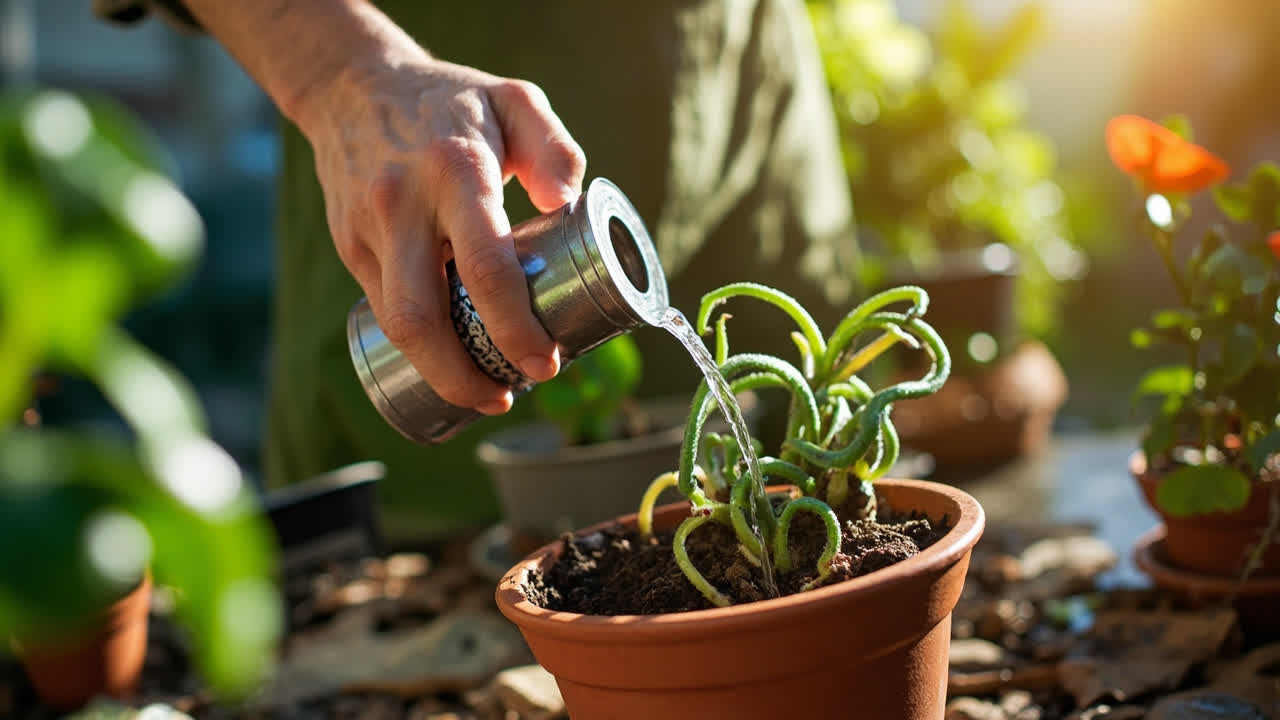
Watering is the trickiest part of hanging spider plant care, because you cannot simply pour water and let it drain into a saucer underneath. The most practical approach: take the basket down from its hook or rail, water over a sink or bathtub, let it drain completely, and hang it back. In practice, this means watering every 5–7 days in summer rather than the 7–10 days you might use for a potted plant on a shelf.
If your basket is in a location where it is difficult to take down — for example, a high ceiling hook — use a long-spout watering can or a watering wand to add water until it flows from the drainage holes, and place a large tray or container underneath to catch the drips. Accept that some water will drip for a few minutes after watering.
The same rules apply: water when the top inch of soil is dry, water thoroughly until it flows freely, and use filtered or sitting water if your tap water is heavily treated with chlorine or fluoride. The hanging environment does not change the plant’s sensitivity to water quality — if anything, a hanging plant near a window may be more exposed to the combinations of light and treated water that accelerate brown tips.
Light for Hanging Spider Plants
Position a hanging spider plant the same way you would a potted one: near a window with bright, indirect light. East-facing windows are ideal — morning sun is gentle and the plant gets good light for the rest of the day. South or west-facing windows work if the basket is a few feet back from the glass or filtered by a sheer curtain.
The challenge with hanging plants and light is that the position you choose for aesthetics — usually at eye level or higher, in the center of a room — may not have enough light. Spider plants tolerate low light better than most houseplants, but they will not produce spiderettes and may lose variegation in a persistently dark corner. If you are hanging a spider plant for decoration in a low-light room, accept that the growth will be slower and check the plant regularly for signs it needs more light: leggy growth, pale leaves, no new spiderette production.
Rotate the basket a quarter turn each time you water to ensure even growth. A spider plant that only gets light from one direction will lean and grow asymmetrically, and a hanging plant with a lean looks awkward.
Managing Spiderettes in a Hanging Display
This is where hanging spider plants really shine. The spiderettes — those baby plants on long stems — cascade naturally from a hanging basket, and a mature spider plant with multiple spiderettes trailing down looks spectacular. Managing them is largely a matter of deciding whether you want a display of trailing babies or you want to propagate and keep the plant producing new growth.
If you want the trailing look: let spiderettes develop to their full length. The longer the stems and the more mature the spiderettes, the more dramatic the cascading effect. You can remove a few to encourage the plant to put energy into the remaining ones, but leaving all of them produces a lush, full display.
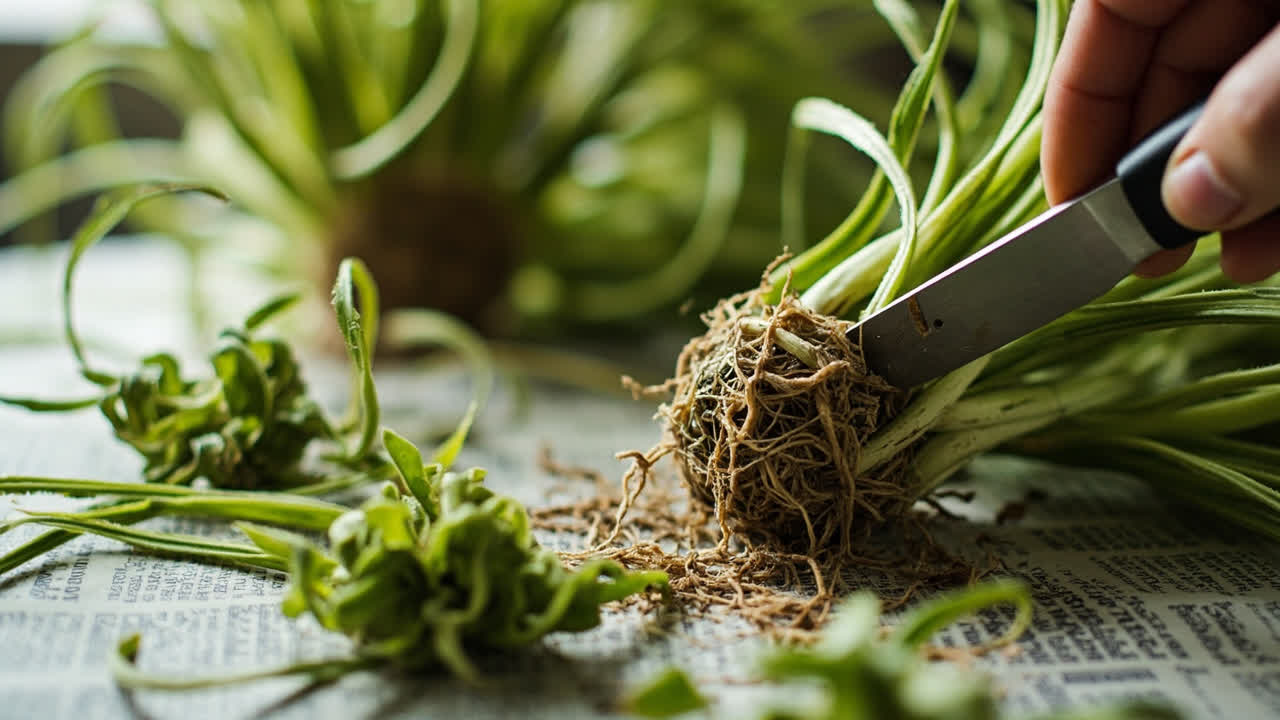
If you want to propagate: cut the spiderettes when they have developed root nubs at the base and root them in water or soil. The mother plant will redirect energy into producing more. Regular propagation also keeps the plant from becoming too heavy and top-heavy in the basket, which is a genuine structural concern — a spider plant that has grown massive with many spiderettes can become so heavy that the basket and hook are stressed.
Spiderettes can tangle with each other as they grow, especially in a humid environment where they grow quickly. Gently separate and redirect new growth as it appears, or trim excess spiderettes to keep the display manageable. A tangled mass of spiderettes is harder to propagate and harder to enjoy visually.
Fertilizing and General Care
Fertilize hanging spider plants the same way you would potted ones: a balanced liquid houseplant fertilizer diluted to half strength, once a month during the growing season (spring through early fall). In winter, stop fertilizing. Over-fertilizing in a hanging basket is particularly problematic because frequent watering flushes nutrients out quickly — you may notice you need to fertilize slightly more often than you would for a potted plant, but always start with half strength and watch how the plant responds before increasing.
Repot when the plant becomes root-bound — roots emerging from drainage holes, water running straight through, the pot cracking under pressure. The best time to repot is spring or early summer. Going up one pot size at a time keeps the root ball proportional to the hanging weight.
Hanging Spider Plants: Common Problems
Brown leaf tips in hanging spider plants are usually caused by the same factors as potted ones: fluoride in tap water, direct afternoon sun, over-fertilizing. The one factor specific to hanging baskets is that they dry out faster due to increased air circulation, which can cause underwatering if you are not checking the soil regularly. In summer, check soil moisture every few days — a hanging basket can go from moist to dry in two days in a warm, airy room.
Drooping leaves usually mean the plant needs water. Check the soil: if it is dry an inch down, water thoroughly. If the soil is wet and the leaves are still drooping, check for root rot by gently removing the plant from its pot and inspecting the roots.
Spiderettes not producing roots on the mother plant usually indicates the plant is not getting enough light or is too young to be producing mature spiderettes. Move it to a brighter spot and be patient — young spider plants produce smaller, less developed spiderettes that may not root as readily.
Making the Most of Your Hanging Spider Plant
A spider plant in a well-chosen hanging basket, positioned in good light and given basic consistent care, will live for decades and produce an ever-increasing cascade of spiderettes each year. The key is routine: checking the soil every few days, watering when it is dry, and switching to filtered water if brown tips appear. The moment you stop paying attention is when problems creep in — but the moment you go back to consistent care, the plant recovers just as quickly.
The other reward of a hanging spider plant is propagation material. A mature spider plant producing multiple spiderettes gives you an ongoing supply of free plants. Root a few every few months and you will never need to buy another spider plant — or you will have a constant supply to give away.
Turn That PDF Into a Spreadsheet in Minutes
You've seen how to do it manually — now let the tool handle the heavy lifting. Upload your bank statement and get Excel, CSV, or QBO in a few clicks.
Try It Free