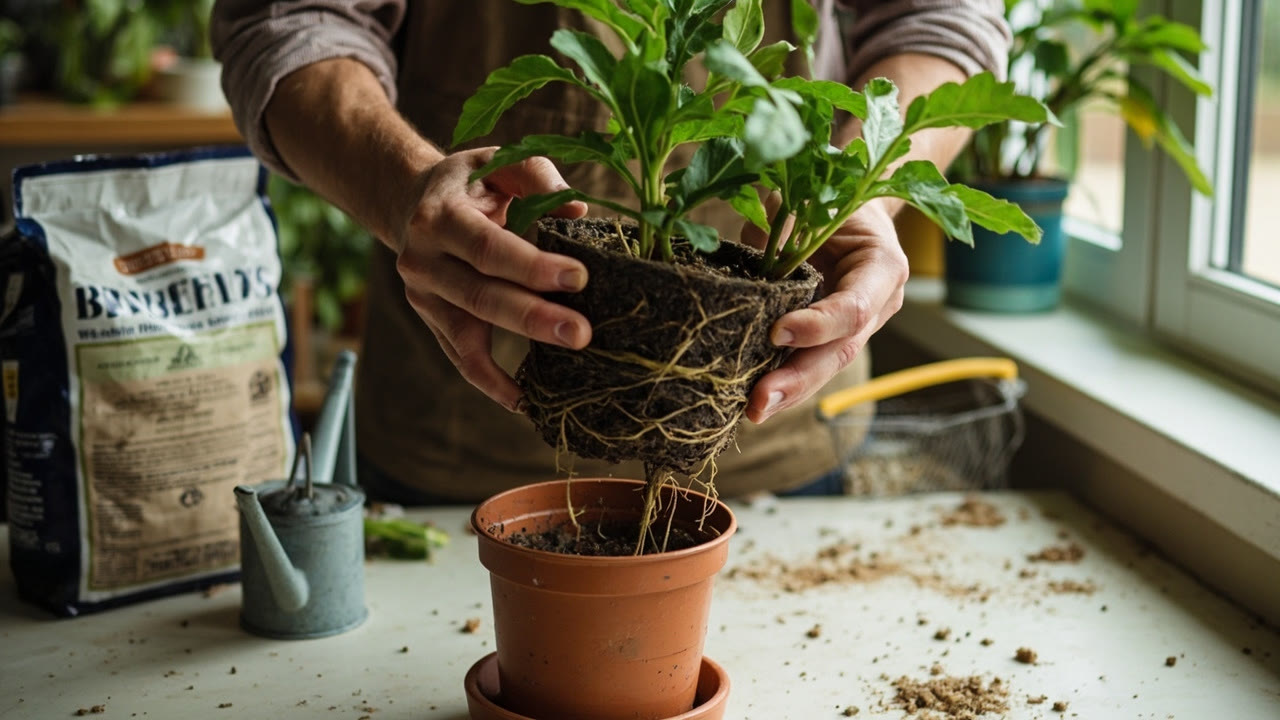
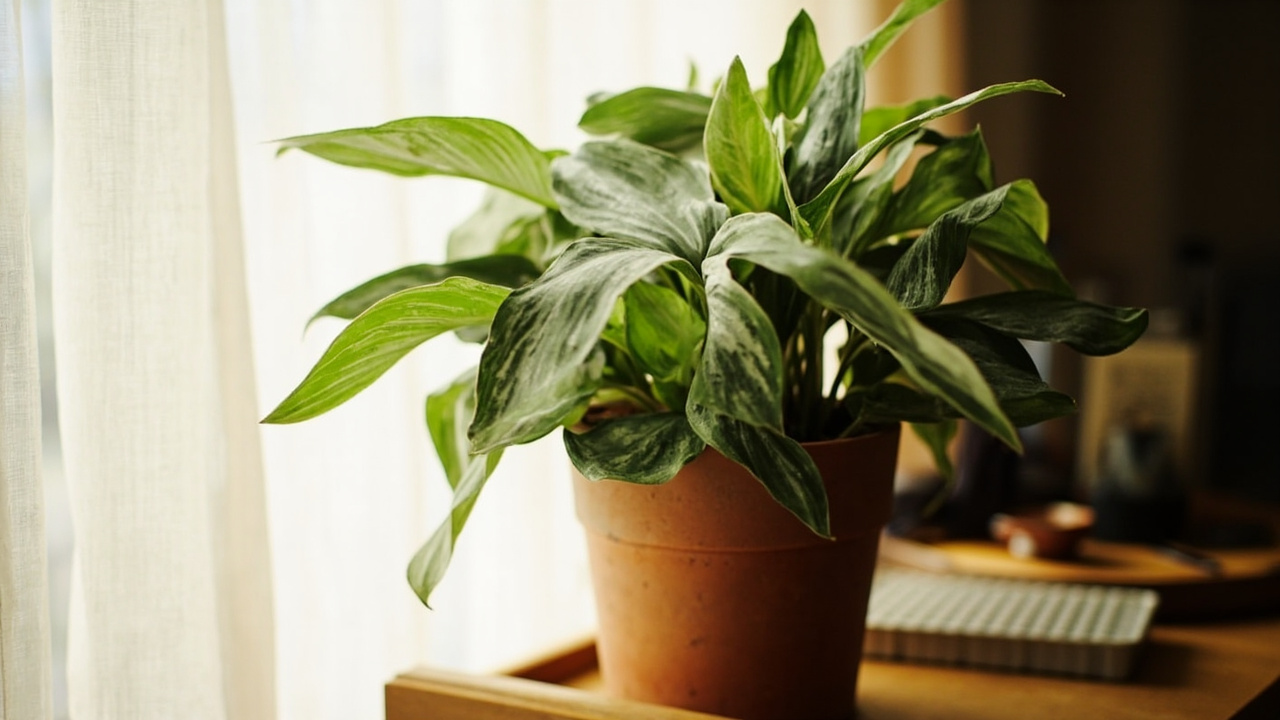
If something is crawling, flying, dotting, fuzzing, or sticking to your calathea, you are on the right page. Calathea — the prayer plant genus, formally Calathea and now mostly reclassified into Goeppertia — is one of the most pest-prone houseplants sold today. The pests that show up on it are unusually predictable. Four culprits account for almost every “what is on my calathea” question: spider mites, mealybugs, fungus gnats, and scale. Learn those four and you can read almost any symptom your calathea throws at you.
The reason calathea collects pests is not bad luck. The same traits that make the plant beautiful — broad thin leaves, soft tissue, high humidity needs, evenly moist soil — are exactly the traits sap-feeders and fungus gnats exploit. The conditions you are giving it (which are correct for the plant) are the conditions these pests prefer. This page is a diagnostic, not a treatment plan. Your job by the end is to identify the pest, not to defeat it.
The four pests that actually show up on calathea
On a calathea, in practice, you are looking for one of four pests. Everything else is rare enough that if the evidence does not match, the problem is probably a cultural issue covered in the complete calathea care walkthrough. Three of the four are sap-suckers on the foliage (spider mites, mealybugs, scale), and one lives in the soil (fungus gnats). The split matters: the evidence you find tells you where to look. Webbing, stippling, white fluff, and brown bumps all appear in different places on the plant, and calathea’s thin leaves, humid still air, and moist soil make all four pests feel right at home.
Spider mites on calathea: the silent stippler
Spider mites are the most common calathea pest and the easiest to miss until the damage is significant. They are not insects — they are tiny arachnids, usually less than 0.5 mm long, typically the two-spotted spider mite (Tetranychus urticae) indoors. On a green calathea they look like tiny pale or reddish-brown specks; on a darker cultivar you may not see the mites at all until the colony is large. Mites pierce individual leaf cells on the underside and suck out the contents; each feeding site kills a small patch of tissue, and over time those patches form a distinctive pattern called stippling — hundreds of tiny pale yellow or white dots, most visible on the upper leaf surface, almost like the leaf was dusted with fine salt.
Two more pieces of evidence clinch the diagnosis. Fine webbing — thin silk-like threads, usually along the midrib on the leaf underside or bridging the gap between two adjacent leaves. And tap a suspected leaf over a white sheet of paper: mites fall off as moving specks. Spider mites do best in warm, dry, still air; a calathea in a low-humidity room (under 40%) is a mite paradise. The humidity requirements matter — getting air moisture right is the single biggest prevention lever. Spider mite damage is sometimes misread as leaf curl; the calathea leaf curling page covers the difference, and the short version is that if the curl is on a leaf with stippling and webbing, the curl is a symptom of mites, not under-watering.
Mealybugs on calathea: the white-fluff giveaway
Mealybugs are the second most common calathea pest, and the easiest to identify by sight. A mealybug is a small, soft-bodied, slow-moving insect covered in a waxy white powder that makes it look like a tiny piece of cotton. On a calathea, the fluff is what you usually see first — a small white mass tucked into a leaf axil, clustered along a midrib, or sitting at the base of a petiole. Adult mealybugs are 2–4 mm long, oval, and segmented; younger nymphs (crawlers) are smaller and pale yellow before they secrete the waxy coating. The colony tends to stay put, which is why you see a small, fixed white patch that does not move when you water or mist.
Two pieces of evidence often show up alongside the fluff: sticky leaves from the sugary honeydew mealybugs excrete, and sooty mold, the black fungal growth that colonizes that honeydew. Sticky patches plus black soot on lower leaves plus white fluff in the axils means mealybugs. Damage often shows up as yellowing on the leaves above the infestation, because the bugs drain sap from the petiole. If yellowing is concentrated on a few leaves on one side of the plant and fluffy white material sits in the corresponding leaf axils, you are almost certainly looking at mealybugs — the calathea yellow leaves page covers the full set of yellowing causes, but the mealybug version is local, sticky, and tied to visible white masses.
Fungus gnats on calathea: the soil-surface swarm
Fungus gnats are the only common calathea pest that is not on the leaves. They are small, dark, mosquito-like flies about 2–4 mm long, seen in two places: hovering above the soil surface after you water, and resting on the rim of the pot or the leaves closest to the soil. The adults are annoying but harmless; the damage is done by the larvae — tiny translucent worms in the top 1–2 cm of soil feeding on fungi, decaying organic matter, and — when the population is high — fine root hairs. If you see small dark flies lifting off the soil when you water, and they keep coming back, you have fungus gnats. They are weak fliers and tend to walk on the soil and leaves rather than fly across the room, which makes them easy to tell apart from fruit flies or drain flies.
Fungus gnats mean your soil surface is staying wet. The gnat life cycle — egg to adult in roughly 3–4 weeks at room temperature (68–75°F / 20–24°C) — runs entirely in the top layer of moist mix, and every day that top layer stays wet is a day the next generation is laying eggs. Tightening the surface rhythm — letting the top 1 cm of soil dry between waterings, switching to bottom-watering, or both — does more than any spray to break the cycle. The full calathea watering guide covers the rhythm that prevents the gnat life cycle from completing.
Scale on calathea: the bump that does not move
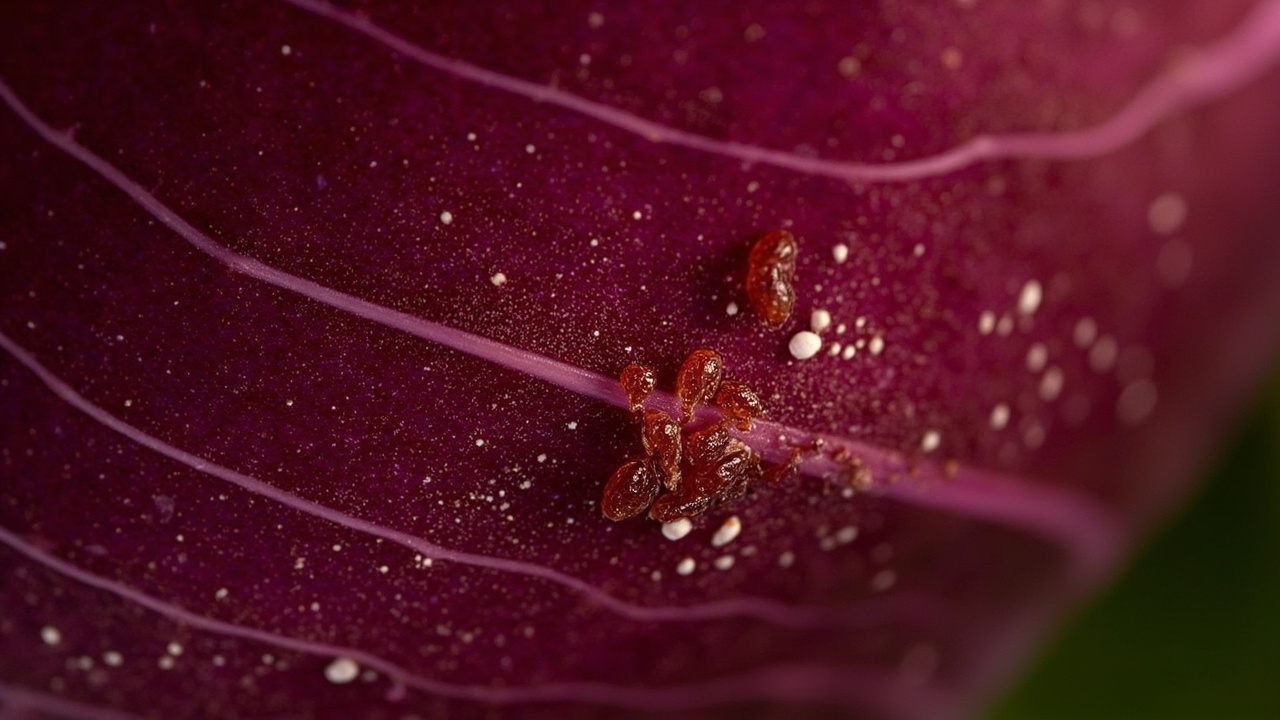
Scale insects are the fourth common calathea pest, and the hardest to identify because they look less like insects and more like part of the plant. A scale is a tiny sap-sucker that, in its adult female form, secretes a hard or waxy protective covering and stops moving. On a calathea, the bumps appear along the midrib on the underside of the leaf, along the petiole, or on the central stem. There are two types. Soft scale produces a smooth, oval, slightly domed covering (about 2–4 mm) and excretes honeydew, so a soft scale infestation has the same sticky-leaf and sooty-mold evidence as mealybugs. Armored scale produces a flatter, harder, more irregular covering and does not excrete honeydew. Both drain sap the same way.
A small brown or tan bump on the leaf underside that does not scrape off easily and does not move when you touch it is almost certainly scale. Quick test: try to lift the bump with a fingernail. If it comes off easily and leaves a small mark, it is scale. If it is stuck, it might be a leaf scar or a mineral deposit. Scale insects are usually brought in on a new plant; the adult female is immobile, but the nymphs (crawlers) hatch in spring and summer and walk or get blown to a neighboring plant. A calathea with a long-standing, multi-stem scale problem may be too far gone for a spray-only treatment — the dying calathea recovery guide covers the decision tree for when to escalate beyond pest treatment.
What it is not: ruling out non-pest problems
Three non-pest issues are routinely misdiagnosed as infestations, and the wrong treatment makes them worse. Mineral deposits from hard tap water show up as white or tan crusty spots near the midrib on leaf undersides — salts, not insects, and they do not move. Edema from overwatering appears as small water-soaked or corky bumps on new growth where cells burst from taking up more water than they could hold; those bumps are part of the leaf. Fuzzy new growth is leaf hair that falls off as the leaf expands; unlike mealybug fluff, it is uniform and follows the leaf margin rather than clustering in the axils.
How to decide which pest you actually have
Small dark flies lifting off the soil when you water? Fungus gnats — treatment is a watering-rhythm change, not a foliage spray. White cottony fluff in the leaf axils, with sticky leaves below? Mealybugs — treatment targets the colonies directly, plus sticky-leaf cleanup. Fine webbing on the leaf undersides, with pale stippling on the upper surfaces, especially in dry air? Spider mites — treatment combines foliar spray and humidity correction. Hard or waxy brown bumps along the midrib or petiole that do not move and do not scrape off easily? Scale — treatment is the slowest of the four. None of the above, but the plant is yellowing, curling, or dropping leaves? You are probably dealing with a cultural issue, not a pest — the leaf curl and watering pages cover the most common non-pest causes.
What to do next, and what this page deliberately does not cover
You now have a name for what is on your calathea. That is the diagnostic half. The treatment half — which spray, what dilution, how often to repeat, when to escalate — lives on the calathea pest treatment page, because the protocol differs for each pest and combining them into a single recipe would underserve the harder ones (armored scale in particular).
Two things are worth doing today, regardless of which pest you identified. First, isolate the affected calathea from your other houseplants — scale crawlers and fungus gnat adults both spread plant-to-plant quickly. Second, do a slow visual inspection of every plant within arm’s reach, focusing on leaf undersides and leaf axils; most calathea pest problems are caught on plant number two. Once the infestation is gone, the prevention work is the routine you should already be doing: bright indirect light, filtered or distilled water, humidity in the 50–60% range, and a watering rhythm that lets the top 1 cm of soil dry between waterings — the full calathea care walkthrough covers that routine.
Turn any PDF statement into a clean sheet
Skip the typos and the hours of copying. Our converter handles any bank statement format and outputs Excel, CSV, or QBO for QuickBooks. No file retention, free to try.
Convert your statement