Calathea is not the diva the internet makes it out to be. The leaves with the painted-on stripes, the prayer-folding habit at night, the crisp edges that brown if you look at them wrong — most of that damage is one mistake repeated across six care variables, not a hundred small failures. Treat the plant as six inputs in a fixed order and it behaves like a calm, predictable houseplant. Treat it as a hundred rules to follow and it dies slowly while you do everything “right.”
This page is the hub for the calathea cluster on Aqualogi. Read it once to learn the six care variables, the order to check them in, and the routine that keeps the most common failure modes out of the picture. The deep-dive on each variable lives on its own attribute page; the links below route you to the right one as soon as you need depth on a single input. If your plant is already deep into trouble, the rescue playbook is separate from this guide.
The six care variables, in the order they kill
Every calathea problem traces back to one of six inputs: light, water, humidity, soil, temperature, fertilizing. The order above is deliberate. If your plant is unhappy, work down this list before chasing symptoms. Most “yellow leaves” cases are not a leaf problem at all — they’re a water problem that took two weeks to show up on the leaf. Most “brown tips” cases are not a humidity problem at first glance — they’re a water-quality problem. Walk the list top to bottom, in order, and the picture resolves faster than chasing whichever symptom you noticed first.
The same six variables also define the six attribute pages in this cluster. This pillar page names them, gives you the working target for each, and points you to the deep-dive when one input needs a closer look. Treat the list below as your weekly checklist and the attribute pages as the reference manual.
Light: bright, indirect, and stable
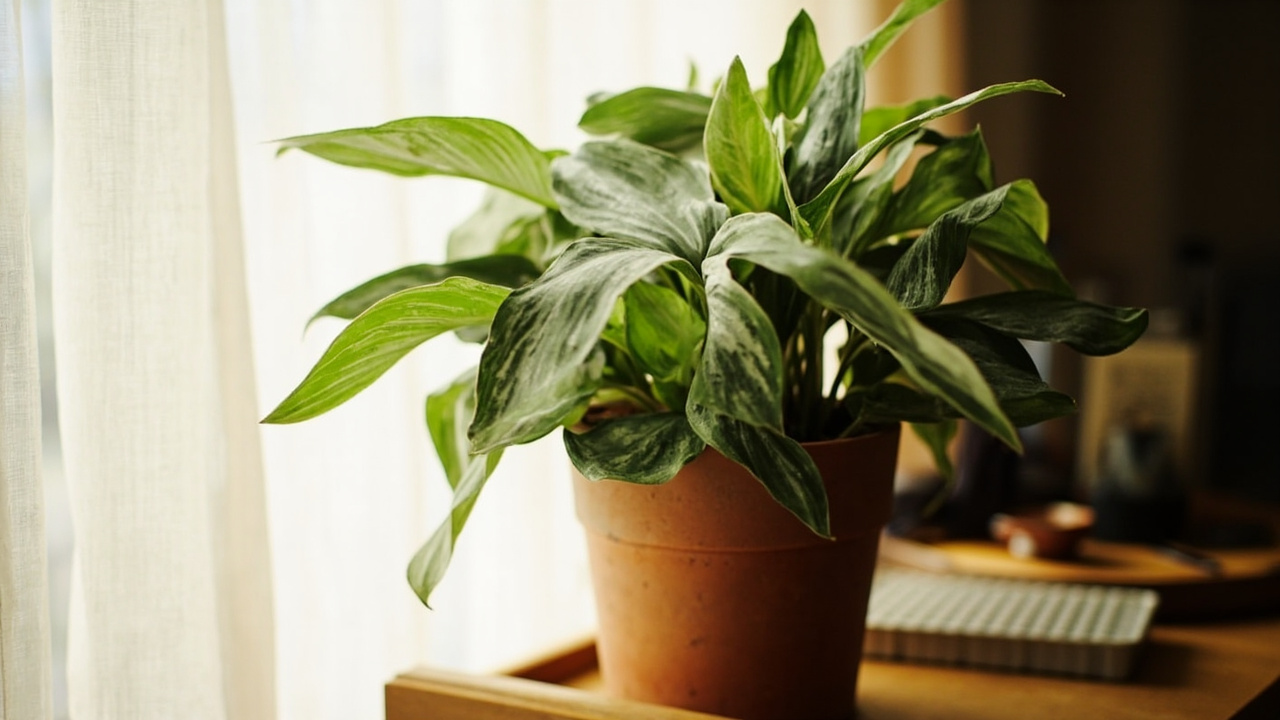
Calathea evolved as an understory plant, so its leaves are built to capture dappled light, not direct sun. The working target is bright indirect light — a north- or east-facing window with a sheer curtain, or a spot 1–2 meters back from a south- or west-facing window. Direct sun bleaches the patterns and crisps the edges within a single afternoon. Deep shade slows growth and makes the plant more vulnerable to the next variable on the list, water.
Light also sets the pace of everything else. A calathea in brighter light drinks faster and uses nutrients faster, so a small watering or feeding problem shows up sooner. A calathea in dimmer light stays wet longer, so the same watering frequency becomes overwatering. Get the light right first because it tunes the rest of the routine. The full light guide, including how to measure “bright indirect” without a light meter, lives on the calathea light requirements page.
Water: filtered, on a finger test, not a schedule
Water is the variable calathea owners get wrong most often, and the one that produces the most symptoms downstream. The working target is filtered or distilled water (not “purified” — that label covers everything from reverse osmosis to remineralized tap), room temperature, poured evenly over the soil until it drains, then let the top 2–3 cm dry before the next watering. A fixed weekly schedule will overwater in winter and underwater in summer, so use the finger test: push a clean finger into the top of the soil. If it feels dry to the second knuckle, water. If it still feels cool or damp, wait two days and recheck.
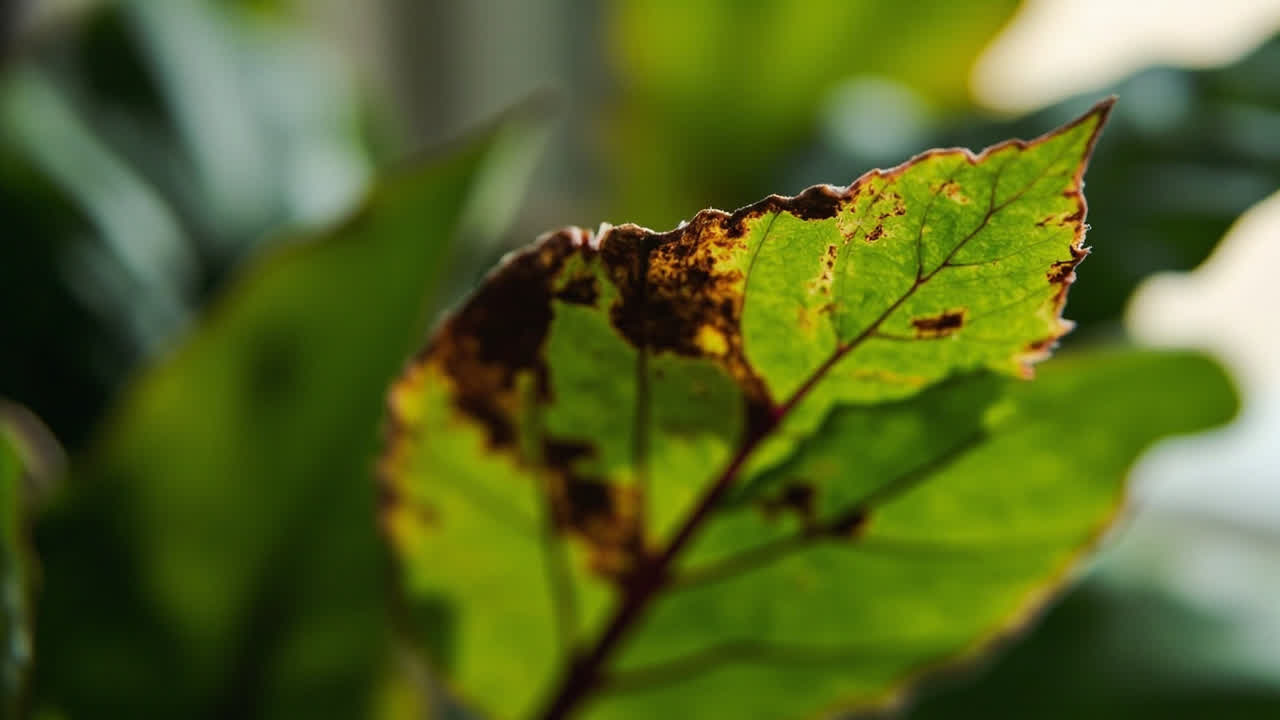
Tap water in most cities contains chlorine, chloramine, fluoride, and dissolved minerals that build up in calathea leaf tips and burn them brown over weeks. The brown-tip pattern you see on social media is usually fluoride and salt accumulation, not low humidity. Switching to filtered or distilled water is the single highest-leverage change a new calathea owner can make. If the pot sits in a saucer, empty the saucer 15 minutes after watering; calathea roots will not tolerate sitting in standing water. The full watering protocol, including the exact way to bottom-water a thirsty plant, lives on the calathea watering guide page.
Humidity: 50%+, measured where the leaf is
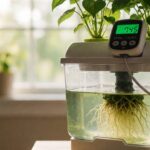
Calathea prefers 50%+ relative humidity as a floor, with 60% being a more comfortable target. Brown, crispy leaf edges are the visible signal that the air is too dry, but the more honest signal is a cheap hygrometer placed at leaf height, not on a shelf 2 meters away. A reading of 35% in your living room can be 28% at leaf level next to a window. Humidity trays, pebble trays, and grouping plants together help; a small humidifier in a dry climate is the most reliable fix. Misting the leaves does almost nothing — the humidity spike fades in under two minutes and does not change the daily average the leaf actually experiences.
Humidity and watering move together. A calathea in a dry room needs more frequent watering because the soil dries faster. If the air is dry and you’re watering weekly, the leaf edges will crisp. Adjust the watering rhythm to the humidity, not the calendar. The full humidity playbook lives on the calathea humidity requirements page.
Soil: chunky, airy, and slightly moisture-retentive
Calathea roots want three things at once: air around the root, moisture available for a few days, and drainage fast enough that they never sit in a swamp. A chunky aroid-style mix — peat or coco coir for moisture, perlite or pumice for air, orchid bark or charcoal for structure — does all three. Standard bagged “potting soil” out of the box is too dense and holds water too long. It works for the first month and then the root zone goes anaerobic, the fine feeder roots rot, and the plant shows it as yellowing lower leaves and a general droop. The fix is a chunkier mix, not a smaller pot.
Repot every 1–2 years, or when you see roots circling the bottom. Go up one pot size — about 2 cm wider in diameter — not two. A too-large pot holds more water than the roots can drink, which recreates the overwatering problem on a slower timeline. The full mix recipe lives on the calathea soil mix guide page, and the move itself is walked through on the calathea repotting page.
Temperature: 65–80°F (18–27°C), with no cold drafts
Calathea is a tropical understory plant and reads cold the way a cactus reads wet. The working range is 65–80°F (18–27°C) year-round, with no drops below 60°F (15°C) and no sudden swings. A calathea next to a drafty window in winter, an air-conditioning vent in summer, or a door that opens to cold outdoor air in autumn will curl its leaves, slow its growth, and start dropping lower foliage within days. The plant does not recover from a cold shock quickly — it sulks for weeks, which most owners read as “something is wrong” and then overcorrect on watering.
Heat is more forgiving than cold, but anything consistently above 85°F (29°C) combined with low humidity will crisp the leaf edges. The honest target is a stable room temperature, not a specific number. If you can sit comfortably in a t-shirt, the calathea is usually fine. If the room is cold enough for you to put on a sweater, the calathea is probably cold too. The full temperature map, including safe winter placement near windows, lives on the calathea temperature tolerance page.
Fertilizing: light, infrequent, and only in the growing season
Calathea is a light feeder. A balanced liquid fertilizer at half the label strength, once a month from spring through early autumn, is enough. Stop feeding in late autumn and through winter — the plant is not actively growing, and unused fertilizer salts build up in the soil and burn the fine feeder roots, which shows up weeks later as brown leaf edges and yellowing. If you have already overfed, flush the soil with filtered or distilled water and hold off on fertilizer for at least two months.
Calathea is also sensitive to the mineral content of the fertilizer itself, not just the water. Many synthetic fertilizers include fluoride and high salt loads that accumulate faster than calathea can process. A urea-free, low-salt formula is safer than a generic all-purpose. The full feeding schedule, including the exact dilution and the safe brands, lives on the calathea fertilizer guide page.
The weekly routine that actually works
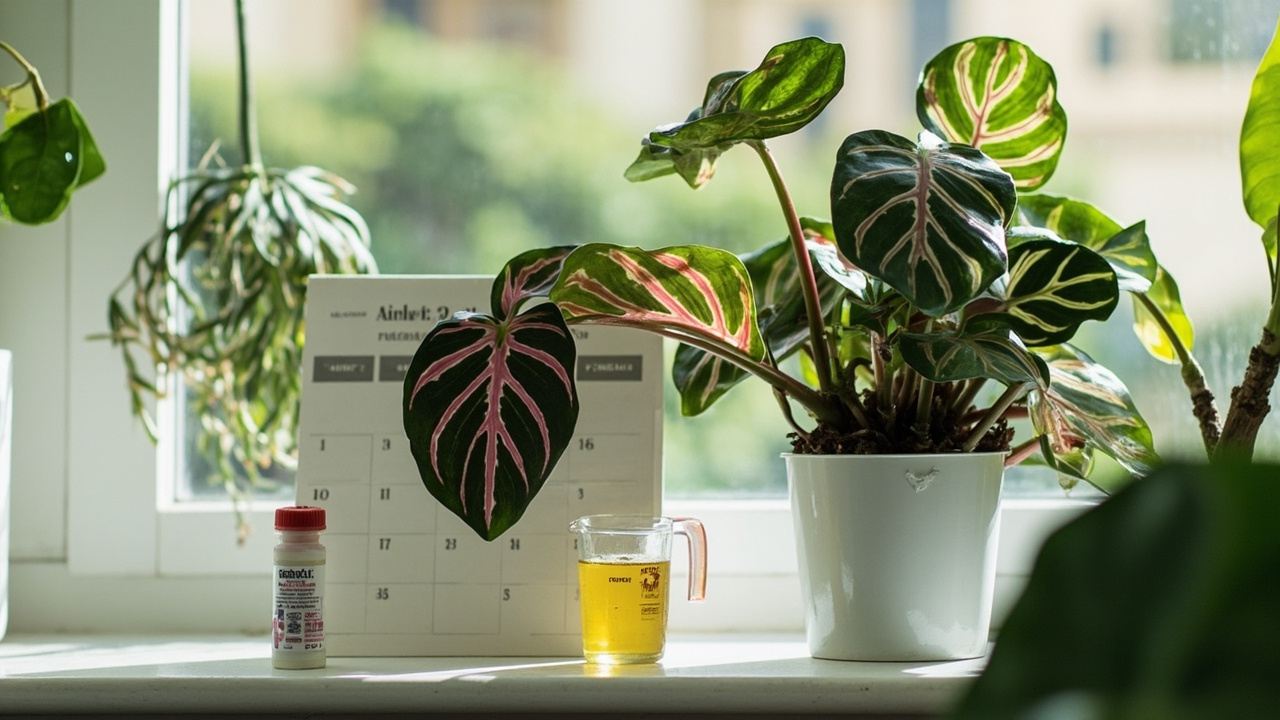
Calathea does not need daily attention. It needs a 60-second weekly check and a 10-minute monthly check, in that order. The weekly check is the finger test on the soil and a quick scan of the leaves — any new brown tips, yellowing, or curl. If everything looks the same as last week, walk away. The monthly check is deeper: feel the pot weight, check the drainage holes for roots, wipe the leaves with a damp cloth, and confirm the temperature and humidity are still in range.
The order of the routine is the point. Do not water until you have checked the soil. Do not adjust humidity until you have checked the soil. Do not fertilize until you have checked light and water. The most common cascade failure is correcting a symptom at the wrong layer — misting a plant that actually needs water, or fertilizing a plant that actually needs more light. If the symptom came on suddenly, the cause is usually one of the first three variables: light, water, humidity. If the symptom came on slowly over weeks, the cause is usually one of the last three: soil, temperature, fertilizer. Match the timeframe to the variable.
How to use this hub when something goes wrong
Use the six attribute pages as the diagnostic map. Brown leaf tips point to water quality and humidity. Yellow lower leaves point to overwatering and compacted soil. Leaves curling inward point to low humidity and a cold draft. Match the symptom to the layer, then read the matching attribute page. Pick the variety for your conditions before starting the routine, not after — a Calathea orbifolia needs more humidity than a Calathea lancifolia, and a Calathea medallion tolerates lower light than a Calathea white fusion. The full variety map is on the calathea types and varieties page.
If the plant is already past the point of routine care — multiple yellow leaves, severe droop, mushy stems at the soil line — this hub is the wrong starting point. Walk straight to the rescue playbook for a dying calathea and follow the triage steps there. Once the plant is stable, come back to this page and start the weekly routine from the top.
What you can do after reading this
You can name the six care variables in the order they affect your plant. You can run a 60-second weekly check and a 10-minute monthly check without second-guessing yourself. You can route any calathea symptom to the right attribute page, and you can pick a variety that matches the humidity and light you already have at home. Most importantly, you can stop the cycle of “I did everything right and it still died” — because the routine above is ordered, not exhaustive, and ordered beats exhaustive on a calathea every time.
Turn That PDF Into a Spreadsheet in Minutes
You've seen how to do it manually — now let the tool handle the heavy lifting. Upload your bank statement and get Excel, CSV, or QBO in a few clicks.