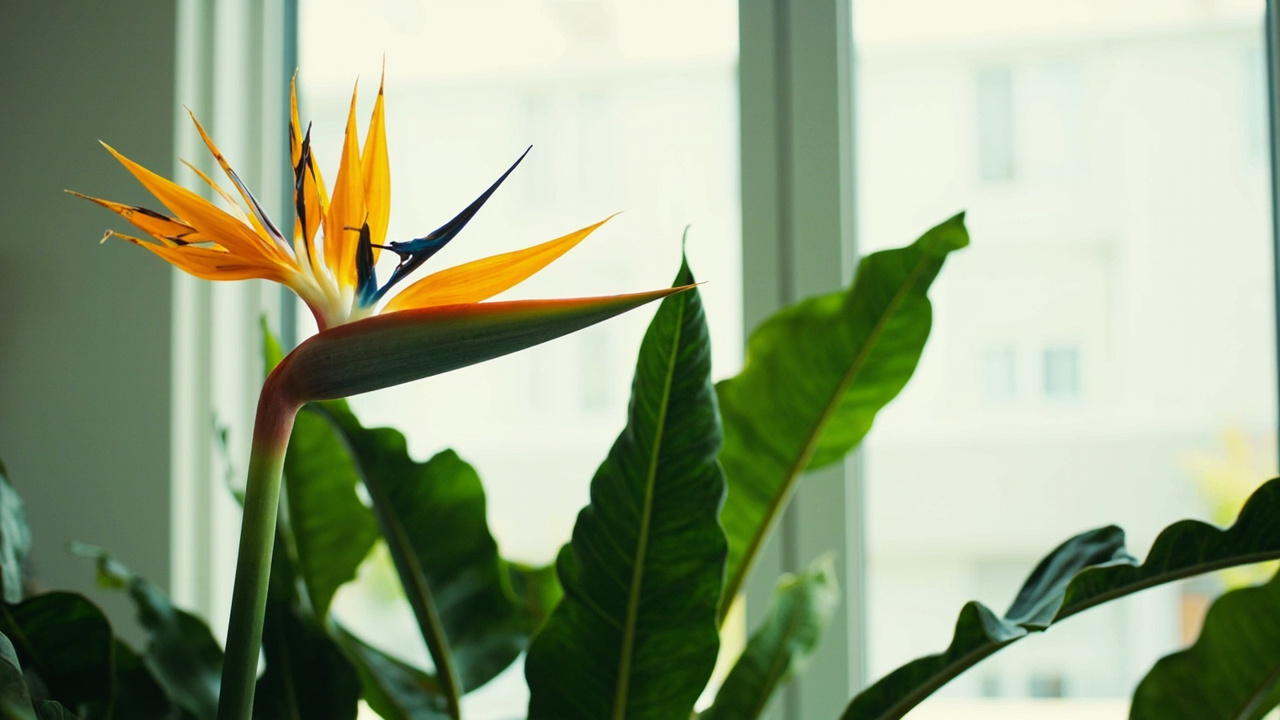

If your Bird of Paradise has been healthy for years but simply refuses to bloom, you are not alone. Most indoor Strelitzia reginae never flower, and the reason is rarely bad care. It is usually a missing signal that the plant needs to initiate its reproductive cycle. Understanding why blooming fails indoors is the first step toward either fixing the problem or accepting your plant for the spectacular foliage it will always provide.
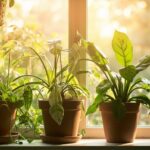
The diagnostic path starts with light. Bird of Paradise needs more direct sun than almost any other common houseplant to flower, and most indoor environments simply cannot provide it. A south-facing window that receives four or fewer hours of direct sun will keep the plant alive and growing leaves, but it will not trigger bloom initiation. Six or more hours of direct sun, or equivalent supplemental grow lighting, is the practical threshold for flowering indoors.
Beyond light, three other factors determine whether an indoor Strelitzia will ever produce flowers: plant maturity, energy reserves, and seasonal temperature rhythm. A plant that is less than four years old will not bloom regardless of conditions. A plant that has been pushed into continuous foliage growth by high-nitrogen fertilizer will prioritise leaves over flowers. And a plant that experiences no seasonal temperature variation may never receive the dormancy cue that triggers bloom production.
Why Bird of Paradise Refuses to Bloom Indoors
The honest answer is that indoor environments are fundamentally mismatched with the bloom requirements of Strelitzia reginae. This species evolved in the open, sunny coastal regions of South Africa, where it receives full sun for most of the year and experiences a distinct dry, cooler dormant period in winter. Indoor growing replicates almost none of those conditions faithfully.
The result is a plant that grows leaves beautifully, fills its pot with lush green foliage, and then stops. Not because it is unhealthy, but because every signal it receives says “grow more leaves, not reproduce.” Bloom is an energetically expensive process, and the plant will only attempt it when it perceives that conditions are stable enough to support flower and fruit development.
This is not a failure of your care. It is a mismatch between the plant’s evolutionary programming and the indoor environment. The pages that follow diagnose each potential blocker in order of impact, starting with the factor that accounts for the vast majority of non-flowering cases: insufficient light intensity.
Light, The #1 Reason Indoor Strelitzia Never Flower
Light intensity is the single most important factor controlling whether an indoor Bird of Paradise will flower. Strelitzia reginae requires a photon flux density that is rarely achieved through windows alone, except in a south-facing exposure with minimal shading and several hours of unobstructed direct sun.
The bloom-initiation threshold for Strelitzia is approximately 6 to 8 hours of direct sunlight daily, or the equivalent in supplemental lighting. A plant receiving only 2 to 3 hours of direct sun will grow normally and produce new leaves, but it will never accumulate enough photosynthetic energy to initiate a flower stalk. This is not a gradual process. The plant either receives sufficient light or it does not, and there is no middle ground where partial bloom might occur.
The photoperiod matters as well. Strelitzia is a long-day plant in its native habitat, meaning that increasing day length in spring signals the onset of the growing and flowering season. Indoors, artificial lighting and window coverings often disrupt this natural photoperiod, further reducing the likelihood of bloom initiation even when light intensity is adequate.
The practical solution is to position the plant in the sunniest window available, ideally a south-facing one with at least 6 hours of unobstructed direct sun. If that is not possible, a full-spectrum grow light positioned 12 to 18 inches above the foliage and run for 14 hours daily can replicate the photon density required for bloom. Use a light meter or a smartphone light-meter app to verify that the intensity at the leaf level reaches at least 2,000 to 3,000 foot-candles during the peak hours.
The timeline for seeing results is measured in months, not weeks. Once light conditions are corrected, the plant needs to accumulate enough energy reserves over one to two full growing seasons before it will attempt to flower. Do not mistake a year of improved growth for failure. The bloom signal may simply not have reached the threshold yet.
Plant Maturity, You Cannot Rush a Four-Year Commitment
Even under ideal light conditions, a juvenile Bird of Paradise will not flower. Strelitzia reginae typically requires 4 to 5 years from seed to reach the size and energy reserves necessary to produce flowers. Plants propagated from division or offset may flower slightly earlier, sometimes at 3 years, but this is the exception, not the rule.
The reason is structural: bloom production requires a minimum leaf area and root mass to support the energy demands of a flower stalk, which can reach 2 to 3 feet in height and require significant carbohydrates to develop. A young plant with fewer than six to eight mature leaves simply does not have the photosynthetic capacity to fund reproduction.
To assess maturity, count the number of fully expanded leaves on your plant. A specimen with fewer than six mature leaves is almost certainly too young to flower, regardless of light or care conditions. A plant with eight to ten mature leaves may be approaching bloom readiness if light and energy reserves are adequate.
If your plant is mature but still not flowering, the issue is almost certainly light intensity rather than age. Move to the next diagnostic step and evaluate whether the plant is receiving sufficient photon density to initiate bloom.
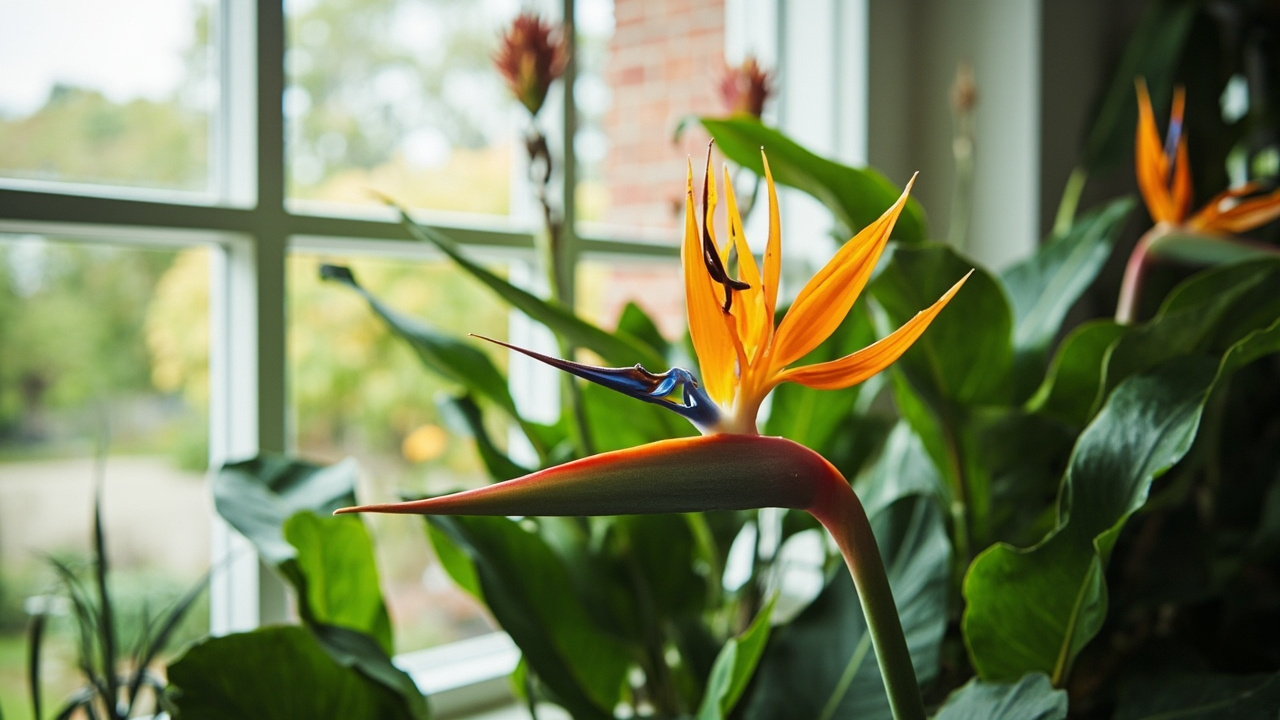
Energy Reserves, The Hidden Requirement Most Growers Miss
Plant maturity and energy reserves are closely related but distinct concepts. A plant can be old enough to flower chronologically but still lack the stored carbohydrates needed to produce a bloom stalk. Energy reserves are built up slowly, leaf by leaf, over multiple growing seasons, and they are the real currency of flowering.
Think of energy reserves as the plant’s savings account. Each mature leaf produces photosynthate, sugars and starches, that the plant can allocate to growth, maintenance, or reproduction. A plant that is actively growing new leaves every few weeks is spending most of its income on construction and has little left for bloom. A plant that has reached its adult size and is maintaining a stable leaf count is finally in a position to save enough for reproduction.
The telltale sign of inadequate energy reserves is a plant that looks healthy and has the right number of leaves but consistently produces smaller leaves over time. This indicates that the plant is operating at the edge of its energy budget, investing just enough in new growth to replace senescing leaves but not enough to accumulate surplus for bloom. Correcting light intensity is the primary way to increase energy reserves. More photons mean more photosynthate, which means a higher chance of bloom initiation within the next growing season.
Fertilizer Mismatch, Too Much Nitrogen Suppresses Flowering
The most common fertiliser mistake that prevents Strelitzia from flowering is applying a high-nitrogen formula during the growing season. Nitrogen promotes vegetative growth, more leaves, bigger leaves, faster stem elongation, but it actively suppresses the hormonal signals that trigger bloom initiation. A plant fed with a balanced or nitrogen-heavy fertiliser will look luxuriant and healthy while remaining reproductively dormant.
The fix is to switch to a fertiliser with a higher phosphorus ratio during the active growing season. An NPK formula such as 3-1-2 or 5-10-10, applied at half strength every four weeks from spring through early autumn, shifts the plant’s hormonal balance toward reproduction. Stop fertilising entirely during the winter dormancy period, when the plant’s metabolic activity is lowest and additional nutrients would only accumulate as salt in the growing medium.
If your current fertiliser is a general-purpose houseplant feed with a high first number (the nitrogen component), switching to a bloom-boosting formula is the single most effective chemical intervention you can make. Do not expect immediate results. The plant needs one full growing season on the new regimen before bloom initiation becomes likely, assuming light and maturity are adequate.
Temperature and Seasonal Rhythm, The Dormancy Signal
Strelitzia reginae requires a distinct cool-dry period in winter to trigger the hormonal cascade that leads to bloom production. In its native South African habitat, this occurs between May and August, when temperatures drop to 10 to 15°C (50 to 59°F) at night and rainfall decreases significantly. Indoors, most growers fail to provide this seasonal shift, keeping their plants at constant warm temperatures year-round.
The practical winter protocol: place the plant in its coolest bright location for 8 to 10 weeks during the coldest months. Night temperatures of 10 to 13°C (50 to 55°F) are ideal. Reduce watering to once every 14 to 21 days, keeping the soil barely moist but never dry. Do not fertilise during this period. This cool, drier dormancy period signals to the plant that conditions are stabilising for the upcoming growing season, and it is the trigger that unlocks bloom potential built up over the preceding months.
Plants kept at constant 20 to 24°C (68 to 75°F) year-round with consistent watering and fertilising will grow vigorously but rarely flower. The lack of a seasonal break means the plant never receives the dormancy signal that shifts its energy allocation from vegetative growth to reproductive development.
What to Do When Your Bird of Paradise Still Won’t Bloom
If you have addressed light intensity, confirmed plant maturity, switched to a bloom-boosting fertiliser, and provided a winter dormancy period, and your Strelitzia still has not flowered after 12 to 18 months, you are likely dealing with an indoor environment that cannot support bloom regardless of adjustments. This is not uncommon, and it does not mean your plant is failing.
The alternative path is to accept your Bird of Paradise as a foliage plant. A healthy, well-grown Strelitzia reginae is visually spectacular even without flowers. Its architectural leaves and natural splitting pattern create a dramatic tropical statement that few other houseplants can match. Many growers find that the pursuit of bloom becomes a source of frustration rather than enjoyment, and shifting expectations to appreciate the foliage alone leads to a more satisfying relationship with the plant.
If bloom remains the goal, the only reliable path is supplemental grow lighting with a strong red spectrum component, positioned close enough to deliver high photon density, combined with the winter dormancy protocol described above. This approach replicates the native conditions most closely and gives the plant every available signal to attempt flowering. The timeline remains measured in seasons, not weeks, so patience is essential.
For plants showing signs of decline alongside non-flowering, yellowing leaves, stunted growth, or pest damage, consult the dedicated care recovery guide before attempting bloom interventions. A stressed plant cannot flower regardless of conditions, and addressing the underlying health issue must come first.
Save Dying Bird of Paradise , for plants showing signs of decline alongside non-flowering symptoms.
Bird of Paradise Care Guide , for comprehensive care covering all dimensions beyond flowering.
Best Grow Lights for Indoor Plants , for selecting the right supplemental lighting to achieve bloom-level photon density.
From PDF to Excel in one click
Forget retyping line by line. Upload any bank statement, get a spreadsheet you can actually use. Your files are never stored, and you can test the converter with 3 free conversions.
Try it free