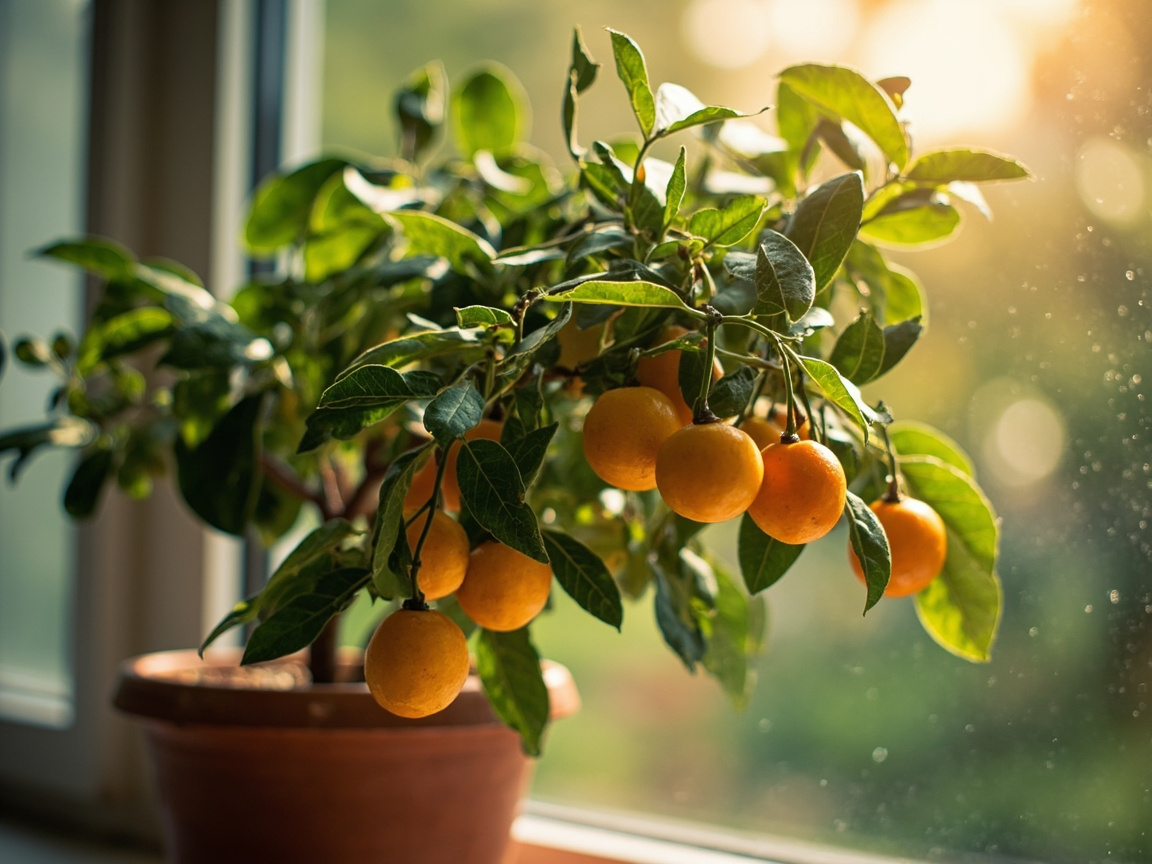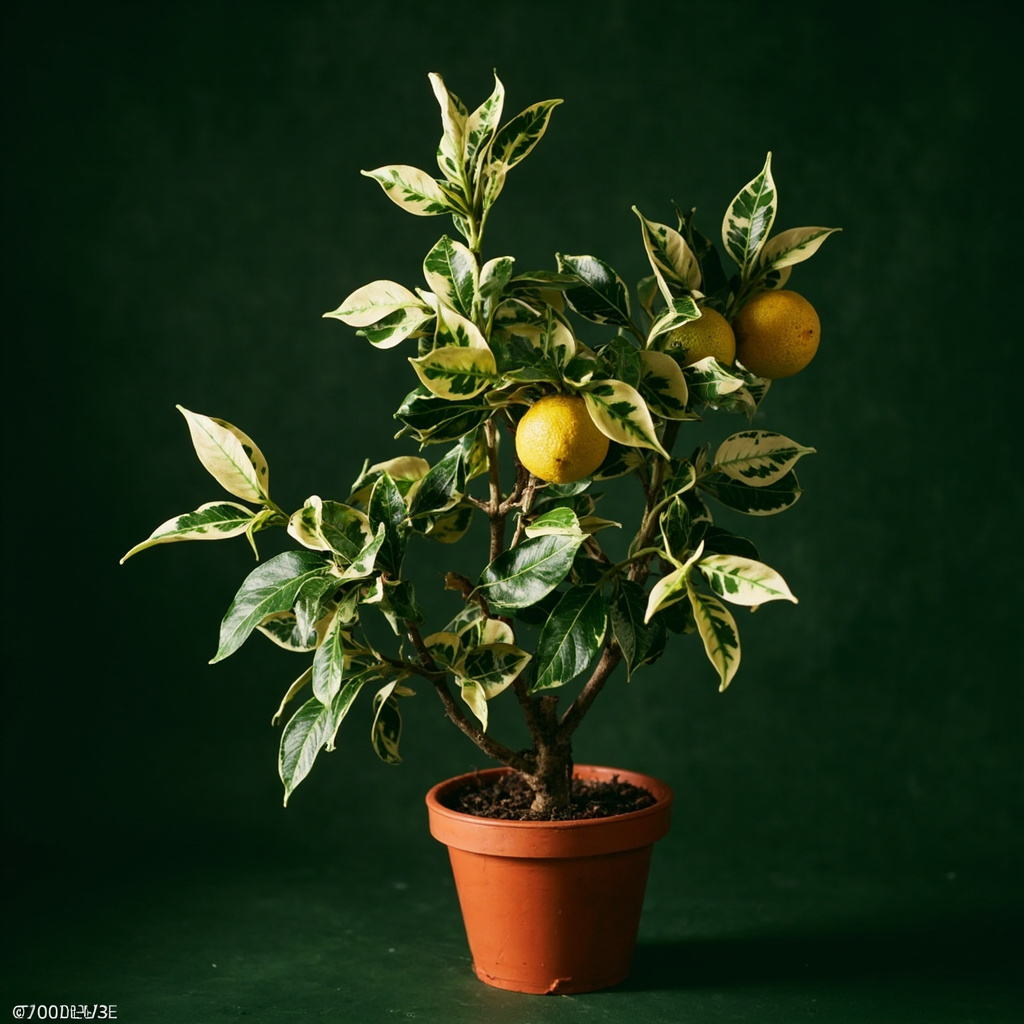

Indoor citrus trees in pots do not get free nutrients from the garden soil. Every flush of new leaves and every handful of flowers pulls nitrogen, phosphorus, and potassium out of a volume of mix that fits in a bucket. Feed them wrong and the tree throws yellow tips in two weeks. Feed them right and you can expect fruit on a Meyer lemon in its third year indoors. See the Meyer lemon care guide for the complete overview of light, watering, and pruning basics before diving into the seasonal feeding schedule below.
What Nutrients Indoor Citrus Actually Needs
A potted citrus tree draws its entire nutrition from the medium around its roots. Unlike an in-ground tree that sends fibrous roots into square feet of soil, a container root zone tops out at a few quarts and cycles through it every time you water. That means the nutrient supply is finite, and the grower must replace it on a schedule.
The three macronutrients every indoor citrus tree requires are nitrogen, phosphorus, and potassium. Each one performs a non-redundant job. Nitrogen drives leaf and stem growth. Phosphorus supports root development and flower initiation. Potassium regulates water uptake and sugar transport into developing fruit. Remove any one of them and the tree signals the deficit within three to four weeks.
Beyond those three, indoor citrus needs secondary nutrients (calcium and magnesium) and trace elements (iron, manganese, zinc, copper, boron, and molybdenum). Magnesium and iron are the micronutrients most likely to show deficiency symptoms indoors because they bind tightly to alkaline soil pH, which is the default condition of most tap water and commercial potting mixes.
The fertilizer label tells you everything you need to decide whether a product matches your tree’s current need. Look for an NPK ratio where the first number (nitrogen) is equal to or slightly higher than the second (phosphorus) during vegetative flush, and reverse that relationship once bloom cycle begins. A ratio like 3-1-2 in spring shifts to 1-2-2 by late April when flower buds form.
The Meyer lemon care guide covers light and watering in detail but only sketches fertilizing in a single paragraph. This page fills that gap with a full seasonal schedule and deficiency identification keyed to each macronutrient.
The Three Macronutrients and What Deficiency Looks Like
Nitrogen deficiency is the most common and the easiest to misread. When nitrogen drops below the tree’s demand, the oldest leaves turn a uniform pale green and then yellow, starting at the tip and working backward toward the petiole. The new growth at the stem tip remains darker green by comparison, which is the key diagnostic clue. A nitrogen-starved tree produces small, narrow leaves with reduced internode spacing. If you see those symptoms in a container-grown citrus that has not been fed since repotting, the diagnosis is almost certainly nitrogen.
Phosphorus deficiency shows up more subtly. New growth emerges normal size but turns a dull blue-green instead of vibrant green. The leaf edges may develop a purplish tint, especially on Kaffir lime and some calamondin cultivars. Root development slows, which means the tree struggles to take up water even when the soil feels moist. Fruit set drops because phosphorus is the nutrient that powers flower initiation and bud retention.
Potassium deficiency is the hardest to spot because it overlaps with both nitrogen and phosphorus symptoms. The outer margin of older leaves turns yellow and then necrotic, forming a scorched fringe. The tree responds by shedding leaves from the bottom of the canopy upward, which can be confused with overwatering or salt stress. Potassium shortage also reduces fruit sweetness and increases susceptibility to cold damage during winter dormancy.
The table below summarizes the three macronutrient deficiency profiles.
| Nutrient | First symptom location | Leaf appearance | Fruit impact |
|---|---|---|---|
| Nitrogen | Older, lower leaves | Uniform pale yellow from tip inward | Reduced vegetative size; delayed bloom |
| Phosphorus | New growth | Blue-green tint, purplish leaf margins | Fewer flower buds, poor fruit set |
| Potassium | Older leaf margins | Scorched yellow fringe, downward leaf drop | Smaller fruit, lower brix, cold-sensitive |
Iron Chlorosis and Micronutrient Lockout in Containers
Iron chlorosis is the single most recognizable micronutrient problem in indoor citrus. The pattern is unmistakable: new leaves emerge pale yellow to almost white while the veins stay green, creating a lace-like contrast. Older leaves retain more green because iron is immobile in the phloem and cannot relocate from mature tissue to new growth.
The lockout mechanism is pH-dependent. Iron becomes unavailable to citrus roots when soil pH rises above 6.5. Most tap water in North American and European cities sits between 7.0 and 8.0 pH, and commercial potting mixes often start near 6.2 and drift upward as fertilizers and water accumulate salts. Every watering event pushes the root zone pH higher until iron absorption stops entirely.
The fix is a chelated iron drench applied directly to the soil. Ordinary iron sulfate won’t work once pH has climbed above 6.5 because the iron precipitates into an insoluble form before the roots can absorb it. Chelated iron (EDDHA or EDDHA-type) stays soluble at pH 7.5 and above, which is why it is the only reliable correction for established chlorosis.
A foliar spray of chelated iron gives visible greening within five to seven days, but it treats the symptom, not the cause. The underlying pH problem remains in the root zone. For a lasting correction, combine the foliar spray with a soil drench of acidifying fertilizer such as ammonium sulfate, which lowers rhizosphere pH as the ammonium ion converts to nitrate during nitrification.
The blueberry soil pH guide covers the same acidification principles that apply to citrus: lower pH unlocks micronutrients, raise it and they disappear. The mechanisms differ in degree but not in kind.
The Indoor Citrus Fertilizer Schedule (Month by Month)
The feeding calendar below follows the growth cycle, not the wall clock. Adjust dates by one month depending on your local climate and the exact timing of your tree’s spring flush. The anchors are physiological milestones (first new leaves, first flower buds, fruit set, dormancy onset), not calendar dates.
| Period | Goal | NPK ratio | Frequency | Notes |
|---|---|---|---|---|
| November to February | Dormancy maintenance | None | Stop feeding | Tree is in low-light, cool dormancy. Fertilizer accumulates as salt. |
| Late February to March | Dormancy break | High nitrogen (3-1-2 or 4-1-2) | Half-strength every 14 days | First sign of bud swell or new flush. Begin feeding at quarter strength. |
| April to May | Vegetative flush + bloom initiation | Balanced to high P (3-2-2 or 2-3-2) | Full strength every 10 to 14 days | Switch to higher phosphorus as flower buds appear. Expect flower buds within 4 to 6 weeks of switching feeds. |
| June to August | Fruit set and development | Higher K (1-2-3 or 2-2-3) | Full strength every 14 days | Reduce nitrogen to prevent excessive leafy growth at fruit expense. Expect fruit set to drop by 20 to 30 percent if nitrogen stays above 3 parts in the NPK ratio. |
| September | Transition to dormancy | Lower all rates | Every 21 days, half-strength | Slow the feed as daylight drops. Last full feeding by early September. |
| October | Dormancy onset | None | Stop feeding | First hard frost outside or indoor temperatures consistently below 55°F signals the end of the cycle. |
The table assumes a standard liquid feed applied at label strength diluted to the rates specified. Slow-release granules follow a different release curve and usually require only one application per growing season (March) with a mid-season top-dress in June if the product label recommends it.
Calamondin orange trees follow this same schedule but tend to flush more aggressively than Meyer lemon, which means they may need an extra half-strength feeding in late June. Kumquat is slightly more conservative and often completes its main flush by late May.
Liquid Feeds vs Slow-Release Granules for Indoor Containers
Two delivery methods dominate the indoor citrus market: liquid feeds applied through watering and slow-release granules mixed into the potting medium. Each has a distinct risk profile and precision ceiling.
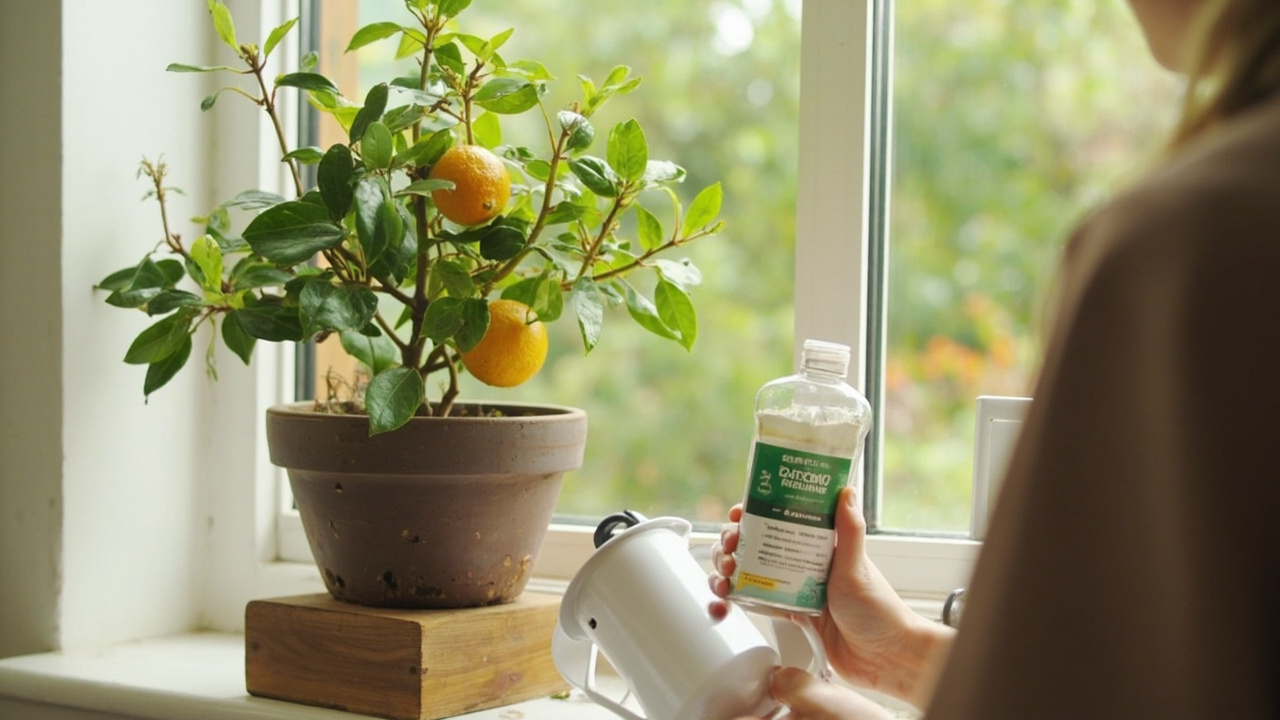
Liquid fertilizers give you control. You can adjust the strength, switch ratios mid-cycle, and respond immediately to deficiency symptoms. The trade-off is frequency: you must remember to feed every 10 to 14 days during active growth, and you must mix the solution correctly every time. A single strong-dose mistake (applying full strength instead of half) can trigger leaf-tip burn within 7 to 10 days, especially on a tree that has not been flushed since last repot.
Slow-release granules remove the scheduling burden. You mix them into the top inch of soil once per season and the nutrients leach out gradually as you water. The downside is rigidity: you cannot adjust the NPK ratio mid-cycle, and you cannot respond quickly to a deficiency that appears earlier than expected. Granules also carry a higher risk of over-fertilization if you apply too much during the initial mix, because the release rate depends on soil temperature and microbial activity, not on your direct control.
Most indoor citrus growers use a hybrid approach. Slow-release granules provide a baseline nutrient floor throughout the growing season, and a liquid feed fills the gaps when the tree shows signs of accelerated demand (heavy flush, active bloom, developing fruit). Apply granules at repotting in March and supplement with liquid feed every two weeks from April through August.
The indoor citrus yellow leaves guide covers the full diagnostic tree for leaf discoloration, including nutrient deficiency, overwatering, and light stress. Use it alongside this fertilizer schedule to distinguish between a feeding problem and a care-problem that looks similar.
How to Flush Salt Buildup Before the Next Feed
Every watering of tap water leaves dissolved salts behind as the water evaporates. Over months, those salts accumulate in the potting medium until the electrical conductivity of the soil solution exceeds what the roots can tolerate. The result is root burn: the root tips darken, stop absorbing water and nutrients, and the tree exhibits the same leaf-tip scorch that mimics potassium deficiency.
Leaching resets the root zone. The procedure is straightforward.
- Move the pot to a sink, bathtub, or outdoor area with drainage.
- Run lukewarm water through the soil at a rate three times the pot volume. For a 12-inch pot holding roughly 3 gallons of mix, run water for about 9 gallons of outflow.
- Let the pot drain completely. Do not return it to its saucer until the drainage stops.
- Wait 48 hours before resuming fertilizer. The roots need a clean period to recover from the flush shock.
Flush once per growing season (early April, before the main feeding cycle begins) and whenever you observe the following signs: persistent leaf-tip burn despite correct NPK ratios, a white crust on the soil surface or pot rim, and a tree that refuses to take up water even when the medium feels moist.
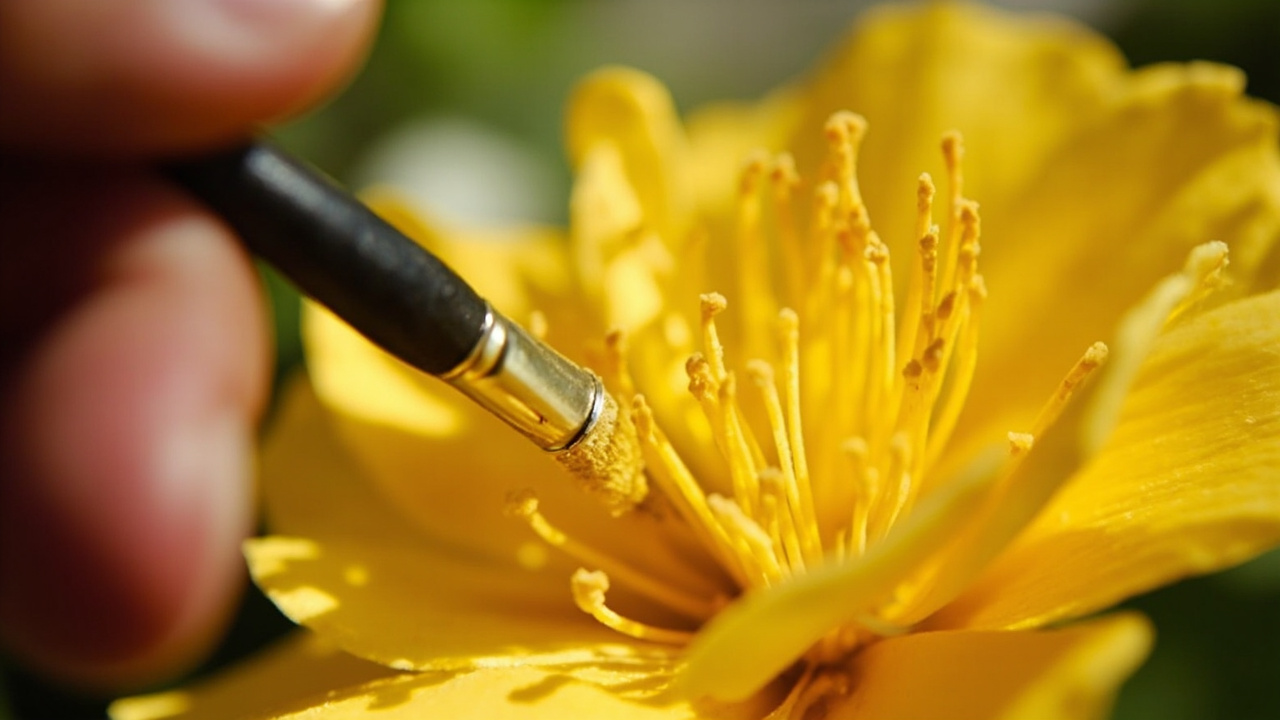
Hand pollination is the other half of indoor citrus fruiting success. Fertilizer builds the vegetative and floral structure, but without pollinator service or manual pollination, flower drop eliminates most of the fruit before it ever reaches full size. Pair this feeding schedule with the pollination guide for complete indoor citrus fruit production.
Turn That PDF Into a Spreadsheet in Minutes
You've seen how to do it manually — now let the tool handle the heavy lifting. Upload your bank statement and get Excel, CSV, or QBO in a few clicks.
Try It Free