
Getting started with hydroponic nutrients can feel a bit like becoming a personal chef for your plants, and honestly, that’s one of the most exciting parts of soil-free gardening!
In my own journey, I’ve found that understanding the hydroponic nutrient solution you provide is the single most important step toward a lush, thriving garden.
Unlike their soil-grown cousins who forage for food, your hydroponic plants depend entirely on you to provide a perfect, balanced meal with the right NPK ratio and micronutrients, all delivered in a water-based solution.
This might sound like a big responsibility… but it’s also your greatest advantage!
You have complete control to give your plants exactly what they need, right when they need it, through every stage of their life cycle.
Forget about soil deficiencies or guesswork… We’re going to dive into the world of essential plant nutrients, water quality, and pH levels to unlock the secrets to vibrant growth and amazing harvests.
Hydroponics Nutrient Solution: The Building Blocks of Plant Life
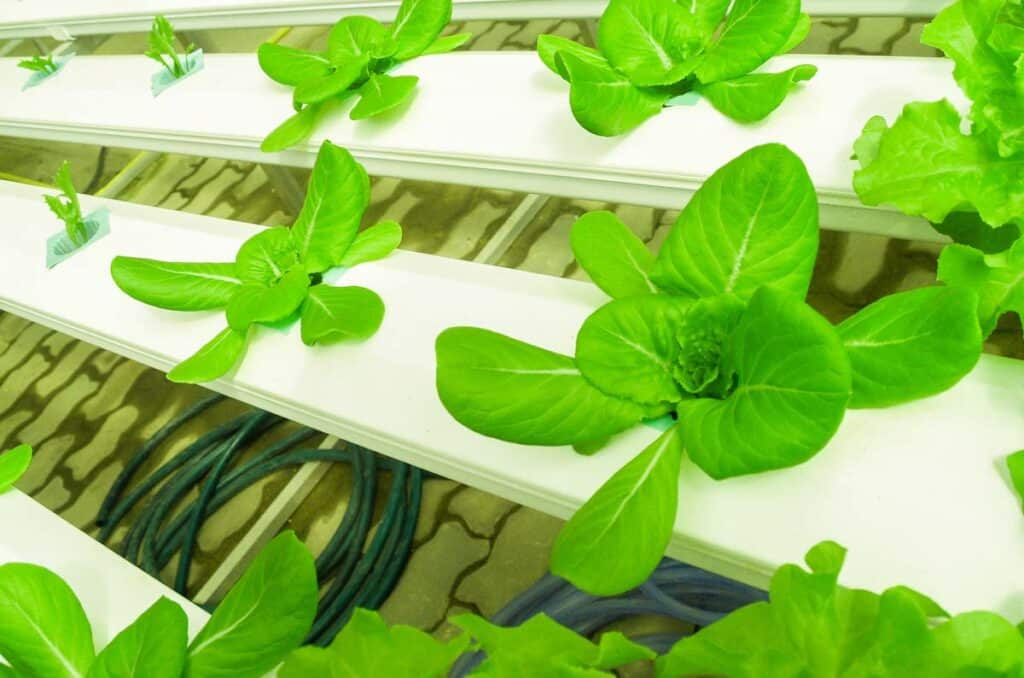
At its heart, a hydroponic nutrient solution is a precisely crafted mix of mineral salts dissolved in water. Think of it as a complete meal replacement shake for your plants.
These essential elements are broken down into two main groups:
1. Macronutrients: The Main Course
Macronutrients are the elements your plants are hungriest for, forming the foundation of their diet. The NPK ratio (Nitrogen-Phosphorus-Potassium) is the most critical part of this group.
- Nitrogen (N): This is all about lush, green, leafy growth. As a core component of chlorophyll, it drives photosynthesis.
- Phosphorus (P): The great energizer! Phosphorus is vital for energy transfer, developing strong roots, and producing beautiful flowers and healthy fruits.
- Potassium (K): Think of this as the overall health regulator. Potassium helps plants move water and nutrients, activates enzymes, and strengthens them against disease.
- Secondary Macros: Don’t forget Calcium (Ca) for strong cell walls (preventing issues like blossom-end rot), Magnesium (Mg), the central atom in chlorophyll, and Sulfur (S) for producing important amino acids and proteins.
2. Micronutrients: The Essential Vitamins
Micronutrients also known as trace elements, plants only need these in tiny amounts, but they are absolutely critical for specific functions.
A deficiency in any one of micro nutrients can halt growth!
This group includes chelated minerals like iron, plus manganese, boron, zinc, copper, and molybdenum.
It feels good knowing you’re providing every last little thing your garden needs to thrive.
The Foundation of a Perfect Mix: Water Quality & Base Nutrients
Before we even open a bottle of nutrients, we have to start with the most basic ingredient: water!
From there, we can choose the core meal plan for our garden.
1. It All Starts with Water
The quality of your starting water can make a huge difference.
Tap water contains minerals that can affect your nutrient solution’s balance and pH. If your water is very “hard” (high in minerals), it might be worth getting a simple water quality report from your local utility.
For the ultimate clean slate, many gardeners use a reverse osmosis (RO) or distilled water, which is essentially pure H₂O. This gives you total control, but remember that you’ll need to add back essential minerals like Calcium and Magnesium using a Cal-Mag supplement.
2. Choosing Your Base Nutrients
Walking into a hydro store or browsing online can be overwhelming. Let’s simplify it.
Your base nutrient is your everyday, complete meal. Most fall into a few categories:
- Liquid vs. Powdered: Liquid concentrates are wonderfully easy to measure and mix, making them a favorite for beginners. Powdered nutrients are often more cost-effective and have a longer shelf life, which is great once you get into the swing of things. I started with liquids and now keep both on hand!
- 1-Part, 2-Part, or 3-Part Formulas:
- 1-Part: This is the all-in-one option. Simple, straightforward, and perfect for leafy greens like lettuce or herbs.
- 2-Part (A & B): A common setup where two bottles are mixed into the water. This two-step process prevents certain elements like calcium and sulfates from reacting and forming an unusable solid—a problem called nutrient lockout.
- 3-Part (Grow, Micro, Bloom): This system, like the popular General Hydroponics Flora Series, gives you ultimate control. You adjust the ratio of the three parts to create custom nutrient profiles for every stage of your plant’s life, from a tiny seedling to a fruit-laden plant. It’s incredibly rewarding to tailor the recipe perfectly.
Organic vs. Synthetic Nutrients: A Gardener’s Philosophical Choice
This is a topic close to the heart of many gardeners. There’s no single right answer, only what’s right for you and your garden.
Organic Nutrients
Organic Nutrients are derived from natural sources like fish emulsion, bone meal, or kelp, organic nutrients often feed beneficial microbes in your system, which in turn aid nutrient uptake by the plants.
Many gardeners (myself included) feel this approach leads to a richer, more complex flavor.
Keep in Mind: Organic solutions can be thicker and may have small particles that could clog drip emitters or pumps. It’s a more hands-on approach that feels deeply connected to natural cycles.
Synthetic Nutrients
Synthetic (Mineral-Based) Nutrients are made from highly refined mineral salts. Because they are so pure, the elements are immediately available for the plant to absorb, often leading to explosive growth.
The benefit of synthetic nutrients is they are incredibly precise, clean, and far less likely to cause clogs.
If you’re aiming for maximum yield and precision control, synthetics are a fantastic and reliable choice.
Brands like Advanced Nutrients and Dyna-Gro have built their reputation on this consistency.
The Art and Science of Hydroponic Nutrients Management
Beyond the nutrients themselves, a couple of tools and a consistent process are non-negotiable for success. This is where you truly step into the role of plant chef!
1. The Gardener’s Toolkit: pH and EC Meters
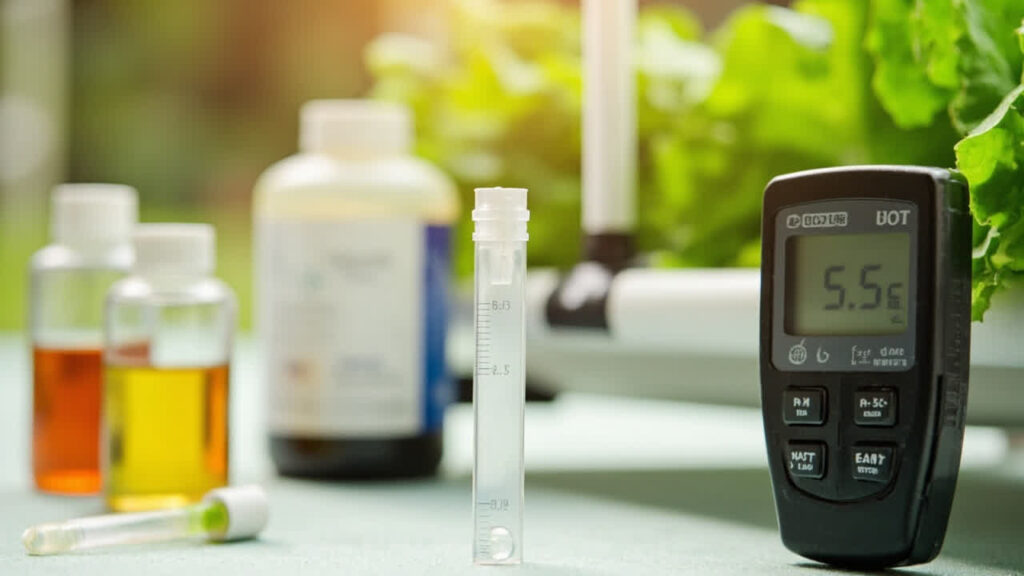
- A pH Pen or Kit: This measures how acidic or alkaline your water is. For most hydroponic plants, the sweet spot is a slightly acidic range of 5.5 to 6.5.
Why? The pH level dictates nutrient availability.
Outside this optimal range, even if nutrients are present in the water, your plants can’t absorb them. This simple tool is often the key to solving mysterious plant problems. Source: PennState Extension - An EC/TDS Meter: Electrical Conductivity (EC) or Total Dissolved Solids (TDS) measures the concentration of your nutrient solution. It tells you how strong the “meal” is. A tiny seedling needs a very light meal (low EC), while a large tomato plant in full fruit needs a hearty feast (high EC). This tool prevents underfeeding or nutrient burn from a solution that’s too strong.
2. Mixing Your Nutrients: An Order of Operations
Always follow this order to prevent nutrient lockout. It’s a simple habit that saves a lot of headaches!
- Fill your reservoir with water.
- If using, add a Silica supplement first and stir well.
- Add your Cal-Mag supplement (if needed) and stir well.
- Add your base nutrients (Part A, then B, or Micro, Grow, Bloom), mixing thoroughly after each one. Never mix concentrates directly together!
- Add any other boosters or additives.
- Finally, check and adjust your pH to the target range.
Decoding Your Plant’s Language: Guide to Nutrient Deficiencies
Your plants will talk to you; you just have to learn their language. The leaves are often the first place you’ll see signs of a nutrient issue.
- Mobile Nutrient Deficiency (N, P, K, Mg): Problems appear on older, lower leaves first. The plant moves these nutrients to support new growth. A classic example is the yellowing of lower leaves from a Nitrogen (N) deficiency.
- Immobile Nutrient Deficiency (Ca, S, Fe, Mn, B, Cu, Zn): Problems appear on new, upper leaves first. The plant cannot move these nutrients from old tissue.
- Burnt-looking edges on new leaves? This is often a lack of Calcium (Ca), causing tip burn in lettuce and blossom-end rot in tomatoes.
- Yellowing between the veins on new leaves? A classic sign of an Iron (Fe) deficiency. The veins stay green while the tissue between them turns yellow.
- Crispy, Brown Leaf Tips? This often isn’t a deficiency but the opposite! It’s likely nutrient burn from a solution that’s too concentrated (your EC is too high).
Often, these symptoms are actually caused by an incorrect pH locking out the nutrient, so always check your pH first before making drastic changes!
Advanced Techniques: Supercharging Your Garden’s Growth
Once you’re comfortable with the basics, you can explore supplements to really fine-tune your garden’s performance.
- Cal-Mag: An absolute must-have if you use filtered water or grow heavy-feeding plants like tomatoes and peppers.
- Silica: This helps build stronger cell walls, giving you sturdier plants that are more resistant to pests and heat stress. I think of it as giving my plants a suit of armor.
- Beneficial Microbes: These are the unsung heroes of the root zone. Products containing beneficial bacteria and fungi improve nutrient uptake and protect against harmful pathogens.
- Bloom Boosters: When it’s time to flower, your plants get hungry for extra Phosphorus and Potassium. A PK booster provides the exact energy they need for bigger, more abundant blooms and fruits.
Hydroponics Nutrients Guide For Home Gardener
Embrace the journey of learning what your plants love. Keep a simple log of your pH, EC, and your feeding schedule.
Before you know it, you’ll be mixing hydroponic nutrients solutions like a pro, and your garden will reward you with health, vibrancy, and a truly amazing harvest.
Hydroponic Nutrients FAQ
Q: How often should I change my nutrient solution?
For most home systems, a complete water change every 1 to 2 weeks is ideal. This prevents any single nutrient from building up to toxic levels and ensures your plants always have a fresh, balanced meal.
Q: Can I just top off the water instead of doing a full change?
You can top off with fresh, pH-balanced water between changes to replace what the plants drink. However, remember that plants don’t absorb nutrients and water at the same rate, so a full change is still necessary to reset the balance regularly.
Q: Can I make my own hydroponic nutrients?
Yes, you can! For those who enjoy a hands-on approach, creating a DIY hydroponic fertilizer can be a rewarding and cost-effective option, giving you complete control over your plant’s diet.
Q: Can I use regular garden fertilizer for my hydroponic system?
It’s generally not recommended. Using normal fertilizer for hydroponics can cause problems because it often lacks the full spectrum of micronutrients and may contain elements in forms that are not water-soluble, leading to nutrient lockout and clogs.
Q: What is nutrient lockout and how do I fix it?
Nutrient lockout is when a plant cannot absorb nutrients that are present in the solution. It’s usually caused by an incorrect pH or a chemical reaction from mixing concentrated nutrients directly. To fix it, do a complete reservoir change with fresh, properly mixed, and pH-balanced nutrient solution.
Turn any PDF statement into a clean sheet
Skip the typos and the hours of copying. Our converter handles any bank statement format and outputs Excel, CSV, or QBO for QuickBooks. No file retention, free to try.
Convert your statement