
A nutrient solution is the absolute heart and soul of any hydroponic garden. It’s the magic liquid that lets us grow lush, vibrant plants without a speck of soil.
I still remember the first time I saw a head of lettuce thriving in nothing but water; it felt like witnessing a small miracle!
That miracle, a process known as fertigation, is made possible by a perfectly balanced diet of essential elements delivered directly to the plant’s roots.
Whether you’re just starting with a simple deep water culture (DWC) system or tending plants in a soilless medium like coco coir, understanding your plant’s nutrition is the key to a bountiful harvest.
It can feel a little like being a scientist at first, but I promise, it’s more like being a chef for your plants! You’re simply learning the perfect recipe for their success.
Let’s break it down together, step by step.
The Building Blocks of Life: Essential Macronutrients
Think of macronutrients as the main course for your plants. They are the essential nutrients needed in the largest amounts and form the foundation of all growth.
The big three you’ll always hear about are Nitrogen (N), Phosphorus (P), and Potassium (K).
- Nitrogen (N): This is the engine for lush, green leaves and strong stems. During the vegetative growth stage, nitrogen is its best friend. A tell-tale sign of nitrogen deficiency is chlorosis (yellowing) of older, lower leaves on the plant, as the plant moves this mobile nutrient to its new growth.
- Phosphorus (P): This hero works behind the scenes, promoting healthy root development, strong flower formation, and eventually, fruit. It’s crucial for energy transfer within the plant. If you see stunted growth and leaves turning a dark, purplish color, your plants might be asking for more phosphorus.
- Potassium (K): Think of this as the plant’s immune system booster. It helps regulate a plant’s internal processes (like stomata function) and strengthens it against disease. Chlorosis along the edges of leaves, often followed by necrosis (tissue death), can point to a lack of potassium.
Beyond the primary NPK trio, there are three secondary macronutrients that are just as vital: calcium (Ca) for building strong cell walls, magnesium (Mg), the central molecule in chlorophyll, and sulfur (S) for creating important amino acids and proteins.
The Unsung Heroes: Vital Micronutrients
If macronutrients are the main course, micronutrients (often called trace elements) are the essential vitamins and minerals.
Plants only need them in tiny amounts, but their absence can cause big problems, leading to a frustrating nutrient deficiency.
You’ll often find these are chelated minerals, which means they are specially formulated for easier root uptake. Chelation protects the mineral ion, preventing it from precipitating out of the solution at higher pH levels and becoming unavailable.
Key players include iron (Fe) for chlorophyll production, manganese (Mn) to help with photosynthesis, zinc (Zn) for growth hormones, and copper (Cu) for overall plant resilience.
Don’t forget boron (B), which is crucial for reproduction.
Unlike nitrogen deficiency, an iron deficiency typically shows up as interveinal chlorosis on the newest leaves first, a classic sign of an immobile nutrient deficiency.
Choosing the Right Nutrient Formula
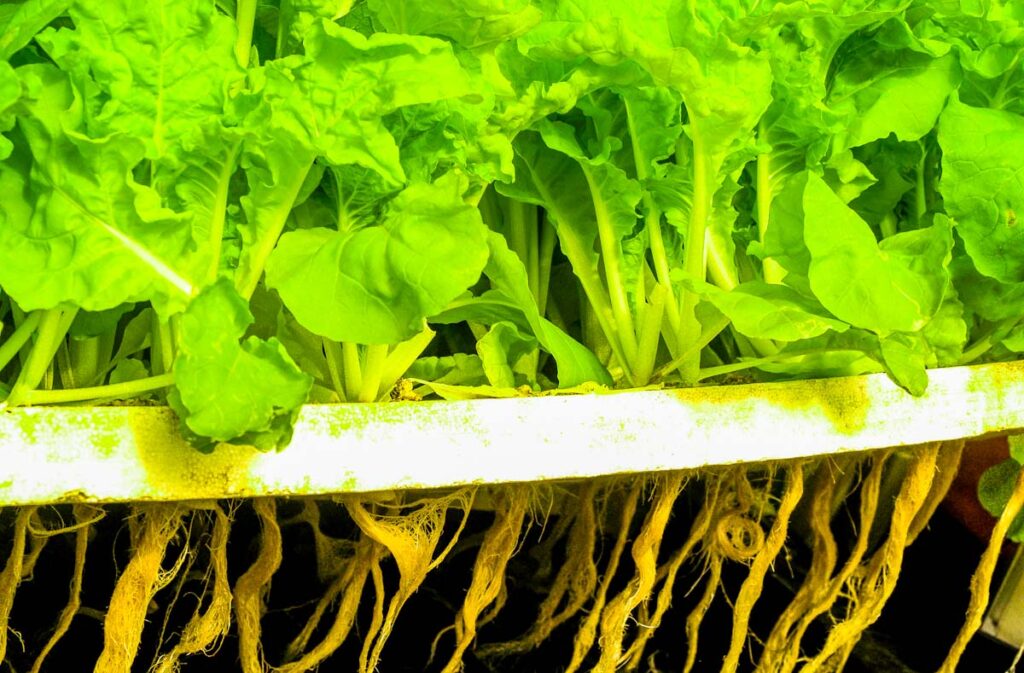
Walking into a hydro store or browsing online can be dizzying with all the nutrient options.
Let’s demystify the common types:
- Liquid vs. Powdered Nutrients: Powdered nutrients are often more cost-effective and have a longer shelf-life, but they require careful dissolving. Liquid nutrients are super convenient and easy to measure, making them a great choice for beginners, though they can be a bit more expensive.
- 1-Part vs. 2- or 3-Part Formulas: A 1-part formula is the simplest—everything is in one bottle. It’s great for leafy greens like lettuce that don’t have complex needs. A 2- or 3-part system (like the popular General Hydroponics Flora Series) gives you much more control to tailor the NPK ratio for plants that have distinct vegetative and flowering stages, like tomatoes or peppers.
For your first grow, you can’t go wrong with a high-quality, 2-part liquid nutrient system. It offers a great balance of simplicity and control.
Tailoring the Menu: The Right NPK Ratio for Every Stage
Just like us, plants have different dietary needs at different stages of life. Giving a seedling the same nutrient recipe as a fruiting tomato plant is a recipe for disappointment.
This is where the NPK ratio on your fertilizer concentrate becomes so important.
- For the Vegetative Stage: Young plants focused on growing leaves, like lettuce, basil, or a tomato plant before it flowers, need a high dose of nitrogen. A common NPK ratio you’ll see is 3-1-2.
- For the Flowering Stage: Once your plants start to produce buds and flowers, their needs change. It’s time to reduce the nitrogen and ramp up the phosphorus and potassium to support blooms and fruit. A typical ratio here is 1-3-2. You might even add a bloom booster, which is a supplement high in P and K, during this phase.
The Great Balancing Act: Mastering pH and EC
This is the part that can feel the most intimidating, but trust me, with the right tools, it’s simple.
Getting this right is what prevents nutrient lockout, a frustrating situation where nutrients are in the water but the plant can’t absorb them.
Understanding pH (potential Hydrogen)
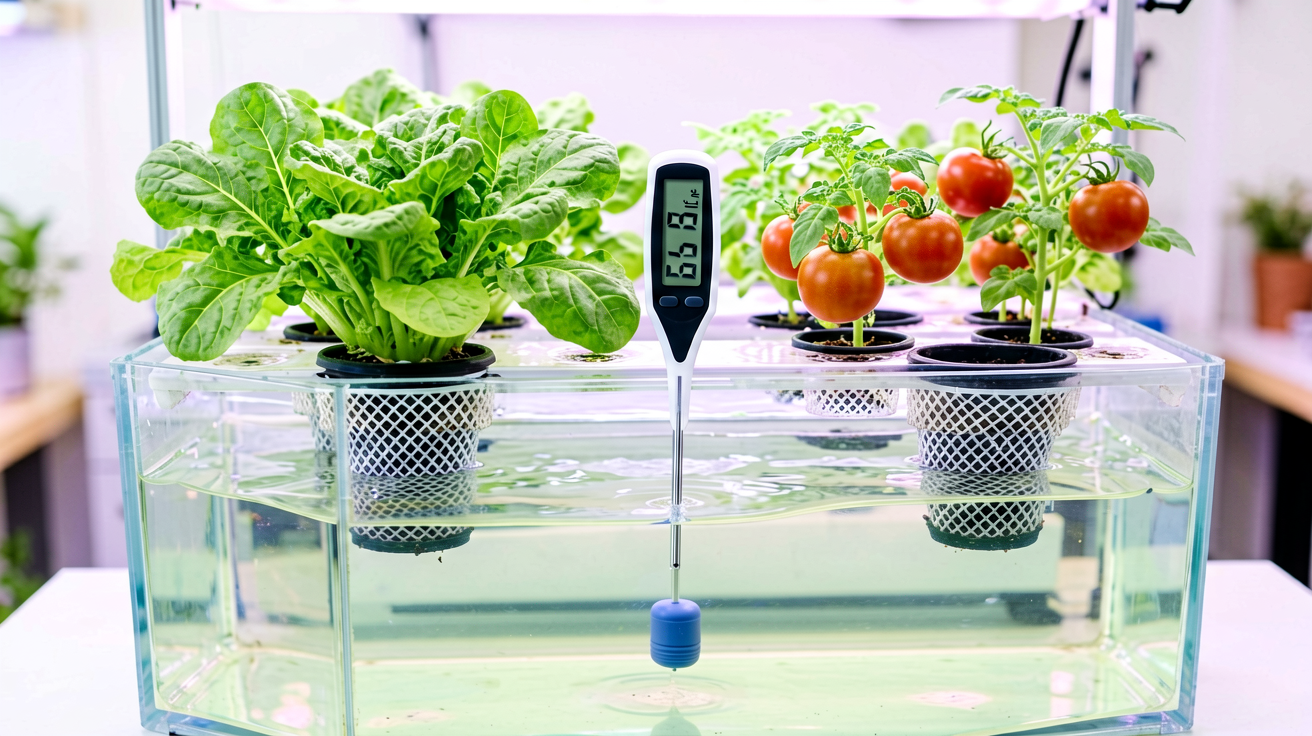
The pH level of your nutrient solution determines its acidity or alkalinity. For most hydroponic plants, the sweet spot for nutrient availability is between 5.5 and 6.5.
You’ll notice your solution’s pH will naturally drift over time, often upwards, as plants consume certain nutrients. This is normal, but it’s why daily checks are so valuable.
Understanding EC (Electrical Conductivity)
Electrical conductivity (EC) measures the strength of your nutrient solution. It’s often measured in conjunction with TDS (total dissolved solids) or PPM (parts per million).
The ideal EC varies by plant and growth stage:
- Seedlings & Clones: 0.2-0.5 mS/cm
- Vegetative Growth: 0.5-0.8 mS/cm
- Flowering & Fruiting: 0.8-1.0 mS/cm or even higher
Quick Reference: Target pH & EC for Common Plants
Here’s a handy chart to get you started. Remember these are general guidelines!
| Plant | Ideal pH Range | Ideal EC (mS/cm) |
| Lettuce | 5.5 – 6.0 | 0.8 – 1.2 |
| Tomatoes | 5.5 – 6.5 | 2.0 – 4.0 |
| Strawberries | 5.5 – 6.5 | 1.8 – 2.2 |
| Peppers | 5.5 – 6.0 | 1.8 – 2.2 |
| Basil & Herbs | 5.5 – 6.5 | 1.0 – 1.6 |
Troubleshooting Common Nutrient Issues
Even with the best care, you might run into bumps. The key is to watch your plants—they’ll tell you what they need!
- Nutrient Burn (Tip Burn): If you see the very tips of your leaves turning brown and crispy, you might be overfeeding them. The fix is simple: add some fresh, pH-balanced water to your reservoir to dilute the solution and lower the EC.
- Deficiencies: As mentioned, chlorosis is a classic sign of a problem. If you’re struggling, learning how to save a dying plant can provide general tips for revival. Remember the simple rule: yellowing on the bottom (older leaves) is likely a mobile nutrient like Nitrogen. Yellowing on the top (new growth) is likely an immobile nutrient like Iron or Calcium.
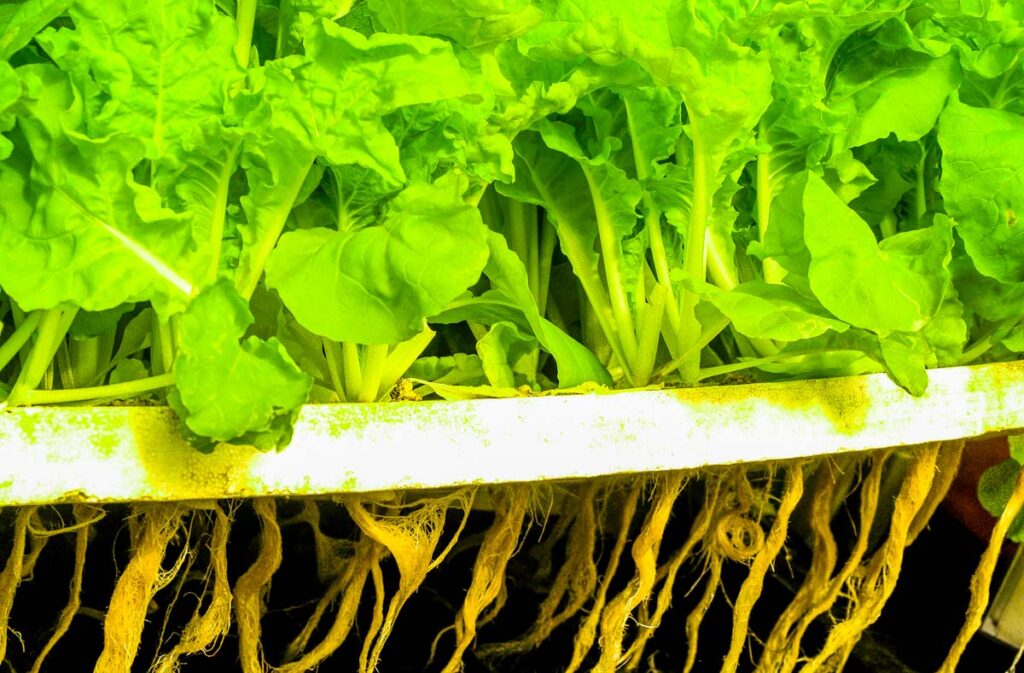
- Root Rot: Healthy roots should be bright white and smell fresh. If they look brown, slimy, and musty, you may have root rot. This is often caused by a lack of dissolved oxygen (DO), creating an anaerobic environment perfect for harmful pathogens. Ensure your air pump and stone are bubbling vigorously.
A Sample Lettuce Feeding Schedule
Let’s make this practical! Here is a sample week-by-week schedule for growing a head of lettuce in a DWC system.
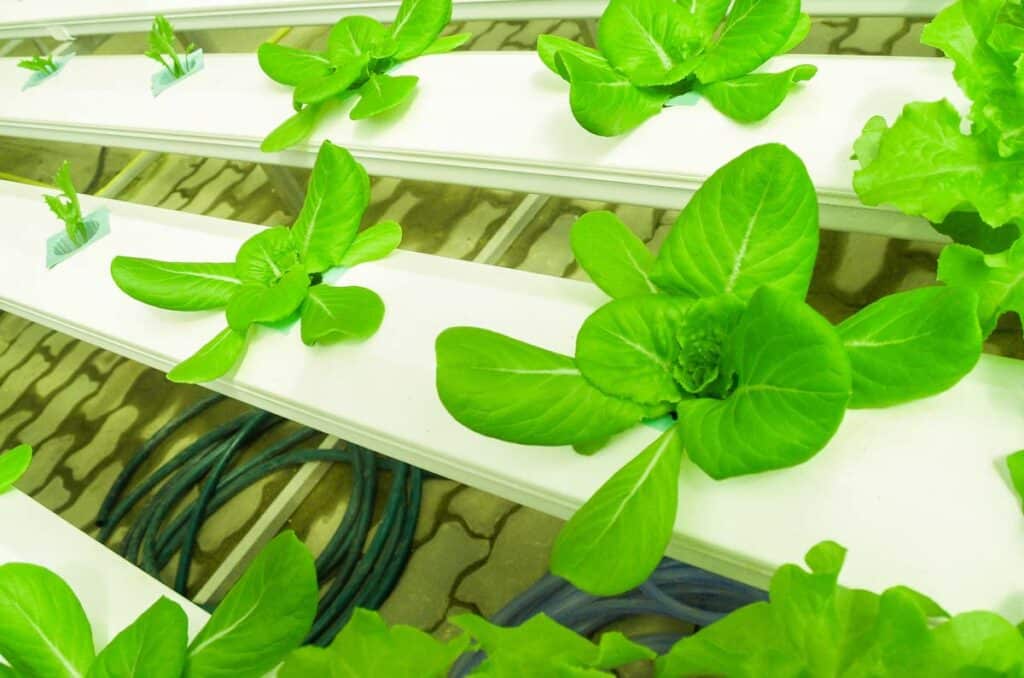
- Week 1 (Seedling): Once your seedling has its first true leaves, place it in the system with a very gentle nutrient solution. Aim for an EC of 0.4-0.6. Keep the pH between 5.5-6.0.
- Week 2 (Early Vegetative): Your plant is starting to take off! Increase the nutrient strength slightly. Aim for an EC of 0.6-0.8.
- Weeks 3-4 (Mid-to-Late Vegetative): Now it’s in full growth mode. Bring the solution to full strength. Aim for an EC of 0.8-1.2.
- Week 5 (Harvest): Maintain full strength. Some gardeners like to do a “flush” 1-2 days before harvest by replacing the nutrient solution with plain, pH-balanced water, believing it improves the taste. It’s an optional step to experiment with!
Your First Nutrient Mix: A Simple Guide
Ready to mix your first batch?
- Start with Good Water: Your water quality matters. For the purest start, use filtered or reverse osmosis water. Keep in mind that RO water is a blank slate, so you’ll likely need to add a Cal-Mag (Calcium and Magnesium) supplement back in.
- A Quick Note on Safety: Nutrient concentrates are powerful salts. It’s always a good idea to wear gloves and safety glasses when handling them to avoid any skin or eye irritation. Always add your nutrients to your bucket of water, never the other way around.
- Fill Your Reservoir: Add the desired amount of water to your reservoir.
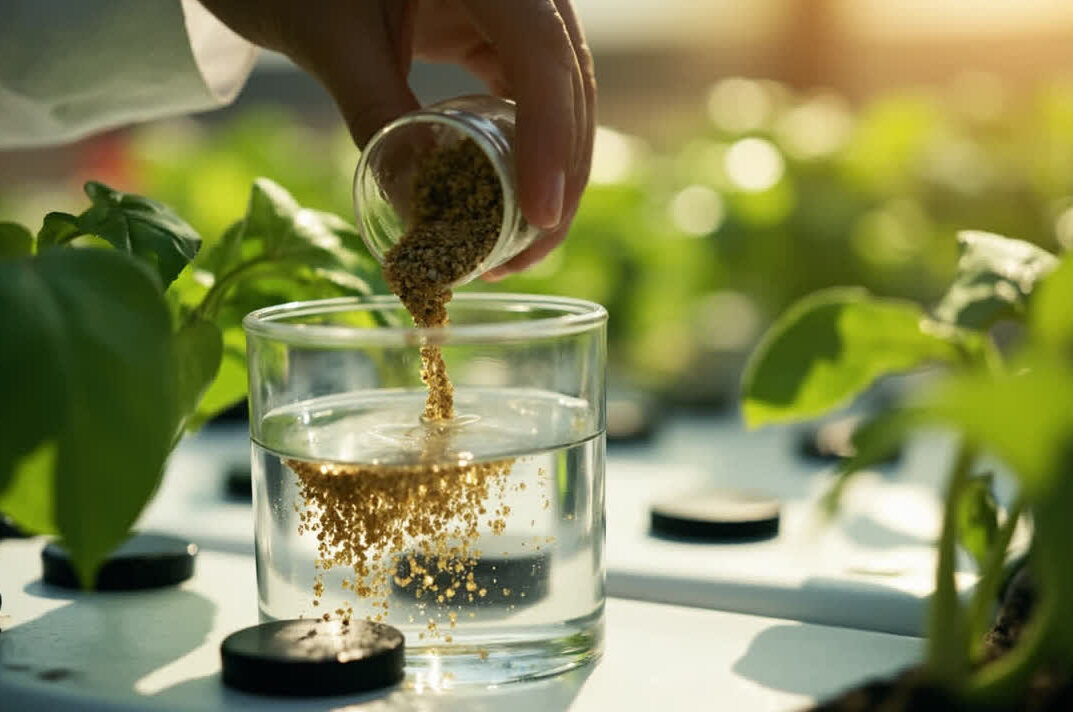
- Mix Nutrients In: If you’re using a multi-part liquid fertilizer, it’s critical to follow the mixing instructions. Never mix the concentrates directly together! Add Part A, stir well, then add Part B, stir well, and so on. This prevents minerals from precipitating.
- Check and Adjust: Once everything is mixed, use your meters to check the pH and EC/TDS. Adjust as needed to get them into the perfect range.
- Set a Schedule: Create a feeding schedule. For most home systems, this means checking and adjusting your reservoir every few days and doing a complete water change every 1-2 weeks.
The Future is Now: Your Smart Garden
It’s an incredibly exciting time to be a home gardener! The technology that powers large-scale commercial hydroponic farms is becoming smaller, smarter, and more affordable, putting professional-level tools right in our hands.
The world of soilless cultivation is buzzing with innovation that makes growing easier and more efficient than ever.
The biggest game-changer is the rise of smart sensors and automation. Imagine a garden that practically takes care of itself.
Internet of Things (IoT) devices can now provide real-time monitoring of everything from your solution’s pH and EC to water temperature and ambient humidity.
But it doesn’t stop there… these sensors can connect to automated dosers that intelligently add tiny amounts of pH buffer or nutrient concentrate to your reservoir, keeping your solution perfectly balanced 24/7.
This move towards precision fertigation means less daily testing for you and a more stable environment for your plants.
This wealth of data is also paving the way for AI-driven insights. New apps and systems can analyze your garden’s conditions, compare them to optimal data for your specific plant, and offer recommendations to maximize growth or even predict potential problems before they start.
According to a recent report on agricultural technology, the integration of AI is projected to optimize resource use by up to 30% in controlled environments (Source: Journal of Smart Agriculture, 2025).
What was once the domain of high-tech labs is now becoming a weekend project for the dedicated hobbyist, allowing for healthier plants and bigger yields with less waste.
This is all happening alongside incredible advancements in other areas, like specialized LED lighting that can be tuned to specific light spectrums to enhance flavor or accelerate growth, and more compact, efficient vertical growing systems perfect for urban gardeners.
The future of home gardening is smart, sustainable, and more productive than ever.
Hydroponic Nutrient Solutions
Stepping into the world of hydroponics is an exciting adventure, and mastering your hydroponic nutrient solutions is the most important skill you’ll develop.
It all comes down to the fundamentals: providing a balanced diet of macro and micronutrients, keeping a close eye on your pH and EC levels, and listening to what your plants are telling you.
Start with a simple plan, don’t be afraid to make small adjustments, and celebrate every success.
The reward of pulling a crisp, vibrant vegetable from your own soil-free garden is an experience unlike any other, and it’s well within your reach.
Turn PDF Bank Statements Into Workable Spreadsheets
Your bank statement is a mess of numbers, but your books shouldn't be. Use our converter to get Excel, CSV, or QBO files — ready for QuickBooks.
Try It Free Now