
Compost and NPK fertilizer are not two brands of the same product. Compost is a soil conditioner that delivers nutrients slowly and in small doses, while NPK fertilizer is a concentrated, fast-acting nutrient supply that feeds the plant directly and builds nothing in the soil. The decision between them is not which is better. It is whether your bed is missing structure, missing nutrients, or missing both.
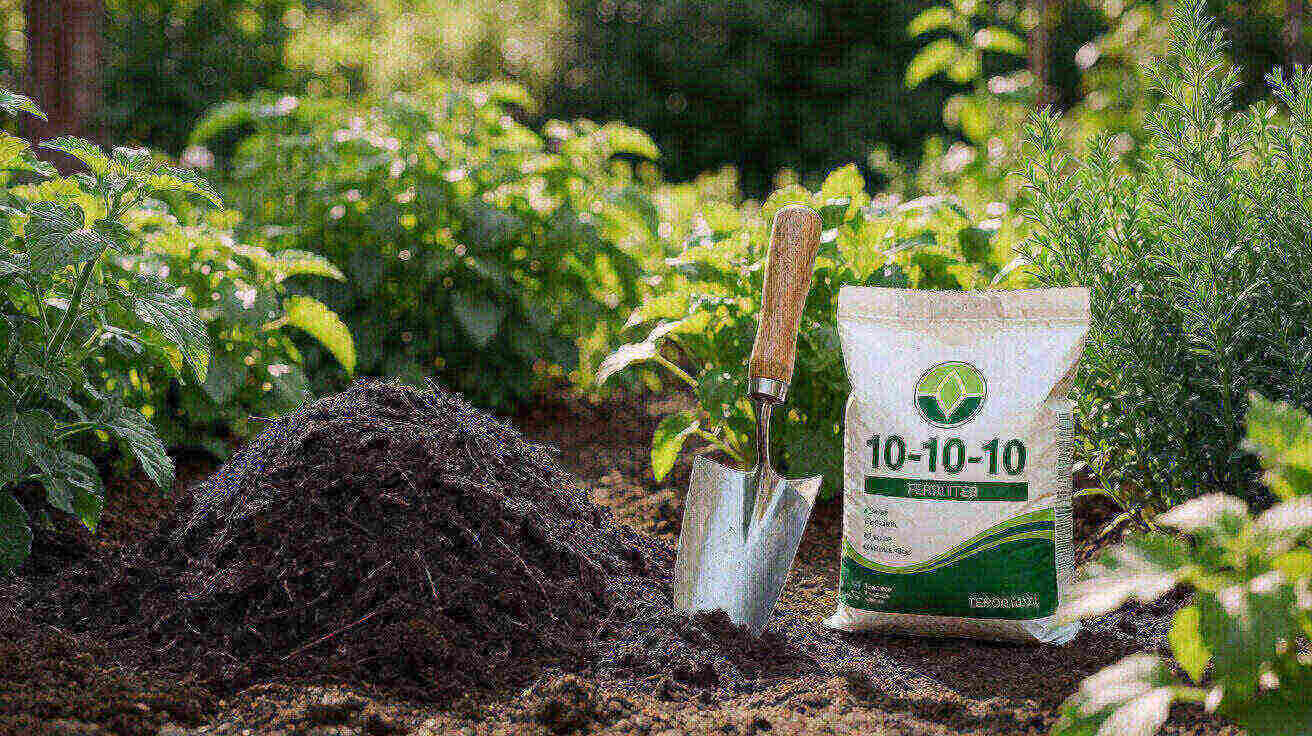
Two bags sit in the shed. One is compost. One is a 10-10-10. The real risk is using the wrong one for the job, or using both without knowing which did what. Compost applied where nutrients are already ample wastes money and time. Fertilizer applied where the soil is starved of organic matter keeps plants alive while the soil degrades underneath them.
Most growers get the relationship backwards. They treat compost as a fertilizer and fertilizer as a soil builder. Compost is not a fertilizer in any practical sense, and fertilizer is not soil. That confusion is why a garden can be fed and still fail.
What compost actually does for your soil
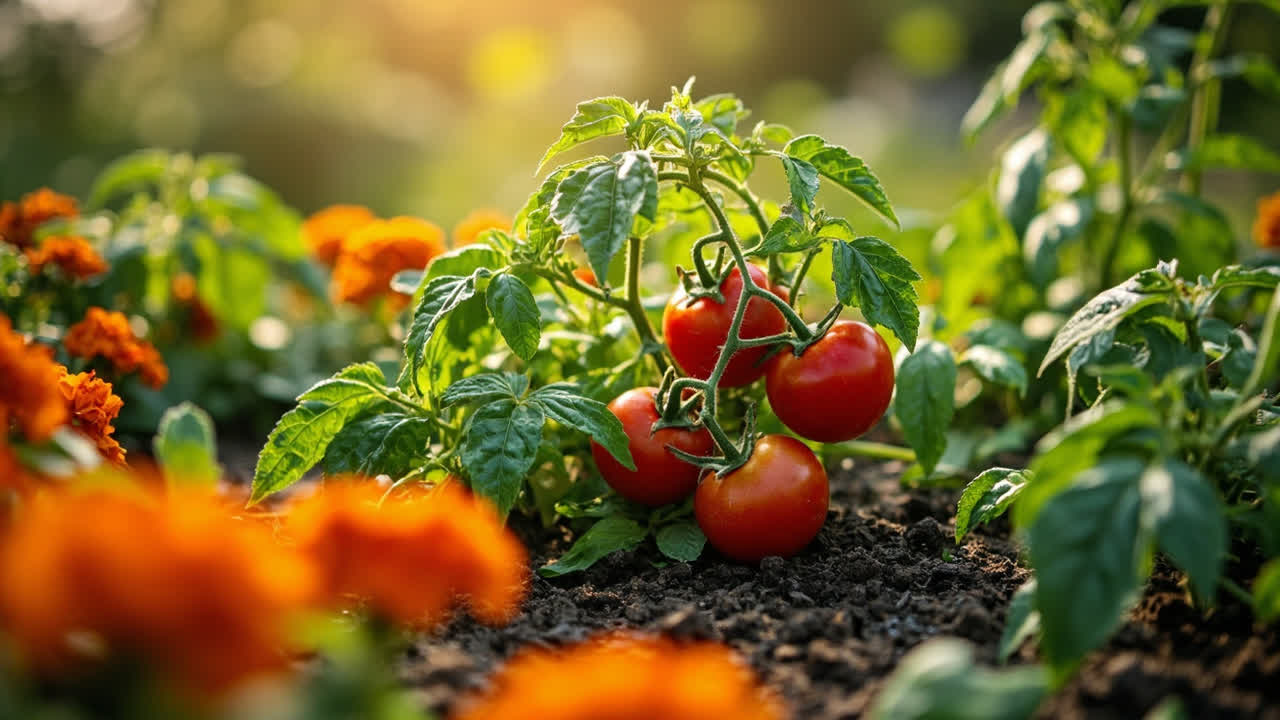
Compost is decomposed organic matter. Its first job is physical: it opens heavy clay, holds water in sandy soil, and feeds the microbial community that drives nutrient cycling. When you add compost, you are adding organic matter, structure, and a slow-release nutrient trickle, in that order of importance.
Compost raises cation exchange capacity, the soil’s ability to hold nutrient ions against leaching. It improves water retention and aeration at the same time, which is the combination that roots actually need. These effects accumulate over seasons, not days.
The microbial side is where compost earns its keep beyond physics. A healthy compost-amended soil holds billions of bacteria and fungi per gram, and those organisms are the ones that mineralize nitrogen, solubilize phosphorus, and suppress disease. Synthetic fertilizer does none of this. In fact, heavy soluble nitrogen can suppress mycorrhizal colonization, because the plant has no reason to trade carbon for nutrients it is getting for free. Compost keeps the plant paying its microbial rent.
What compost actually delivers as nutrients
Nutrient density is where compost loses the comparison. A typical finished compost analyzes around 0.5 to 2 percent nitrogen, with phosphorus and potassium lower still. That is roughly one-fifth to one-twentieth the concentration of a standard bag of 10-10-10 fertilizer, which is 10 percent nitrogen.
Most of that compost nitrogen is not available in the season you spread it. It is locked in organic compounds and must be mineralized by microbes before roots can take it up. Year-one nitrogen from compost is largely immobilized, and release stretches over later seasons. Compost feeds the soil’s bank account, not this week’s grocery bill.
What NPK fertilizer actually does
NPK fertilizer is a concentrated, soluble nutrient source. The nitrogen is present as ammonium or nitrate ions that roots absorb within days. Phosphorus and potassium are likewise in forms the plant can use immediately. Nothing about it builds soil structure or feeds microbes.
Precision is its advantage. You can target a specific ratio, correct an acute deficiency, or feed a heavy feeder on a schedule. The risk is equally specific: soluble salts accumulate, and over-application burns roots or leaches into groundwater. Used on soil already rich in organic matter, repeated concentrated feeding raises salt risk further.
The salt risk deserves respect. Every application adds ions that the plant does not immediately take up, and those ions stay in the soil solution until water moves them. In a container or a dry bed, they concentrate. The first symptom is usually leaf tip burn on sensitive crops, followed by stunted roots and reduced water uptake. The fix is not more fertilizer but a thorough watering to flush salts below the root zone, which is itself a reason to keep fertilizer doses modest and to split them across the season rather than dumping them at once.
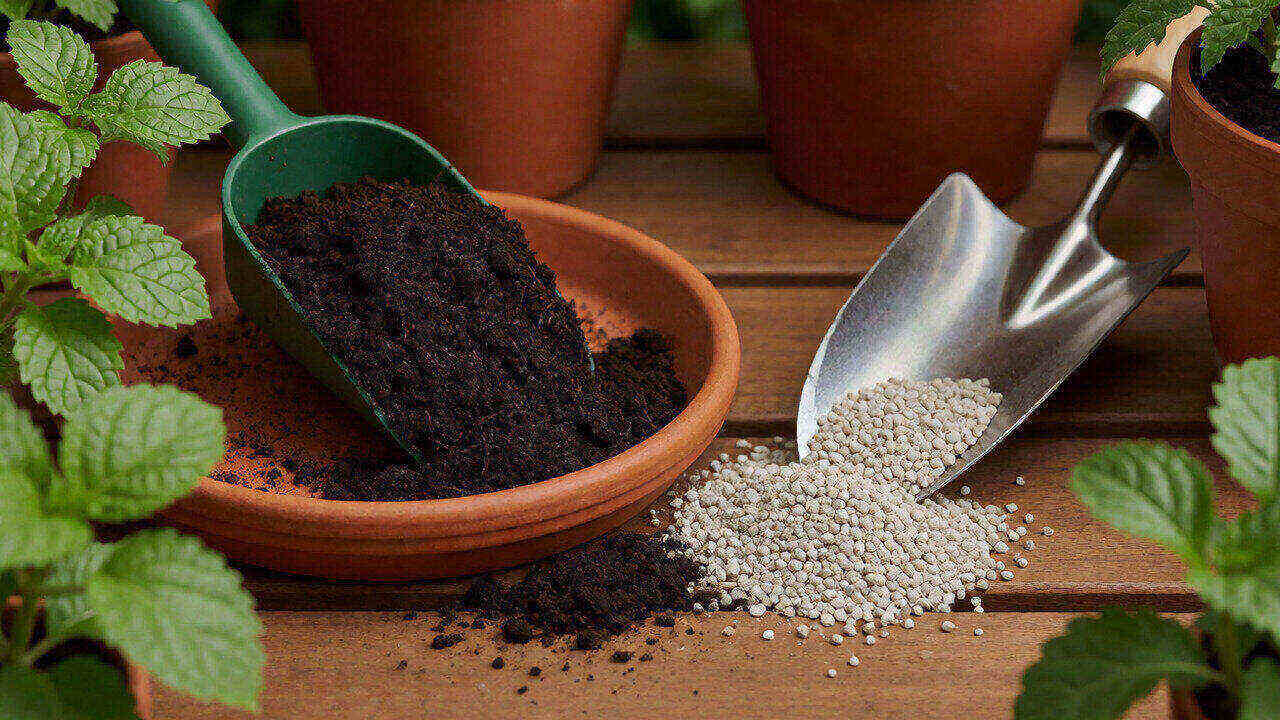
Compost against fertilizer, side by side
| Factor | Compost | NPK fertilizer |
|---|---|---|
| Primary role | Soil builder | Nutrient supply |
| Nutrient density | 0.5 to 2% N typical | 5 to 20% N typical |
| Speed of effect | Weeks to months | Days |
| Soil structure | Improves | None |
| Microbial life | Feeds it | No effect |
| Best for | Building soil, long term | Acute deficiency, heavy feeders |
| Main risk | Under-feeding crops | Salt buildup, over-fertilization |
When compost is the better choice
Compost wins when the soil is the problem, not the plant. New beds with little organic matter, sandy soils that drain too fast, beds that have been cropped hard for years, and any situation where you have no soil test and no clear deficiency. Compost is also the safer choice for sensitive crops and for growers who would rather under-feed than burn.
If you are building a bed for the first time, compost is the first input. Add it, let it integrate, and reassess. For the organic-vs-organic question, see worm castings vs compost.
When fertilizer is the better choice
Fertilizer wins when the plant is hungry now. Heavy feeders mid-season, containers with limited soil volume, short growing seasons, and any confirmed deficiency from a soil test. When you need precise crop nutrition or a fast response, compost cannot deliver it in time. Containers in particular leave almost no buffer: a few weeks of heavy feeding can exhaust the limited soil volume, and only a soluble input can refill it quickly enough to save the crop.
Choosing the right product is a separate step, covered in choosing an NPK fertilizer. Understanding what NPK means on a fertilizer label comes before that.
When you need both, and in what order
Most beds need both, and order matters. Compost first, to build the soil’s structure and microbial base. Then fertilizer, to top up the specific nutrients the crop demands this season. Do not burn fresh compost with fertilizer on top of it. Let compost settle, then feed precisely. The compost changes how the soil holds what the fertilizer supplies, which is why the same fertilizer dose goes further on compost-amended ground.
Timing is the part most growers get wrong. Compost is best worked in before planting, when the soil is open and roots have not yet colonized the bed. Fertilizer is best applied when the crop is actively growing and can absorb it, usually after establishment and again at key growth stages. Applying both on the same day is not a disaster, but it wastes the fertilizer, because the microbial bloom from fresh compost will immobilize soluble nitrogen for a few weeks.
Quantity follows the same logic. Compost is measured in inches spread across the bed, typically one to two inches worked into the top six inches. Fertilizer is measured in grams or pounds per unit area, and the label rate assumes average soil. On compost-amended ground, start at the lower end of the label range and watch the crop. The goal is not to maximize either input but to match supply to demand, which is why a soil test is the cheapest tool in the shed.
For the quantity side, see calculating how much to apply. If plants are not responding to either input, the gate may be pH rather than nutrients, which is why soil pH changes nutrient availability.
How to read a bag of compost before you buy it
Read the analysis label. Look for nitrogen, phosphorus, and potassium percentages, the carbon-to-nitrogen ratio, maturity, salt content, and contaminants. Compost nutrient content varies widely by source and maturity, which is exactly why the bag’s own analysis must be read rather than assumed.
Start with the label’s nitrogen figure, then ask what that nitrogen is bound to. A high total nitrogen on a compost label can still mean little plant-available nitrogen this season if the carbon-to-nitrogen ratio is wide. A ratio above 30:1 means microbes will tie up nitrogen while they break down the carbon, and your crop starves in the short term. A ratio between 20:1 and 30:1 is the workable band for garden use. Below 20:1, the compost is closer to finished and releases nitrogen more readily, though it may also be saltier.
Maturity is the single most useful word on the bag. Mature compost is dark, crumbly, and smells like forest floor. Immature compost smells sour or ammoniacal and can burn seedlings or tie up nitrogen for weeks. If the label does not state maturity or curing time, assume it is unfinished and use it as a mulch rather than a soil amendment, or let it cure another season before planting into it.
Salt content, often reported as electrical conductivity, matters most in containers and in arid regions where salts do not leach. A compost high in salts can raise soil salinity enough to stunt germination and tip-burn leaves. Contaminants are the other quiet risk: weed seeds that survived the heat, plastic fragments, and persistent herbicide residues from sprayed lawns or hay. Ask the producer about feedstock and peak pile temperature. A pile that never reached 131 degrees Fahrenheit for several days did not sanitize.
A mature compost should smell earthy, not sour. High salt content or unfinished material can harm seedlings. For vegetable-specific organic strategies, see organic fertilizer for vegetables.
What to read next
If your bed is new, start with compost and reassess after one season. If your plants are yellowing now, test first, then feed precisely. Either way, the two materials are not rivals. They are two tools for two different jobs.
Both are right. Which one your bed needs depends on what the soil is missing.
Sources and further reading
Fertilizing Guidelines · University of Massachusetts Amherst Extension. Compost and rotted manure as soil conditioners that must be combined with other materials to deliver balanced nutrition, including the 1,000 lb compost plus 20 lb bone meal plus 30 lb wood ash recipe per 1,000 square feet.
Compost and Manure Nutrient Content and Release · University of Georgia Extension. Typical compost nutrient content and the slow mineralization of compost nitrogen across seasons.
Inorganic Fertilizers for Crop Production · Mississippi State University Extension. Nutrient forms, solubility, and release characteristics of inorganic fertilizers against slow-release behaviour.
Fertilizing Vegetable Gardens · Mississippi State University Extension. Crop nitrogen requirements and the roles of phosphorus and potash.
How to Calculate Fertilizer Rates for the Garden · Iowa State University Extension. Filler and carrier content, and the fact that fertilizer numbers do not add to 100.
Read also: what NPK means on a fertilizer label, worm castings vs compost, and calculating how much to apply.
Last reviewed on 28 October 2026.
Read Also on Aqualogi
Related on the site, broken out by topic:
Start here: Unlocking the Magic of Essential Nutrients for Plants: Handbook for Thriving Gardens.
For vegetables: Organic Fertilizer for Vegetables: Best Options and Application Guide covers why vegetables seem not to grow, how organic fertilizer works in soil, choosing by crop stage and by soil condition, and compost and worm castings.
For the schedule: Fertilizer Schedule by Plant Type: The Year-Round Feeding Calendar for 12 Categories covers the three universal rules, twelve plant categories, the seasonal calendar, the common mistakes, and knowing if it is working.
For working out the amount: Fertilizer Application Rate: How to Calculate the Right Amount covers how to turn a soil-test recommendation into pounds of product.
From PDF to Excel in one click
Forget retyping line by line. Upload any bank statement, get a spreadsheet you can actually use. Your files are never stored, and you can test the converter with 3 free conversions.
Try it free