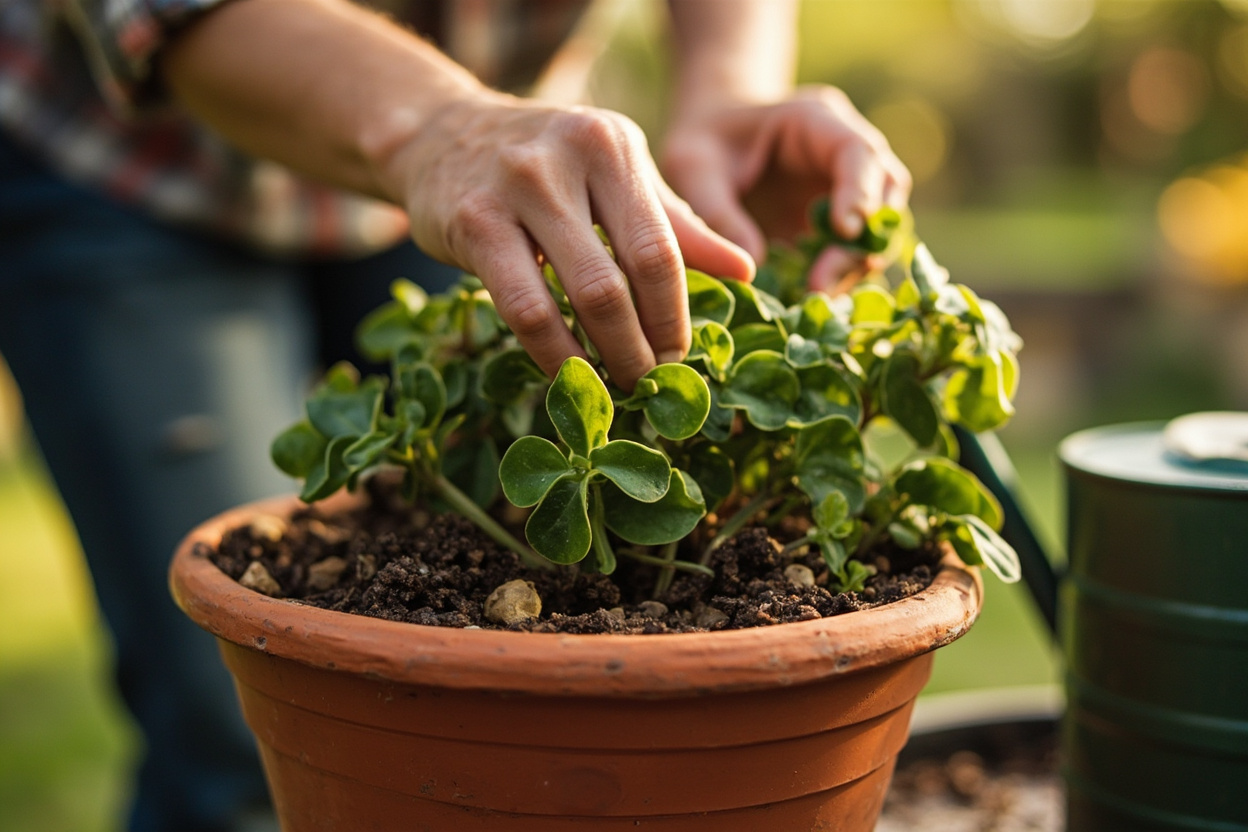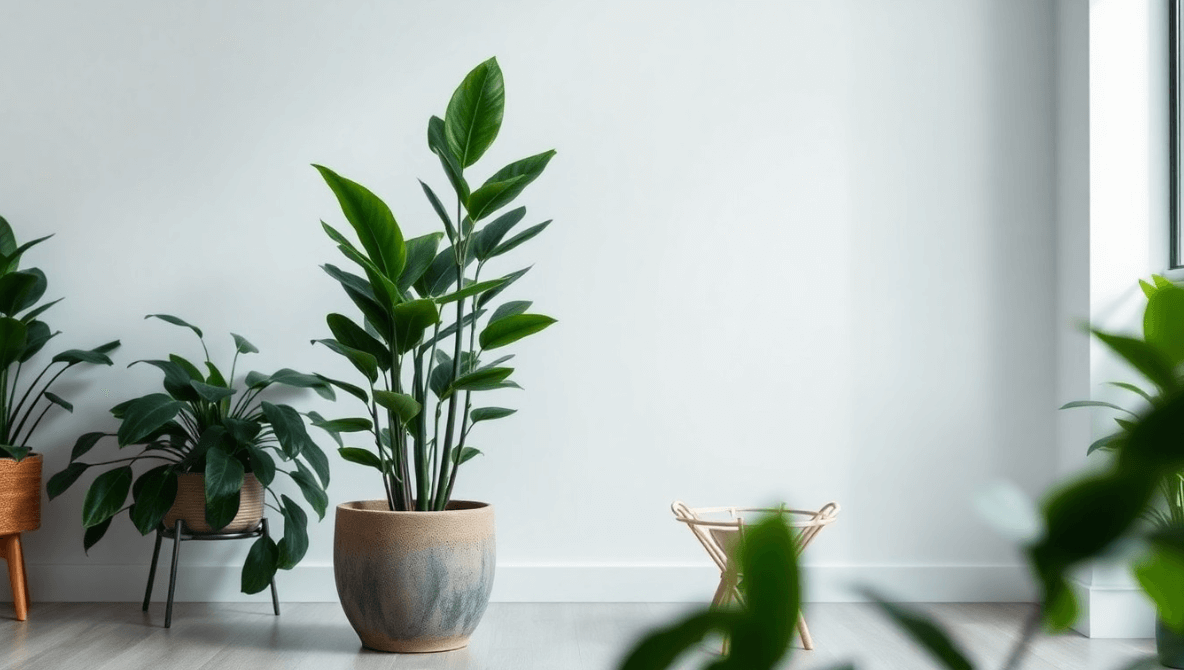

A fertilizer schedule is not a calendar — it is a plant’s appetite matched to its growing cycle. Indoor plants in active growth need more food than dormant plants. Flowering plants need a different nutrient balance than foliage plants. Succulents and cacti need almost none at all. Treating every plant in your home with the same weekly feeding is the most common mistake that produces leggy houseplants, salt-crusted soil, and root damage that looks identical to underwatering.
The right schedule is a function of three variables: species growth habit (foliage, flowering, succulent, herb), season of active growth (most houseplants grow March through September in the Northern Hemisphere, rest October through February), and light exposure (a plant in bright light uses more nutrients than the same plant in low light because it photosynthesizes more actively).
This guide gives you specific schedules for 12 common houseplant categories, with the exact NPK ratio, frequency, and seasonal adjustment for each. Follow the schedule for your plant type, not the schedule on the fertilizer bottle — bottles are written for outdoor garden vegetables and over-feed indoor plants by 2 to 4x.

The Three Universal Rules Before You Start
Rule 1: Never fertilize a dry plant. Always water first, then fertilize 30 to 60 minutes later. Fertilizer applied to dry soil concentrates at the root zone and burns root hairs. The plant looks wilted within 24 hours and you will assume it needs more water, then more fertilizer — the cycle compounds.
Rule 2: Dilute to half the label rate for indoor plants. Fertilizer labels are calibrated for outdoor soil with high buffer capacity. Indoor potting mixes have less buffer and burn more easily. Half-strength is the safe default for most houseplants; quarter-strength for sensitive species (ferns, African violets, calathea).
Rule 3: Pause feeding when the plant is dormant. Reduced light and cooler temperatures in fall and winter mean most houseplants are not actively growing. Fertilizing a dormant plant accumulates salts without being used, leading to root burn and salt crust on the soil surface. Resume only when you see new growth in spring.
Schedule by Plant Type: 12 Categories
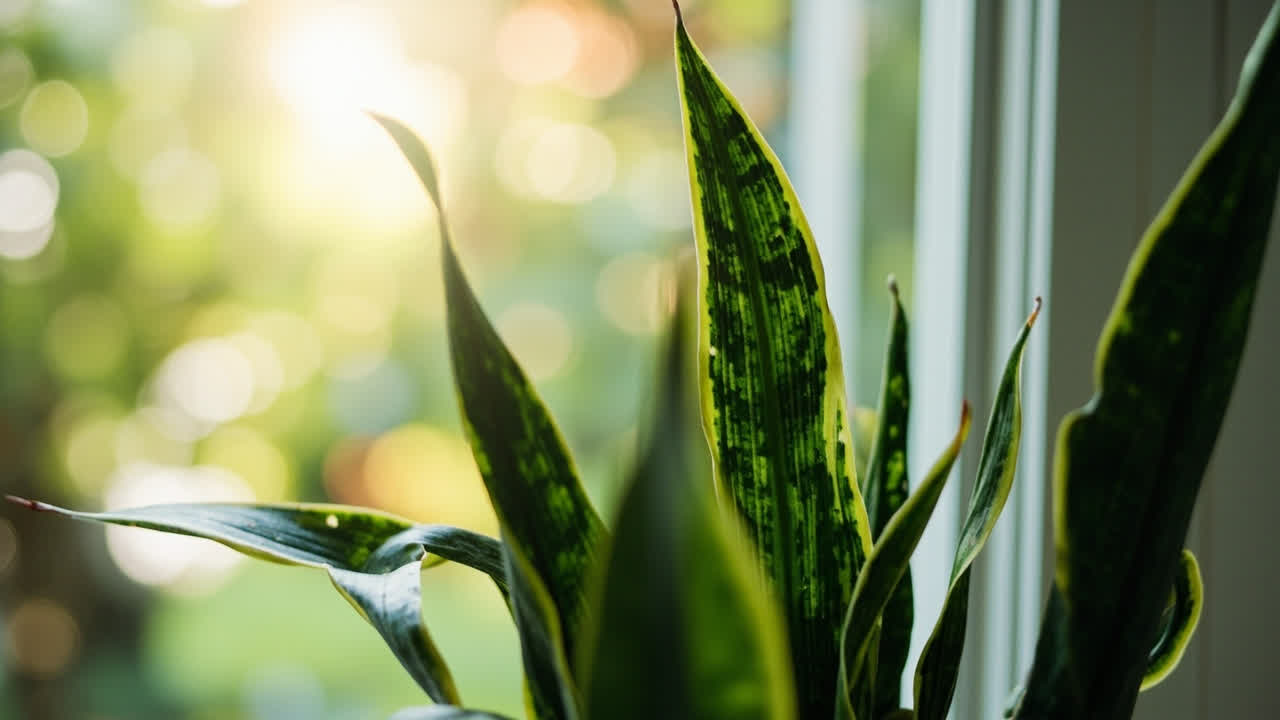
Foliage Houseplants (Pothos, Philodendron, Monstera, ZZ, Snake Plant)
NPK ratio: 3-1-2 or balanced 5-5-5, 10-10-10
Frequency during active growth (March–September): Every 4 to 6 weeks at half-strength, OR every 2 weeks at quarter-strength
Frequency during dormancy (October–February): Pause entirely, or feed once at quarter-strength in late February to support early spring growth
Foliage plants are the most forgiving category. They tolerate inconsistent feeding, missed feedings, and dilution errors better than flowering plants. The mistake to avoid is over-feeding during winter when light is low — the plant cannot use the nutrients and accumulates salt.
Flowering Houseplants (African Violet, Anthurium, Begonia, Gloxinia)
NPK ratio: 1-2-1 or bloom-booster (high phosphorus), like 5-10-5 or 7-9-5
Frequency during active growth and bloom: Every 2 weeks at half-strength
Frequency during dormancy (typically 6 to 8 weeks post-bloom): Pause entirely
Flowering plants need higher phosphorus to support bloom development, but excess nitrogen produces leafy growth at the expense of flowers. African violets in particular want consistently dilute feeding — full strength burns roots quickly. Anthuriums and begonias appreciate a brief rest after their main bloom cycle; resume when new leaves emerge.
Succulents and Cacti (Echeveria, Haworthia, Jade, Christmas Cactus)
NPK ratio: 1-1-1 balanced or low-nitrogen 1-3-2
Frequency during active growth (typically spring and fall for most; summer for Christmas cactus): Once per month at quarter-strength
Frequency during dormancy: Pause entirely — zero fertilizer for 3 to 4 months
Succulents evolved in low-nutrient desert soils and store water and nutrients in their tissues. Over-fertilizing produces stretched, leggy growth (etiolation) and weak cell walls that split under stress. Less is more — feed monthly during active growth, pause in winter.
Herbs (Basil, Mint, Parsley, Cilantro, Chives)
NPK ratio: Balanced 5-5-5 or slightly nitrogen-leaning 6-3-3
Frequency during active growth: Every 2 to 3 weeks at half-strength
Frequency during dormancy: Pause entirely if grown outdoors; maintain monthly quarter-strength if grown indoors under lights year-round
Edible herbs have higher nutrient needs than ornamental foliage plants because you are harvesting the leafy growth. Nitrogen supports leaf production. Herbs grown in small pots (4 to 6 inches) need more frequent feeding because the limited soil volume runs out of nutrients faster than larger pots.
Tropical Foliage (Calathea, Prayer Plant, Stromanthe, Maranta)
NPK ratio: Balanced 3-1-2 or 5-5-5
Frequency during active growth: Every 3 to 4 weeks at quarter-strength (these plants are sensitive to over-fertilization)
Frequency during dormancy: Pause entirely
Tropical foliage plants evolved on nutrient-poor forest floors and have sensitive root systems. They show leaf burn, browning edges, and crispy tips quickly when over-fertilized. Use only quarter-strength and flush the soil monthly with plain water to prevent salt buildup.
Ferns (Boston Fern, Maidenhair Fern, Bird’s Nest Fern)
NPK ratio: Balanced 5-5-5 or slightly nitrogen-leaning
Frequency during active growth: Every 3 to 4 weeks at quarter-strength
Frequency during dormancy: Reduce to every 6 to 8 weeks at quarter-strength, do not pause entirely (ferns do not go fully dormant)
Ferns are sensitive to salt buildup more than most plants. Use only quarter-strength and flush monthly. Maidenhair ferns in particular drop leaves if the soil dries out even once, and they accumulate salt burn from tap water alone — fertilizing adds to the load, so go lighter than for most other foliage plants.
Citrus Indoors (Meyer Lemon, Calamondin, Kumquat)
NPK ratio: Citrus-specific formula (5-2-6 or 6-3-6) — these contain the extra micronutrients (iron, zinc, manganese) citrus needs
Frequency during active growth and fruiting (March–October): Every 2 to 3 weeks at half-strength
Frequency during dormancy (November–February): Reduce to monthly at half-strength, do not pause entirely
Citrus are heavy feeders with high micronutrient requirements that standard houseplant fertilizer does not meet. Iron chlorosis is the most common symptom of using the wrong fertilizer — yellow leaves with green veins. Use a citrus-specific or acid-loving-plant formula.
Orchids (Phalaenopsis, Cattleya, Dendrobium)
NPK ratio: Orchid-specific formula (typically 13-3-15 or similar low-urea, high-potassium)
Frequency during active growth: Weakly — every 7 to 10 days at quarter-strength with watering
Frequency during bloom: Pause feeding during full bloom to extend flower life
Frequency during dormancy: Pause entirely or reduce to monthly at quarter-strength
Orchids in bark-based media receive almost no nutrients from the medium itself; all nutrition comes from fertilizer. The “weakly weekly” approach (very dilute, every watering) suits them better than monthly full-strength. Standard houseplant fertilizer at standard rates burns orchid roots.
Hoyas and Wax Plants
NPK ratio: Balanced 5-5-5 or slightly bloom-leaning 3-1-2
Frequency during active growth: Every 3 to 4 weeks at half-strength
Frequency during dormancy: Pause entirely; resume when you see new vine growth
Hoyas are sensitive to over-fertilization but need consistent feeding to bloom. The key signal is new growth: when the plant pushes new leaves or vines, it is ready to use fertilizer. Pause when growth stops. They bloom on the same spurs year after year, so do not prune off the long leafless tendrils — those are next year’s flower stalks.
Palm Plants (Areca, Parlor, Majesty, Lady Palm)
NPK ratio: Palm-specific or 5-5-5 with extra magnesium and iron
Frequency during active growth: Every 4 to 6 weeks at half-strength
Frequency during dormancy: Pause entirely, or once at quarter-strength in late winter
Palm deficiencies are notoriously slow to show and slow to recover. Magnesium and iron are the most common indoor deficiencies — yellow fronds with green veins indicate iron, marginal yellowing indicates magnesium. Use a palm-specific fertilizer or supplement standard fertilizer with Epsom salt (1 tablespoon per gallon monthly).
Bromeliads (Aechmea, Guzmania, Neoregelia, Tillandsia)
NPK ratio: Dilute balanced, 5-5-5 or weaker
Frequency: Lightly, once per month at quarter-strength poured into the central cup; for air plants (Tillandsia), foliar mist with dilute fertilizer once per week
Dormancy: Pause entirely for air plants; reduce to every 6 to 8 weeks for potted bromeliads after bloom
Bromeliads are extremely light feeders. The central cup catches water and debris in the wild, which decomposes into a steady nutrient trickle. Indoors, this happens minimally, so light supplemental feeding supports growth. After the main plant blooms, it produces pups (offsets) and then declines — the pups are the next generation and need only light feeding.
Vegetables and Edibles Indoors (Cherry Tomato, Pepper, Lettuce)
NPK ratio: Vegetable-specific or balanced 5-5-5 with calcium and magnesium
Frequency during active growth and fruiting: Every 1 to 2 weeks at half-strength
Frequency during dormancy: Not applicable — these are typically grown as annuals and replaced
Indoor vegetables are heavy feeders because they are completing a full life cycle in containers. Cherry tomatoes and peppers particularly need consistent feeding once they start flowering — blossom end rot (calcium deficiency) and yellow leaves (nitrogen or magnesium deficiency) appear within days of missed feeding. Lettuce and leafy greens are lighter feeders but respond visibly to feeding with faster growth.
Seasonal Adjustment Calendar
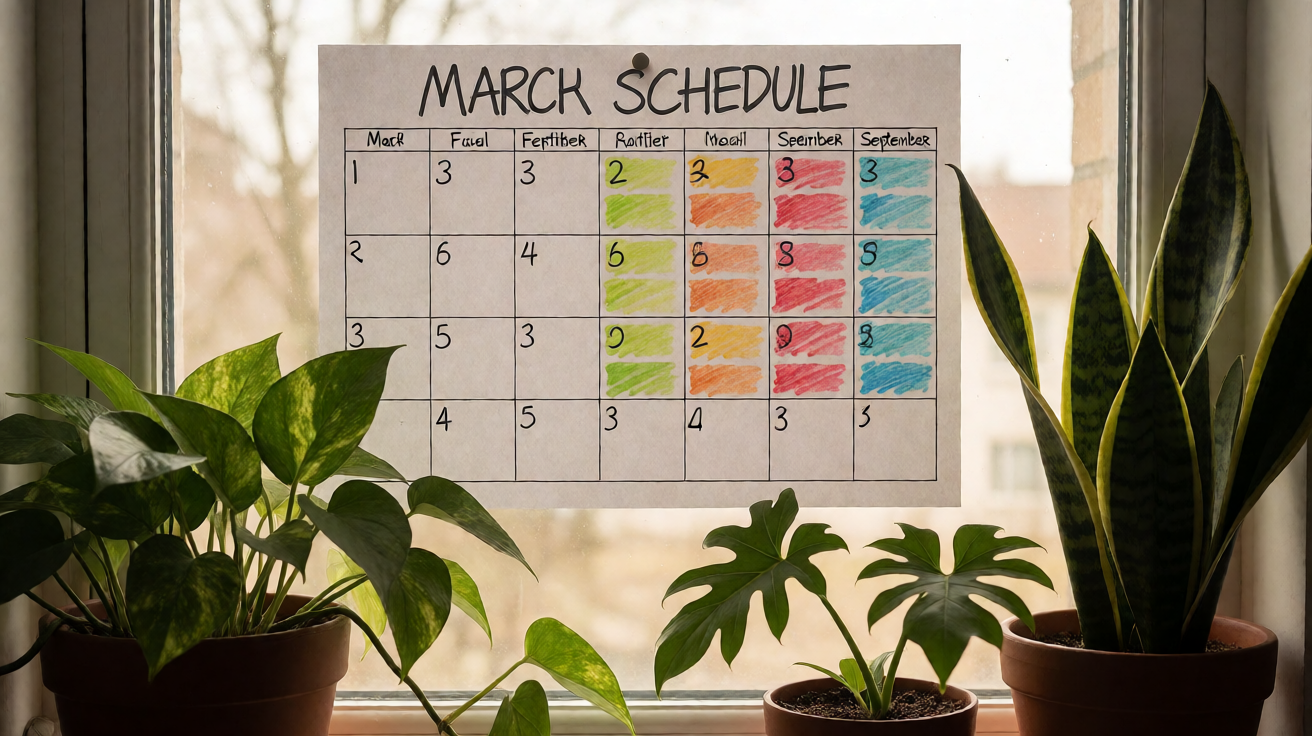
Use this calendar as the framework for adjusting any schedule above. Northern Hemisphere assumption; reverse for Southern Hemisphere.
| Month | Light level | Growth phase | Feeding adjustment |
|---|---|---|---|
| January | Low (short days) | Dormant | Pause for most plants |
| February | Low to rising | Pre-spring | Quarter-strength once if no growth visible |
| March | Rising | New growth emerging | Resume at half-strength |
| April to May | Increasing | Active growth | Full schedule per plant type |
| June to August | Peak | Peak growth / flowering | Full schedule for most, increase for heavy feeders |
| September | Decreasing | Slowing | Reduce by half |
| October | Low | Pre-dormancy | Last feeding of season for most plants |
| November to December | Low (short days) | Dormant | Pause |
Common Schedule Mistakes to Avoid
Feeding on a calendar instead of by observation. Plants do not read calendars. A pothos in a bright south window in March is actively growing and ready for fertilizer; the same pothos in a north window in March may still be dormant. Check for new growth as your primary signal.
Feeding during stress. A plant that is recovering from overwatering, root rot, pest damage, or recent repotting is not actively growing and cannot use fertilizer. Wait until you see new growth before resuming feeding, typically 2 to 6 weeks depending on the stress.
Not flushing the soil. Fertilizers leave mineral salts behind. Over 3 to 6 months of normal feeding, salts accumulate in the soil and create a white crust on the surface. Flush monthly by watering with 4 to 6 pot-volumes of plain water to leach the salts out the drainage holes.
Mixing fertilizer types. Combining a slow-release granular product with a weekly liquid feeding creates double-dosing. Pick one feeding strategy per plant and stick with it for at least one full growing season before switching.
How to Know If Your Schedule Is Working
Signs of correct feeding: new leaves emerge at the expected rate for the species (1 to 2 leaves per month for slow growers like snake plant and ZZ; 4 to 8 per month for fast growers like pothos and philodendron during peak season), existing leaves maintain deep green color, flowering plants bloom on schedule, and the plant holds its overall shape without stretching.
Signs of over-fertilization: white salt crust on the soil surface, leaf edges browning or crisping, sudden leaf drop, roots visible at drainage holes (seeking nutrients), or a thin crust of fertilizer residue on the pot rim.
Signs of under-fertilization: pale green to yellow older leaves (nitrogen), no new growth during peak season, slow recovery from pruning, smaller-than-expected leaves, or no blooms on flowering species that should be in their bloom window.
What to Do Now
Identify the top 3 to 5 plants in your home that need feeding this week. Look up their category in the schedules above and apply the recommended NPK ratio at half-strength to quarter-strength. Set a calendar reminder to check them again in 2 to 4 weeks depending on growth phase. Over the next 3 months, you will see the difference between random feeding and a structured schedule — leaves will be larger, growth will be more vigorous, and flowering plants will bloom more reliably.
For the broader context of choosing the right fertilizer in the first place, our best fertilizer for indoor plants guide covers NPK ratios and product types in detail. For diagnosing specific deficiency symptoms, our indoor plant nutrient deficiency chart maps the 10 most common deficiencies to the visual symptoms you will see.
Turn PDF Bank Statements Into Workable Spreadsheets
Your bank statement is a mess of numbers, but your books shouldn't be. Use our converter to get Excel, CSV, or QBO files — ready for QuickBooks.
Try It Free Now