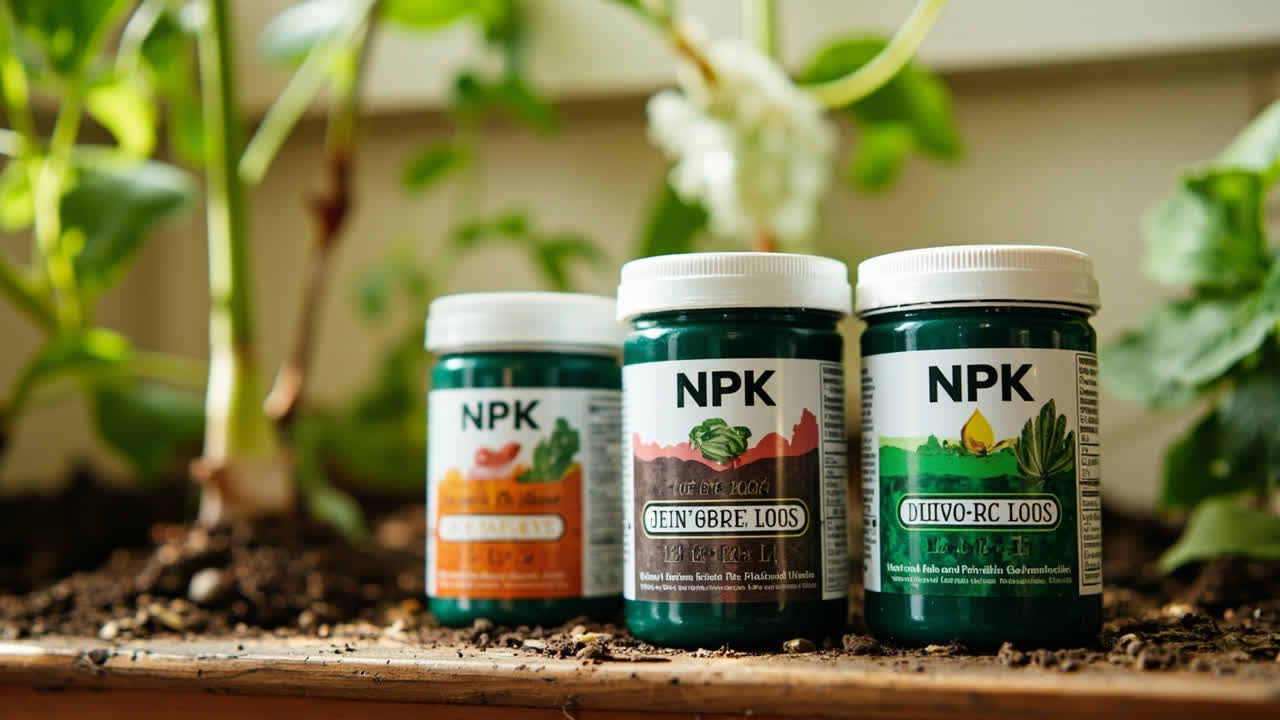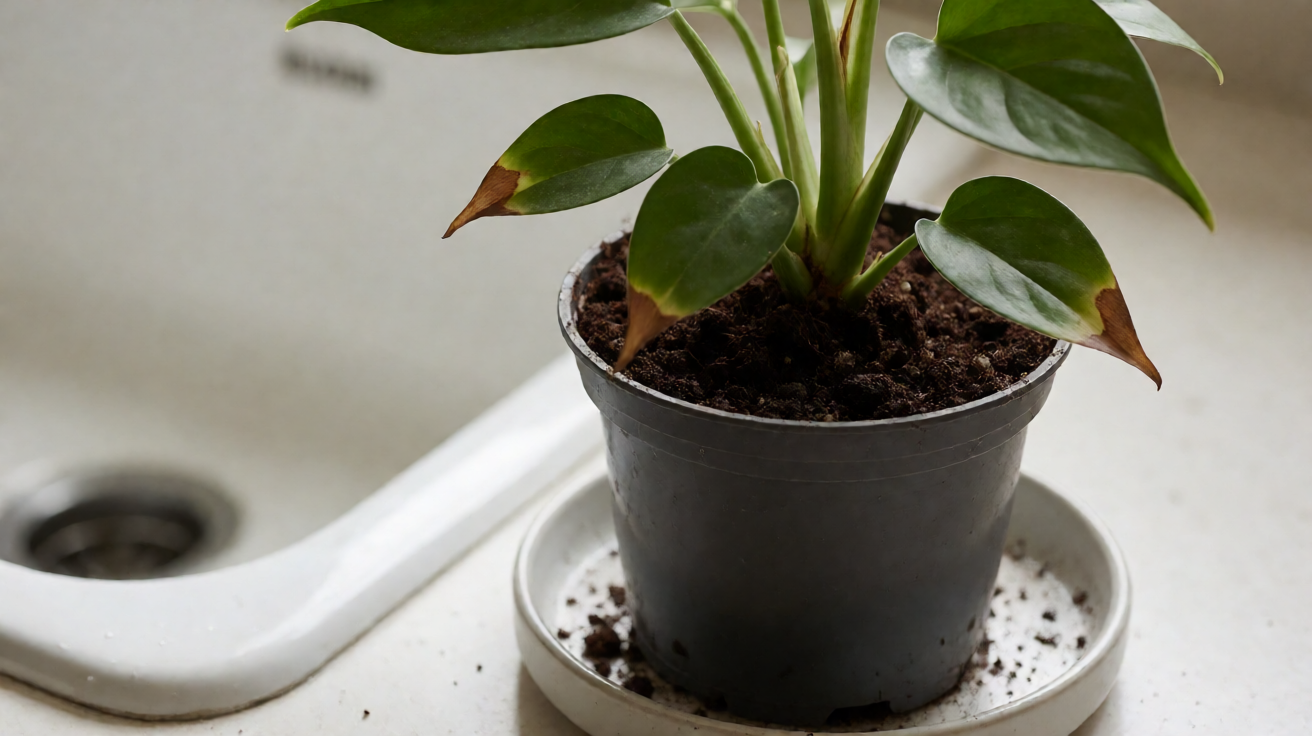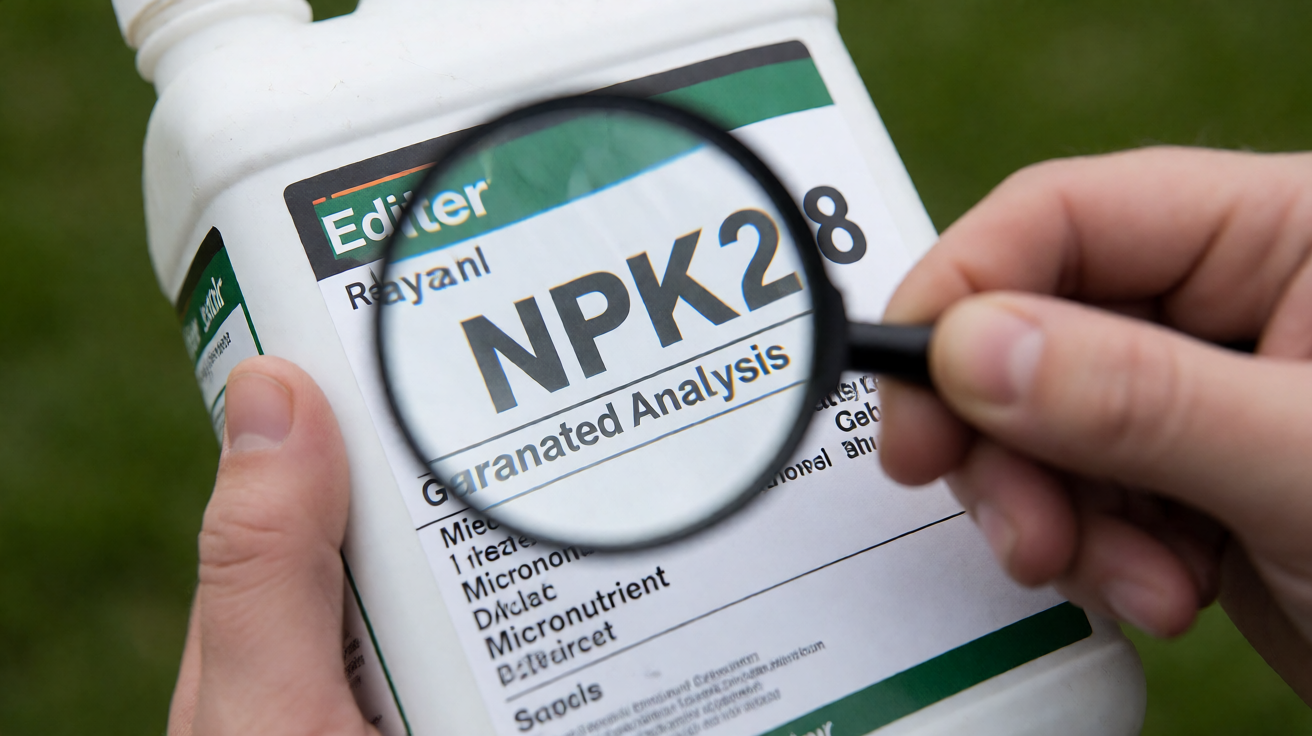

Buying fertilizer for houseplants should take 5 minutes and cost $10 to $20. The decision is straightforward once you understand the three things that actually matter: the NPK ratio on the label, the form of the product, and whether it is formulated for indoor or outdoor use. Everything else — brand, packaging, marketing claims, “premium” positioning — is noise that increases price without improving results.
This guide walks through what to look for on the label, what to ignore, the product categories worth your money, and the products worth skipping. The specific recommendations at the end are based on the formulations that consistently produce results across the widest range of common houseplants in typical home conditions.

The Three Numbers That Matter
Every fertilizer label in the United States and most other countries shows three numbers separated by hyphens. This is the NPK ratio, and it tells you the percentage by weight of nitrogen, phosphorus, and potassium in the product.
A 5-5-5 fertilizer contains 5 percent nitrogen, 5 percent phosphorus, and 5 percent potassium. The remaining 85 percent of the product is filler — usually sand, clay, or other inert carriers — that makes the product easier to measure and apply. The three numbers always add up to less than 100 because the rest is inert.
The NPK numbers do not tell you everything, but they tell you enough to make a decision. For most indoor plants, a balanced formula (all three numbers equal, like 5-5-5 or 10-10-10) or a slightly nitrogen-leaning formula (like 3-1-2) covers 80 percent of what you need. A bloom-booster formula (like 5-10-5 or 1-3-2) is for flowering plants in their pre-bloom phase. Specialty formulas (citrus, orchid, succulent) are for plants with specific needs that balanced formulas do not fully meet.
What to Look for Beyond the Three Numbers
The guaranteed analysis below the NPK numbers lists micronutrients — iron, manganese, zinc, copper, boron, molybdenum. Look for “derived from” ingredients that include these micronutrients. They prevent the secondary deficiencies that show up 6 to 12 months after you start using a fertilizer that lacks them.
The source of nitrogen matters more than the percentage. Urea-based nitrogen is cheap and common in outdoor fertilizers but converts to plant-available form slowly in cool indoor soil (below 65°F). Look for ammoniacal nitrogen (listed as ammonium nitrate, ammonium sulfate, or urea ammonium nitrate) or nitrate nitrogen for faster availability. The difference shows up most clearly in winter when indoor soil temperatures are lower.
The form of the product (liquid, powder, granular, spike) and the volume of the package also matter. A $15 liquid concentrate that makes 30 gallons of working solution is cheaper per application than a $10 bottle that makes 5 gallons. Calculate the cost per application, not the cost per bottle.
Reading the Marketing Without Being Misled
Fertilizer labels are full of marketing language designed to make one product sound better than another. Here is what to ignore.
“Boosts growth by 300%” with no context. Growth comparisons require a baseline — boosted compared to what? In what conditions? Most growth-boost claims are based on field trials in ideal greenhouse conditions, not in average home conditions. A 300 percent boost in a greenhouse is often a 30 percent boost in a home.
“Miracle” or “magic” in the product name. Marketing language, not a formulation difference. The product inside is the same chemistry as the generic alternative, often made in the same factory.
“Just for indoor plants” is meaningful only when the formula is actually different from the outdoor version. Many “indoor” products are the same as “outdoor” products with different packaging. Check the guaranteed analysis to confirm the difference is real.
“All-natural” or “organic” claims do not mean better for your plants. They mean the nutrients are sourced from organic material (compost, bone meal, fish emulsion) rather than synthesized from mineral sources. Both work; both can burn roots if over-applied. Choose based on the NPK ratio and your preference for organic versus synthetic, not on the marketing.
Liquid, Powder, Granular, or Spike: The Format Breakdown
Liquid concentrates are the standard format for indoor plants. They are easy to dilute, deliver nutrients immediately, and integrate with normal watering. Cost per application is moderate. The main downside is the need to measure accurately and the shorter shelf life once opened.
Water-soluble powders offer the same results as liquid concentrates at lower cost per application but require accurate powder measurement. For beginners, the convenience of a pre-measured liquid cap is worth the modest premium.
Slow-release granules like Osmocote Plus release nutrients over 3 to 6 months. They are useful for outdoor containers and large planters where you want to feed once and forget for a season. Indoors, the release rate depends on temperature and moisture in ways that are hard to predict, and over-release can burn roots. Best for experienced growers.
Spikes like Miracle-Gro Indoor Plant Food Spikes are the least efficient format. They concentrate nutrients in a small zone, leading to uneven feeding and root burn near the spike. The convenience does not offset the poor feeding pattern. Avoid for most indoor situations.
Specialty Formulas Worth Buying
Some plant categories have nutritional needs that standard balanced fertilizers do not fully meet. For these, a specialty formula is worth the extra cost.
Citrus fertilizer (like Jack’s Citrus Feed or Miracle-Gro Citrus, both around $15) contains extra iron, zinc, and manganese that citrus plants need to prevent the leaf yellowing that standard fertilizers allow to develop. Standard houseplant fertilizer used long-term on citrus produces iron chlorosis within 6 to 12 months.
Orchid fertilizer (like Better-Gro Orchid Plus or MSU Orchid Fertilizer, around $10) is formulated for weakly-weekly feeding at low concentration, which matches how orchids grow in their native environment on tree bark. Standard fertilizer at standard rates burns orchid roots; orchid fertilizer at quarter-strength every watering does not.
African violet fertilizer (like Optimara or Schultz African Violet Plus, around $8) is a bloom-booster formula designed for the dilute, frequent feeding that African violets need. Standard bloom-boosters work but require more careful dilution.
What to Skip
Fertilizer spikes for indoor use. The delivery format is poor — concentrated hot spots lead to uneven feeding and root burn near the spike. The convenience is illusory because you still need to check the soil for salt buildup and flush monthly.
“Indoor and outdoor” combination products. These are usually outdoor formulations marketed for indoor use. The NPK is too concentrated and the salt content is too high for the limited soil volume of indoor pots. Use a product specifically formulated for indoor use, or dilute an outdoor product to half or quarter strength.
Anything with proprietary “secret formula” claims. There are no secrets in fertilizer chemistry. The guaranteed analysis tells you everything you need to know. Products that hide their analysis behind trademarked terminology are usually standard formulations at premium prices.
Product Recommendations by Use Case
Best for most houseplants (foliage): Dyna-Gro Foliage Pro (3-1-2 liquid concentrate, ~$15 for 8 oz, makes 30+ gallons at half-strength). Includes complete micronutrients, ammoniacal nitrogen for indoor soil temperatures, and is one of the most-tested formulas among serious indoor growers.
Best budget option: Miracle-Gro Indoor Plant Food (1-1-1 liquid, ~$8 for 8 oz, makes ~15 gallons at half-strength). Less precise NPK than Dyna-Gro but works fine at half-strength for most foliage plants. The dropper-bottle format is convenient for beginners.
Best for flowering plants: Jack’s Classic Blossom Booster (10-30-20 water-soluble powder, ~$12 for 8 oz). High phosphorus supports bloom development; use at half-strength every 2 weeks during the 4 to 6 weeks before and during bloom.
Best for citrus: Jack’s Citrus Feed (20-10-20 with micronutrients, ~$15 for 8 oz). Includes chelated iron and the trace minerals citrus needs. Use at half-strength every 2 weeks during active growth.
Best for orchids: MSU Orchid Fertilizer (13-3-15 with calcium and magnesium, ~$12 for 1 lb powder). Use at quarter-strength every 7 to 10 days with watering, year-round except during full bloom.
Where to Buy
Local garden centers and big-box stores (Home Depot, Lowe’s, Walmart) carry the most popular options. Online retailers like Amazon and specialty orchid/citrus sellers carry the full range. Cost per application is usually lower online but you pay shipping. For the occasional bottle of basic houseplant fertilizer, local purchase is more practical.
Buy smaller bottles initially to test compatibility with your plants. Once you find a formula that works for your main plant categories, buy the largest size available to reduce cost per application. Liquid concentrates last 6 to 12 months once opened, so buy a size you can use in that window.
How to Calculate Cost Per Application
Divide the bottle price by the total gallons of working solution at half-strength. A $15 bottle that makes 30 gallons at half-strength costs $0.50 per gallon of working solution. If you apply 1 gallon per feeding and feed every 3 weeks for 9 months (the active growing season for most plants), one bottle covers a year of feeding for 12 to 15 plants. The cost per plant per year is under $1.
Fertilizer is one of the cheapest ongoing costs of keeping houseplants. The investment that produces the biggest visible return is not more fertilizer — it is more light, better watering discipline, and the right pot size. A $15 fertilizer bottle cannot compensate for a plant in a dark corner of the room.
What to Do Now
Pick one balanced liquid fertilizer for your foliage plants, one bloom booster for your flowering plants, and one specialty formula if you grow citrus or orchids. Calculate the cost per application to confirm you are getting fair value. Apply at half-strength every 2 to 4 weeks during active growth, pause during dormancy, and flush monthly with plain water.
For the broader context of how to apply fertilizer correctly throughout the year, our fertilizer schedule by plant type gives week-by-week protocols for 12 categories. For the broader context of choosing the right formula for your specific plants, our best fertilizer for indoor plants guide covers NPK ratios by plant type in detail.
Turn That PDF Into a Spreadsheet in Minutes
You've seen how to do it manually — now let the tool handle the heavy lifting. Upload your bank statement and get Excel, CSV, or QBO in a few clicks.