Companion Planting for Tomatoes: What to Grow Alongside (and What to Keep Away)
—
title: Companion Planting for Tomatoes: What to Grow Alongside (and What to Keep Away)
target: companion planting for tomatoes
slug: companion-planting-tomatoes-guide
cluster: vegetable-gardening
type: SEO Backbone
—
You’ve planted your tomatoes. Now the question is: what goes next to them — and what should stay far away? Companion planting gets thrown around as gardening gospel, but most advice is just repetition of folklore without any real explanation behind it. This guide is different. Here, every recommendation comes with the mechanism — the reason a pairing either works or doesn’t. That way you can make your own decisions when the garden throws curveballs at you.
Tomato Companion Planting Chart: The Quick Reference
Before diving into the why, here is the summary. These are the most evidence-supported companions and antagonists for tomatoes, grouped by mechanism:
Pest confusion (aphids, hornworms); may improve tomato flavor compounds
Marigolds
WIN
Repels nematodes and whitefly via thiophene compounds in roots
Carrots
WIN
Loosen soil, no competition for nutrients, attract predatory insects
Parsley
WIN
Attracts predatory wasps that target tomato hornworm
Borage
WIN
Deters tomato fruitworm and lygus bugs; attracts bees for pollination
Nasturtiums
WIN
Trap crop for aphids — draws them away from tomatoes
Dill (mature)
AVOID
Mature dill competes for nutrients; self-seeds aggressively near tomatoes
Fennel
AVOID
Allelopathic to tomatoes; inhibits growth via phenylpropane compounds
Brassicas (cabbage, kale)
AVOID
Heavy feeders competing for nitrogen; share fungal disease pathways
Corn
AVOID
Common host for tomato fruitworm; shares earworm pest with tomatoes
Potatoes
AVOID
Share blight (Phytophthora infestans) and blight vectors; compete for potassium
Now let’s go deeper on why these mechanisms matter — and how to use them in your garden.
Why Companion Planting Works: Four Mechanisms
Not all companion planting advice is equal. When you understand the underlying mechanism, you can evaluate a pairing on its merits rather than relying on gardening myths. There are four main ways companion planting actually helps your tomatoes:
Nitrogen Fixation
Legumes — beans, peas, and clovers — have root nodules that host Rhizobia bacteria. These bacteria pull atmospheric nitrogen and convert it into a form plants can use. When you interplant legumes near tomatoes, the tomato roots can access some of this released nitrogen, reducing your need for synthetic fertilizer. The key is timing: plant legumes early so they fix nitrogen before tomatoes need it most, during flowering and fruit set. You can also cut legume plants back and leave them as green manure to decompose into the soil.
Pest Confusion
Pests locate host plants by smell, visual contrast, and chemical signals. When you plant strong-scented herbs like basil, mint, or cilantro among your tomatoes, you muddle those chemical signals. Pests arrive expecting a tomato leaf and find themselves in a cloud of competing volatiles. Some companions, like marigolds, actively repel pests through root exudates — thiophenes and alpha-terthienyl compounds that deter root-knot nematodes and suppress some soil-dwelling insects. Borage repels tomato fruitworm with its hairy, alkaloid-rich leaves. Nasturtiums function differently: they’re a trap crop, drawing aphids away from your main plants so the aphids colonize the nasturtium instead.
Physical Support
Some companions serve structural roles. Taller plants can shade tomatoes during extreme heat, reducing blossom drop. Sunflowers, for example, provide light shade and also attract beneficial pollinators. Radishes and carrots break up compact soil with their taproots, improving drainage and oxygen availability for tomato roots. The caveat: avoid companions that compete aggressively for the same root zone, as soil space is a real limiting factor.
Allelopathy
Some plants release chemicals that suppress the growth of neighbours — this is allelopathy. Fennel is the classic offender near tomatoes: it produces phenylpropane compounds that actively inhibit tomato growth. Knowing which plants are allelopathic helps you avoid unintentional crop suppression. On the positive side, some cover crops like crimson clover and buckwheat suppress weeds through allelopathy while also feeding the soil.
Companion Planting for Tomatoes: What to Grow Alongside (and What to Keep Away)
The Win Pairings: What to Grow With Tomatoes
Basil : The Classic Deserves Its Reputation
Basil isn’t just a kitchen pairing; it’s a genuine ally in the garden. The mechanism is multi-layered. First, basil’s strong volatile compounds — primarily linalool and eugenol — disrupt the chemical communication that aphids and hornworms use to locate tomato plants. Several controlled studies show reduced aphid colonization on tomatoes interplanted with basil compared to monoculture plots. Second, basil may influence tomato flavor development. Research from the University of Florida suggests that basil’s presence can alter the concentration of volatile flavor compounds in tomatoes, though the effect varies by variety and growing conditions.
Plant basil within 30 centimetres of your tomato stems. You don’t need a dedicated basil bed — tucking plants between tomato stakes works well. Let some basil flower; the blooms attract pollinators and predatory wasps that hunt hornworm larvae.
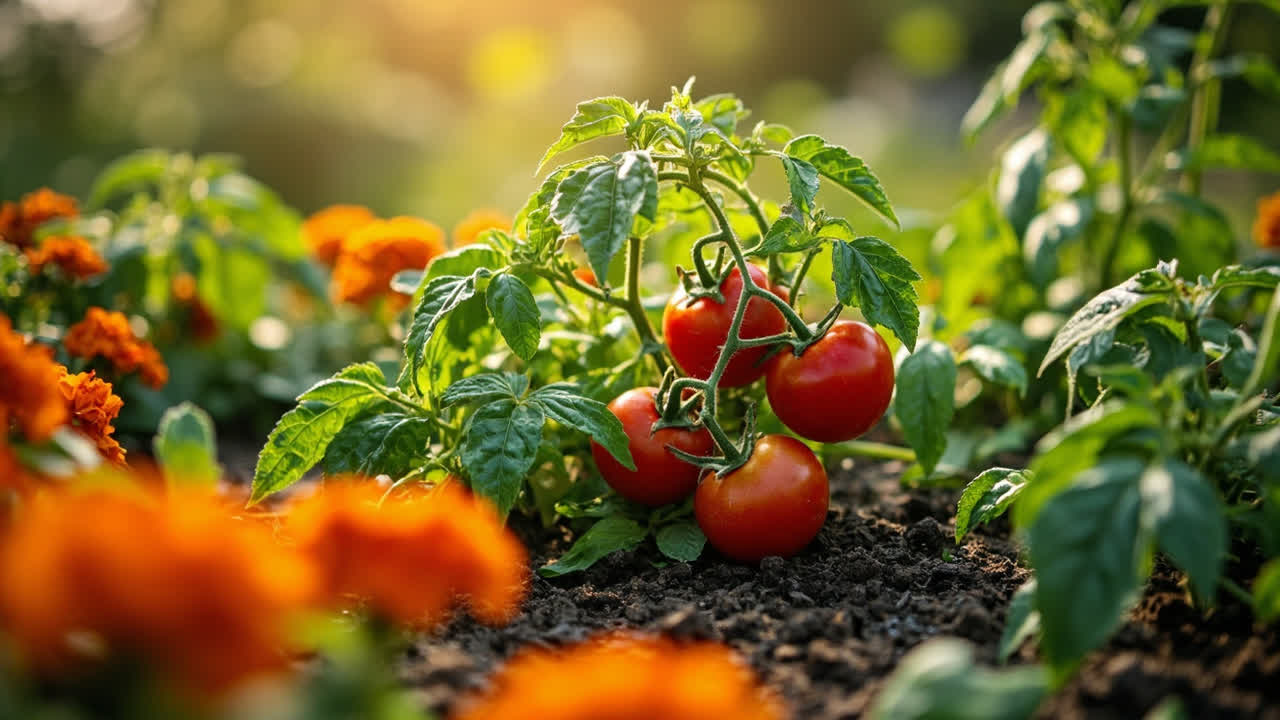
Marigolds : The Nematode Fighter
Marigolds (Tagetes patula) are probably the most scientifically validated companion for tomatoes. Their roots produce thiophene compounds that are toxic to root-knot nematodes (Meloidogyne species) — microscopic worms that pierce tomato root cells and cause the galls you see on infected plants. Plant marigolds as a cover crop two months before tomatoes go in, then till them under before planting. The thiophenes persist in the soil for weeks after the marigolds decompose, creating a window of reduced nematode activity during the tomato’s vulnerable early growth stage.
Marigolds also deter whitefly, a viral vector that spreads tomato yellow leaf curl virus. The trap is that marigolds can attract spider mites in dry climates — watch your plants carefully in hot, dry periods.
Carrots and Parsley : The Soil Helpers
Carrots and parsley are Apiaceae family members, and their fine, thread-like foliage attracts a range of predatory insects — especially parasitic wasps. These wasps lay eggs inside hornworm caterpillars, and the larvae eat the hornworm from within. It’s macabre, but it’s effective biological control. Carrots also have deep taproots that break up compacted layers, improving tomato root penetration and water infiltration.
The key is timing: carrots and parsley grow slowly. Plant them early in the season or alongside your tomato transplants so they’re established by the time pest pressure peaks in mid-summer.
Borage and Nasturtiums : The Trap Crop Duo
Borage (Borago officinalis) is one of the best all-around tomato companions. Its hairy leaves contain alkaloids that deter lygus bugs and tomato fruitworm. It attracts honeybees and bumblebees, which improve tomato flower pollination — better pollination means more evenly shaped fruit. Borage also accumulates potassium from deep soil, and when its leaves decompose, they release this potassium for nearby tomato uptake.
Nasturtiums function as a sacrifice. Aphids prefer nasturtium over tomatoes. Plant them as a border crop around your tomato bed and accept that the aphids will colonize them. Once nasturtiums are heavily infested, pull them out and destroy them before the aphid population disperses back into the garden.
What NOT to Grow With Tomatoes
Fennel : The Antagonist
Fennel is the tomato grower’s most consistent enemy. It produces allelopathic compounds — primarily anethole and related phenylpropane derivatives — that inhibit tomato seedling growth. In controlled trials, tomato seedlings planted within 60 centimetres of fennel showed stunted root development and reduced leaf area compared to isolated controls. There is no workaround; fennel and tomatoes simply should not share soil. Keep fennel in its own dedicated bed.
Brassicas : The Nutrient Battle
Cabbage, kale, broccoli, and cauliflower are heavy feeders that demand the same nitrogen, phosphorus, and potassium that tomatoes need during fruit development. Pairing them means both crops underperform. Beyond nutrient competition, brassicas and tomatoes share susceptibility to clubroot and some fungal pathogens. If you want to grow both, use at least 120 centimetres of separation and different soil depth zones — brassicas are shallow-rooted compared to tomatoes.
Corn and Potatoes : The Pest Sharing Problem
Corn is a host for Helicoverpa zea, the tomato fruitworm (also called the corn earworm). When you plant corn near tomatoes, you create a bridge for this pest to move between crops. The pest overwinters in corn stalk residue and emerges in spring ready to target tomatoes. It’s not a theoretical risk — fields with corn within 100 metres consistently show higher tomato fruitworm pressure.
Potatoes and tomatoes share Phytophthora infestans — late blight — which can devastate both crops. Early blight (Alternaria solani) also spreads between the two. If you’ve had blight problems, keep these crops in entirely separate garden zones and never follow potatoes with tomatoes in the same bed.
Mature Dill : A Surprising Conflict
Young dill is fine near tomatoes. But once dill matures and starts setting seed, it becomes allelopathic — similar to fennel. Mature dill roots release compounds that stunt tomato growth, and dill’s aggressive self-seeding means it will colonize your tomato bed if left unchecked. The practical fix: grow dill at the edge of the garden, away from tomato planting zones, and cut plants back before they go to seed.
How to Design Your Tomato Companion Planting Layout
A good companion layout isn’t just about which plants go where — it’s about timing, spacing, and succession. Here’s how to approach it practically:
Start with nematode management. If you’ve grown tomatoes in the same spot for more than two years, sample your soil for root-knot nematodes. If levels are high, plant French marigolds (Tagetes patula) as a cover crop in the preceding season. Till them under six to eight weeks before planting tomatoes.
Layer your companions by height and harvest time. Put low-growing basil and nasturtiums at the edges of your tomato bed. Plant carrots in rows between tomato cages. Let marigolds establish at the perimeter. Taller companions like borage can go at the north edge so they don’t shade your tomatoes.
Plan for succession. Early-season companions like carrots and parsley can be harvested before tomatoes need their full growing space. As carrots come out in late summer, tomato roots can expand into that newly opened soil without competition. Use this succession to maximize your bed’s output across the full season.
For container gardeners, the principles hold — just on a smaller scale. A single tomato in a large pot can be paired with two to three basil plants around its base. Marigolds in a neighbouring pot still provide nematode suppression through shared container proximity. The one difference: avoid the trap crop strategy (nasturtiums) near containers if you have limited space, as aphid populations can more easily migrate back.
If you want a complete guide to growing tomatoes in containers — including variety selection, soil mixes, and feeding schedules — see our guide to Growing Tomatoes in Pots.
Signs Your Companion Planting Setup Needs Fixing
Not every combination works out. Watch for these signals:
Stunted growth with no obvious pest cause — Check for allelopathic competition, especially from fennel or mature dill in adjacent beds.
Aphid colonies appearing on trap crops but also on tomatoes — Trap crop density is too low. Add more nasturtiums or remove the first wave of heavily infested plants before aphids disperse.
Blossom drop despite healthy plants — Could be heat stress (shade companions may help) or excessive nitrogen from legume companions. Reduce nitrogen-rich mulch near roots.
Spider mite pressure alongside marigolds — Marigolds can attract spider mites in hot, dry conditions. If this happens, replace marigolds with basil as your primary pest management companion.
For more guidance on diagnosing tomato plant problems, our article on Tomato Plants Wilting and Dying covers the most common causes and how to recover your plants.
The Bottom Line on Tomato Companions
Companion planting isn’t magic — it’s applied ecology. When you understand the mechanism behind a pairing, you can use it reliably and troubleshoot it when something goes wrong. For tomatoes, the strongest evidence supports basil, marigolds, borage, and Apiaceae herbs like parsley and carrots as allies. Fennel, brassicas, corn, and potatoes are genuine antagonists and belong in separate garden zones.
The chart near the top of this guide is your quick reference. But the deeper understanding of nitrogen fixation, pest confusion, physical support, and allelopathy is what makes you a better tomato gardener — because it means you don’t have to follow rules blindly. You can make decisions that fit your garden’s specific conditions, your climate, and the varieties you’re growing.
Start with one or two companion combinations this season. Observe what happens. Then build out from there.
Turn That PDF Into a Spreadsheet in Minutes
You've seen how to do it manually — now let the tool handle the heavy lifting. Upload your bank statement and get Excel, CSV, or QBO in a few clicks.
Meet Samuel, a passionate gardening enthusiast and lifelong learner.
With a deep love for all things green, Samuel spends his days exploring the latest gardening trends and technologies.
Whether it's trying out new techniques or discovering innovative tools, he is always eager to enhance her gardening skills.
Join Samuel on her journey as he shares experiences, tips, and the joy of nurturing nature!