A blueberry bush that grows well, looks green and vigorous, but produces little or no fruit is one of the most frustrating situations in home fruit growing. The bush clearly looks healthy. You have done everything the gardening guides recommend. But the harvest is sparse or nonexistent.
The causes of poor fruiting in blueberries fall into a few distinct categories, and the diagnosis is straightforward once you know what to look for. Most cases trace back to one of four root causes: insufficient cross-pollination, winter damage to flower buds, incorrect soil pH, or immaturity of the bush.
Cross-Pollination : The Most Common Overlooked Cause
Blueberry varieties that are not fully self-fertile need pollen from a second, compatible variety to set a heavy crop. Even self-fertile varieties produce more and larger fruit when cross-pollinated. A single blueberry bush planted alone, with no compatible pollinator variety nearby, will often produce some fruit — but typically much less than it would with a partner.
The mechanism: blueberry flower fertilization requires pollen transfer between flowers, which in nature is done by bees. Some varieties produce more viable pollen than others. When pollen from one variety lands on the flower of another compatible variety, more seeds develop, which triggers the plant to develop a larger fruit around those seeds.
A bush that is healthy and vigorous but produces only a handful of berries while neighboring bushes produce heavily is almost always a pollination problem.
The fix: Plant a second, compatible blueberry variety within thirty feet — for the full variety matching guide, see our blueberry varieties guide. of the existing bush. For varieties that require a cross-pollinator, choosing a variety that blooms at the same time is essential. The pollinator variety does not need to be the same type (highbush with highbush, southern with southern) — what matters is compatible bloom timing.
If adding a second bush is not possible, hand pollination is an option during bloom. Use a small, soft artist’s brush to transfer pollen from the stamens of one flower to the pistil of another. This is labor-intensive but can significantly improve fruit set on an isolated bush.
—
Winter Damage to Flower Buds : The Invisible Cause
Blueberry flower buds are formed in late summer and must survive winter to flower the following spring. The plant care guide has the seasonal maintenance calendar that protects flower bud development. and must survive winter to flower the following spring. The buds are less cold-hardy than the vegetative parts of the bush — the woody canes can survive temperatures that kill the flower buds inside them.
Winter damage to flower buds is invisible from the outside. The bud may look intact in late winter, but when it fails to open in spring, you find a brown or black interior when you cut it open. The bush is healthy — it just has no flowers to pollinate.
This is most common in zones 5 and below, particularly in late winter when warm spells trigger early bud development followed by a hard freeze that kills the swelling buds. It also happens to southern highbush varieties planted in climates that are marginally cold for them.
Diagnosing winter bud damage: In spring, cut open several flower buds on the bush. If the interior is green and healthy, the bud is viable. If it is brown, black, or dried out, it was killed by winter cold. Vegetative buds — the leaf buds — are usually less damaged because they are more cold-hardy and open later than flower buds.
The fix: For gardens in cold climates, choose varieties with sufficient cold hardiness for your zone. Northern highbush and half-high varieties tolerate colder winters than southern highbush. In zone 5 and below, avoid southern highbush varieties unless you can provide winter protection or accept that flower bud damage may occur in cold winters.
For established bushes that regularly lose flower buds to winter cold, the only mitigation is to select more cold-hardy varieties or provide winter protection — covering the bush with row cover or burlap in late winter to delay bud break and reduce freeze damage.
—
Soil pH : Why an Established Bush May Suddenly Stop Fruiting
A blueberry bush that has fruited well in previous years and suddenly produces little or no fruit — without any visible change in the bush’s health — almost always has a soil pH problem. The pH has drifted upward above 5.5, the roots can no longer absorb iron and manganese efficiently, and the bush is in a state of chronic nutrient stress that manifests as poor flower bud development.
This commonly happens when:
The irrigation water is alkaline and gradually raises the pH over several seasons — for container blueberries especially, annual pH testing prevents this drift..
The fertilizer used was not ammonium-based and has been slowly pushing pH upward.
The container soil was not retested and pH has drifted.
Organic matter decomposition has raised pH in the root zone.
The key diagnostic: check soil pH at the root zone. If it is above 5.5, the bush is experiencing induced nutrient deficiency — not enough to cause visible yellowing, but enough to reduce flower bud formation and fruit set.
The fix: Apply elemental sulfur to lower pH. Retest after four to six weeks. The bush will not recover this season’s fruit production, but next year’s flower buds will develop normally once the pH is corrected.
—
Bush Immaturity : The Most Innocent Cause
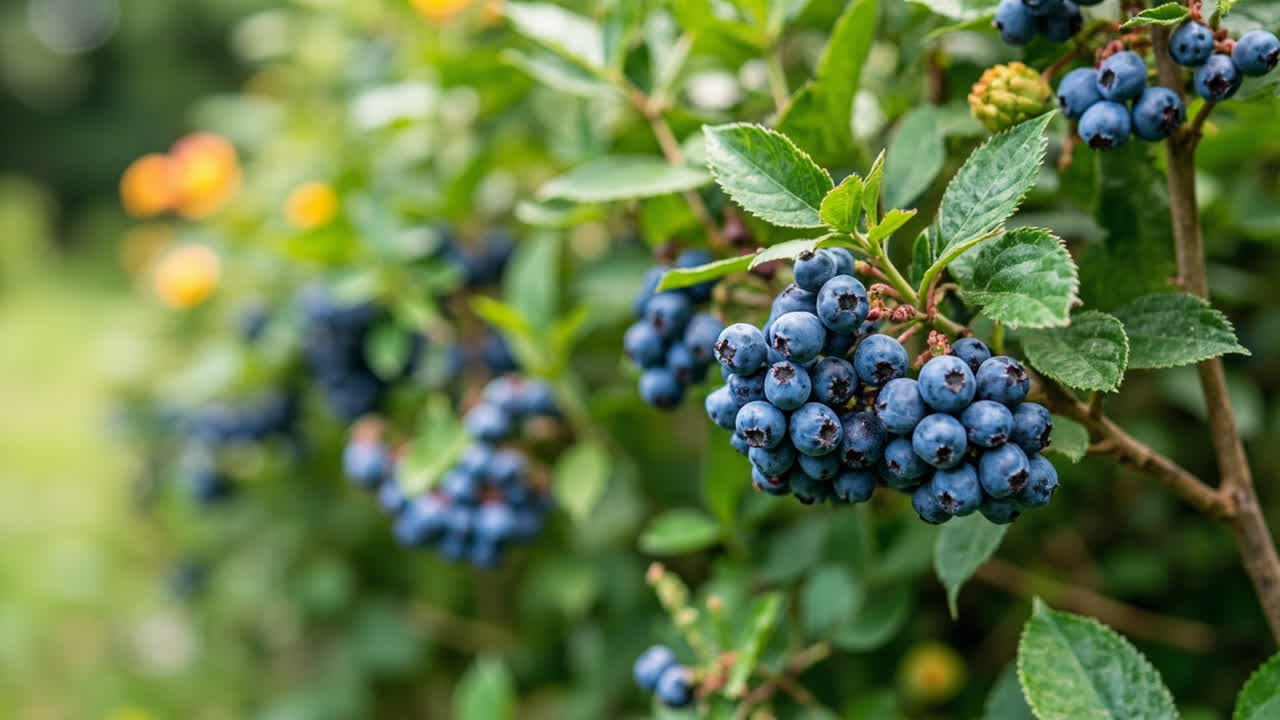
A blueberry bush planted from a one or two-year-old nursery stock typically does not produce a meaningful harvest until its third or fourth growing season. The first two to three years of growth go into establishing the root system and building the structural cane framework. Flowers and fruit come after that foundation is built.
This is not a problem — it is the normal development sequence. A first-year blueberry bush that flowers may set a few fruit, but the bush’s energy is better directed toward root and cane growth in the establishment years.
The diagnostic: How old is the bush? A bush that is two to three years from planting in the ground, or one year from planting in a container from a small nursery plant, should not be expected to produce heavily. If the bush looks healthy, is putting on good new growth, and has no other symptoms — it is simply too young to fruit heavily. For the establishment phase management for young bushes, see our container blueberry guide..
The fix: Patience. Remove flower buds in the first and second year after planting if you want to redirect all energy into growth. For the first-season care that gets a young bush established, see our growing blueberries guide.. Let the bush establish fully before allowing it to carry a full crop.
—
Incorrect Variety for Climate : The Hidden Planting Mistake
A blueberry bush that is well-established, healthy, and receives good care but produces no fruit may have been planted with the wrong variety for its climate. The most common version of this is a southern highbush variety planted in a climate that is too cold for it — the bush grows and looks healthy but does not get enough winter chilling to break dormancy and trigger flowering.
The opposite also happens: a northern highbush variety planted in the deep South may not go fully dormant, which causes erratic flowering over a long period rather than a concentrated bloom, and poor fruit set as a result.
The diagnostic: What variety is it? Does it match your climate? If you do not know the variety, check the chill hour requirement and compare it to your local winter chill accumulation.
The fix: If the bush is young (one to two years), remove it and replace with a climate-appropriate variety. If the bush is older and established, managing it for its actual conditions may produce some fruit — a southern highbush in zone 6 will produce some fruit even if it does not get enough chill hours for maximum yield. For an older bush that is otherwise healthy, accept the reduced productivity and plan to replace it with a better-suited variety.
—
Other Factors That Reduce Blueberry Fruit Production
Insufficient sunlight: Blueberries need full sun — six to eight hours of direct sunlight — to produce well. A bush that is partially shaded by a building, tree, or fence will grow but fruit sparsely. The fix: either move the bush to a sunnier location or accept reduced productivity.
Over-pruning: Removing too many canes, particularly the young one-year-old canes that carry flower buds, reduces the following season’s fruit. Each cane produces flowers on the growth it made the previous season — cutting those canes removes next year’s flowers.
Root competition: Blueberries planted near large trees or heavy-feeder shrubs compete for water and nutrients and often produce poorly. The fix: remove competing plants or relocate the blueberry to an isolated spot in the garden.
—
The Diagnostic Sequence
When a blueberry bush fails to fruit, work through this sequence:
1. How old is the bush? If under three years from planting, it may simply be too young.
2. Are there flowers? If the bush blooms but does not set fruit, the problem is pollination.
3. Are flower buds intact? Cut several open — if interiors are brown/black, winter damage is the cause.
4. What is the soil pH? If above 5.5, correct it.
5. What variety is it? Check whether it matches your climate and chill hours.
6. How much sun does it get? Less than six hours reduces fruiting significantly.
7. Was it over-pruned last season? Removing young canes removes this year’s flower buds.
The most common reason a healthy-looking blueberry bush doesn’t fruit is invisible: the flower buds were killed by winter cold, the variety is wrong for the climate, or the soil pH has drifted above the range where roots can absorb the nutrients needed for flower bud development. All of these are fixable — once you know which one you’re dealing with.
Turn PDF Bank Statements Into Workable Spreadsheets
Your bank statement is a mess of numbers, but your books shouldn't be. Use our converter to get Excel, CSV, or QBO files — ready for QuickBooks.
Try It Free Now