Tomato plant care comes down to three things: full sun (8 or more hours a day), consistent moisture, and well-draining soil rich in organic matter. Get these right and your plants will produce fruit from early summer through the first frost. Miss one of them and you get blossom end rot, cracked fruit, or tall leafy plants with no tomatoes.
Tomatoes are the most popular home garden vegetable in the world, and the most frustrating. Beginners often lose half their fruit to problems that are entirely preventable — inconsistent watering, poor soil, or inadequate support. The good news is that once you understand what a tomato plant actually needs, the care routine is straightforward.
This guide covers the full care foundation for growing tomatoes at home, in containers or in the ground. For specific topics, the linked guides go deeper on container growing, companion planting, and blossom end rot.
Light Requirements: Full Sun or Nothing
Tomatoes need at least 8 hours of direct sunlight per day. Not bright indirect light — direct sun. A south-facing spot that gets sun from mid-morning through late afternoon is ideal. If your plants get less than 6 hours, they will grow tall and leggy, produce few flowers, and set little fruit.
There is no substitute for sun when it comes to tomatoes. A common mistake is tucking them into a spot that looks bright to your eye but is actually shaded for half the day. If you are unsure, track the sun in your garden for a full day before planting. The spot that gets the most uninterrupted direct light wins.
In extremely hot climates (above 35 °C / 95 °F), afternoon shade can prevent sunscald on the fruit. But this is the exception. For most growers, more sun is always better.
Watering: Consistency Beats Volume
The number one cause of tomato problems is inconsistent watering. Too much water and the roots suffocate. Too little and the fruit cracks. The goal is evenly moist soil — not soggy, not dry — maintained throughout the growing season.
Water deeply once or twice a week rather than a light sprinkle every day. Deep watering encourages roots to grow down into the soil where moisture is more stable. A light daily watering keeps roots near the surface where they dry out fast and stress the plant. In containers, you may need to water daily in hot weather because pots dry out faster than ground soil.
The best test: stick your finger into the soil near the base of the plant. If the top 2 inches are dry, water. If they are still moist, wait. Mulching with 2 to 3 inches of straw or shredded leaves dramatically reduces watering frequency by slowing evaporation.
Watering vegetable plants follows the same principles — deep, consistent, and adjusted for container vs. in-ground growing.
Soil: Drainage and Organic Matter
Tomatoes need soil that holds moisture but drains well — a combination that sounds contradictory until you understand the root system. Tomato roots grow deep (up to 3 feet in good soil) and need both water and oxygen. Heavy clay holds too much water and suffocates roots. Pure sand drains too fast and dries out.
The ideal mix is loose, well-draining soil amended with 2 to 3 inches of compost worked into the top 6 to 8 inches. Aim for a pH between 6.0 and 6.8. If your soil is heavy clay, build a raised bed with a custom soil mix rather than trying to amend the existing ground.
In containers, use a high-quality potting mix — not garden soil, which compacts in pots and drains poorly. A 5-gallon container is the minimum size for a single tomato plant. Larger is better.
Feeding: When and How Much
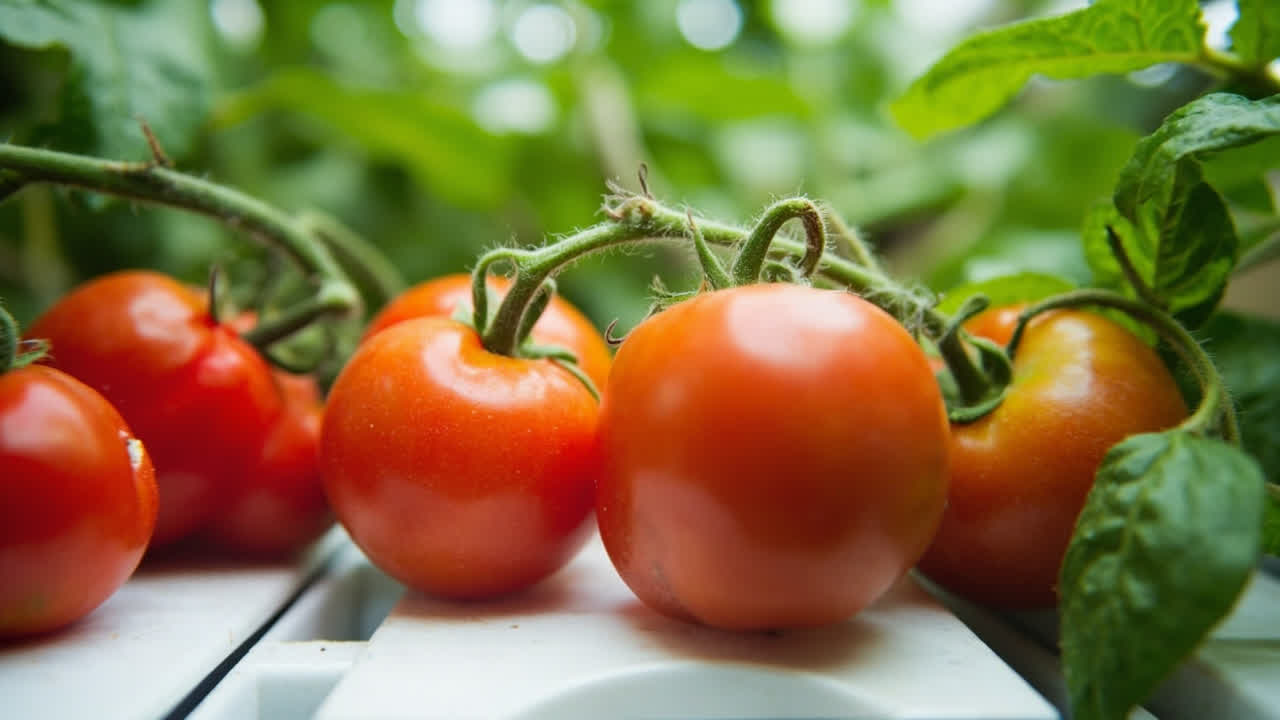
Tomatoes are heavy feeders, but the wrong fertilizer at the wrong time does more harm than good. At planting, mix a balanced slow-release fertilizer into the soil. Once the first flowers appear, switch to a fertilizer higher in phosphorus (the middle number in the NPK ratio) to promote fruiting rather than leaf growth.
Too much nitrogen is the most common fertilizing mistake. You get a massive, dark green plant with lush foliage and almost no fruit. If your tomato plant looks spectacular but is not setting tomatoes, cut back on nitrogen and switch to a bloom-boosting feed.
The NPK ratio guide explains what the numbers on fertilizer labels actually mean and how to pick the right feed for each stage of growth. Feed every two to three weeks during the growing season and stop fertilizing six weeks before your first expected frost.
Support, Pruning, and Seasonal Care
Tomato plants need support. Without it, fruit sits on the soil and rots, and the plant sprawts in every direction. Use a sturdy stake, cage, or trellis — install it at planting time so you do not damage roots later. Indeterminate varieties (most heirloom and cherry tomatoes) grow 6 feet or more and need tall, strong support. Determinate varieties (bush types) stop growing at about 3 to 4 feet and do well in standard cages.
Pruning suckers — the small shoots that grow in the joint between the main stem and a branch — directs energy into fruit production rather than leaf growth. Pinch them off when they are 2 to 3 inches long. Do not over-prune; the foliage shades the fruit and prevents sunscald.
Harden off seedlings before transplanting by exposing them to outdoor conditions gradually over 7 to 10 days. Transplant after the last frost date when soil temperatures are consistently above 15 °C (60 °F). At season end, remove all dead plant material to reduce disease carryover to next year.
Common Problems and Where to Get Help
Three issues account for most tomato losses. Blossom end rot — a dark, sunken spot on the bottom of the fruit — is caused by calcium uptake problems, almost always triggered by inconsistent watering rather than a calcium deficiency in the soil. Keep watering steady and the problem resolves on its own for the next fruit.
Cracking happens when dry periods are followed by heavy rain or watering. The fruit swells faster than the skin can stretch. Mulching and consistent watering prevent it.
Leaf problems (yellowing, spots, wilting) are usually fungal — early blight, septoria leaf spot, or late blight. Remove affected leaves, improve air circulation, and avoid overhead watering. The blossom end rot guide covers the most common fruit problem in detail.
Tomatoes reward attention to basics more than anything else. Full sun, steady water, good soil, and strong support — get these right and the plants will do the rest.
From PDF to Excel in one click
Forget retyping line by line. Upload any bank statement, get a spreadsheet you can actually use. Your files are never stored, and you can test the converter with 3 free conversions.
Try it free