When oregano grows tall and bare with leaves only at the stem tips, the cause is almost always too much shade, too little cutting, or a plant that has simply outlived its prime. Oregano is a woody subshrub — not a soft annual herb — and its growth habit changes as it ages. Understanding whether your plant’s legginess is environmental (fixable) or age-related (not fixable) determines whether you should prune it hard or start over from cuttings.
The key decision point is plant age. Oregano in its first and second year should be compact, bushy, and densely leafed. By year three, the base begins to wood out naturally. By year four or five, most plants are bare-stemmed with foliage only at the tips — and no amount of pruning will turn old wood back into productive growth. Before you reach for the pruners, do the scratch test: scrape the bark on a few woody stems. Green tissue means life. Brown means that stem is done.
Not Enough Sun — The Most Common Cause of Leggy Oregano
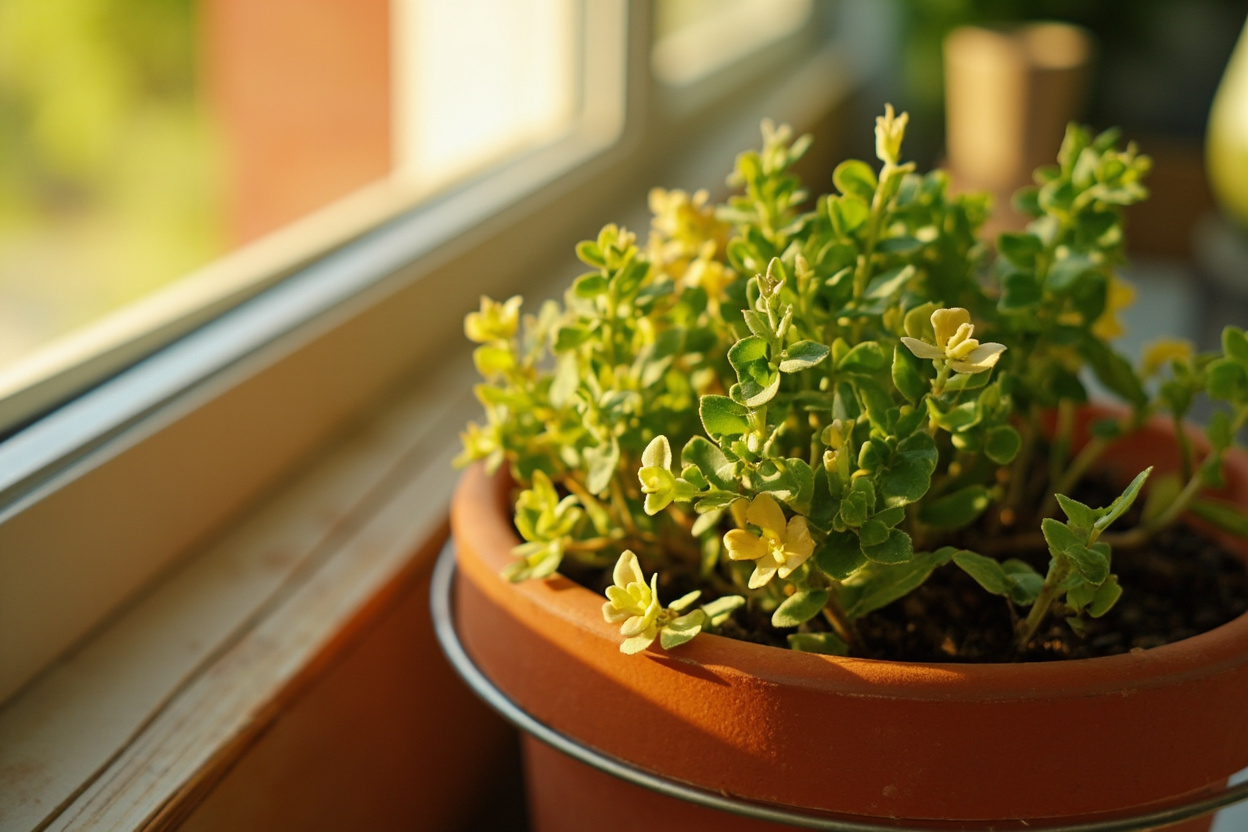
Oregano evolved under the full Mediterranean sun — eight to ten hours of direct, unfiltered light on a south-facing hillside. When you grow it in partial shade, on an east-facing windowsill, or behind a taller plant, the stems elongate as they search for more light. This stretching, called etiolation, produces thin, pale stems with wide gaps between leaf pairs. The plant looks sparse, weak, and floppy rather than the compact, upright bush you expect.
The mechanism is hormonal: in low light, the plant produces more auxin (a growth hormone) and less of the branching hormones that create dense growth. The result is a single tall stem with minimal side branching. Internodes that should be 1-2 cm apart stretch to 4-6 cm. Leaves are smaller and paler because the plant is prioritizing stem elongation over leaf production. It’s not a nutrient problem or a watering problem — it’s a light problem.
The fix is straightforward: move the plant to the sunniest location available. Outdoors, that’s a south-facing bed or west-facing border with zero shade between 10 a.m. and 4 p.m. Indoors, even the brightest windowsill rarely delivers enough light for compact oregano growth — a full-spectrum LED grow light positioned 6 inches above the plant for 14 hours per day is the reliable solution. The oregano light and watering guide covers the exact thresholds for healthy growth.
Recovery takes two to four weeks. New growth will emerge shorter, darker green, and more tightly spaced. Existing etiolated stems won’t revert — but you can prune them back once the plant is producing healthy new growth from the base.
Lack of Pruning — Why Oregano Goes Leggy Without Regular Cutting
Even in full sun, oregano that is never cut back becomes leggy. The plant’s natural habit is to grow upward from the tips of each stem, shedding lower leaves as the stem ages and lignifies (turns woody). Without regular harvesting or pruning, you end up with a few long, bare stalks topped with a tuft of leaves — productive at the top, empty below.
Regular cutting changes the plant’s architecture. When you cut a stem back by one-third, you remove the apical bud that produces the auxin suppressing side growth. The dormant buds at the nodes below the cut activate, producing two or three new branches where there was one. Each pruning cycle multiplies the number of growing tips, creating a denser, more productive plant. The pruning and harvesting guide shows the exact cutting technique for maximum branching.
If you’ve been pinching only the top inch of growth, you’ve been encouraging the plant to grow taller without branching. The correct approach is to cut back to 2-3 inches above a healthy leaf node — even if that means removing most of the stem. The plant will look sparse for a week, but new shoots will emerge from the nodes below the cut within 10-14 days.
The best time for a major prune is early spring, just as new growth begins and daytime temperatures consistently exceed 10°C (50°F). A second lighter prune after the plant flowers in mid-summer keeps it compact through autumn. Never hard-prune in late autumn — fresh cuts combined with cold, wet soil invite rot at the crown.
Natural Aging — When Woody Oregano Is Just Old
Oregano is a hardy perennial, but it is not immortal. In USDA zones 4-9, a well-grown oregano plant reaches peak production in years one to three. By year three to four, the base becomes increasingly woody, the number of new shoots declines, and the plant allocates more energy to maintenance than to fresh growth. By year five, most container plants are past their prime — bare, woody, and producing few harvestable leaves.
The scratch test tells you where your plant stands. Use your fingernail to scrape a thin line of bark on several woody stems, including those near the base. Green tissue underneath means the stem is still alive and capable of producing new shoots if pruned. Brown, dry, brittle tissue means that stem is dead — it will not resprout regardless of how hard you cut. If more than half the stems test brown, the plant is in decline and rejuvenation pruning is unlikely to succeed.
RHS guidance is practical: container oregano should be replaced every three to four years, either by taking cuttings or by purchasing new plants. Garden-bed oregano can last five to six years if divided every third year — splitting the root ball and replanting the youngest, most vigorous sections. The complete oregano care guide covers the full lifecycle from planting to replacement.
The honest truth is that a four-year-old woody oregano plant is not a failure — it’s a plant that has done its job. The best thing you can do is propagate it and start the next generation.
How to Rejuvenate Leggy Oregano — Hard Pruning Step by Step
If your plant is under three years old and passes the scratch test (green tissue on at least half the stems), hard pruning can bring it back to productive growth. The protocol is simple but the timing matters: prune in early spring when new growth is just visible and the risk of frost has passed. Do not hard-prune in autumn — the combination of fresh cuts, cold soil, and winter moisture kills more oregano than the pruning itself.
Sterilize sharp bypass pruners with rubbing alcohol. Cut all stems back to 2-3 inches above the soil line, making each cut at a 45-degree angle just above a visible node or leaf pair. Remove any stems that are entirely brown, hollow, or damaged. Cut out any stems that cross or rub against others. When you’re done, the plant will look like a bare stub in a pot — that’s exactly right. You’re forcing it to regenerate from the base.
After pruning: water once lightly to settle the soil, then do not water again until the top two inches are completely dry. Move the plant to full sun — eight or more hours of direct light. Do not fertilize; the plant needs to re-establish root-shoot balance, not push soft growth. If the pot sits on a saucer, empty it after every watering — crown rot is the main killer of freshly pruned oregano.
New shoots emerge from the base in three to six weeks. Once they reach four inches, begin pinching the growing tips to encourage side branching. By mid-summer, the plant should be bushy, compact, and producing harvestable growth. The rejuvenation buys you another two to three productive years.
When to Replace Instead of Pruning — The Cutting Decision
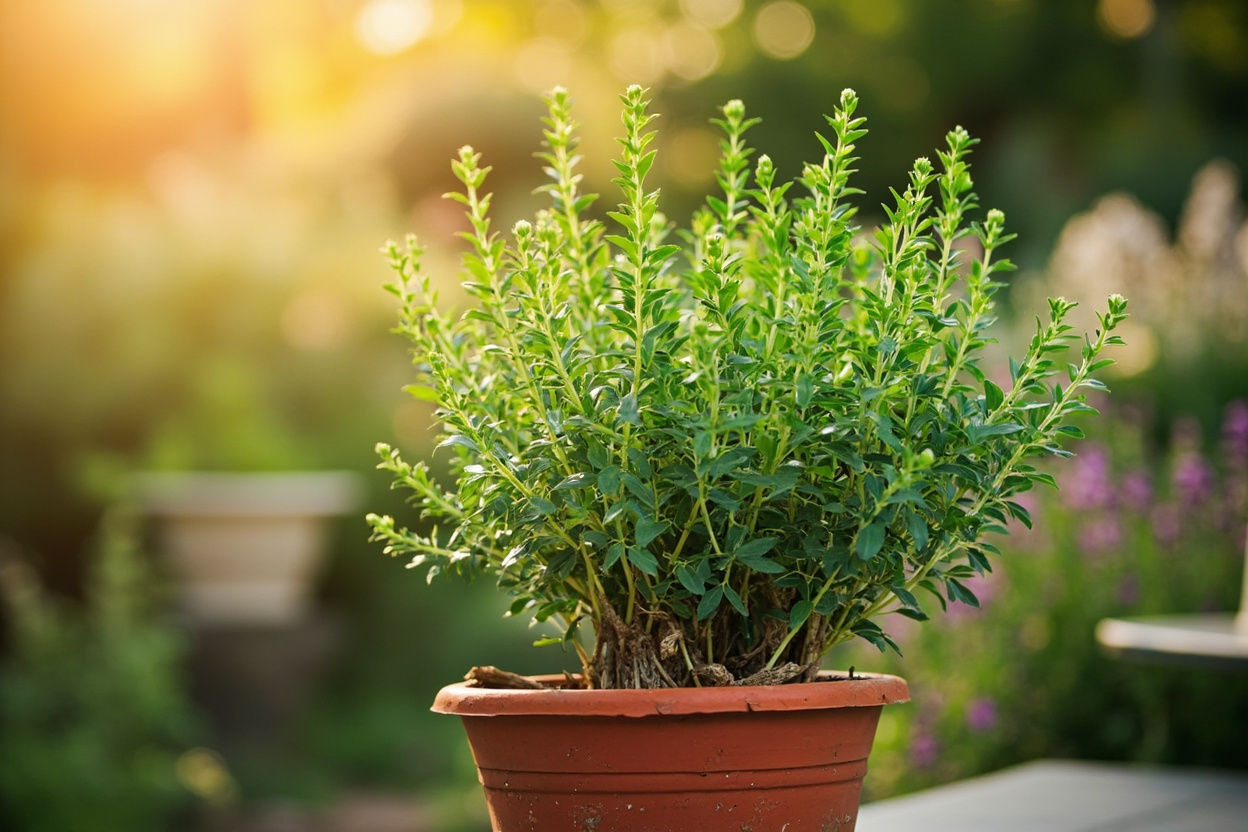
The decision comes down to two factors: plant age and scratch-test results. If the plant is under three years old and at least half the stems show green tissue when scratched, hard-prune and recover. If it’s four or more years old, or if most stems test brown and dry, skip the pruning and propagate instead. Hard-pruning an old, fully woody plant often kills it outright — the plant doesn’t have enough stored energy to push new growth from bare wood.
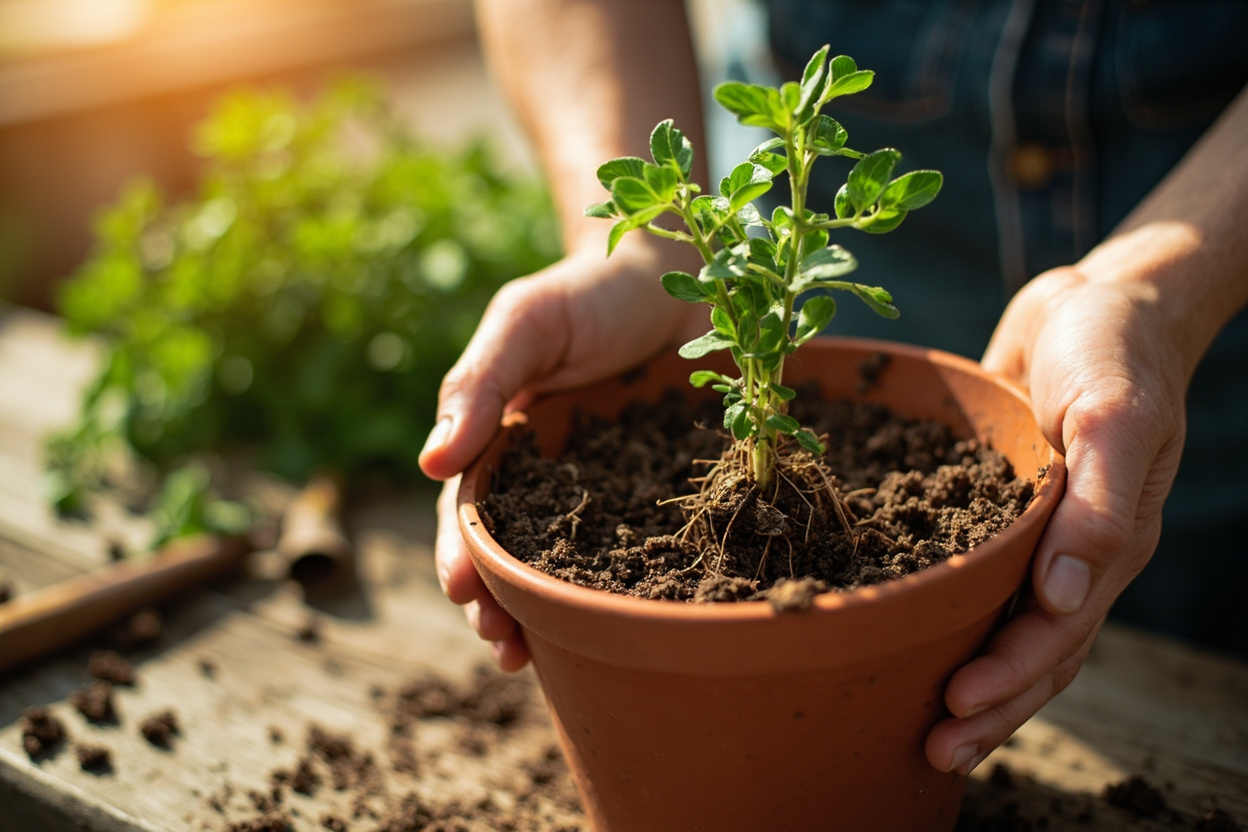
Stem cuttings are the fastest replacement path. Take 4-inch cuttings from any healthy green growth at the stem tips. Strip the lower two inches of leaves, dip the cut end in rooting hormone (optional but helpful), and insert into moist perlite or a 50/50 perlite-vermiculite mix. Keep the medium lightly moist — not wet — in bright indirect light. Roots appear in two to three weeks; pot up into a gritty herb mix when roots are one inch long. The oregano propagation guide covers every step in detail.
For garden-bed oregano, division is an alternative: dig up the entire plant in early spring, split the root ball into two or three sections with a sharp spade (each section needs healthy roots and at least two green shoots), and replant at the same depth. Water once and treat as a new planting. Division works best on plants that are three to four years old — older plants often have root balls too woody to split cleanly.
The new plant will outperform the old one within a single growing season. Young oregano is more vigorous, more compact, more flavorful, and more resistant to the root rot that accumulates in aging root systems. Replacing old oregano isn’t admitting defeat — it’s good herb gardening. If you’re unsure which culinary variety to plant next, the oregano varieties guide compares the best options for flavor, hardiness, and growth habit.
Turn PDF Bank Statements Into Workable Spreadsheets
Your bank statement is a mess of numbers, but your books shouldn't be. Use our converter to get Excel, CSV, or QBO files — ready for QuickBooks.
Try It Free Now