Water tomato plants deeply once or twice a week rather than a light sprinkle every day. That is the single most important watering rule. Deep watering encourages roots to grow down into the soil where moisture is stable. Shallow daily watering keeps roots near the surface where they dry out fast and stress the plant.
Inconsistent watering causes more tomato losses than any other single factor. Blossom end rot, fruit cracking, leaf curl, and flower drop are all triggered by the soil cycling between too wet and too dry. The fix is not more water — it is more consistent water.
This guide covers how to water tomatoes at every stage, from transplant through harvest, in containers and in the ground.
Why Deep Watering Beats Daily Sprinkling
Tomato roots can grow 3 feet deep in good soil. When you water deeply — soaking the soil to a depth of 6 to 8 inches — you encourage roots to follow the moisture down. Deep roots access water that is not affected by surface evaporation, which means the plant handles hot days and short dry spells without wilting.
When you give the plant a light sprinkle every day, the water only penetrates the top inch or two of soil. Roots have no reason to grow deeper. The result is a shallow root system that dries out within hours on a hot day, and a plant that wilts every afternoon even though you watered that morning.
Deep watering once or twice a week is better than a little every day. The exact frequency depends on your soil, weather, and whether the plant is in a container or in the ground. The finger test (below) tells you when it is time.
How to Know When to Water
The most reliable method is the finger test. Push your finger into the soil near the base of the plant, up to the second knuckle (about 2 inches). If the soil feels dry at that depth, water. If it feels moist, wait and check again tomorrow.
Container tomatoes dry out faster than in-ground plants. In hot weather, you may need to water containers daily. The same finger test applies — check the soil, do not water on a schedule.
Visual cues help too. Slight leaf curl in the late afternoon is normal — the plant is reducing surface area to conserve water. But if leaves are still curled in the morning, the plant is stressed and needs water immediately. Soil that has pulled away from the edges of the pot or turned light gray is too dry.
Container vs. In-Ground Watering
Container tomatoes need more frequent watering than in-ground plants. A 5-gallon pot can dry out completely in one hot day. In contrast, a plant in well-mulched garden soil may go three to four days between waterings.
For containers, water slowly until water runs freely out the drainage holes. This ensures the entire root ball is moistened. If the soil has dried out completely, water may run straight down the gap between the soil and the pot wall without actually wetting the root ball. If this happens, set the pot in a basin of water for 20 minutes and let it soak from the bottom up.
The container vegetable gardening guide covers pot size, soil mix, and drainage details that affect watering frequency.
Blossom End Rot and Cracking: The Watering Connection
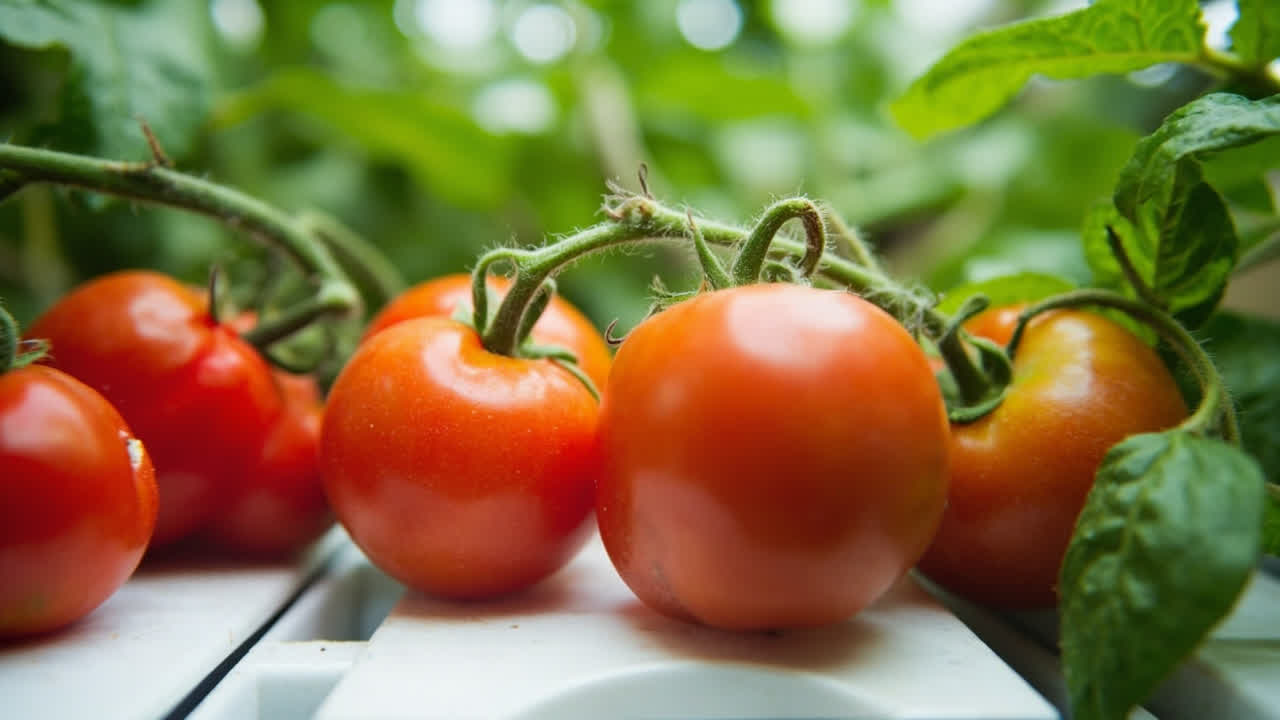
Blossom end rot — a dark, sunken spot on the bottom of the fruit — is the most common watering-related tomato problem. It is caused by the plant’s inability to move calcium into the fruit fast enough, and the trigger is almost always inconsistent watering rather than a lack of calcium in the soil.
When the soil dries out and then gets flooded, the roots cannot absorb calcium steadily. The fruit, which is the last part of the plant to receive nutrients, shows the deficiency first. Keep watering consistent and the problem resolves on its own for subsequent fruit.
Fruit cracking works similarly. A dry period followed by heavy rain or deep watering causes the fruit to swell faster than the skin can stretch. The skin splits, usually in concentric circles around the stem or radiating from the blossom end. Mulching and steady watering prevent it entirely.
The blossom end rot guide covers calcium, pH, and variety selection in detail.
Seasonal Adjustments and Mulching
Watering needs change through the season. Newly transplanted seedlings need frequent light watering until their roots establish — about 3 to 4 days. Once the plant is established (showing new growth), switch to deep weekly watering.
During fruiting (mid-summer), water demand peaks. This is when inconsistency causes the most damage. Mulching with 2 to 3 inches of straw, shredded leaves, or wood chips reduces watering frequency by slowing evaporation and keeping soil temperature stable.
Two weeks before your expected first frost, reduce watering slightly. This signals the plant to ripen remaining fruit rather than producing new growth. Stop fertilizing at the same time.
Water at the base of the plant, not over the foliage. Wet leaves invite fungal diseases, especially in humid climates. A soaker hose or drip irrigation on a timer is the most reliable way to deliver consistent deep watering without wetting the leaves.
From PDF to Excel in one click
Forget retyping line by line. Upload any bank statement, get a spreadsheet you can actually use. Your files are never stored, and you can test the converter with 3 free conversions.
Try it free