Most gardeners water wrong in one of two directions: they either water too often and shallow, which trains roots to stay at the surface, or they water too infrequently and deeply, which creates stress cycles that limit yield. The right approach is consistent moisture at the root zone — not at the surface, not throughout the entire bed, but exactly where the roots are working.
Why Most Gardeners Water Too Often
The impulse to water comes from seeing dry soil. But top-soil dryness and root-zone dryness are two different things. The surface dries out within hours of sun and wind exposure — that’s normal and not a reliable signal. Meanwhile the root zone, where plants actually absorb water, may still have plenty of moisture.
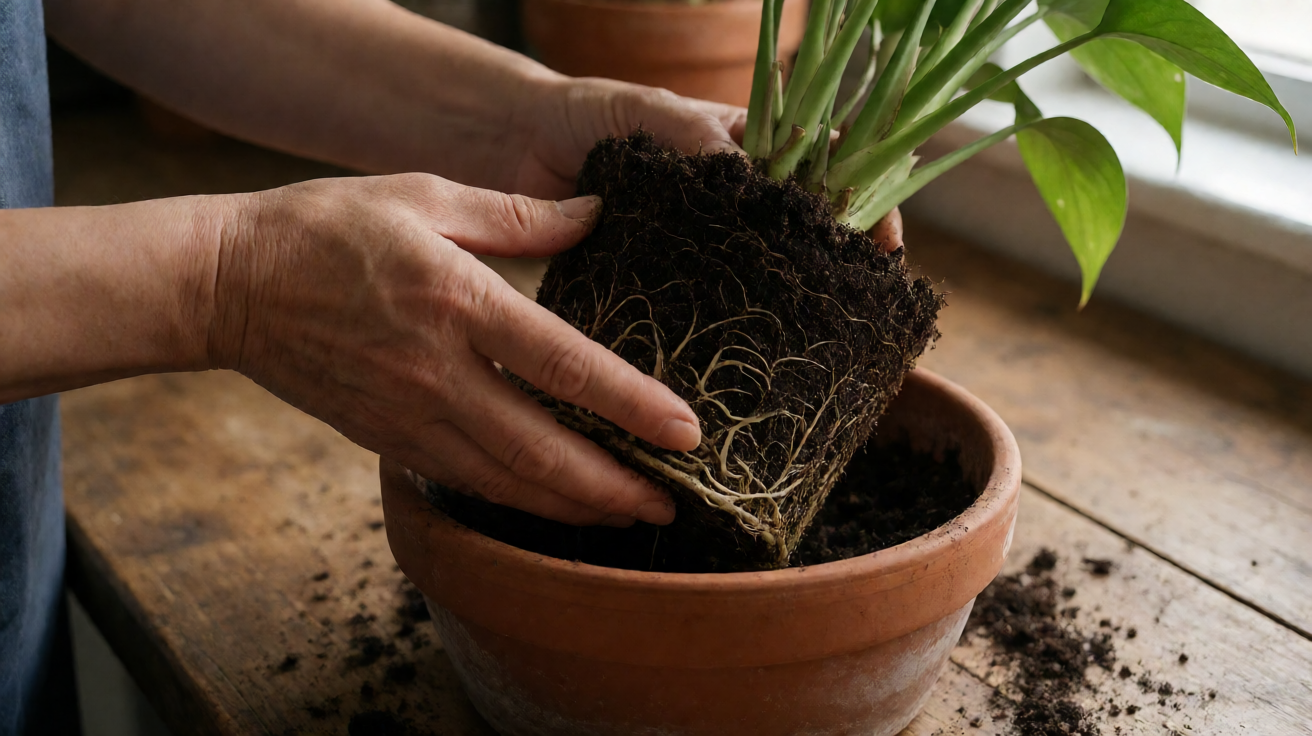
Watering every time the surface looks dry creates shallow root systems. Shallow roots are more vulnerable to heat stress, more dependent on frequent watering, and less efficient at absorbing nutrients. A plant with deep roots can survive a week without rain. A plant with shallow roots starts showing stress after two hot days.
The solution is not more water. It’s less frequent, deeper watering that trains roots downward.
—
The Two-Inch Rule : When to Water
The most reliable test for in-ground gardens and raised beds: push your finger into the soil two inches from the base of the plant. If it feels dry at your second knuckle, it’s time to water. If it still feels damp, wait.
For containers: lift the pot. If it feels significantly lighter than it does after watering, the soil has dried enough. Or use the two-inch finger test — containers dry faster than beds.
For the first few weeks after transplanting seedlings, check daily. Young root systems are shallow and can’t access deeper moisture. Once plants are established — usually three to four weeks after transplanting or once they’ve put on visible new growth — you can move to every two to three days in warm weather, adjusting based on rain and temperature.
—
How Much to Water : Deep and Slow
Vegetables need roughly one to two inches of water per week, including rainfall. In hot climates or during heat waves, that can go up to two to three inches. The goal is wetting the soil to a depth of six to eight inches, not just wetting the surface. If you are growing in containers, our container vegetable gardening guide covers how container soil dries differently than bed soil and how to adjust for it.
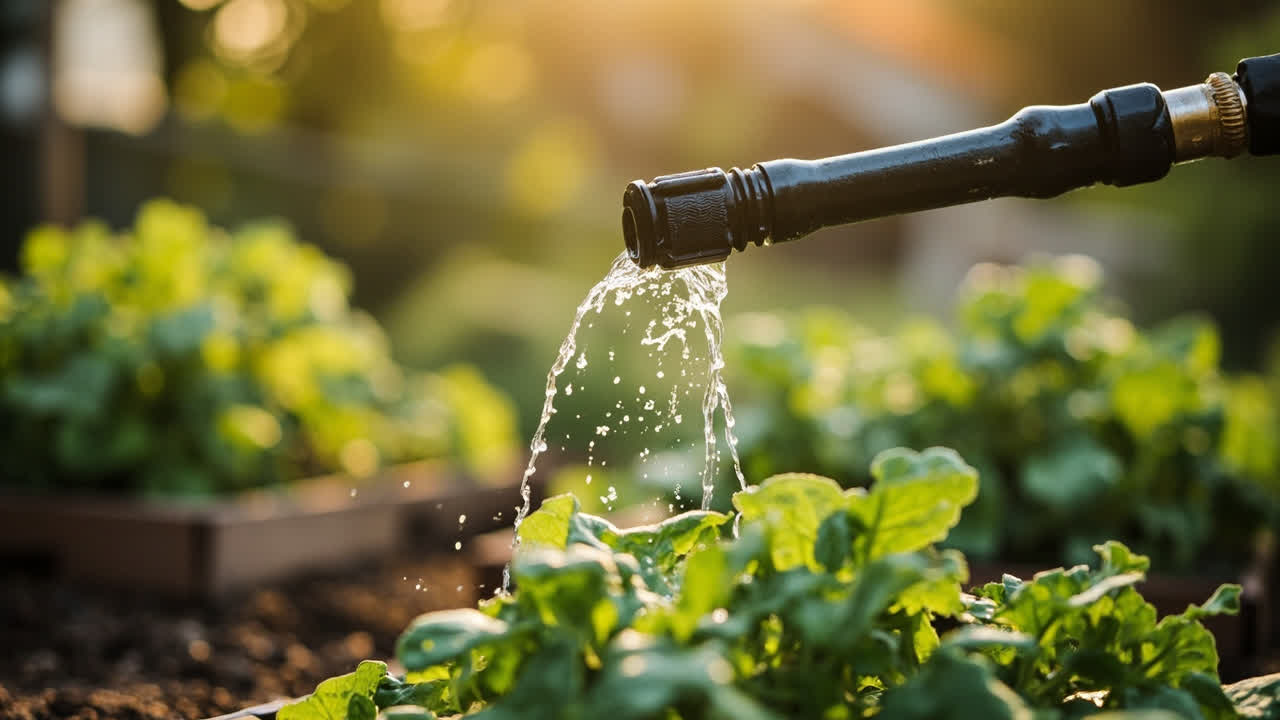
Use a slow, steady watering approach. A quick hose blast runs off before it soaks in. Three minutes of slow trickle at the base of each plant is more effective than thirty seconds of high pressure.
Drip irrigation or soaker hoses deliver water exactly where roots need it and keep foliage dry, which reduces fungal disease risk. If you’re hand-watering, direct the stream at the soil around the base of the plant — not over the leaves.
—
Watering by Vegetable Type
Not all vegetables have the same water needs. Grouping them by frequency and volume helps you water strategically without moving hoses across the garden.
High water needs (water deeply 3–4 times per week in warm weather):
Tomatoes, peppers, cucumbers, squash, leafy greens, corn
Moderate water needs (water 2–3 times per week):
Beans, carrots, beets, radishes, herbs
Lower water needs (water 1–2 times per week):
Melons, watermelons, sweet potatoes, dried beans
Fruiting vegetables like tomatoes and peppers need more water during flowering and fruit set. Once fruits are sizing up, slightly reducing water concentration improves flavor — this is why a dry spell just before tomato harvest often improves taste. But reduce only after fruits have reached full size, never during fruit development when calcium uptake and fruit expansion are active.
—
Signs of Underwatering
Underwatering produces consistent, recognizable symptoms. Wilting during the hottest part of the day is the first signal — leaves look limp and slightly curled. The soil feels dry two inches down. Leaves may develop brown, crispy edges as cells desiccate.
Recovering from underwatering is straightforward: water deeply at the base, and the plant typically recovers within hours. Avoid the instinct to over-correct by watering every day for several days — one deep watering followed by the normal schedule trains roots correctly.
—
Signs of Overwatering
Overwatering is harder to diagnose because it mimics other problems — especially nutrient deficiency. A plant that’s getting too much water often shows yellowing. For the full symptom picture, our save a dying vegetable plant guide breaks down overwatering vs nutrient deficiency in detail. leaves, particularly lower leaves, with soil that stays wet for three or more days after watering.
The smell test helps: soil that smells musty or sour suggests anaerobic conditions and potential root rot beginning. Roots under constant saturation turn brown and mushy instead of white and firm.
The most common overwatering mistake is watering every day. Every other day in warm weather is sufficient for established plants in most soil types, and every two to three days is more typical.
—
What to Avoid : Common Watering Mistakes
Watering in the evening: Leaves stay wet overnight, which promotes fungal diseases like powdery mildew and botrytis. Water in the morning so leaves have time to dry before sunset.
Overhead watering with sprinklers: Wetting the entire plant surface, not just the soil, dramatically increases fungal disease risk. If you must use overhead irrigation, water early enough that leaves dry before noon.
Watering with cold hose water in hot sun: A pipe sitting in full sun can deliver water at 100°F or higher, which shocks plant roots. Use soaker hoses or drip irrigation to avoid temperature shock.
Shallow frequent watering: Trains roots to stay near the surface, making plants dependent on frequent watering and less drought-resilient.
Ignoring rain: After a significant rainfall (half an inch or more), skip your next watering. Most vegetable plants can’t use more than two inches per week regardless of how much falls.
—
Container Watering : Different Rules
Containers dry out faster than in-ground beds and need more frequent attention — sometimes daily in hot weather. The same principle applies: water slowly and deeply until it runs out the bottom of the pot, not just a light surface sprinkle.
Terracotta and unglazed clay pots lose moisture through the walls — water more frequently than with plastic or glazed containers. Self-watering containers extend intervals but require attention to the reservoir level.
Inconsistent watering causes blossom end rot in tomatoes and fruit cracking more than any other factor in container-grown tomatoes. If the soil moisture swings between drought and saturation, calcium transport becomes irregular and the classic black-bottomed tomato appears.
—
Adjusting for Season and Weather
The watering schedule is not fixed. Summer heat waves require an increase in frequency, even if the calendar says it’s the same week as last month. Cool, cloudy weather reduces demand even for the same plant.
After transplanting seedlings: water every day until they’re established, then taper gradually. During flowering: maintain consistent moisture, as water stress at bloom reduces fruit set. During fruit development: moderate consistent moisture — fluctuations cause cracking and blossom end rot. Late season: reduce watering as fruits ripen on vining crops to improve flavor concentration. For the full seasonal growing cycle, our beginner vegetable garden guide covers what to prioritize at each stage.
Track actual soil moisture with your finger, not the calendar.
Deep, infrequent watering builds root systems that survive dry weeks and produce more reliably than daily shallow sprinkling. Once you know the two-inch test, you won’t need a schedule — you’ll read the soil.
Turn any PDF statement into a clean sheet
Skip the typos and the hours of copying. Our converter handles any bank statement format and outputs Excel, CSV, or QBO for QuickBooks. No file retention, free to try.
Convert your statement