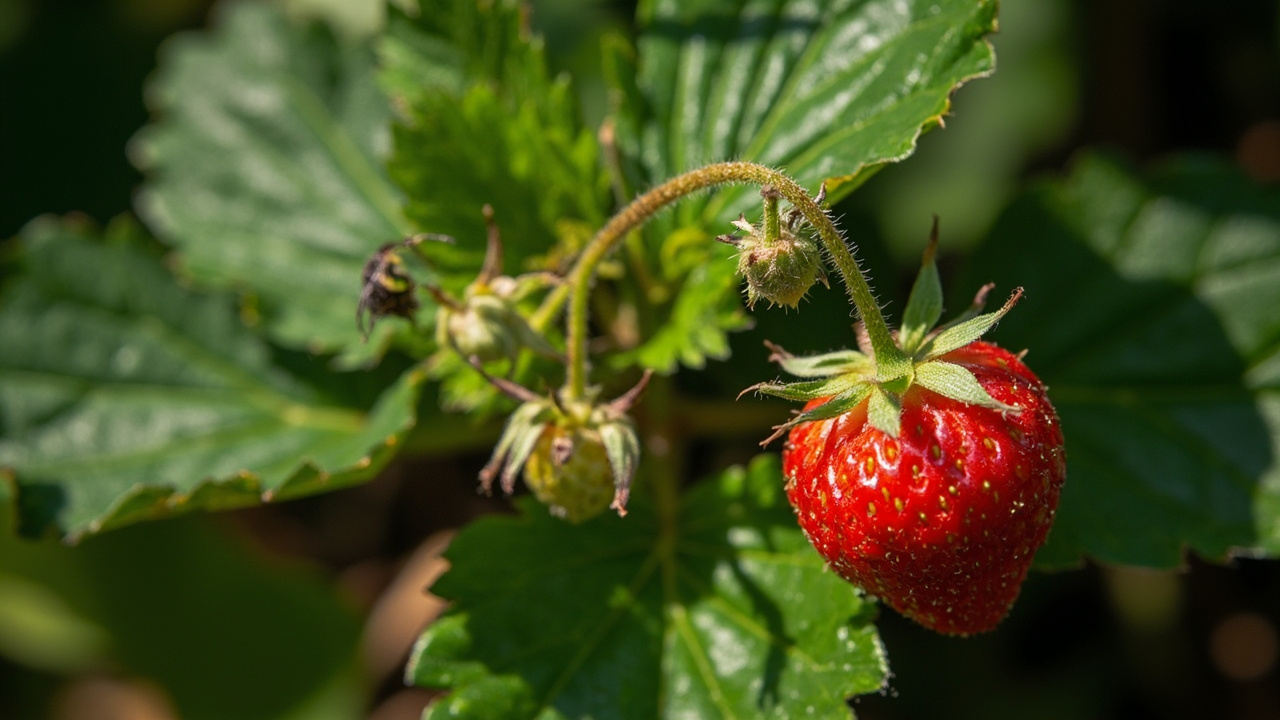

Most strawberry pests are too small to see with the naked eye, especially in the early stages of infestation. By the time you notice damage, the pest population may already be established. Early detection through pattern recognition – not individual insect observation – is the only reliable way to identify problems before they destroy your harvest. Strawberries grown in direct sun with proper drainage and full sun exposure develop tougher leaves that resist pest colonization.
The Damage-Pattern Approach to Pest Identification
Most strawberry pests are too small to see with the naked eye, especially in the early stages of infestation. Trying to spot an aphid on a leaf edge or a spider mite underneath a leaf wastes time and often misses the problem entirely. The faster, more reliable approach is to read the damage pattern first.
Each pest has a characteristic feeding signature, the key to identification.
This guide walks through the seven most common strawberry pests in order of how frequently home gardeners encounter them. For each pest, you will learn the damage pattern, how to confirm the identification, and what treatment options work best. The goal is to get you from symptom to solution in one visit rather than multiple rounds of trial and error.
Aphids – Curling Leaves and Sticky Residue
Aphids are the most widespread strawberry pest and the easiest to identify by damage alone. They feed on plant sap using piercing-sucking mouthparts, which causes leaves to curl downward and inward around the feeding site. The curling is not random – it follows the vein structure and creates a tight tube that protects the aphid colony inside. Aphids are the most widespread strawberry pest, affecting both June-bearing and everbearing varieties equally. Dense spacing and excess nitrogen from over-fertilizing create the soft growth aphids prefer. Mulch around plants reduces alternate aphid hosts.
The secondary sign of aphid damage is honeydew, a sticky, clear to slightly yellow liquid excreted by the insects. Honeydew coats leaves and fruit below the colony and promotes the growth of black sooty mold. The mold itself does not harm the plant directly but reduces photosynthesis by blocking sunlight from leaf surfaces.
To confirm an aphid identification, lift the curled leaves and inspect the undersides. Aphids cluster on soft new growth, leaf buds, and the stems just below flower spikes. They are soft-bodied, pear-shaped, and range from pale green to dark brown depending on the species. A gentle tap over white paper will dislodge them, making the colony obvious. During propagation, inspect runner tips for aphid colonies before transplanting to new beds.
Light aphid infestations often resolve on their own through natural predator activity. Lady beetles, lacewings, and hoverfly larvae are constant visitors to strawberry patches and will consume large numbers of aphids if given the chance. For heavier infestations, a strong spray of water from the hose can knock colonies off plants, and insecticidal soap applied to the undersides of leaves provides contact kill without harming most beneficial insects.
Spider Mites – Stippling and Webbing
Spider mites cause a damage pattern that is easily confused with drought stress or nutrient deficiency. The first sign is fine stippling – tiny yellow or white dots scattered across the leaf surface where individual cells have been emptied of chlorophyll. As the infestation grows, these dots merge into a general bronzing or yellowing that covers entire leaves. Indoor plants under inadequate grow light show etiolation that makes leaves thin and vulnerable to spider mites, while outdoor plants in shade harbor higher mite populations than those in full sun.
The distinguishing feature is fine webbing on leaf undersides.
Spider mites thrive in hot, dry conditions with low humidity. Plants under stress from drought or excessive nitrogen fertilization are especially vulnerable. The mites reproduce rapidly in these conditions, with populations doubling every three to four days during peak summer heat. Damage that appears overnight is often the result of a weeks-long buildup that went unnoticed.
Water sprays are less effective against spider mites than against aphids because the mites live protected underneath leaves where water droplets do not reach. Miticides containing abamectin or horticultural oil are the most reliable treatment. Preventive strategies include maintaining adequate soil moisture, avoiding excessive nitrogen, and encouraging predatory mite populations through diverse plantings.

Japanese Beetles – Skeletonized Leaves and Chewed Fruit
Japanese beetles are among the most visually damaging strawberry pests, producing a feeding signature that is unmistakable once seen. Adults chew the leaf tissue between veins, leaving a lace-like or skeletonized appearance that can defoliate entire plants if the colony is large. Bare root transplants established in compost-amended soil tolerate beetle pressure better than container plants.
The damage pattern is distinct from other chewing insects, with daytime feeding and group skeletonization.
Adult beetles are metallic green with copper-brown wing covers, about half an inch long. They emerge in early summer and feed continuously for six to eight weeks. females lay eggs in the soil near infected plants, and the grubs feed on grass roots, causing additional damage to turf areas nearby.
Physical removal is the most effective control for light infestations. Shake beetles into a container of soapy water early in the morning when they are sluggish. For heavier infestations, neem oil or spinosad applications provide contact kill. Row covers installed before beetle emergence prevent access entirely but must be removed during flowering to allow pollination.
Prevention Strategies
The best pest management starts before planting. Choose resistant varieties, rotate planting locations yearly, and maintain healthy soil biology. Beneficial insects like ladybugs and lacewings naturally control aphid and mite populations when pesticide use is minimized. Day-neutral varieties have longer pest pressure windows than June-bearing types, so dormancy sanitation matters more. Soil pH outside the 5.5 to 6.8 range causes nutrient lockout that mimics pest damage and triggers wilting.
See also: How to Save a Dying Strawberry Plant for rescue techniques when pest damage is severe. For disease identification that overlaps with pest damage, see Strawberry Leaf Problems. Consistent watering during fruiting keeps crowns strong. Variety selection for resistant cultivars reduces pest pressure. Overwintering pest eggs hatch as temperatures rise, so cleanup of debris reduces next-season population. Balanced fertilizer supports crown vigor without the tender growth aphids prefer.
Monitoring and Scouting Strategies
Regular scouting prevents catastrophic pest damage. Inspect plants weekly during growing season, focusing on leaf undersides, flower buds, and fruit where pests hide. Use a magnifying lens to identify small insects like aphids and spider mites before populations explode. Early detection preserves fruit set and prevents the root rot that opportunistic fungi establish in pest-damaged tissue.
Beneficial Insect Conservation
Ladybugs, lacewings, and parasitic wasps naturally control strawberry pest populations. Plant nectar-rich flowers like dill, fennel, and yarrow nearby to attract these beneficial insects. Avoid broad-spectrum pesticides that kill helpful predators along with pests.
See also: How to Save a Dying Strawberry Plant for rescue techniques when pest damage is severe.
Monitoring and Scouting Strategies
Regular scouting prevents catastrophic pest damage. Inspect plants weekly during growing season, focusing on leaf undersides, flower buds, and fruit where pests hide. Use a magnifying lens to identify small insects like aphids and spider mites before populations explode.
Beneficial Insect Conservation
Ladybugs, lacewings, and parasitic wasps naturally control strawberry pest populations. Plant nectar-rich flowers like dill, fennel, and yarrow nearby to attract these beneficial insects. Avoid broad-spectrum pesticides that kill helpful predators along with pests.
Prevention Strategies
Prevent pest outbreaks by rotating planting sites yearly, choosing resistant varieties, and maintaining soil health. Beneficial insects like ladybugs naturally control aphid populations when pesticide use is minimized.
Prevention Strategies
Prevent pest outbreaks by rotating planting sites yearly, choosing resistant varieties, and maintaining soil health. Beneficial insects like ladybugs naturally control aphid populations when pesticide use is minimized.
Prevention Strategies
Prevent pest outbreaks by rotating planting sites yearly, choosing resistant varieties, and maintaining soil health. Beneficial insects like ladybugs naturally control aphid populations when pesticide use is minimized.
Prevention Strategies
Prevent pest outbreaks by rotating planting sites yearly, choosing resistant varieties, and maintaining soil health. Beneficial insects like ladybugs naturally control aphid populations when pesticide use is minimized.
Monitoring and Scouting Strategies
Regular scouting prevents catastrophic pest damage. Inspect plants weekly during growing season, focusing on leaf undersides, flower buds, and fruit where pests hide. Use a magnifying lens to identify small insects like aphids and spider mites before populations explode.
Beneficial Insect Conservation
Ladybugs, lacewings, and parasitic wasps naturally control strawberry pest populations. Plant nectar-rich flowers like dill, fennel, and yarrow nearby to attract these beneficial insects. Avoid broad-spectrum pesticides that kill helpful predators along with pests.
Monitoring and Scouting Strategies
Regular scouting prevents catastrophic pest damage. Inspect plants weekly during growing season, focusing on leaf undersides, flower buds, and fruit where pests hide. Use a magnifying lens to identify small insects like aphids and spider mites before populations explode.
Beneficial Insect Conservation
Ladybugs, lacewings, and parasitic wasps naturally control strawberry pest populations. Plant nectar-rich flowers like dill, fennel, and yarrow nearby to attract these beneficial insects. Avoid broad-spectrum pesticides that kill helpful predators along with pests.
Monitoring and Scouting Strategies
Regular scouting prevents catastrophic pest damage. Inspect plants weekly during growing season, focusing on leaf undersides, flower buds, and fruit where pests hide. Use a magnifying lens to identify small insects like aphids and spider mites before populations explode.
Beneficial Insect Conservation
Ladybugs, lacewings, and parasitic wasps naturally control strawberry pest populations. Plant nectar-rich flowers like dill, fennel, and yarrow nearby to attract these beneficial insects. Avoid broad-spectrum pesticides that kill helpful predators along with pests.
Monitoring and Scouting Strategies
Regular scouting prevents catastrophic pest damage because early detection allows targeted intervention before populations explode. Inspect plants weekly during growing season, focusing on leaf undersides, flower buds, and fruit where pests hide. Use a magnifying lens to identify small insects like aphids and spider mites.
Beneficial Insect Conservation
Ladybugs, lacewings, and parasitic wasps naturally control strawberry pest populations because they prey on aphids, mites, and caterpillars. Plant nectar-rich flowers like dill, fennel, and yarrow nearby to attract these beneficial insects. Avoid broad-spectrum pesticides that kill helpful predators along with pests.
When to Take Action
Most pest damage is cosmetic, but severe infestations need treatment.
Turn any PDF statement into a clean sheet
Skip the typos and the hours of copying. Our converter handles any bank statement format and outputs Excel, CSV, or QBO for QuickBooks. No file retention, free to try.
Convert your statement