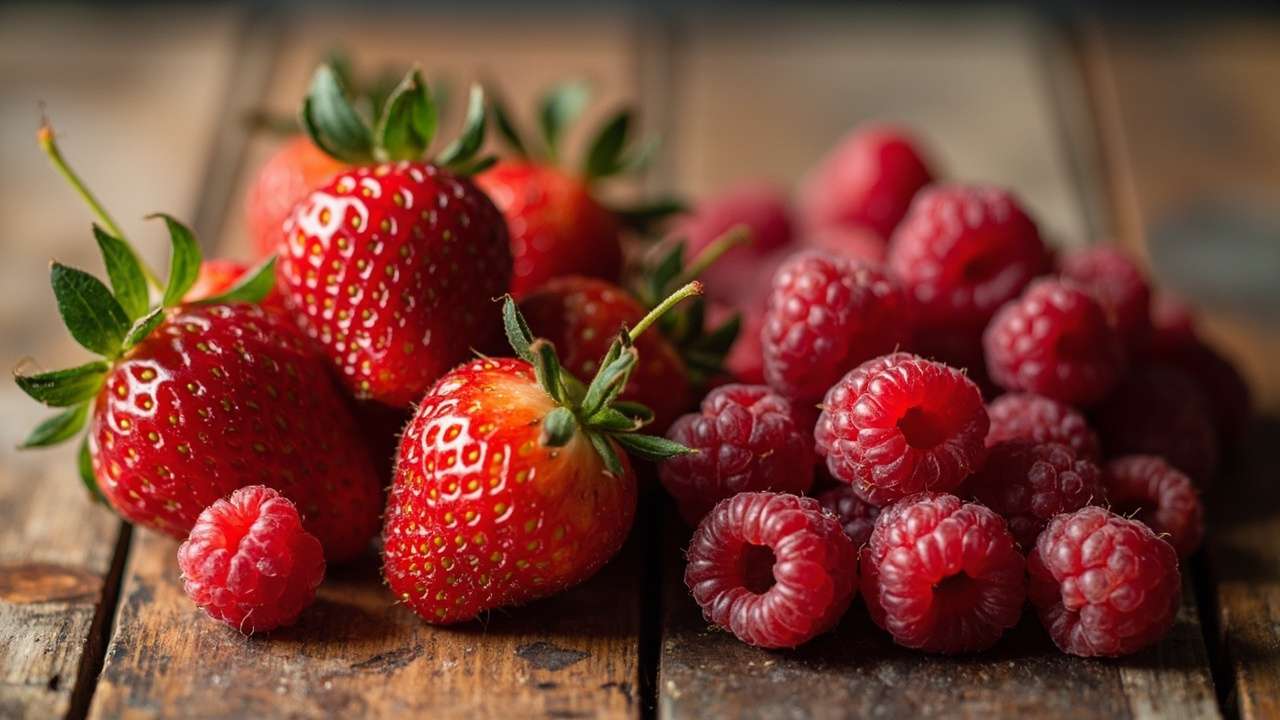

Strawberries and raspberries produce similar red fruit but grow from completely different structures, require different pruning systems, and respond differently to the same conditions, so choosing between them or growing both depends on understanding those structural differences first.
Growth Structure: Runner vs Cane, Rhizome vs Root Crown
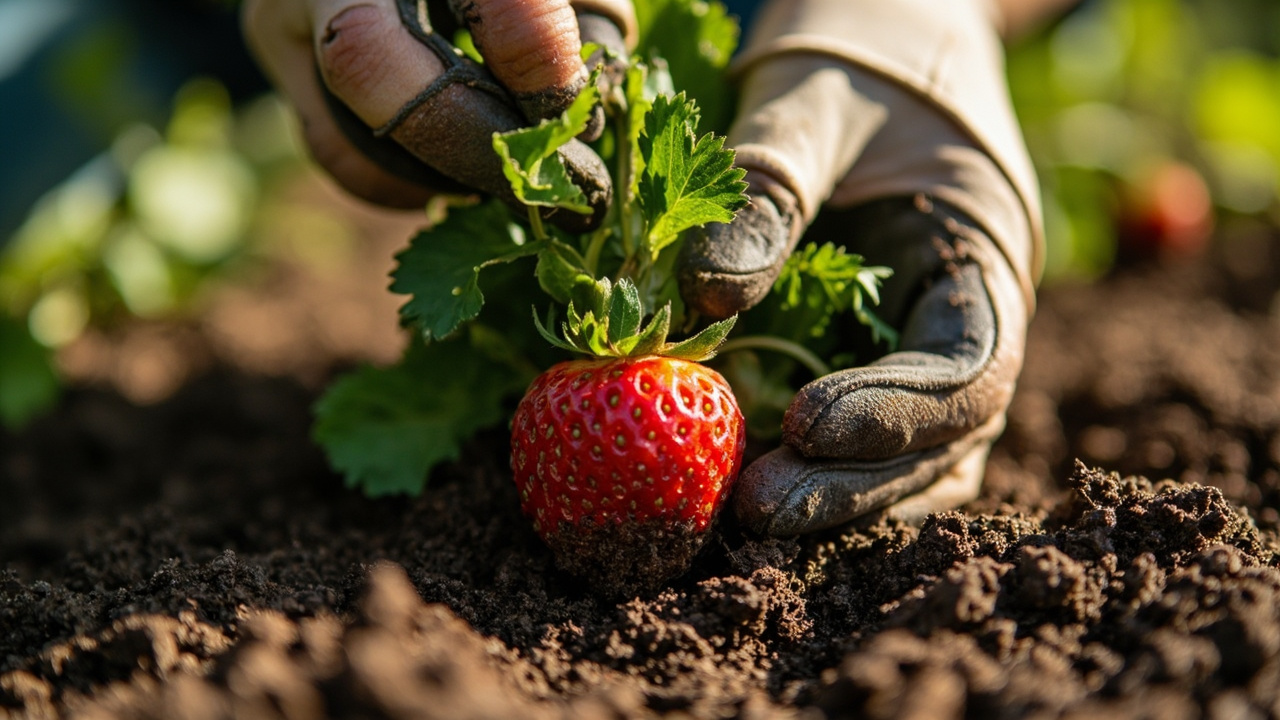
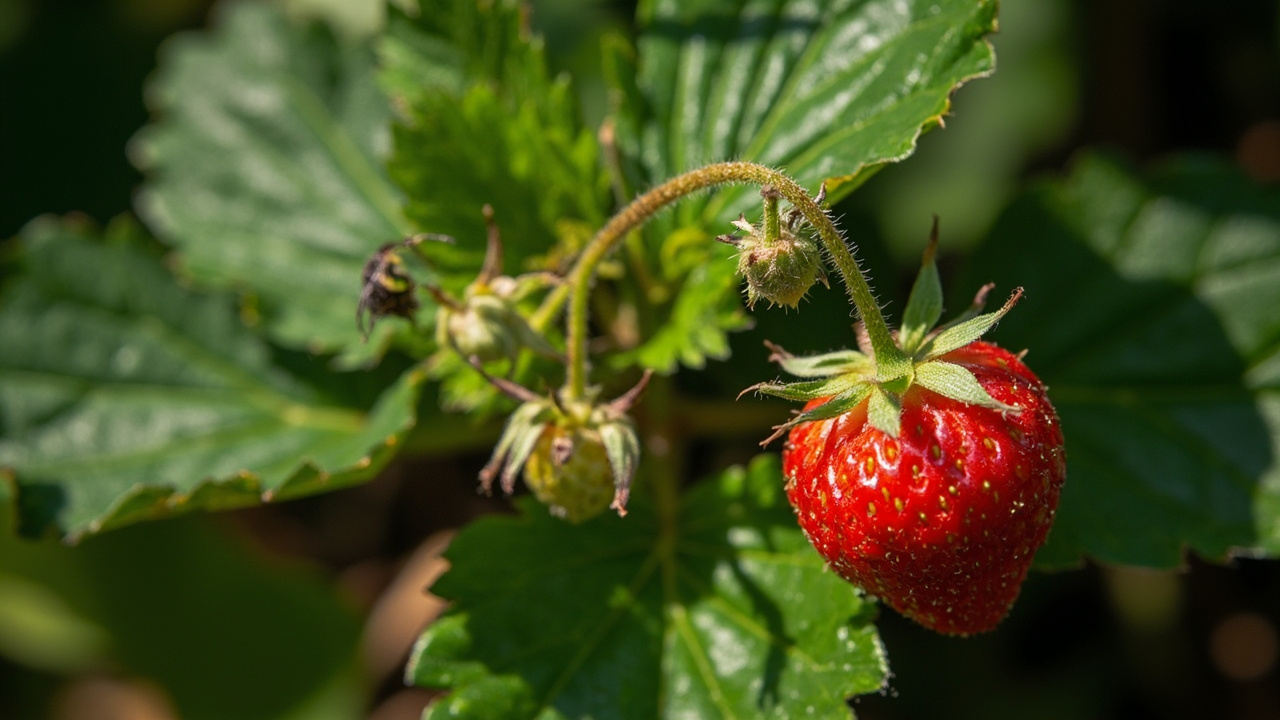
For a full overview of strawberry care fundamentals, see our strawberry care guide. Strawberries and raspberries belong to completely different plant families, which explains why they look similar as fruiting bodies but grow from fundamentally different structures. Strawberries are herbaceous perennials that spread through runners, thin stems that grow horizontally above the soil surface and root at nodes to form new plants. Each strawberry plant lives from a central crown, a thickened stem base just below the soil line from which leaves, flowers, and roots emerge.
Raspberries are woody perennial canes that grow vertically from a root crown, forming a bramble structure that resembles a miniature shrub. Each cane, called a primocane in its first year, produces leaves and sometimes flowers before dying after fruiting. Floricane canes are the second-year growth that fruits once and then must be removed. This two-year cane cycle is the most important structural difference between the two plants.
The runner system gives strawberries a carpet-forming habit, making them ideal for ground cover, raised beds, and container edges where spreading is desirable. The cane system gives raspberries an upright, arching habit that requires space and support, making them better suited to dedicated rows, trellises, and fence lines where vertical growth can be managed.
Root depth differs significantly. Strawberry roots are shallow and fibrous, concentrated in the top six to eight inches of soil, which makes them sensitive to drought but easy to establish in container mixes. Raspberry roots are deeper and more extensive, reaching 12 to 18 inches or more, which gives them better drought tolerance but makes them harder to grow in shallow containers or compacted soils.
Climate and Hardiness: Which Zone Grows What
Strawberries thrive in USDA zones 3 to 10, with most varieties producing best in zones 4 to 7. They require a chilling period of 800 to 1,200 hours below 45 degrees Fahrenheit to initiate flower buds, which limits some varieties in warm winter regions. Day-neutral varieties break this requirement and fruit continuously through the growing season, making them suitable for zones 5 to 10 where winter chilling is insufficient.
Raspberries have narrower hardiness ranges depending on color. Red raspberries grow best in zones 3 to 8, while black raspberries prefer zones 4 to 8. Purple raspberries, a hybrid of red and black, fall in the middle at zones 4 to 8. All raspberries require a winter chilling period, though less than strawberries, typically 200 to 500 hours below 45 degrees Fahrenheit.
Heat tolerance differs markedly. Strawberries tolerate high temperatures reasonably well once established, though fruit quality declines above 85 degrees Fahrenheit. Raspberries struggle in sustained heat above 80 degrees, with fruit shrinkage, poor color development, and increased pest pressure all becoming problems in hot summer climates.
Cold hardiness favors raspberries slightly. Mature raspberry canes survive temperatures down to 0 to minus 10 degrees Fahrenheit with minimal protection. Strawberry crowns are similarly hardy but the shallow root zone makes them more vulnerable to freeze-thaw cycles that heave plants out of the ground, especially in zones 4 and 5 without winter mulch.
Soil, Containers, and Watering: Similar but Not Identical
For strawberry-specific soil guidance, see our strawberry soil requirements guide. Both strawberries and raspberries prefer slightly acidic soil in the pH range of 5.5 to 6.5, with excellent drainage as a non-negotiable requirement. Heavy clay or waterlogged soil kills both plants, though raspberries tolerate slightly wetter conditions than strawberries because their deeper root system accesses oxygen from lower soil layers.
Watering frequency diverges significantly. Strawberries, with their shallow roots, need consistent moisture at the surface, requiring watering two to three times per week in warm weather, or daily in containers. Raspberries, with deeper roots, need less frequent but deeper watering, typically once or twice per week, allowing the top two inches of soil to dry between sessions.
Both plants benefit from organic mulch, but the type differs. Strawberries grow best under straw or pine needle mulch, which keeps fruit clean and soil cool. Raspberries prefer wood chip or leaf mulch, which supports the deeper root zone and discourages cane-root contact with soil-borne pathogens.
Fertilizer needs are moderate for both, but timing differs. Strawberries benefit from a light nitrogen application in early spring and again after harvest for everbearing types. Raspberries require a more substantial spring fertilizer application to support cane growth, followed by a light fall application to strengthen canes for winter.
Pruning and Training: Different Systems for Different Growth Habits
Strawberry pruning is simple and minimal. Remove spent flower stems after harvest, trim away dead or damaged leaves at any time, and pinch off runners from fruiting beds to direct energy into flower production. Renovate established beds once per year by mowing foliage to two inches above the crown, thinning plants to six inches apart, and fertilizing immediately after cutting.
Raspberry pruning is complex and varies by cane type. Primocane-fruiting varieties, which produce on first-year canes, require a simple cutback: mow all canes to ground level in late winter or early spring, then train new primocanes as they grow. Floricane-fruiting varieties, which produce on second-year canes, require a two-step system: remove spent floricanes immediately after harvest, then thin primocanes to six inches apart in summer to direct energy into next year fruit.
Training is essential for raspberries but optional for strawberries. Red raspberries need a trellis or post-and-wire system to support arching canes and keep fruit accessible. Black raspberries are more upright but still benefit from tip-pruning to encourage lateral branching and increase yield. Strawberries need no training, though container edging or berm planting can keep runners contained and fruit clean.
Pruning mistakes are far more costly for raspberries. Leaving spent floricanes attached reduces next year yield by 30 to 50 percent because the plant diverts energy into dead wood. Missing the primocane thinning step in summer results in overcrowded canes, poor air circulation, and increased disease pressure. Strawberry pruning mistakes, by contrast, rarely affect yield significantly.
The labor difference is substantial. Strawberry beds require 15 to 30 minutes of pruning per 10 square feet annually. Raspberry canes require 45 to 90 minutes of pruning per 10 linear feet, split between summer thinning and winter cane removal. Gardeners seeking low-maintenance fruit should prefer strawberries, while those willing to invest pruning time can reward raspberries with higher total yield.
Pest and Disease Pressure: Shared Vulnerabilities, Different Patterns
Strawberries and raspberries share several pathogens, including Phytophthora root rot, Verticillium wilt, and Botrytis gray mold. However, exposure differs because of growth habit. Strawberries sit low to the ground, making their fruit and lower leaves more vulnerable to soil splash, slugs, and ground-dwelling insects. Raspberries stand upright, exposing their canes and upper leaves to bird predation, cane borers, and aerial spore diseases.
Spider mites affect both crops equally, thriving in hot, dry conditions and causing stippling, bronzing, and premature leaf drop. Aphids target strawberry flowers and raspberry primocane tips, transmitting viruses in both cases. Thrips damage raspberry fruit directly, causing distorted, pale berries, while strawberry thrips damage is primarily cosmetic on foliage.
Songbirds are the most consistent pest for both crops, but raspberries suffer more because fruit hangs exposed on tall canes. Netting is essential for raspberry harvests and strongly recommended for strawberries. Cane borers, which tunnel into raspberry canes and cause wilting tips, have no equivalent pest in strawberries, making raspberry health management more complex.
White pine blister rust affects red raspberries and loganberries but not strawberries, blackberries, or black raspberries. This fungal disease is fatal to five-needled pine trees nearby, so raspberry plantings near pines require resistant varieties or physical barriers. Black raspberries and blackberries are immune to this disease, which simplifies planting decisions in pine-dense regions.
Harvest Timing and Yield: When and How Much
Strawberry harvest begins 6 to 8 weeks after spring planting for bare-root transplants, or 8 to 10 weeks for crowns. June-bearing varieties produce a single concentrated harvest over 2 to 3 weeks in early summer, yielding 1 to 2 pounds per plant. Everbearing varieties produce two crops, one in early summer and one in early fall, yielding 0.5 to 1 pound per plant per crop. Day-neutral varieties fruit continuously from spring to fall, yielding 0.5 to 1 pound per plant total across the season.
Raspberry harvest timing depends on cane type and variety. Primocane-fruiting varieties produce their first harvest in late summer of the planting year, then a second crop the following summer, yielding 1 to 3 pounds per plant annually once established. Floricane-fruiting varieties produce their first meaningful harvest in the second year after planting, yielding 1 to 2 pounds per plant annually for 5 to 10 years.
Peak production differs. Strawberries reach maximum yield in year 2 and begin declining in year 3, with most gardeners replacing beds after year 3 or 4 when vigor drops and disease accumulates. Raspberries reach maximum yield in year 3 to 5 and maintain productivity through year 8 to 10 before replacement is warranted, making them a longer-term investment.
Fruit size and quality differ noticeably. Strawberry fruit is generally larger, juicier, and more sugary at peak ripeness, with flavor declining rapidly after picking. Raspberry fruit is smaller, more delicate, and more acidic, with flavor that holds better after harvest but bruises easily. Both fruits are best eaten fresh within 24 hours of picking, though raspberries degrade faster due to their fragile structure.
Can You Grow Both Together: Compatibility and Spacing
Strawberries and raspberries can grow in the same garden bed, but they should not share the same soil consecutively. Both crops host Phytophthora and Verticillium pathogens, and rotating between them without a break increases disease buildup. If you harvest strawberries and then plant raspberries in the same bed, allow three years before returning either crop to that soil.
Side-by-side planting is feasible with proper spacing. Place strawberries at the front of a bed, where they form a low carpet, and raspberries behind them, where their taller canes do not shade the strawberries. Maintain at least 18 inches between the strawberry row and the raspberry row to prevent cane shade from reducing strawberry photosynthesis below optimal levels.
Shared irrigation is manageable if you water deeply but infrequently, favoring the raspberry root zone while keeping the strawberry surface moist through mulch retention. Drip irrigation with two emitters per strawberry cluster and one per raspberry cane provides optimal moisture distribution without overwatering either crop.
Shared pest management is the main challenge. Sparrow netting protects both crops simultaneously, but spider mite and aphid treatments must be applied carefully because strawberries are more sensitive to certain insecticides than raspberries. Always check label compatibility with both crops before applying any spray.
Soil, Containers, and Overwintering
Both fruits prefer slightly acidic soil with pH between 5.5 and 6.5, well-drained and rich in organic matter. Soil pH matters because acid-loving nutrients like iron become chemically unavailable in alkaline conditions, and both crops develop iron chlorosis when pH climbs above 6.8. Gardeners with neutral or alkaline native soil need to amend with elemental sulfur, pine bark fines, or peat moss months ahead of planting to bring pH into the productive range; gardeners with limestone-rich soil should consider raised beds or containers because in-ground amendment cannot hold pH against the buffering capacity of crushed limestone subsoil. Strawberries in particular demand full sun, and the same holds true for raspberries, so a south-facing site with at least six hours of direct sunlight beats a shaded corner for both crops.
Container growing works well for both, but the pot size and soilless mix differ. Strawberries thrive in shallow planters at least 8 inches deep with peat moss and perlite blended into a soilless potting mix, and they absolutely need drainage holes because root rot develops in any container that holds standing water. Drainage holes at the base of every pot are non-negotiable for strawberries because their shallow fibrous root zone suffocates within days of waterlogging. Raspberries need containers at least 18 inches deep with a woodier, compost-rich mix that anchors their taller canes. Avoid root-bound nursery stock in either crop by teasing apart circling roots at planting time, which prevents the transplant shock that delays establishment by several weeks. Strawberry runners from container plants root into adjacent pots if runners are left untrimmed, so container growers should also plan for runner management or propagation swaps rather than letting them wander.
Overwintering strategies differ because of dormancy timing and root zone depth. Strawberry crowns survive harsh winters under 3 to 4 inches of straw mulch applied after the first hard frost, which insulates the crown and prevents the freeze-thaw heaving that lifts plants out of the soil. Mulch should be pulled back in early spring once new growth emerges so the crown receives direct sun. Raspberry canes tolerate colder temperatures but benefit from a lighter mulch layer that protects the root zone without smothering the canes; in zones 3 to 4, tying canes to a support and wrapping in burlap reduces winter injury to flower buds that emerged the previous season.
Which Should You Choose: Decision Framework
For a full strawberry growing overview, see our strawberry care guide. Choose strawberries if you want fast results, low pruning labor, small-space compatibility, and a sweet fruit that matures in weeks rather than months. They are the better choice for containers, windowsills, raised beds under four feet wide, and gardeners who prioritize quick harvest over long-term yield stability.
Choose raspberries if you have a permanent garden space, want a higher total yield over multiple years, do not mind annual pruning investment, and prefer a tart fruit that preserves well. They are the better choice for fence-line plantings, dedicated fruit rows, and gardeners who want a long-lived perennial crop that outperforms strawberries in years three through ten.
Choose both if you have 20 square feet or more of garden space, can dedicate separate soil areas for each crop, and want extended harvest season coverage. Plant strawberries in spring and raspberries in late fall or early spring, stagger their harvest windows, and manage them as separate crops with independent pruning and irrigation schedules.
The final decision factor is patience versus reward. Strawberries deliver fruit in weeks with modest annual maintenance. Raspberries deliver more fruit over years but require consistent pruning, cane management, and disease monitoring. Gardeners who value immediate results and simple care should start with strawberries. Gardeners who plan ahead and enjoy structured maintenance should invest in raspberries.
Turn any PDF statement into a clean sheet
Skip the typos and the hours of copying. Our converter handles any bank statement format and outputs Excel, CSV, or QBO for QuickBooks. No file retention, free to try.
Convert your statement