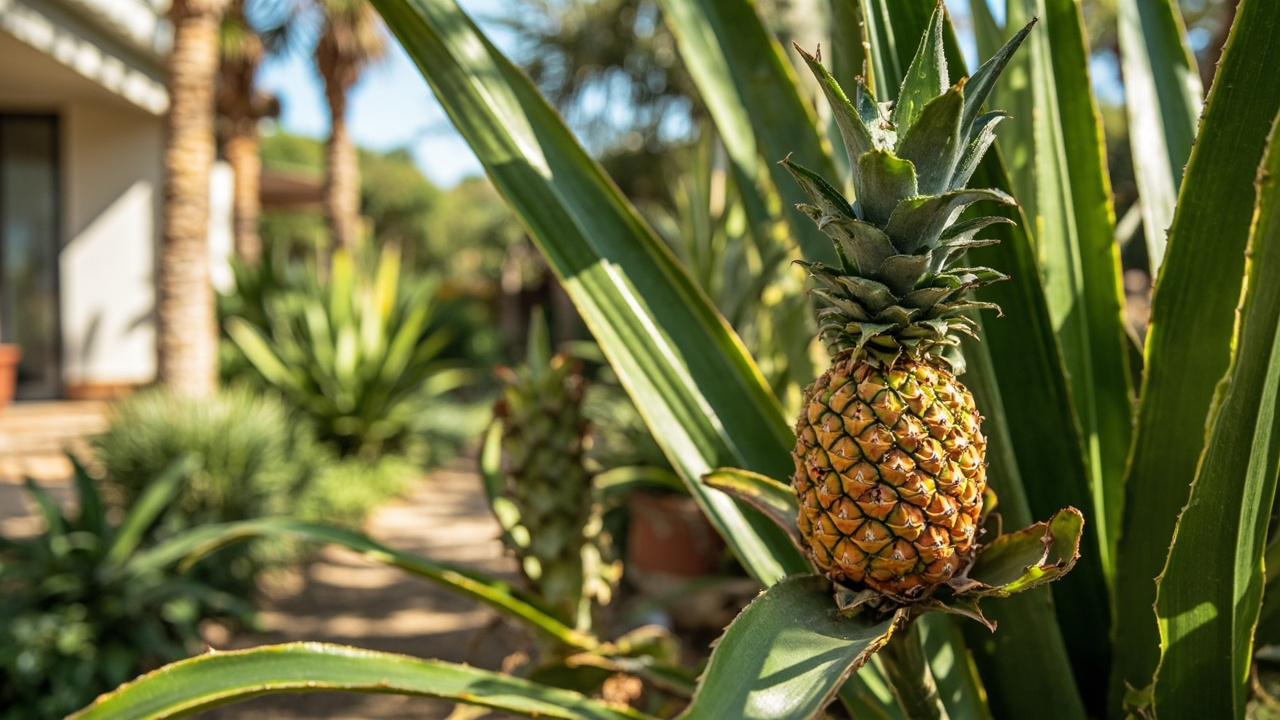
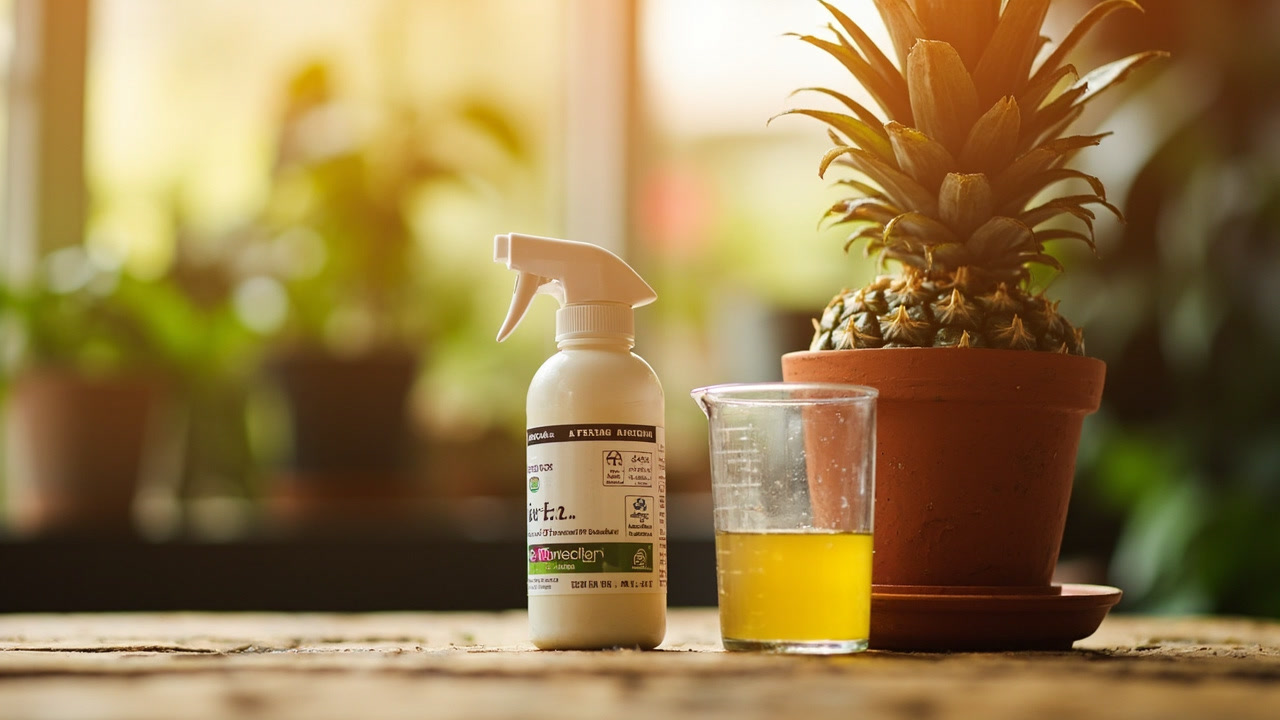
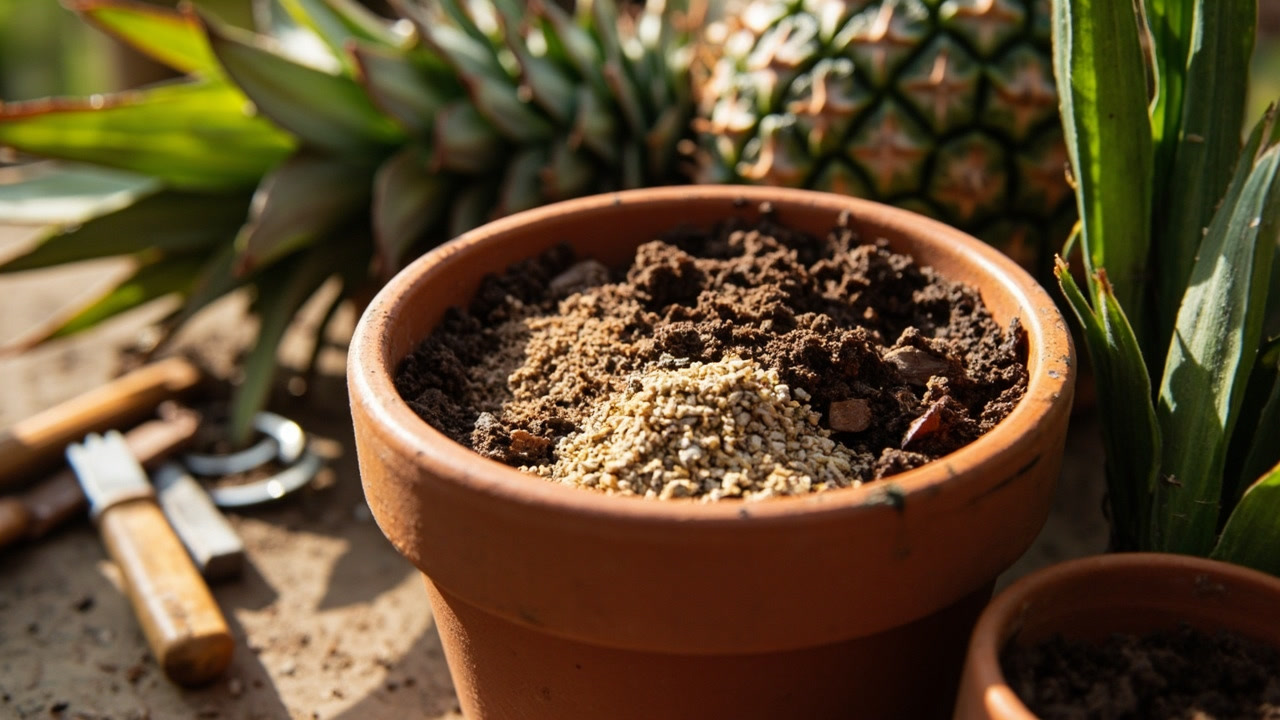
Companion planting sounds like a neat idea until you try to make it work with a plant that wants full sun, lean soil, and airflow around its base. Not every plant fits that profile. And when you crowd a pineapple with something thirsty or shade-loving, the visual arrangement stops mattering because the plant itself stops thriving.
The practical question is not whether a companion looks good next to pineapple. It is whether it makes the growing conditions better or worse. Everything else is decoration.
What Makes a Good Pineapple Companion
A useful pineapple companion does at least three things:
- It does not shade the plant significantly as it grows
- It does not compete aggressively with the root system
- It tolerates the same warmth range and similar water needs
That is the baseline. If a plant can do all three without constant intervention, it qualifies. If it requires more care than the pineapple just to coexist, the relationship is probably not worth the effort.
What happens next when companions meet these criteria: you get a layered, coherent planting that looks intentional and does not require constant management to prevent one plant from undermining the other.
Why Root Competition Is the Overlooked Problem
Most companion guides focus on light. Light matters, but root competition is often the silent problem. Two plants in the same container with different water needs create a situation where you either overwater one or underwater the other.
Even in adjacent containers, if they share a tray or sit in the same humidity pocket, there is some degree of shared environment. The question is whether that shared environment helps or creates friction.
For most home growers, keeping the pineapple in its own container with companions nearby but separate gives you more control over pineapple soil requirements and watering than trying to manage a shared-root situation.
Companion Types That Actually Work
The options that tend to work well near pineapple share a profile: low-growing, non-invasive, and happy with similar warmth. Here is what fits that profile in practice:
Low-Growing Herbs in Separate Containers
Basil, thyme, and similar herbs are good candidates because they want warmth and sun, do not get tall enough to shade a pineapple at maturity, and have a shallow enough root system that they do not compete aggressively.
The important part is keeping them in their own containers rather than planting them in the same pot. Separate containers let you water the herbs on their schedule and the pineapple on its own. What happens next is more straightforward management and fewer compromises.
Small Ornamental Tropicals
Low, compact tropicals that do not overtop the pineapple can work in larger arrangements. The key phrase is “do not overtop.” Anything that will eventually block light from the upper leaves of the pineapple is not a companion — it is a problem you are choosing to create.
What happens next with slow-growing but eventually too-large companions: you end up moving them eventually anyway, so the initial pairing was temporary at best.
Groundcovers in Separate Beds
If you have a warm outdoor bed or greenhouse bench, low groundcover plants that stay under a foot tall can fill the space around a pineapple without creating root or light issues. The same rules apply — they need to tolerate the same conditions and not hold moisture against the base of the pineapple.
What to Avoid Near Pineapple
The list is short but important:
- Large, fast-growing plants that will eventually shade the pineapple at maturity
- Aggressive spreaders with voracious root systems
- Plants that want consistently more water than pineapple does
- Shade-tolerant species that will look fine but slowly weaken the pineapple over a season
What happens next when you pair pineapple with the wrong companions: the pineapple loses light or gets dragged into a moisture regime that causes root stress. The companion may look fine. The pineapple declines slowly enough that the connection is not obvious until it is.
The Appearance Trap
A dense, lush mixed planting looks good in a photo. It may look good for the first season. But if it is structurally incompatible with how the pineapple actually grows, the aesthetic appeal fades as the plant health does.
Trade-off: you get a few months of visual interest, and then spend the next year managing a plant that never quite got its rhythm back. Is that worth it? Usually not.
The Coordinated Container Approach: Often the Better Answer
For most home growers, the companion planting strategy that works best in practice is not true shared-root companionage at all. It is placing compatible plants in their own containers and arranging those containers as a group.
This gives you the visual effect of a mixed planting without any of the root competition or moisture management problems. Each plant stays in its own soil with its own watering schedule, and the pineapple does not get pulled into someone else’s conditions.
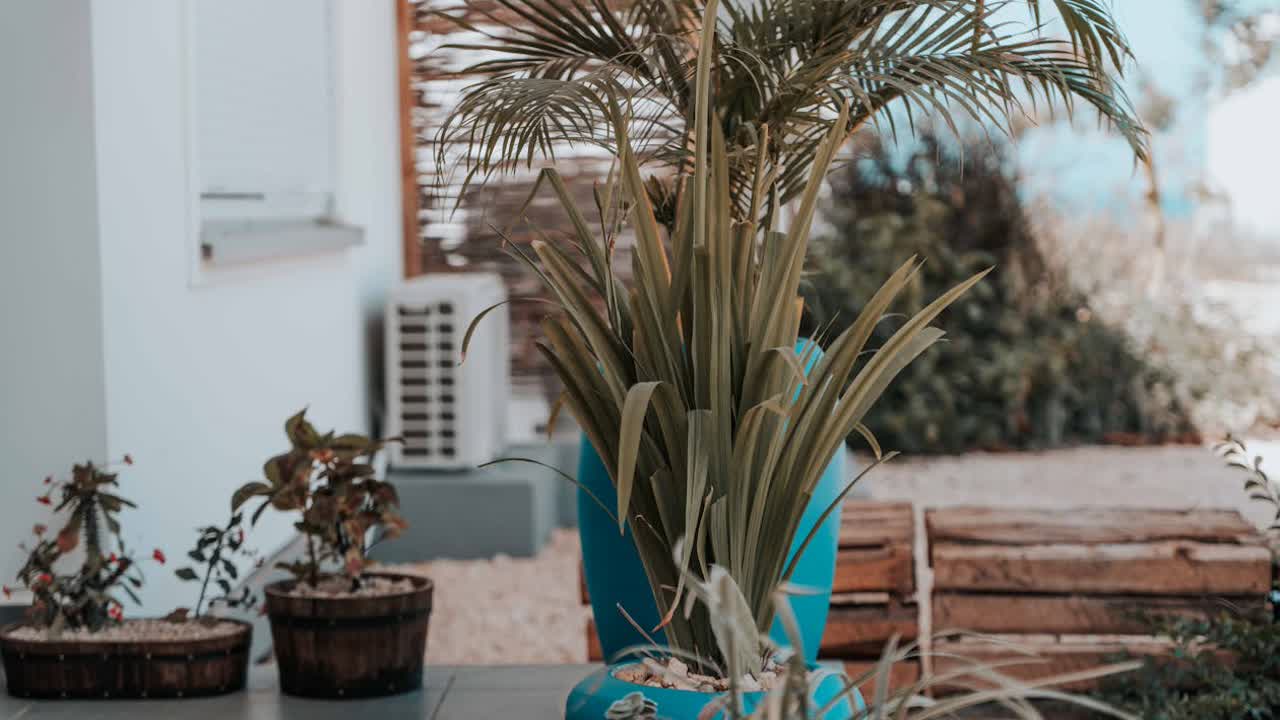
What happens next with coordinated containers: the pineapple thrives on its own schedule, the companions do the same, and you can rearrange or replace things without disturbing the main plant.
Combining Containers in Practice
Group containers with similar water needs and sun preferences. Keep the pineapple on the edge or top of the arrangement where it gets the most light. Place lower-light-tolerant companions in positions where they are not blocking the pineapple but still look intentionally placed.
This approach also makes it much easier to manage watering schedules for each plant independently, which is one of the main practical advantages over true in-ground companion planting.
Making It Work Season by Season
Pineapple companions that work in summer may not work in winter if the growing conditions change significantly. A herb that thrives next to a pineapple in warm months may need to move to a different spot when light levels drop and the pineapple needs more of the available sun.
This is not a one-time setup. The environment shifts, and the arrangement should probably shift with it. Thinking of companion placement as a seasonal decision rather than a one-time landscaping choice tends to produce better results over time.
The Honest Take
Pineapple companion planting is mostly about restraint and compatibility. Choose companions that do not shade, do not crowd roots, and tolerate the same warmth and water rhythm. Keep them in their own containers when possible. Rearrange as conditions change rather than setting and forgetting.
If a companion planting looks impressive but makes the pineapple harder to manage, it is working against you. Simpler and more compatible is usually better than elaborate and slightly wrong.
Turn any PDF statement into a clean sheet
Skip the typos and the hours of copying. Our converter handles any bank statement format and outputs Excel, CSV, or QBO for QuickBooks. No file retention, free to try.
Convert your statement