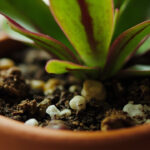
Philodendrons need an airy, chunky, well-draining soil mix that holds a little moisture but never stays wet. A standard indoor potting soil on its own is too dense and will suffocate the roots within a few weeks. The right philodendron soil mix mimics the loose, bark-rich layer of the tropical forest floor where the genus evolved, and a homemade blend of coco coir, orchid bark, perlite, and a small amount of worm castings is the easiest way to get there.
What a Philodendron Soil Mix Has to Do
In the wild, most philodendrons are hemiepiphytes: the parent plant climbs a tree, sends roots into the bark, and only later lets those roots reach the ground. The result is a root environment that is structurally open, with plenty of air pockets, and that drains within minutes of a rain event. The job of an indoor potting mix is to copy that structure as closely as possible, because philodendron roots are highly prone to rot in compacted, low-oxygen substrates.
A working soil mix for philodendrons has three jobs to do at once: hold enough moisture that the plant does not have to be watered every other day, drain fast enough that the pot is never sitting in saturated soil, and stay loose enough that air reaches the roots between waterings. Most bagged “houseplant” or “tropical plant” mixes are close, but they usually need extra bark or perlite added to make them airy enough for a philodendron’s liking.
The Core Components of a Philodendron Soil Mix
A reliable DIY blend for most heartleaf, Brasil, Micans, and climbing philodendrons uses four components in roughly equal parts, with the bark fraction bumped up for larger specimens.
- Coco coir or peat moss (30–40%): the moisture-holding base. Coco coir is more sustainable and re-wets more reliably than peat, so it is the default for most indoor mixes.
- Orchid bark or pine bark (20–30%): the chunky structural element that keeps the mix open and creates the air pockets philodendron roots need.
- Perlite or pumice (15–25%): the drainage workhorse. Perlite is light and cheap; pumice is heavier and does not float to the surface over time.
- Worm castings (5–10%): a small nutrient charge and a gentle biological buffer. More than 10% starts to make the mix too rich and can hold excess moisture.
For larger climbing philodendrons with mature fenestrated leaves, a slightly barkier blend (40% bark, 30% coir, 20% perlite, 10% worm castings) supports the heavier root mass and resists compaction longer. For velvet-leaved types such as Micans and the dark-leaved hybrids, a leaner blend with more perlite (40% coir, 20% bark, 30% perlite, 10% worm castings) keeps the root zone drier and reduces the risk of fungal leaf spots.
Why Regular Potting Soil Is Not Enough
Standard indoor potting soil is designed to hold water uniformly for a wide range of plants, which is the opposite of what philodendrons want. After 4 to 8 weeks in a pot, regular potting soil collapses under its own weight, the air pockets close, and the mix turns into a slow-draining sponge. The visible result above the soil is yellowing lower leaves, a musty smell from the pot, and roots that come up black and mushy when the plant is unpotted. By that point, the plant is usually in early root rot territory, and the fix is a complete repot into a fresh, chunky mix rather than more fertilizer or more frequent watering.
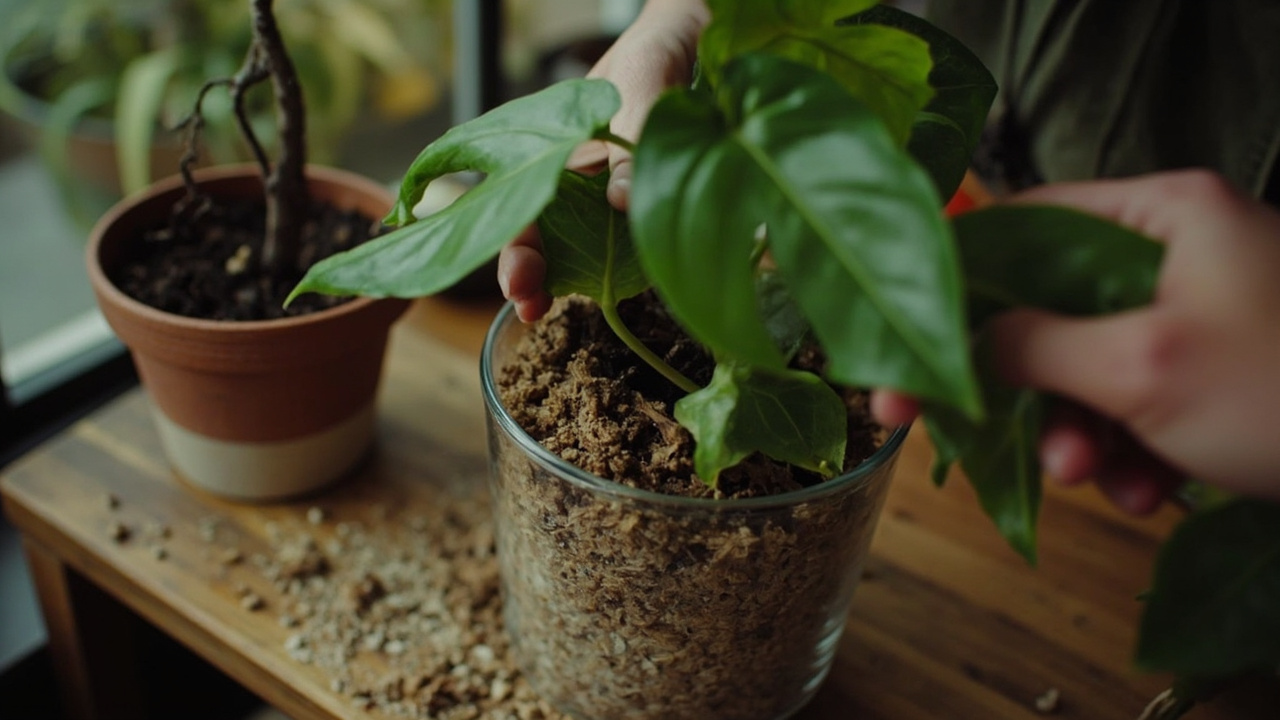
Most “tropical plant” or “aroid” mixes sold in garden centers are closer to what philodendrons need, but even those benefit from an extra handful of orchid bark or perlite added at home. The bark pieces are what keep the mix from collapsing, and they also give the aerial roots of climbing philodendrons something to grip onto when they push into the substrate.
Drainage, Pot Choice, and the Role of the Container
Soil mix is only half of the drainage picture. The other half is the pot. A philodendron in a mix-perfect substrate will still rot if the container has no drainage holes or if it sits in a saucer of standing water. A nursery pot with multiple drainage holes is the safest choice, even if it is slipped inside a decorative cachepot. The cachepot is fine as long as the inner pot is removed for watering and the water is allowed to drain fully before the plant goes back.
Terracotta and unglazed ceramic pots wick moisture out through the walls, which keeps the soil mix from staying wet for too long. For growers who tend to overwater, a terracotta pot is a useful safety net because it adds a small amount of evaporation on top of whatever the soil mix does. For growers who underwater or who live in a dry climate, a plastic or glazed pot retains more moisture and reduces the watering frequency.
When to Repot and How to Refresh the Mix
Most philodendrons benefit from a full repot every 2 to 3 years, or sooner if roots are visibly circling the bottom of the pot or pushing out of the drainage holes. A yearly top-dress, replacing the top 2 to 3 cm of old soil with fresh mix, is a good lighter-touch option for mature plants that are not ready for a full repot. The fresh top-dress adds a small amount of new nutrients, refreshes the surface structure, and prevents the salt crust that builds up from fertilizer over time.
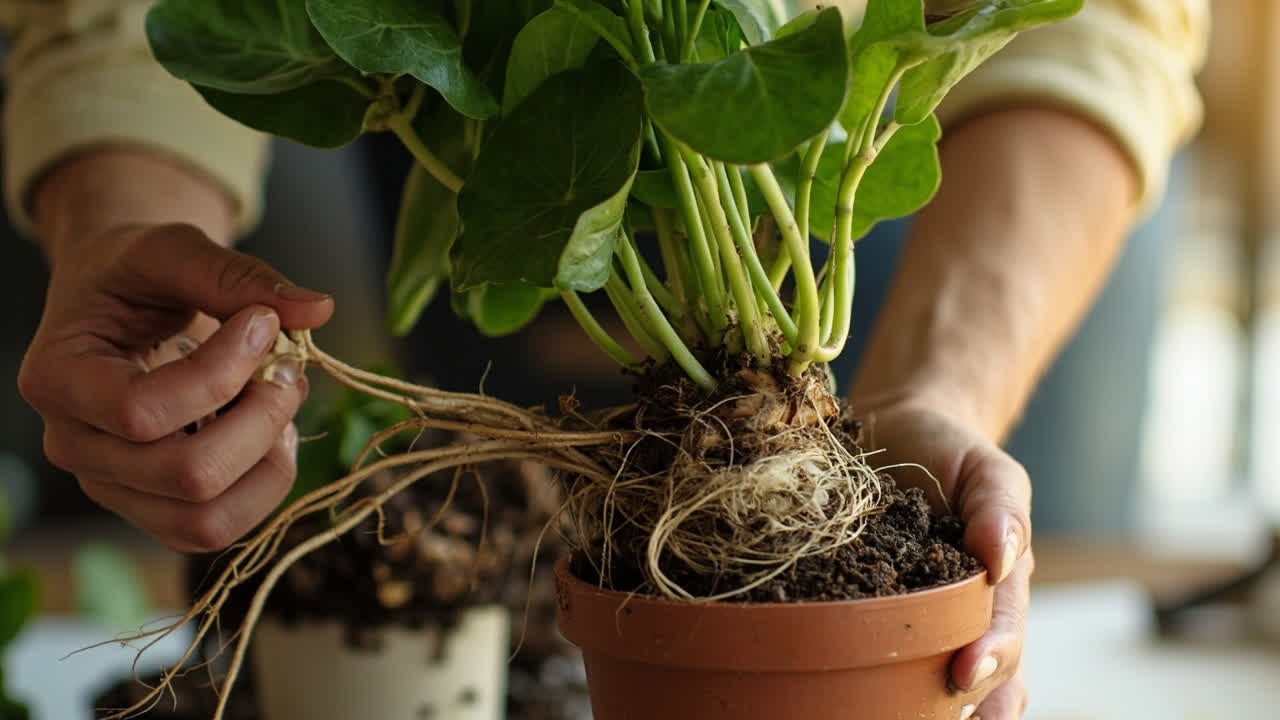
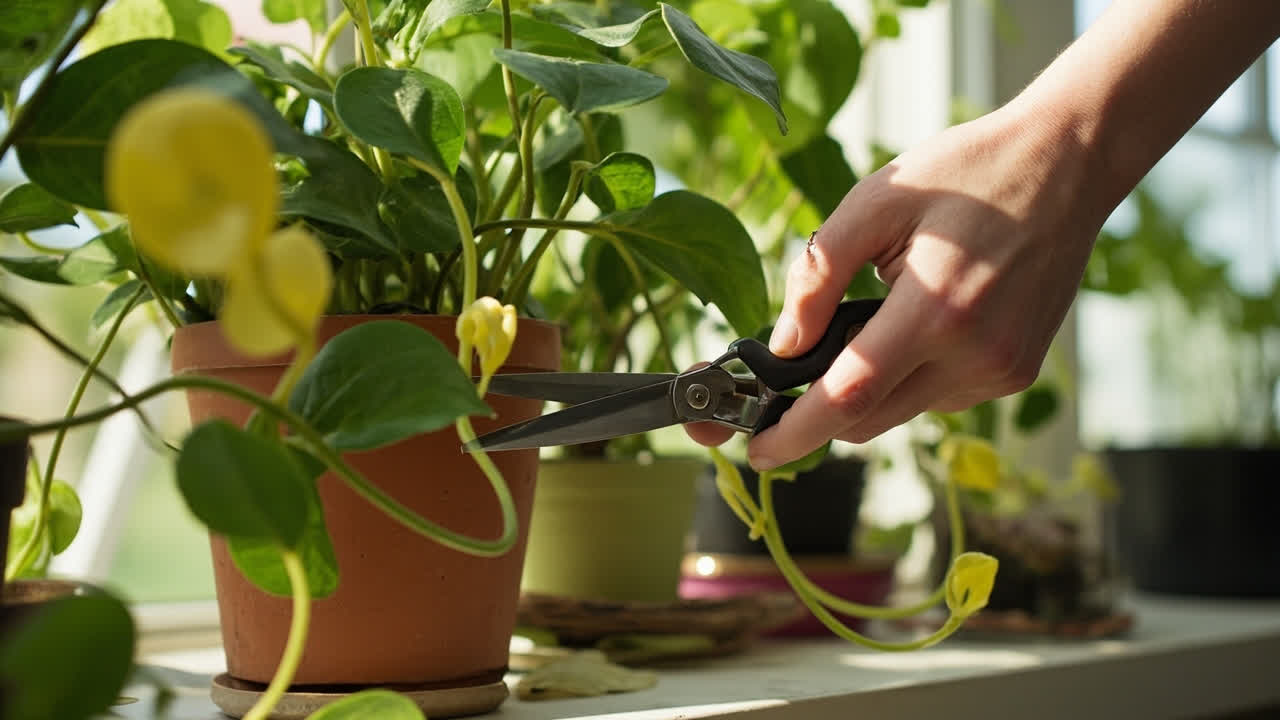
Repotting is also the right time to check the root mass. Healthy philodendron roots are white to light tan and firm; black, mushy, or smelly roots should be trimmed back to healthy tissue with a clean pair of scissors or pruners before the plant goes back into fresh mix. A dusting of cinnamon on the cut ends, or a brief dip in a dilute hydrogen peroxide solution (1 part 3% peroxide to 4 parts water), helps prevent fungal infection while the cuts heal.
Common Soil Mix Mistakes to Avoid
Three mistakes show up again and again in troubleshooting. First, using pure orchid bark on its own: it drains too fast and holds almost no moisture, so the plant ends up chronically underwatered. Second, using too much worm castings or compost in an attempt to make the mix “richer”: this holds water and salts, and quickly produces the same compacted, waterlogged conditions the chunky mix is meant to prevent. Third, skipping the perlite or pumice and using only bark and coir: the result is a mix that drains well at first but collapses into a dense mat after 6 to 12 months as the coir breaks down.
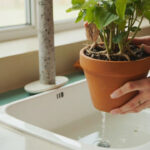
A useful self-test before potting is to wet the mix in a small pot with a drainage hole, then lift the pot immediately afterward. A well-built philodendron mix should feel light, springy, and slightly damp but not dripping. If water pools on top for more than a second, the mix is too fine; if it runs straight through and the pot feels bone-dry within a minute, the mix is too coarse. Adjust by adding more coir or more bark until the in-between feel is right.
Matching the Mix to the Plant’s Light and Watering Routine
Soil mix is part of a system, not a standalone decision. A plant in bright indirect light uses water faster, so a slightly more moisture-retentive blend (more coir, less perlite) makes watering more forgiving. A plant in lower light uses water slowly, so a more open blend (more bark and perlite) helps prevent the mix from staying wet for too long. The same logic applies to the grower’s own habits: a chronic overwaterer benefits from a 50/50 blend of the standard mix with extra perlite, while a forgetful waterer can lean toward the coir-heavier end of the recipe.
For a closer look at how the mix interacts with watering frequency, the philodendron watering guide explains how to test moisture by weight rather than by calendar, and the repotting walkthrough covers how to handle the root ball when refreshing the substrate.