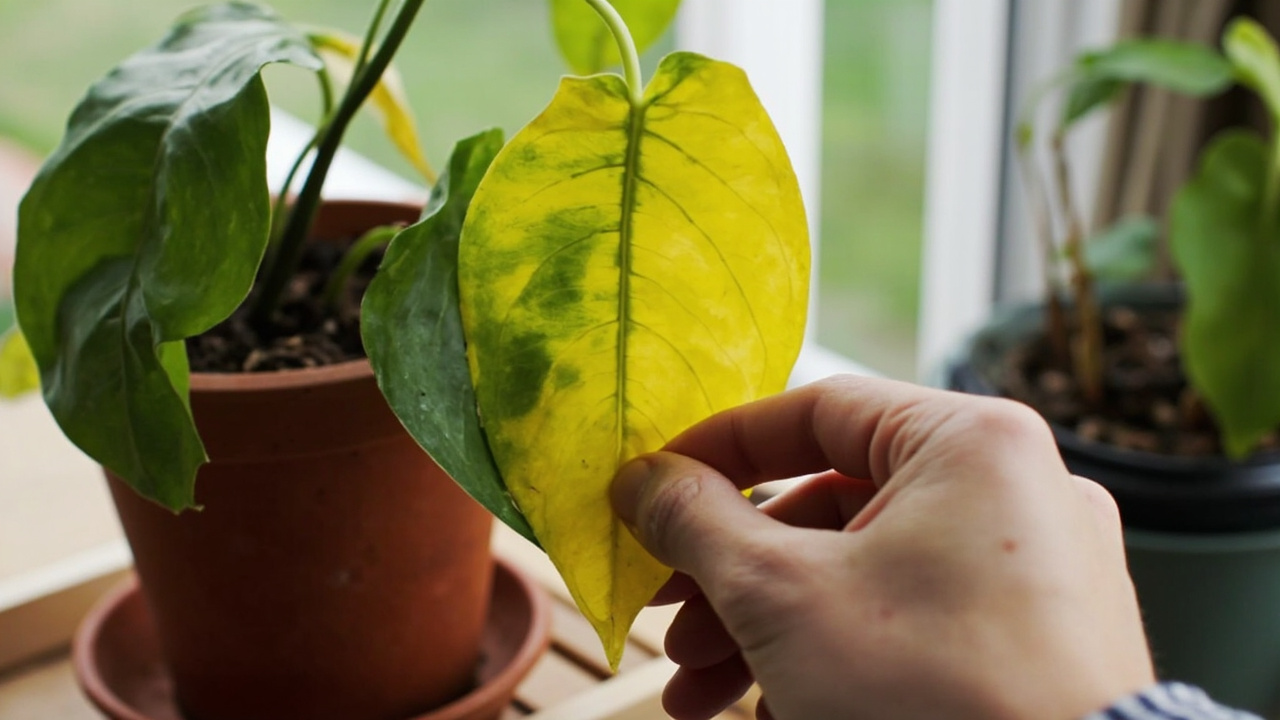
Pothos grows fast. If you have one, you have probably faced the question at some point: do I trim this long, bare vine, or leave it? The answer is simple — you trim. Pruning a Pothos is one of the most useful things you can do for the plant, and it is also the free way to multiply your collection. Every node you cut is a cutting you can root.
Why Prune a Pothos
There are three good reasons to prune a Pothos. First, aesthetic — long vines that have lost their leaves at the base look untidy, and pruning encourages fresh, dense growth from the cut points. Second, plant health — removing dead, damaged, or diseased growth improves airflow and directs the plant’s energy toward new growth. Third, propagation — every cutting you take is a new plant, for yourself or to give away.
You do not need a special time to prune. Pothos is forgiving enough that light pruning can be done any time. Major reshaping is best done in spring or early summer during active growth, when the plant recovers fastest.
What You Need
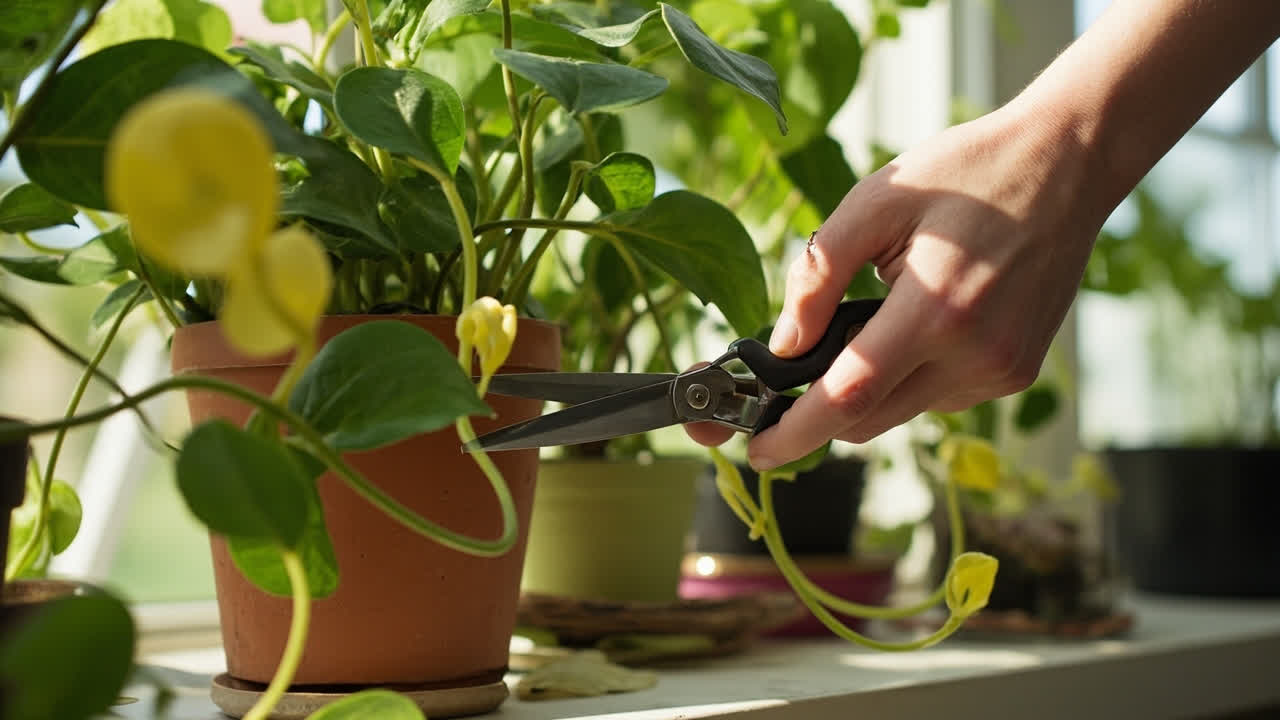
Clean, sharp scissors or secateurs. That is it. Wipe the blades with rubbing alcohol before you start — this prevents spreading any fungal or bacterial issues from one part of the plant to another. Dull blades crush the stem rather than cutting it cleanly, and crushed stems are more vulnerable to disease.
How to Prune a Pothos Step by Step
Step 1 — Identify the nodes. Nodes are the small bump or ridge on the stem where leaves attach. They are also where new roots will emerge if you root the cutting. When pruning, you cut just above a node — about 1 to 2 cm above it. This leaves a short section of stem above the node that will wither naturally and does not damage the node itself.
Step 2 — Decide where to cut. Look at the vine from the tip to the base. Find the oldest, most leggy section — typically the part closest to the soil where the leaves have fallen off and only bare stem remains. Cut there. You are not removing the whole plant; you are shortening individual vines to encourage branching behind the cut.
Step 3 — Make the cut at a 45-degree angle. A diagonal cut, not a flat cross cut, reduces the area exposed to moisture and disease. Cut clean in one motion — do not saw or crush the stem.
Step 4 — Decide what to do with the cutting. If you want more plants, strip the lowest leaf from the cutting so you have a bare node at the base, and place it in water or directly into moist soil. If you do not need more plants, dispose of the cutting — the stem will root on its own if left in water, so it is never wasted.
What Happens After Pruning
Within one to two weeks, you will see new growth emerging from the node just below where you cut. Most Pothos varieties branch from the cut point, producing two new growing tips instead of one. This is how a sparse, trailing plant becomes a full, dense one over the course of a growing season.
After pruning, the plant directs its energy toward new growth. You may also want to fertilise lightly two weeks after pruning to support the burst of new growth — but only if the plant is in active growth and the soil is reasonably fresh.
Common Pruning Mistakes to Avoid
Cutting too close to the node. If you cut right against the node with no stem above it, the new bud directly below the cut can be damaged or suppressed. Leave 1 to 2 cm of stem above the node.
Removing too much at once. Taking more than 25 to 30 percent of the plant’s foliage at one time stresses it. Work in stages if you need to do major renovation — do half this season, wait a month, do the rest.
Reusing dirty tools. If you cut a vine showing any sign of disease or pest and then move to a healthy section without wiping the blades, you transmit the problem. Alcohol wipe between plants if you are pruning multiple.
For propagation of your pruning cuttings, see the full Pothos propagation guide. For general Pothos care, see the Pothos Plant Care guide.
Turn PDF Bank Statements Into Workable Spreadsheets
Your bank statement is a mess of numbers, but your books shouldn't be. Use our converter to get Excel, CSV, or QBO files — ready for QuickBooks.