Philodendrons are not demanding about water, but they are specific. Too much and the roots rot. Too little and the leaves go limp. The difference between a thriving Philodendron and one that looks perpetually tired often comes down to watering technique — not the frequency, but how you do it and when you decide it is time.
The Core Rule
Water when the top 3 to 5 cm of soil are dry. This is the same rule that applies to most tropical houseplants, but it is especially important for Philodendrons because they are sensitive to overwatering in ways that are not immediately obvious. The plant does not look dramatically different for days after overwatering — it gradually declines, with leaves going yellow at the base, growth slowing, and the soil staying wet longer each time.
How to Check Soil Moisture
Insert your finger into the soil up to the second knuckle. If the soil at that depth feels dry, water. If it still feels moist, wait. In Singapore’s climate, in a 15 cm pot with a well-draining mix, this typically means watering every 5 to 10 days — but the season, the room’s temperature, and the pot material all affect this, so the calendar is unreliable. The finger test always works.
Other checks: lift the pot. A dry pot is noticeably lighter than a wet one. After a few watering cycles, you will develop a feel for the weight difference. Or use a moisture meter — inexpensive and more precise than the finger test for those who prefer a gadget.
The Right Way to Water
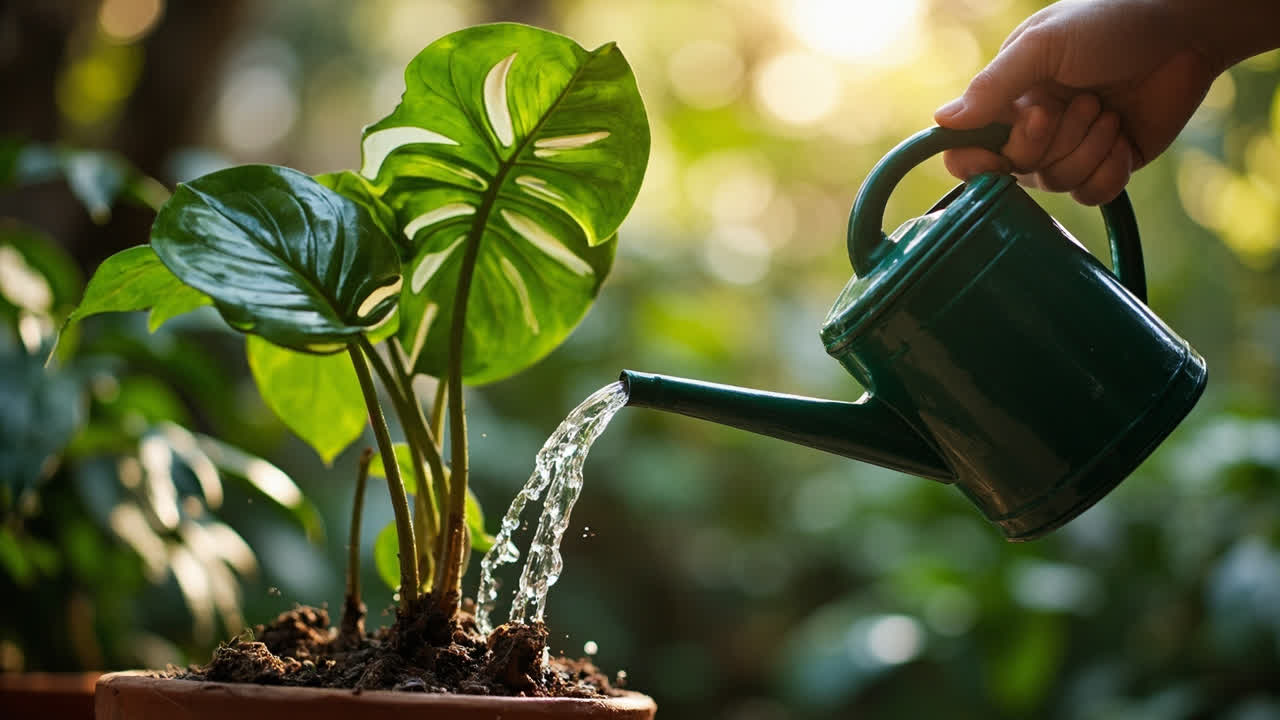
When you water, water thoroughly. The goal is to wet the entire root ball, not just the surface. Pour water evenly across the soil surface until it flows from the drainage hole at the bottom. This ensures the entire root system has access to water, not just the top layer. After 30 minutes, empty any water that has collected in the saucer — Philodendrons do not appreciate sitting in standing water even if their roots need moisture.
What not to do: light watering that only dampens the top centimetre of soil. This encourages roots to stay at the surface rather than growing deep, and it creates conditions where the top layer stays permanently damp while the root ball below is dry. Root rot often starts in the centre of a root ball that was never properly soaked.
Seasonal Adjustments
In Singapore’s dry season (January to March), room temperatures are similar but the air is drier and plants use water faster. Check soil moisture more frequently during this period — you may find yourself watering every five to seven days instead of every seven to ten.
During the cooler rainy months, the plant’s metabolic rate is slightly lower and the soil stays wet longer. Extend the interval between waterings. The same principle applies to any room that runs air conditioning most of the day — the AC dehumidifies the air and can dry the soil faster than expected even in an otherwise cool room.
Signs of Incorrect Watering
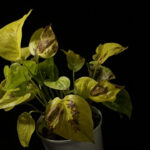
Yellow leaves at the base of the plant. Classic sign of overwatering or root rot. Also check whether the soil is staying wet for more than four to five days after watering — if it is, the mix is too dense or the pot has insufficient drainage.
Wilted leaves despite moist soil. This usually indicates root rot — the roots have died and cannot absorb water, so the plant wilts even though the soil is wet. In this situation, stop watering immediately, check the roots, and repot with fresh mix if necessary.
Crispy, dry leaf edges. Underwatering, or possibly a very low humidity environment. Increase watering frequency slightly and consider a pebble tray.
Leaves that curl inward longitudinally. The plant is under water stress — either not enough water or roots that are compromised and cannot absorb what is available. Distinguish between the two by checking the soil.
Water Quality
Philodendrons are less sensitive to tap water quality than some other houseplants, but very hard water with high mineral content can cause brown leaf tips over time. If your tap water leaves white residue when it dries, consider using filtered or rainwater for your Philodendrons, especially if you are already dealing with brown tip issues that do not respond to adjustments in watering and humidity.
For the full Philodendron care guide, see Philodendron Care.