Monstera deliciosa does best when the top one to two inches of soil dry out between waterings, with a deep soak each time rather than small frequent drinks. The honest answer for most indoor growers is to stop watering on a fixed day of the week and start reading the soil instead, because the dry-down rhythm changes with the season, the pot, the light, and the room humidity.
Over-watering is the single most common cause of an unhappy monstera, and it usually shows up long before under-watering does. Yellow lower leaves, a damp smell from the pot, and soil that stays wet for a week after a normal watering are all signs that the plant is sitting in too much moisture, not too little. A simple moisture check before each watering fixes most of those problems within a month.
What proper watering actually does for a monstera
Monstera roots take up water to keep the leaves turgid, to push out new growth, and to move nutrients from the soil into the plant. When the soil is evenly moist, the roots pull water steadily and the leaves stay upright and deep green. When the soil dries out too far, the plant wilts and the oldest leaves yellow at the edges. When the soil stays too wet, the roots suffocate and start to rot.
Three signals cover most of the watering story. The weight of the pot changes dramatically between wet and dry soil, and a hand test of the top inch is the most reliable check. A plant that needs water feels light when lifted, and the top inch of soil feels dry to the touch. A plant that has been recently watered feels heavy, and the top of the soil is dark and damp.
The pattern through the year matters too. Monstera pushes most of its new growth in spring and summer, when light is strong and the days are long, and the soil dries out faster. In fall and winter, the plant slows down and the soil stays wet longer. A watering routine that works in June will over-water the same plant in December.
How often to water through the year
Forget the calendar. A practical schedule looks like this:
- Spring: water when the top one inch of soil is dry. For most indoor monsteras in a six-inch pot, that is every five to seven days as light levels rise.
- Summer: water when the top one to two inches of soil are dry. In a warm, bright room, that is every four to six days. In an air-conditioned room, every seven to ten days.
- Fall: water when the top two inches are dry. The plant is slowing down, and the soil stays wet longer. Every seven to ten days is typical.
- Winter: water when the top two inches are dry, and only after the soil has had a chance to dry out fully. Every ten to fourteen days is normal. A monstera in a cool room with low light may need water only once every three weeks.
Plants under grow lights, in a heated room, or near a heat source dry out faster and may need water on the spring schedule year-round. The same rule applies: read the soil, not the calendar.
The right way to water a monstera
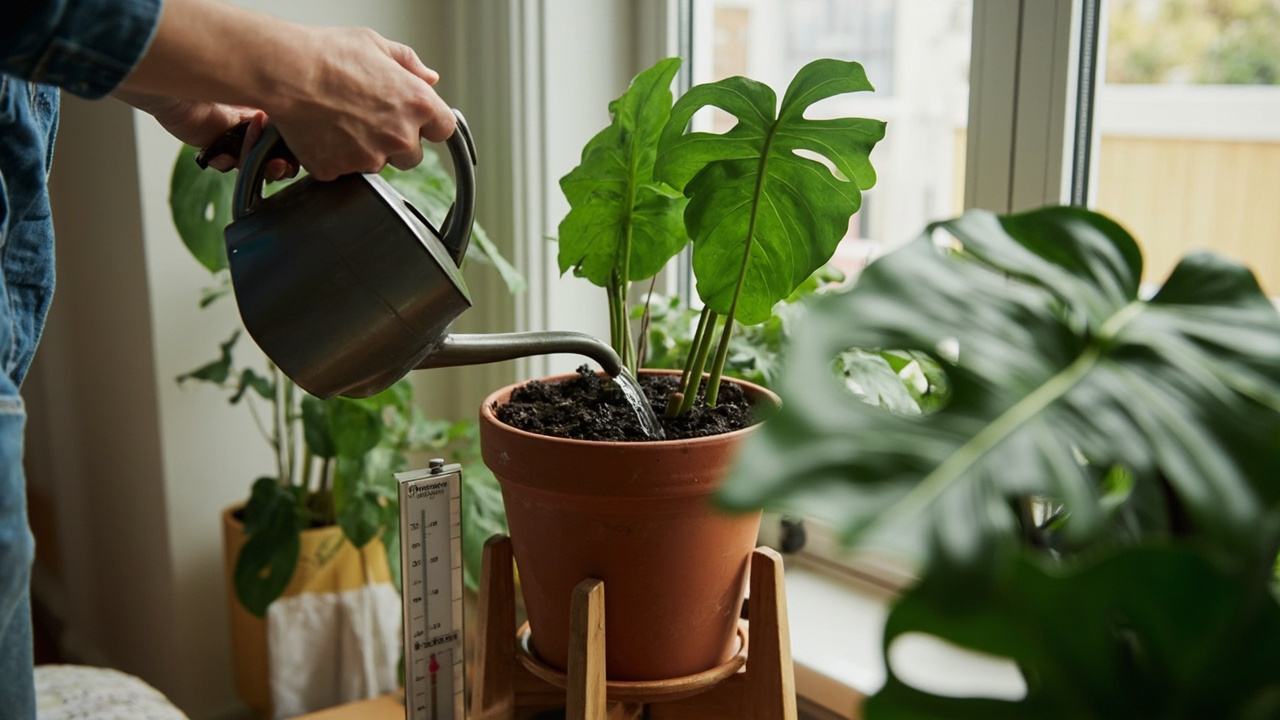
Water thoroughly, until the excess runs out of the drainage holes. A deep soak wets the entire root ball, which encourages the roots to grow down into the pot rather than clustering near the surface. A small, frequent drink only wets the top inch and trains the roots to stay shallow, which makes the plant more vulnerable to dry air and missed waterings.
Pour slowly and evenly across the surface of the soil. The water should soak in rather than run straight down the side of the rootball and out the bottom. If the water runs through too fast, the soil has dried out so much that it has pulled away from the sides of the pot. A re-wet from the top, in two or three passes, will settle the soil back into contact with the roots.
Let the pot drain fully for fifteen to thirty minutes after watering, and empty the saucer. A monstera sitting in standing water is the fastest way to suffocate the roots, because the bottom of the pot stays waterlogged and the air pockets in the soil fill up. Drainage is the second half of the watering routine, and skipping it cancels the first half.
How to read the soil before each watering
The finger test is the simplest and most reliable check. Push a finger into the soil up to the first knuckle. If the soil feels dry at the top and slightly cool and damp below, it is time to water. If it feels dry all the way down, the plant is past due. If it feels wet at the top, wait a few days and check again.
A basic soil moisture meter gives a more precise reading. Push the probe into the soil to root depth, about halfway between the stem and the edge of the pot, and read the dial. A reading in the lower third of the dial for a tropical plant is a good cue to water. Cheap meters drift after a year, so replace them annually for the most accurate reading.
Lift the pot. A dry pot feels noticeably lighter than a wet pot, and the difference is easy to learn within a few waterings. This is the fastest check once the weight becomes familiar, and it works whether the soil is dense or chunky.
Common monstera watering mistakes
Watering on a fixed day of the week is the most common error. The soil dries at different rates through the year, and a routine that works in summer will over-water the same plant in winter. Read the soil, not the calendar.
Watering a little, every day, keeps the surface of the soil damp and the lower part of the pot dry. The roots stay near the surface and the plant becomes fragile. A deep soak every few days is far better than a daily sprinkle.
Letting the pot sit in standing water is the second most common error. The pot should drain fully after each watering, and the saucer should be emptied within thirty minutes. Standing water in a saucer wicks back up into the soil through capillary action, which is enough to keep the lower half of the pot saturated for days.
Watering from a cold tap is rarely a problem, but very cold water can shock the roots in a small pot. Room-temperature water is easier on the plant and on the soil life. Let the watering can sit out for an hour if the tap water is especially cold.
Water quality and what to use
Tap water is fine for most monstera plants. The chlorine and chloramine added by municipal water supplies do not build up fast enough in a pot that is flushed every few weeks to cause problems. If the local water is very hard, with a reading above 200 ppm, the calcium and magnesium will leave a white crust on the soil surface and on the pot rim over time, which is harmless but unsightly.
Filtered water or rainwater is a useful upgrade for monstera in hard-water areas, and for any plant that has been showing brown leaf tips with no other obvious cause. A simple charcoal filter on the kitchen tap is enough, and refilling the watering can from it once a week covers most indoor plants.
Distilled water is not necessary, and it can actually be too pure. The trace minerals in tap water are useful for the plant, and a fully distilled source strips them out. If using distilled or reverse-osmosis water, add a light dose of balanced fertilizer to replace what is missing.
Watering in winter, summer, and after repotting
Winter watering is the most common cause of root rot in monstera. The plant is not pushing new growth, the light is lower, and the soil stays wet for longer. Cut the watering frequency in half from the summer routine, and only water when the top two inches of soil are dry. A monstera in a cool room with low light may need water only every three weeks, and that is normal.
Summer watering is the opposite. The plant is pushing new leaves, the light is strong, and the soil dries fast. In a warm, bright room, the soil can dry out in two to three days, and the plant will drink more than it did in spring. Check the soil every other day through the peak of summer.
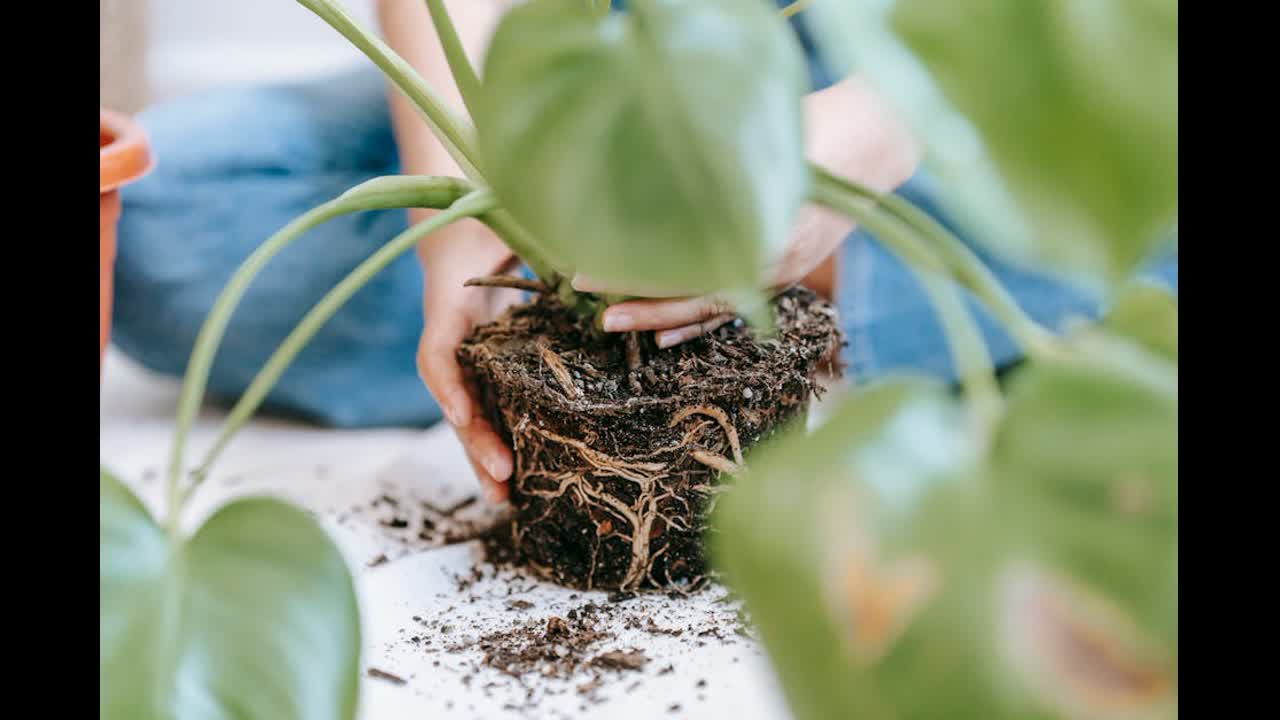
A freshly repotted monstera needs less water for the first two to three weeks. The new soil holds more moisture than the old rootball, and the disturbed roots are slower to take up water. Water lightly after repotting, then let the soil dry to the same rhythm as before. The repotting guide covers the full transition.
What underwatering and overwatering look like
Underwatering is the easier problem to spot. The leaves droop, the soil pulls away from the sides of the pot, and the older leaves yellow at the edges and go crispy. A thorough watering brings the plant back within a day, and a regular routine keeps it from happening again.
Overwatering is slower and more damaging. The leaves yellow at the base, the soil smells damp, and the plant stops pushing new growth. Lift the plant out of the pot and check the roots. White and tan roots with a firm texture are healthy. Dark, mushy roots that fall apart in the hand are rotting, and they need to be trimmed back to firm tissue before the plant goes back into fresh soil mix. The monstera root rot page covers the recovery process in detail.
A plant that has been over-watered for a long time will show signs on the leaves before the roots. Yellowing that starts at the base and moves up the stem, with a damp smell from the pot, is the clearest pattern. Stop watering, let the soil dry fully, and check the roots within a week.
How watering fits with the rest of the care plan
Watering only works in combination with the right soil, the right pot, and the right light. A chunky aroid mix drains quickly and supports deep watering, a properly sized pot with drainage holes keeps the roots out of standing water, and bright indirect light lets the plant use the water it takes up. The light requirements page covers the brightness most monsteras need to actually use the water they receive.
The full routine ties together in the monstera care guide, which is the right starting point for a new grower. A monstera in the right soil, with a sensible watering rhythm, in the right humidity and temperature, will produce a new leaf every four to six weeks through the warm months and hold the older leaves clean through the slow season.
A long-spout watering can, a simple moisture meter, and a routine of reading the top inch of soil before each watering are the only tools most monsteras actually need. Once the dry-down rhythm is dialed in for the pot and the room, the rest of the care plan is just consistency: water when the soil says it is time, feed lightly through the growing season, and let the plant rest in winter.
Turn any PDF statement into a clean sheet
Skip the typos and the hours of copying. Our converter handles any bank statement format and outputs Excel, CSV, or QBO for QuickBooks. No file retention, free to try.
Convert your statement